
A 10×10 canopy is the workhorse of outdoor selling. Whether you’re setting up at a farmer’s market, running a booth at a trade show, or representing your brand at a street festival, this is the footprint most organizers expect, and most vendors prefer. It’s big enough to display product and host conversations, but compact enough to fit standard booth allotments and pack into a midsize vehicle.
The problem? There are hundreds of options out there for 10×10 canopy, and they range from flimsy backyard tents to commercial-grade setups built to last years. Frame materials, fabric coatings, weight, ease of setup, and warranty terms all vary wildly between brands. Picking the wrong one means dealing with bent legs after one windy afternoon or a canopy that fades and leaks before your first season is over.
At TMP Inflatables, we’ve spent over 20 years designing and producing custom inflatable tents, branded arches, and promotional structures for agencies and businesses across North America. That work has given us a deep understanding of what holds up at events, and what doesn’t. We used that experience to evaluate the current market and put together this list of the seven best 10×10 canopy tents for 2026, covering options for different budgets, use cases, and durability needs.
1. TMP Inflatables custom 10×10 canopy inflatable tent and archways
TMP Inflatables builds custom inflatable event tents designed for brands that need to stand out at crowded events. Unlike a standard 10×10 canopy, these structures are fully branded from the ground up, built to your specs, and designed to draw attention before anyone reads a single word on your display.
Best fit for brand activations and high-visibility booths
This tent is the right call when your goal is maximum visual impact, not just shade. It works best for product launches, experiential marketing activations, festival sponsorships, and high-traffic trade shows where your booth needs to pull people in from across the venue floor.
How the inflatable structure compares to conventional 10x 10 Canopy
A standard pop-up 10×10 canopy uses a collapsible aluminum or steel frame with a fabric top. An inflatable tent replaces that frame entirely with air-filled beams, creating a structure that’s lighter to transport and more visually striking. The tradeoff is that it requires a power source and a blower to stay inflated.
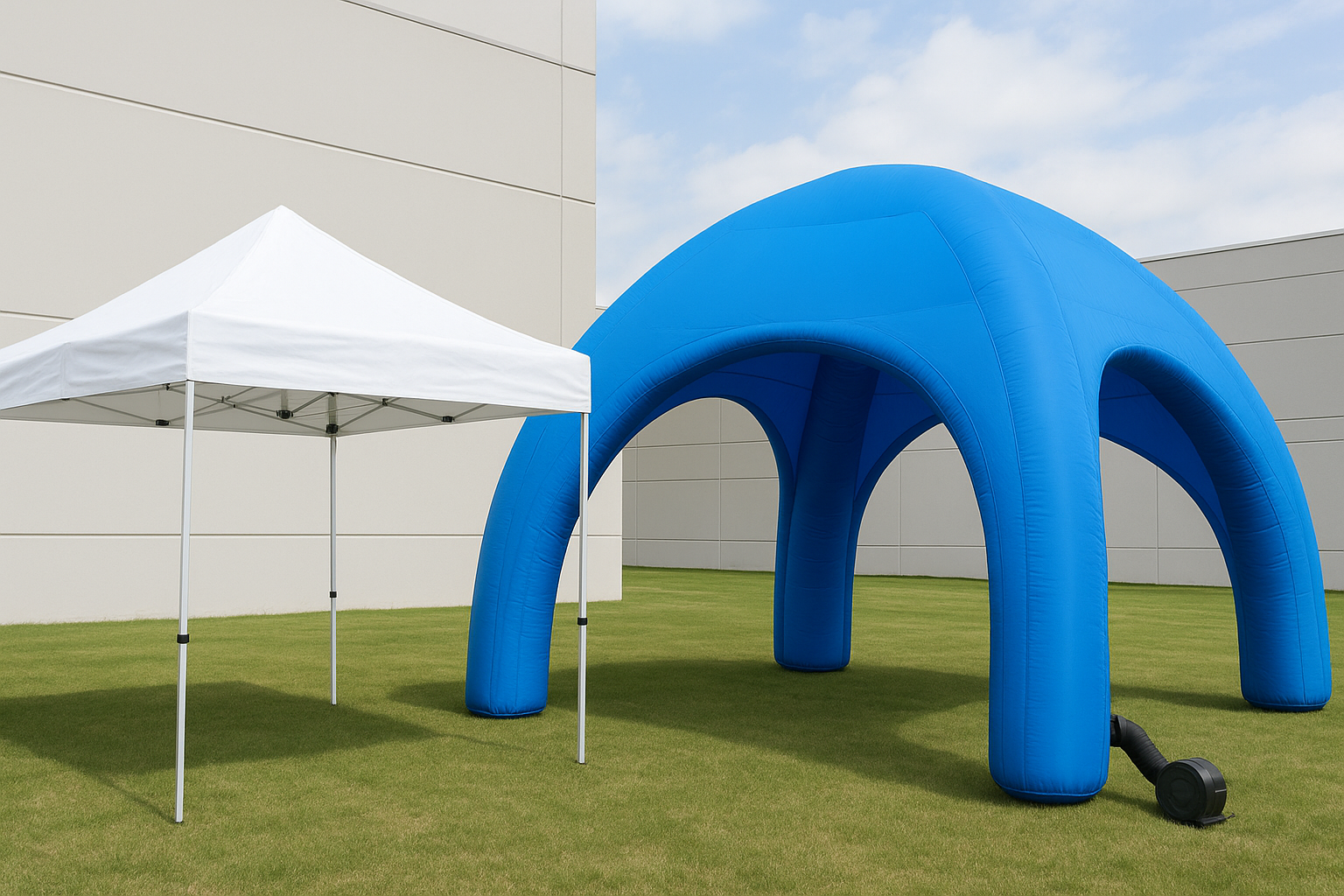
If your brand needs to look different from the 30 other white canopies at the event, inflatable is the faster path to that goal.
Custom branding options and print placement on 10×10 canopy
TMP prints branding across every visible surface, including walls, roof panels, valances, and entry areas. You can match Pantone colors, include full-bleed photography, or run different messaging on each panel. Print placement decisions happen during the design phase, so plan your messaging before you submit files.
Setup time, power needs, and staffing requirements for 10×10 canopy
Most inflatable tents inflate in 5 to 10 minutes using the included electric blower. You need access to a standard power outlet or a generator. Two people can handle setup comfortably, though one person can manage it with some practice.
Weather handling and anchoring basics for 10×10 canopy
These tents handle moderate wind and light rain well when properly anchored. TMP provides anchor points and stakes. For exposed outdoor sites or events with unpredictable weather, stake every anchor point and keep the blower running throughout the event.
Typical price range in 2026 and what drives cost
Custom inflatable tents from TMP start around $1,500 to $2,500 USD depending on size, print complexity, and add-ons like sidewalls or integrated lighting. Full custom work with multiple print zones and premium materials pushes costs higher.
Watch-outs to consider before you buy a 10×10 canopy
Lead times for custom production run 3 to 6 weeks, so this is not a last-minute purchase. You also need reliable power access at your venue, which rules out some outdoor locations without infrastructure.
2. E-Z UP Eclipse series 10×10 canopy
E-Z UP is one of the most recognized names in commercial canopy tents, and the Eclipse series sits near the top of their lineup. It delivers a solid balance of durability, setup speed, and weather resistance that makes it a practical pick for vendors who set up and break down repeatedly throughout the season.
Best fit for frequent market and trade show use
The Eclipse is built for people who use their 10×10 canopy at least a few times per month. If you run a regular farmers market circuit, attend regional trade shows, or do seasonal pop-up retail, this tent earns its cost over time through consistent performance.
Frame strength and hardware features to look for the 10×10 canopy
The Eclipse uses anodized aluminum frames with reinforced corner connectors. Look for the thumb-lock leg system and the truss hub design, both of which reduce flex under load and extend the frame’s lifespan across repeated deployments.
Canopy fabric, UV, and rain performance
E-Z UP uses a 300D polyester fabric with UV protection rated at 99% block and a water-resistant coating. The fabric holds up well through light rain, though it is not fully waterproof under sustained downpours.
If you work outdoor markets through spring and fall, that UV and water resistance pays for itself quickly.
Setup speed and day-to-day usability for the 10×10 canopy
One person can set this tent up in under five minutes. The pull-pin leg adjustment and pre-attached canopy top reduce the steps required on busy event mornings.
Sidewalls, accessories, and branding options for the 10×10 canopy
E-Z UP sells matching sidewalls, roller bags, and weight bags as add-ons. Branding options are limited to basic printing on the valance unless you go through a third-party print vendor.
Typical price range in 2026 and what you get at each tier
Expect to pay $350 to $550 for the base Eclipse tent. Bundles that include sidewalls and a roller bag push the price toward $600 to $700.
Watch-outs to consider before you buy
The canopy fabric can fade after two or three seasons of heavy sun exposure. Budget for a replacement top if you plan to use this tent for more than a couple of years.
3. MasterCanopy commercial series 10×10 canopy
MasterCanopy has built a following among budget-conscious vendors who refuse to sacrifice structural integrity for a lower price tag. Their commercial series 10×10 canopy hits a middle ground that most entry-level competitors miss entirely.
Best fit for value-focused buyers who still need durability for the 10×10 canopy
This tent suits vendors who attend events regularly but cannot justify spending $400 or more on a single canopy. Craft fair regulars, seasonal food vendors, and small retail pop-ups get reliable performance without draining the budget.
Frame material choices and why they matter
MasterCanopy uses steel or aluminum frames depending on the model tier. Steel is heavier but more resistant to bending under lateral pressure. Aluminum costs slightly more within the lineup but saves significant weight on event days when you are hauling gear solo.
Canopy fabric and venting options for the 10×10 canopy
The canopy top uses polyester with a waterproof coating and includes a double-vent design at the peak. That venting reduces wind uplift and keeps the interior noticeably cooler on hot days.
The double-vent feature alone separates this tent from cheaper single-layer competitors that trap heat and catch wind.
Setup workflow and what one person can realistically do
Most users get this tent up in under eight minutes working alone. The pre-attached canopy and push-button leg locks eliminate the steps that slow down solo setup.
Sidewalls and modular add-ons for events
MasterCanopy sells matching sidewall panels separately, including full walls and half walls with windows. Most panels attach using hook-and-loop fasteners that require no tools.
Typical price range in 2026 and what usually comes in the kit for the 10×10 canopy
Base kits run $150 to $250 and typically include the frame, canopy top, and a carry bag. Sidewall bundles add $40 to $80 depending on configuration.
Watch-outs to consider before you buy
Frame connectors on lower-tier steel models can loosen after repeated setup cycles. Check and tighten all connector bolts before each event to avoid instability mid-day.
4. LookOurWay 10×10 custom pop-up canopy tent
LookOurWay focuses on custom-printed canopy tents that arrive ready to use. Their 10×10 canopy option appeals to vendors who want a fully printed setup without going through a separate design and print shop.
Best fit for vendors who want fast, visible branding for the 10×10 canopy
This tent suits small businesses and repeat vendors who need their logo and colors visible from across a crowded venue. Food trucks, craft vendors, and direct-to-consumer brands get the most value here.
Print areas, color matching, and readability at a distance
LookOurWay prints full-color graphics across the canopy roof and valance panels. Colors are matched to your submitted files, so bring accurate brand assets and keep text large and high-contrast for readability beyond 20 feet.
High-contrast designs with a single clear message outperform busy layouts at real events every time.
Frame and canopy construction checkpoints
The frame uses powder-coated steel with push-button leg locks. Verify that the canopy fabric is at least 150D polyester before ordering, since thinner materials wear faster under repeated outdoor use.
Sidewall configurations for wind, sun, and privacy
LookOurWay offers full-print sidewalls and blank wall panels as add-ons. Choose a back wall and one side wall if your booth faces direct afternoon sun or sits in a high-traffic corridor.
Transport and storage for repeat events
The tent packs into a rolling carry bag included with most packages. Total transport weight runs between 35 and 45 pounds depending on how many sidewalls you add.
Typical price range in 2026 for common package types
Base packages with a printed canopy top start around $300 to $450. Adding full-print sidewalls brings the total to $500 to $700 depending on how many panels you include.
Watch-outs to consider before you buy
Proof your design carefully before approving production, because color shifts between screen and print are common. Also confirm production lead times, which typically run two to three weeks for custom orders.
5. Eagle Peak straight-leg 10×10 pop-up canopy
Eagle Peak builds a straight-leg 10×10 canopy that competes directly with mid-range commercial options at a lower price point. Their pop-up design targets event vendors and weekend markets who need a reliable, no-fuss setup without a steep learning curve.
Best fit for quick setup teams and weekend events
This tent works best for craft fair regulars, weekend farmers market vendors, and small teams that rotate event duties between staff members. Anyone can set it up without prior experience, which makes it a practical pick when your crew changes from event to event.
Center-lock and leg-lock features that reduce setup time
Eagle Peak builds in a center-lock hub and push-button leg locks that let one person deploy the tent in about five minutes. Both systems click firmly into place, so you are not second-guessing whether the frame is fully locked before you load the table.
Reliable leg locks matter more than most vendors realize until a leg collapses mid-event.
Stability and anchoring in breezy conditions
The straight-leg frame distributes weight more evenly than slant-leg designs, which improves stability on uneven ground. Use the included stake loops and add weight bags to each leg at open outdoor sites where wind picks up through the afternoon.
Headroom, usable shade area, and straight-leg benefits
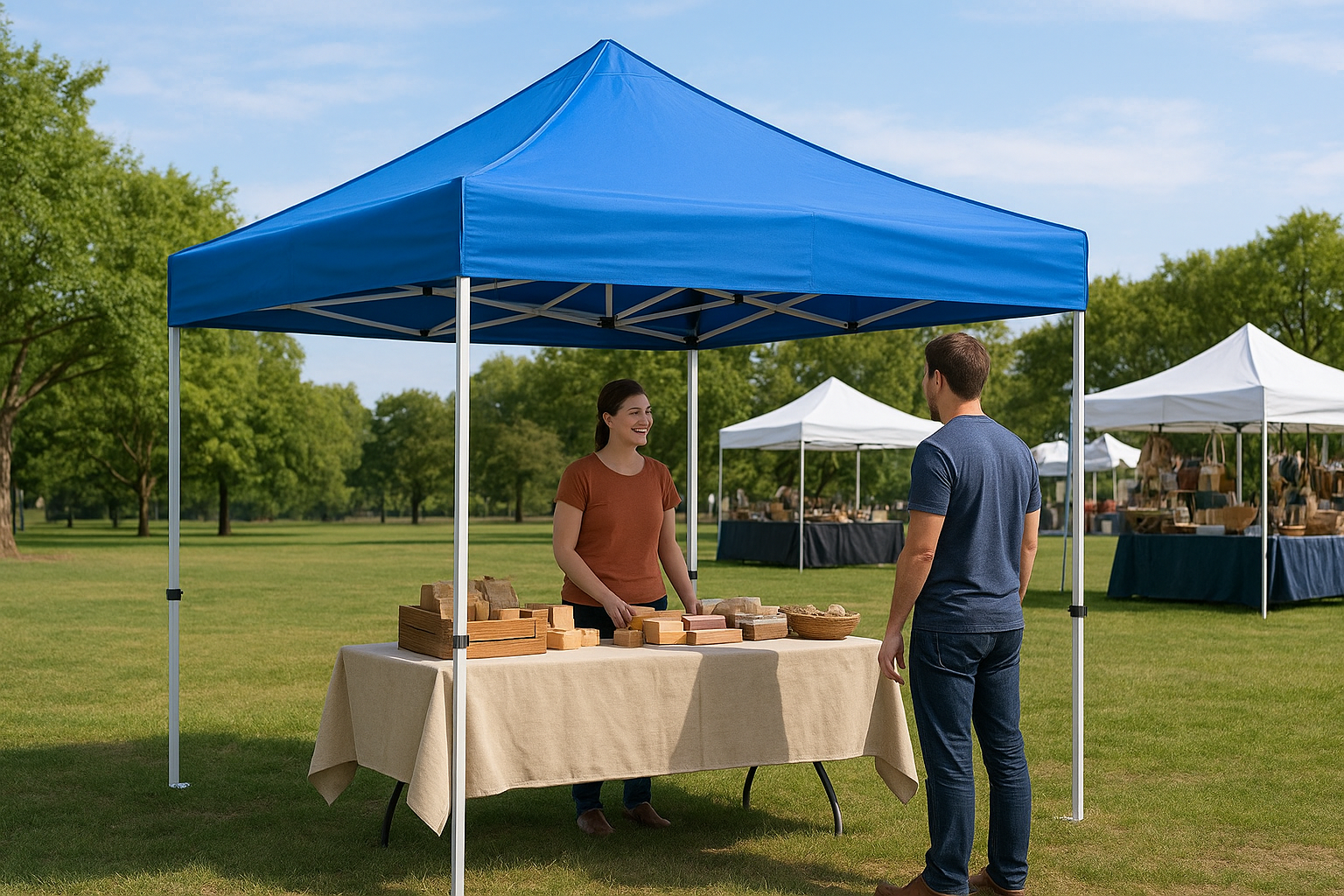
Straight legs push the full 10×10 footprint to the ground, so you get more usable shade at the perimeter than slant-leg alternatives. Headroom at the edges stays near six feet, which keeps taller displays and standing conversations comfortable.
Compatible accessories to expand the footprint
Eagle Peak sells matching sidewalls and connector kits that link two tents side by side. That connector option is useful for larger booth allotments at regional trade shows.
Typical price range in 2026 and what tends to be included
Base packages run $180 to $280 and include the frame, canopy top, and carry bag. Sidewall sets add roughly $30 to $60 per panel.
Watch-outs to consider before you buy
The canopy fabric is lighter weight than commercial-grade competitors, so extended sun exposure degrades it faster. Plan on replacing the top after two full seasons of regular use.
6. ABC Canopy and Caravan Canopy 10×10 options
Both ABC Canopy and Caravan Canopy target the same value-driven market segment, giving you two solid options when you want more configuration flexibility than a standard big-box tent provides.
ABC Canopy at a glance
ABC Canopy produces mid-range 10×10 canopy tents built around a steel or aluminum frame with a coated polyester top. Their lineup covers plain canopies and custom-print versions, making them a versatile pick for vendors who want options without committing to a premium price.
Caravan Canopy at a glance
Caravan Canopy focuses on commercial-grade aluminum frames with reinforced truss hubs. Their tents carry higher weight ratings than most competitors at this price point, and they back the structure with a longer frame warranty than ABC Canopy typically offers.
Best fit for buyers who want lots of configuration choices
Both brands suit event organizers and repeat vendors who run different booth formats throughout the year and need a tent system that adapts to each setup rather than locking you into one configuration.
Sidewalls, windows, and enclosure options compared
ABC Canopy sells full walls, half walls, and windowed panels separately. Caravan Canopy offers similar options but also includes a zippered door panel on select kits, which adds privacy and weather protection for enclosed setups.
Frame, fabric, and seam details to verify before ordering
Check that seam tape is heat-welded, not just stitched, on whichever model you consider. Both brands use 150D to 210D polyester, but seam quality varies between product tiers.
Typical price range in 2026 and how to compare models fast
ABC Canopy base kits run $130 to $220. Caravan Canopy kits start around $180 to $300 depending on frame material and included accessories.
Watch-outs to consider before you buy
Neither brand offers robust custom printing in-house, so factor in third-party print costs if branding matters to your setup.
Wrap Up
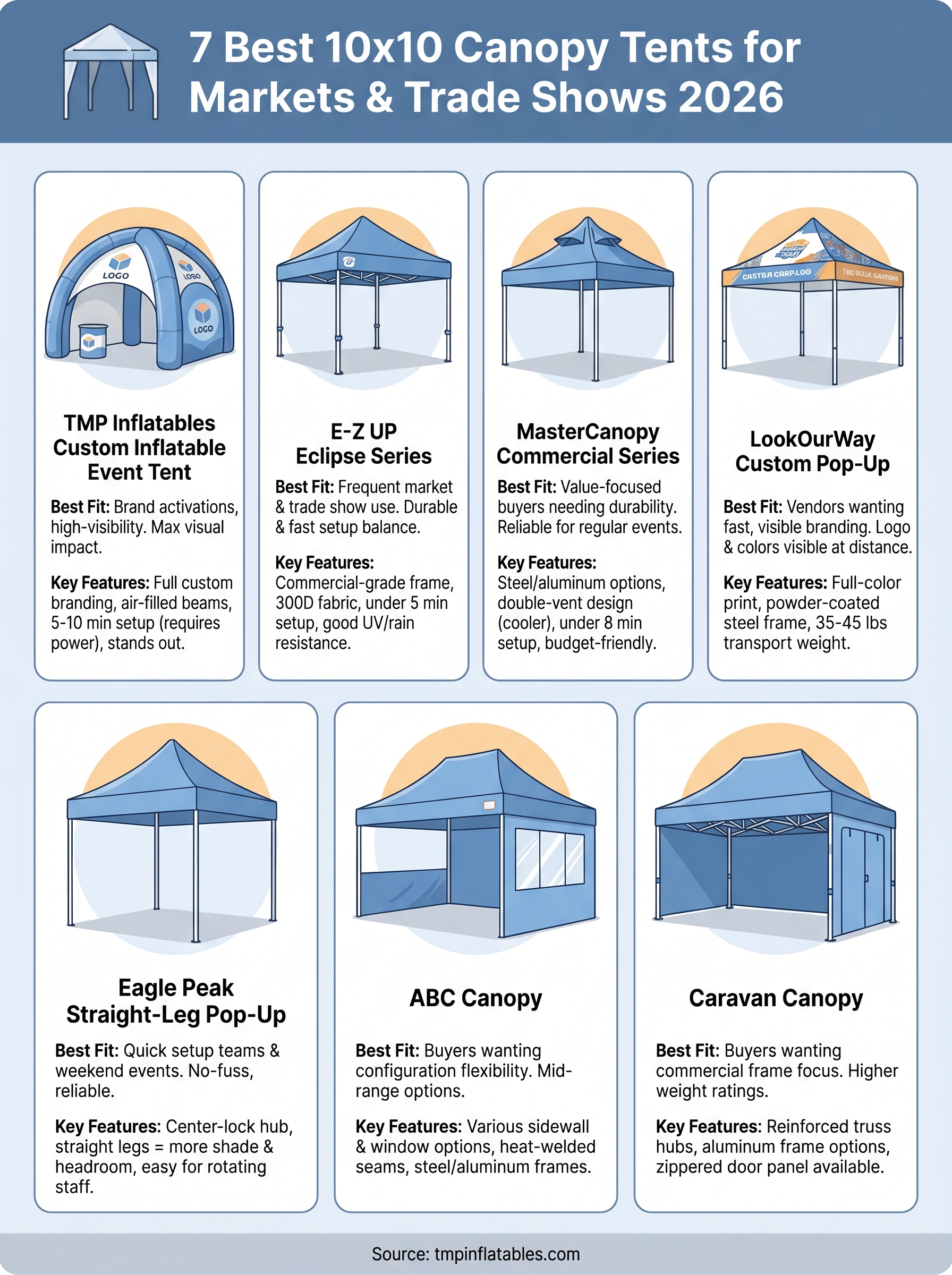
Every option on this list solves the core problem of showing up at an event with a reliable, functional shelter. The right pick depends on what you prioritize. If budget is tight and you need something dependable for weekend markets, MasterCanopy, Eagle Peak, or ABC Canopy will serve you well. If consistent branding and print quality matter more than price, LookOurWay or E-Z UP with third-party printing gives you a solid foundation.
Your 10×10 canopy choice changes entirely when you need to stand out at a high-visibility activation or trade show. That is where TMP Inflatables makes sense. A fully custom inflatable tent puts your brand front and center before anyone walks through the door. Production takes a few weeks, so the earlier you start, the better your options. If you are planning a branded event tent for 2026, request a custom inflatable tent quote and get the process started now.
Looking for more inspo? Checkout a highly recommended post here

