
Planning a wedding, corporate event, or community festival and trying to figure out how much tent you actually need? A 20×40 tent covers 800 square feet, enough space for roughly 80 seated guests at round tables or up to 120 for a standing reception, which makes it one of the most popular sizes rental companies and event planners reach for first.
If you’re comparing structures right now, here’s the short answer: a 20×40 works for mid-sized gatherings where you need room for tables, a dance floor, or a buffet line without renting something oversized. The right choice depends on your guest count, layout, ground surface, and whether you need it for one weekend or an entire season, and pricing and durability shift a lot based on those factors.
This guide walks through exactly what a 20×40 tent includes, how frame and pole styles differ, what capacity looks like in real layouts, and what to expect on rental pricing versus buying your own. We also cover when a custom inflatable structure makes more sense than a traditional canvas tent, especially for brand activations or events where visibility matters as much as shelter.“
Why a 20×40 tent suits weddings and large events
A 20×40 tent hits a sweet spot that smaller canopies can’t reach and giant structures overshoot. At 800 square feet, you get room for a head table, ten to twelve round tables, a small dance floor, and a walking path without guests bumping elbows. That’s why caterers and wedding planners default to this size before they consider anything larger, especially for backyard weddings, church picnics, or company anniversary parties where the guest list sits between 60 and 150 people.
Room for the whole event, not just seating
Guests don’t just need chairs. They need space to move between the bar, the buffet, and the dance floor without the whole tent feeling cramped. A 20×40 layout lets you split the footprint into zones: dining on one end, a DJ booth and dance floor on the other, with enough clearance in between so servers can move trays through without squeezing past tables.
A 20×40 tent gives you enough square footage to run a full reception, not just seat people in rows.
Frame tents vs. pole tents
The style you choose changes both the look and the setup requirements. Frame tents use a rigid aluminum structure and don’t need center poles, which keeps the interior open for staging, lighting rigs, or a dance floor. Pole tents rely on center and perimeter poles staked into the ground, which costs less but limits what you can put directly under those poles.
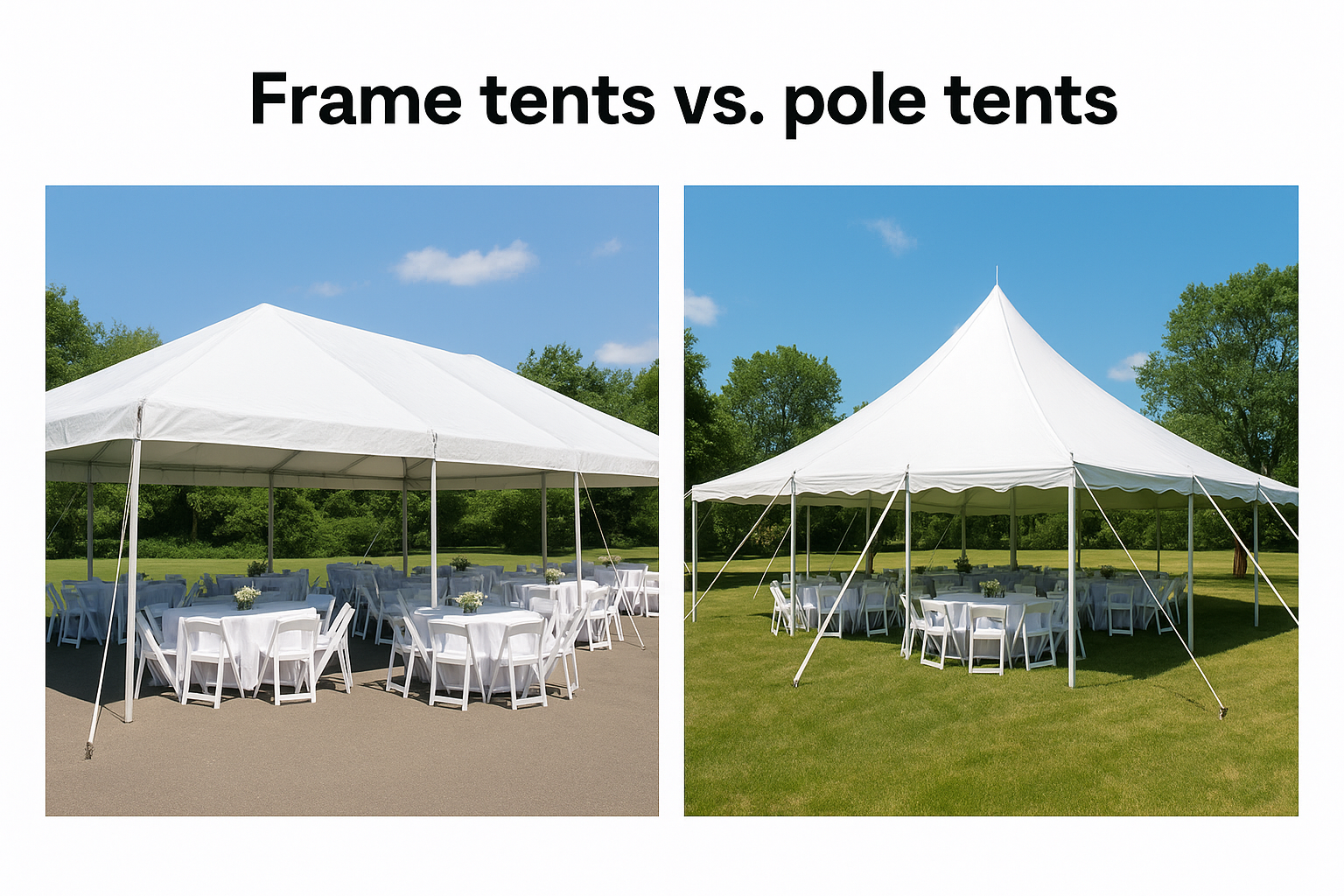
| Feature | Frame Tent | Pole Tent |
|---|---|---|
| Center poles | None | 1-3, depending on length |
| Setup surface | Grass, concrete, pavement | Grass or soft ground only |
| Interior clearance | Fully open | Interrupted by poles |
| Wind rating | Higher | Lower |
| Typical cost | Higher | Lower |
If your event sits on a driveway, parking lot, or patio, a frame tent is often the only option since pole tents need stakes driven into soil. Weddings on grass with a flexible budget tend to lean pole tent for the savings.
How to decide between buying and renting
Most first-time buyers assume renting is always cheaper, but that math flips once you factor in frequency. Renting a 20×40 tent typically runs $400 to $900 for a weekend, delivery and setup included, which makes sense if you’re hosting one wedding or a single company picnic. Buying makes sense once you know you’ll use the structure three or more times a year, since a mid-grade frame tent purchase pays for itself after two or three rental cycles.
When renting wins
Skip ownership if storage space is tight, if you don’t have a crew trained to set up a 40-foot span safely, or if you’re testing whether a 20×40 footprint even fits your venue. Rental companies also carry insurance and handle permits in most municipalities, which removes liability you’d otherwise absorb as an owner.
When buying wins
Ownership starts making sense for churches, schools, sports leagues, and marketing teams running recurring activations throughout the season.
If you’re renting the same tent size more than twice a year, buying almost always costs less over 24 months.
Before deciding, tally your annual event count, available storage, and whether you have staff who can handle setup and teardown without hiring outside labor.
How many guests fit under a 20×40 tent
Capacity numbers swing wildly depending on what you put inside the tent. A 20×40 tent holds 800 square feet, and that space shrinks fast once you add a dance floor, buffet line, or DJ booth. Round tables seating eight guests each need roughly 100 square feet per table once you account for chairs and walking room, so plan on 60 to 80 seated guests if you’re running a full dinner service with a dance floor. Drop the dance floor and buffet, and you can push that number closer to 100.
Guest capacity by layout
Use this table as a starting point, then adjust based on your caterer’s table sizes and whether you’re adding a stage or bar.
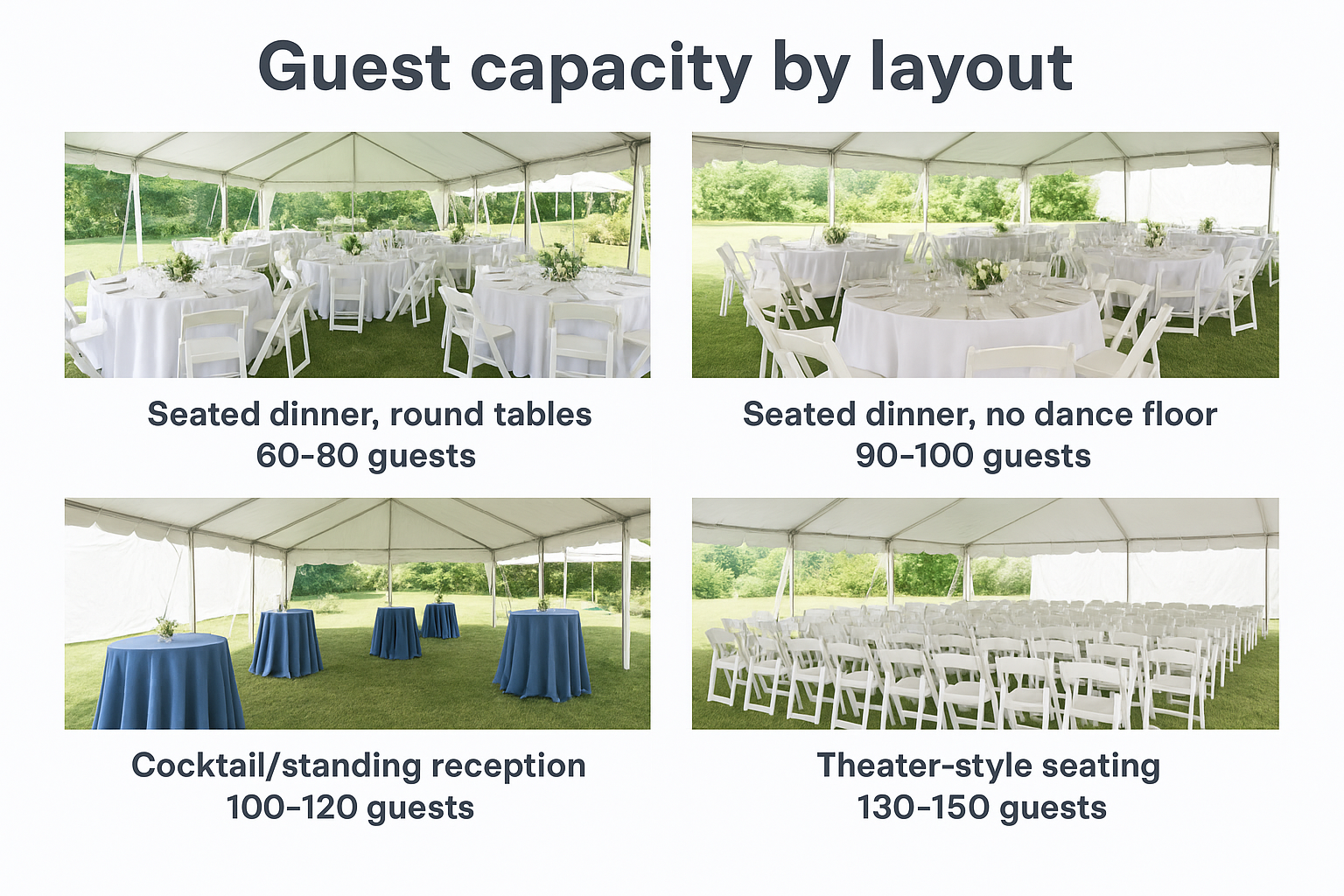
| Layout Style | Approx. Capacity |
|---|---|
| Seated dinner, round tables | 60-80 guests |
| Seated dinner, no dance floor | 90-100 guests |
| Cocktail/standing reception | 100-120 guests |
| Theater-style seating | 130-150 guests |
A 20×40 tent seats up to 100 guests for dinner, but cocktail-style events can push past 120.
Don’t forget the extras
Every buffet table, gift table, or lounge grouping eats into your headcount. Factor those in before you finalize your guest list, not after the invitations go out.
What a 20×40 tent costs to buy or rent
Pricing for a 20×40 tent varies more than most first-time renters expect. Regional labor rates, tent style, and add-ons like lighting or sidewalls all move the final number, so treat any quote as a starting point rather than a fixed price.
Rental price ranges
Expect rental costs to fall into a fairly predictable range depending on tent style and what’s included:
| Tent Type | Weekend Rental Cost | What’s Usually Included |
|---|---|---|
| Pole tent | $400-$600 | Delivery, setup, teardown |
| Frame tent | $600-$900 | Delivery, setup, teardown |
| Frame tent + sidewalls/lighting | $800-$1,200 | Full setup, lighting, walls |
Grass sites with easy access usually land at the low end. Hard surfaces, tight delivery windows, or multi-day rentals push costs higher.
Expect to pay $400 to $1,200 to rent a 20×40 tent for a weekend, depending on style and extras.
Purchase price ranges
Owning a 20×40 frame tent typically costs $4,000 to $8,000 for a mid-grade commercial unit, while pole tents run $2,500 to $5,000. Custom branding, printed panels, or reinforced framing for higher wind loads add to that baseline. Sports leagues and event companies running frequent activations often recoup that investment within two seasons once they stop paying rental fees each time. Factor in a storage trailer or dry space too, since a 40-foot tent doesn’t fold down small.
Key features to compare before you commit
Not every 20×40 tent on the market is built the same, and the differences show up fast once wind picks up or rain hits mid-reception. Before you sign a rental agreement or place a purchase order, walk through fabric weight, hardware quality, and how the vendor handles wind rating claims.
Fabric and frame quality
Look for flame-retardant, UV-treated vinyl rated at 13 to 18 ounces per square yard. Anything lighter tends to sag or tear after a season of sun exposure. On the frame side, aluminum beats steel for weight and rust resistance, and welded joints hold up longer than bolted ones under repeated setup and teardown.
A tent is only as good as its weakest connection point, so check the hardware before you check the price tag.
Wind and weather ratings
Ask any vendor for a documented wind rating before you commit, not a verbal estimate. The National Weather Service publishes wind speed thresholds that help you judge whether a tent’s rated capacity matches your region’s typical event-season conditions.
Sidewalls, lighting, and add-ons
- Clear or solid sidewalls for weather protection
- String lighting or chandeliers for evening events
- Flooring or subfloor for uneven ground
- Anchoring kits rated for your surface type
Compare these line items across quotes since they often explain price gaps that otherwise look confusing.
Finding the right 20×40 tent for your event
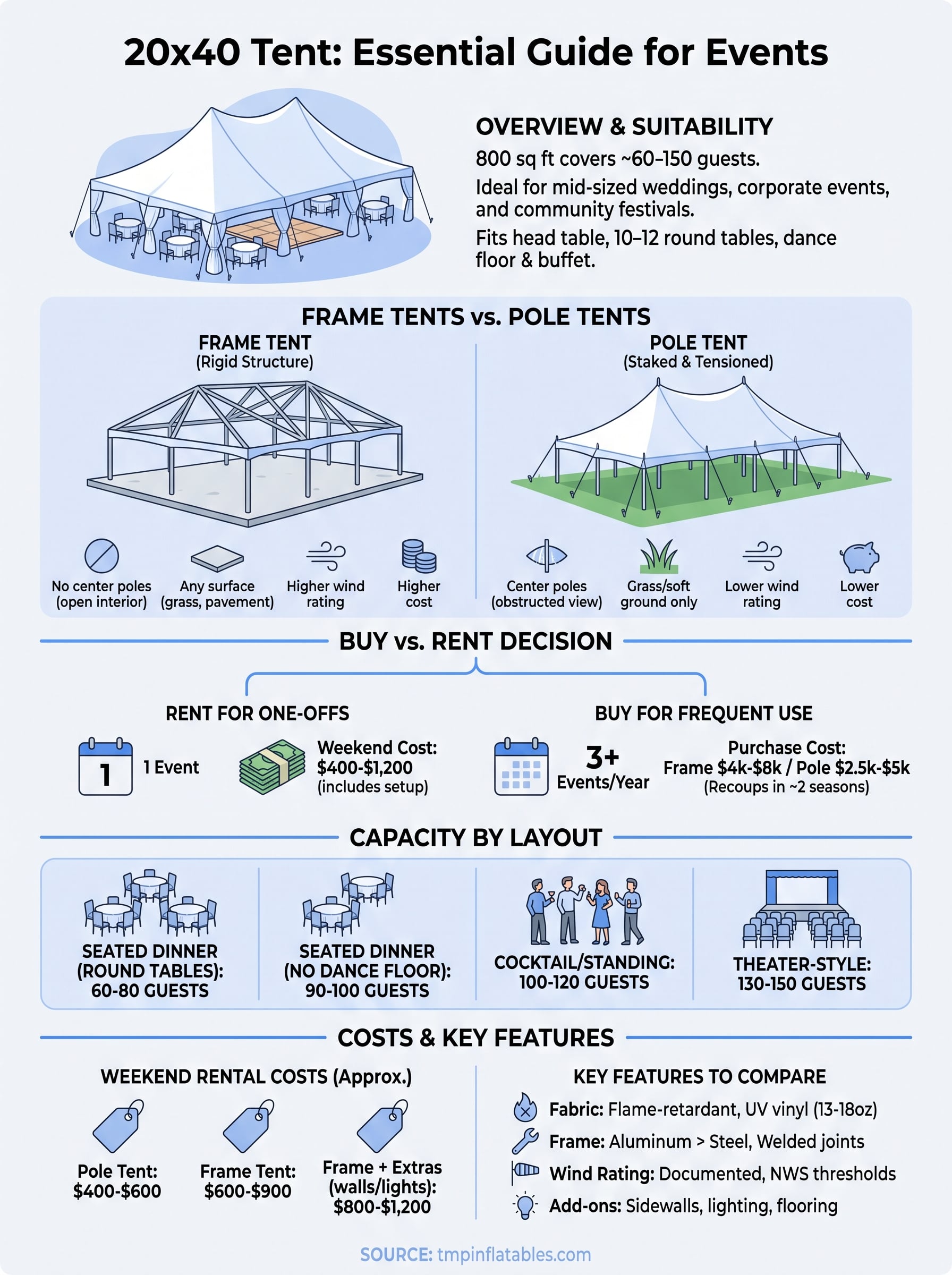
A 20×40 tent gives you enough room to run a full wedding reception or a company event without overpaying for space you won’t use. Match the tent style to your ground surface, confirm capacity against your actual guest list and layout, and get wind ratings in writing before you sign anything. Rent if this is a one-off event, buy if you’re hosting three or more events a year, and always compare fabric weight and frame quality across quotes rather than just the bottom-line price.
Once you’ve nailed down the size and layout that fit your event, the next step is getting a real quote instead of guessing at costs. If your event needs more than a standard tent, TMP Inflatables designs custom structures built for brand visibility and durability. Get a quote and tell us what you’re planning, we’ll help you figure out what actually fits.
