
You’ve got the venue, the concept, and the audience, but your budget has a gap that only a corporate partner can fill. Figuring out how to get sponsors for an event isn’t just about sending cold emails and hoping for the best. It requires a clear strategy, a compelling value proposition, and a sponsorship package that makes saying “yes” the obvious choice.
Here’s what most guides won’t tell you: sponsors don’t write checks for exposure alone. They invest in events that deliver memorable brand experiences, the kind built with eye-catching activations like custom branded arches, inflatable product replicas, and immersive experiential setups. At TMP Inflatables, we’ve spent over 20 years helping event teams and agencies create exactly those moments, so we’ve seen firsthand what makes a sponsorship pitch land versus what gets ignored.
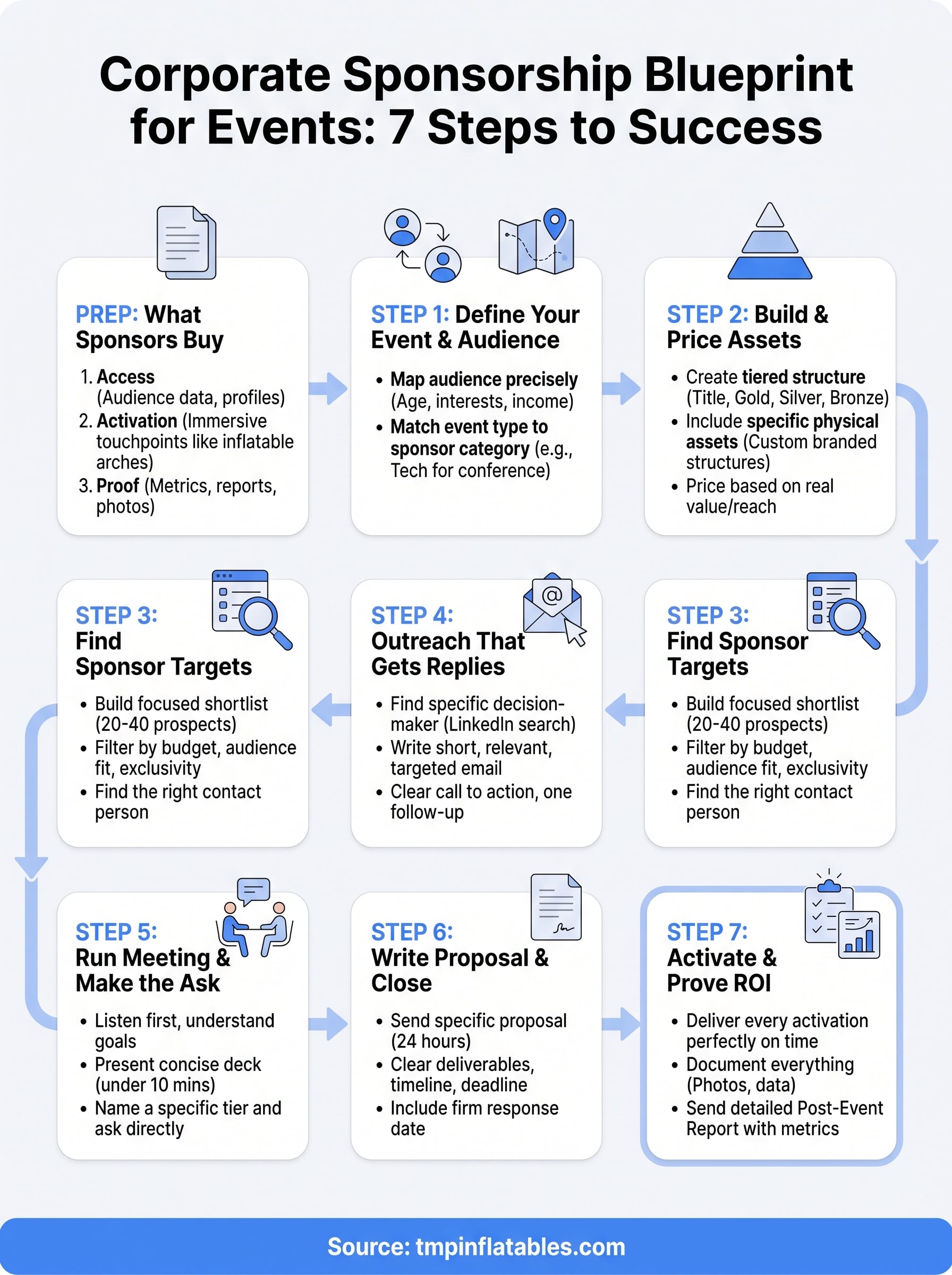
The how to get sponsors for an event guide breaks down the full process, from identifying the right companies to approach, to building a pitch deck that speaks their language, to structuring tiered sponsorship packages that give sponsors real reasons to commit. Whether you’re planning a community festival, a product launch, or a large-scale trade show, you’ll walk away with a repeatable blueprint and actionable steps you can put to work immediately.
How to get sponsors for an event, What sponsors actually buy and what you need ready
Before you start cold-calling marketing directors, you need to understand the fundamental premise that changes everything about how to get sponsors for an event: sponsors are not donating money. They are buying something specific from you, and your job is to package and price that thing in a way that makes clear business sense to them. Brand awareness is part of it, but it’s rarely the whole picture. The moment you treat sponsorship as a transaction rather than a favor, your pitch quality will jump significantly.
How to get sponsors for an event, Sponsors buy access, activation, and proof
The three things sponsors actually pay for are access to your audience, the ability to activate their brand in a memorable way at your event, and evidence that the investment delivered results. A company that sells outdoor equipment doesn’t want a logo on a banner in the corner. They want their product featured in a hands-on demo zone, their branding on the main stage arch, and a post-event report showing how many people engaged with their activation.
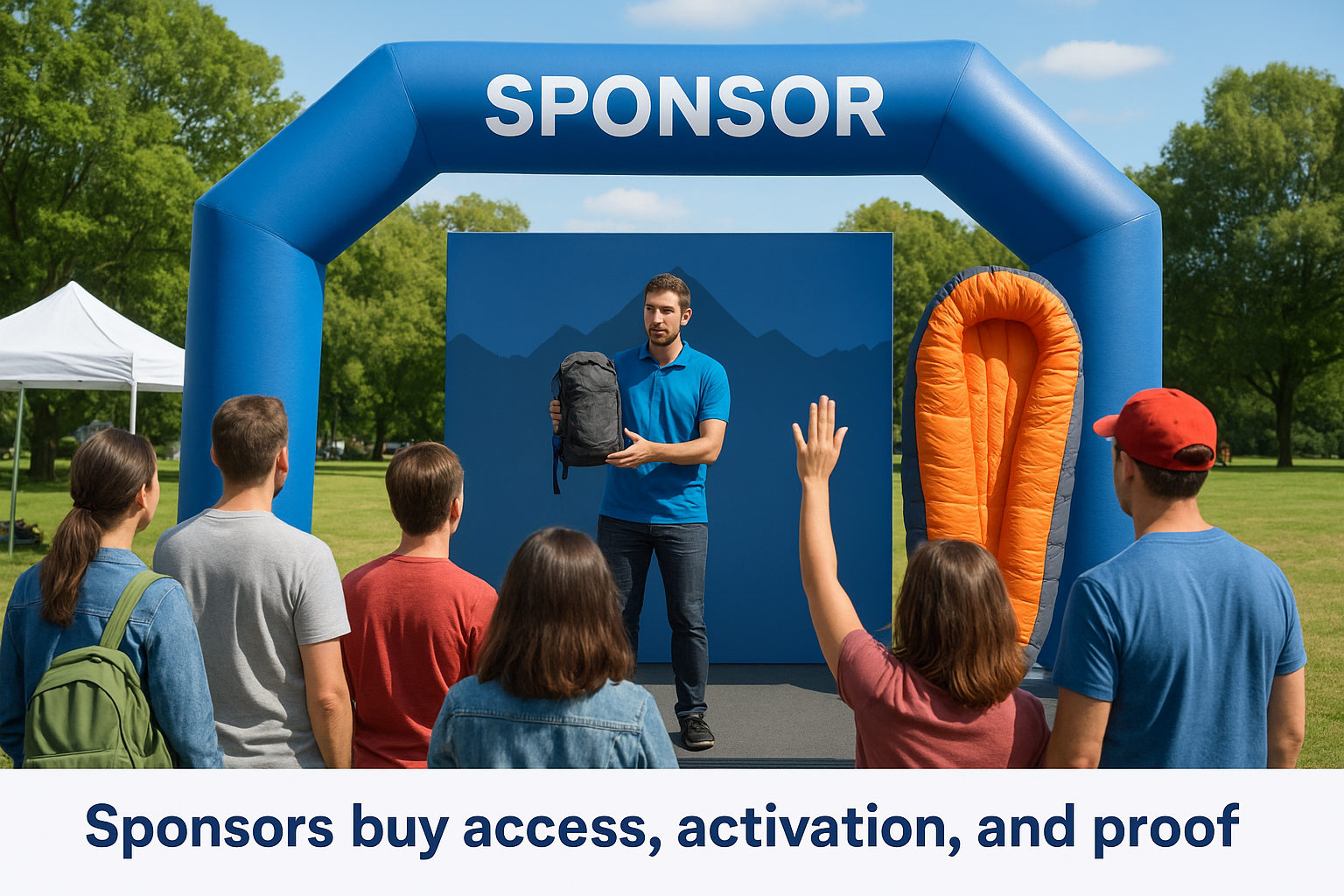
Sponsors treat your event as a marketing channel, so the clearer you make the “what’s in it for them,” the easier the yes becomes.
Experiential touchpoints matter more than passive logo placements. Custom inflatable structures, branded arches at entry points, and inflatable product replicas inside your activation zone give sponsors a physical, immersive presence that attendees actually notice and remember. That’s the kind of tangible brand moment sponsors will pay a premium for, because it produces photos, real social content, and genuine audience interaction that a flat banner simply cannot.
How to get sponsors for an event, The five things you must have ready before outreach
You cannot build a credible pitch without specific, verifiable information about your event. If you approach a sponsor without this foundation in place, you’ll get a polite no or no response at all. Gather these five core assets before any outreach begins:
- Audience profile: Age range, professional background, geographic location, income level, and estimated attendance numbers. The more specific, the better.
- Event overview: Date, location, format, duration, and any confirmed speakers, performers, or anchor brands already attached.
- Media and reach data: Social media following, email list size, paid advertising reach, press coverage, and any streaming or broadcast plans.
- Past event metrics (if applicable): Attendance from previous editions, sponsor retention rates, photos, and post-event reports that show what you delivered.
- Sponsorship tier structure: At minimum, a rough breakdown of what you’re offering at different investment levels. Detailed pricing comes later, but you need a working framework ready.
How to get sponsors for an event, Why your data matters more than your pitch deck
Most event organizers put too much energy into designing a beautiful sponsorship deck and too little into gathering the underlying data that makes that deck worth reading. A sponsor’s marketing team will run their own internal numbers to justify the spend to leadership. If you hand them solid, specific audience data, you’re doing part of their job for them, which makes the internal approval process faster and smoother.
Your goal at this stage is to become the kind of opportunity that a sponsor can actually defend in a budget meeting. That means concrete attendance numbers, clear activation deliverables, and a realistic picture of what their brand presence will look like on the ground. Build this foundation first. Everything else in the sponsorship process, your outreach, your meetings, your proposal, sits directly on top of it, and it will only be as strong as what’s underneath.
Step 1: How to get sponsors for an event, Define your event, audience, and sponsor fit
Before you reach out to a single company, you need to know exactly what you’re selling and to whom. The most common mistake event organizers make when learning how to get sponsors for an event is approaching sponsors before they’ve clearly defined their own audience. Without a sharp picture of who attends your event and why, you cannot make a credible case for why a brand should invest in it.
Map your audience with precision
Your attendee profile is the foundation of every sponsorship conversation you’ll have. Sponsors evaluate your audience the same way an advertiser evaluates a media buy: they want to know if your crowd includes the people they’re trying to reach. General descriptions like “young professionals” or “families” don’t cut it. You need specific demographic and psychographic data that a sponsor’s marketing team can take into a budget meeting and defend.
The more precisely you describe your audience, the easier you make it for sponsors to justify the spend internally.
Build your audience profile using the following data points:
- Age range and gender breakdown based on past registrations or ticket sales
- Professional background or industry if your event has a business or trade component
- Household income or purchasing power relevant to sponsors selling premium products
- Geographic concentration such as local, regional, or national attendees
- Interests and behaviors tied directly to your event theme (fitness, food, tech, outdoor activities)
Match your event type to sponsor categories
Different event formats attract different sponsor categories, and understanding that match saves you from wasting time pitching the wrong companies. A fitness expo draws health, nutrition, and apparel brands. A community music festival draws beverage companies, lifestyle brands, and local retailers. A corporate trade show draws B2B software providers and professional services firms.
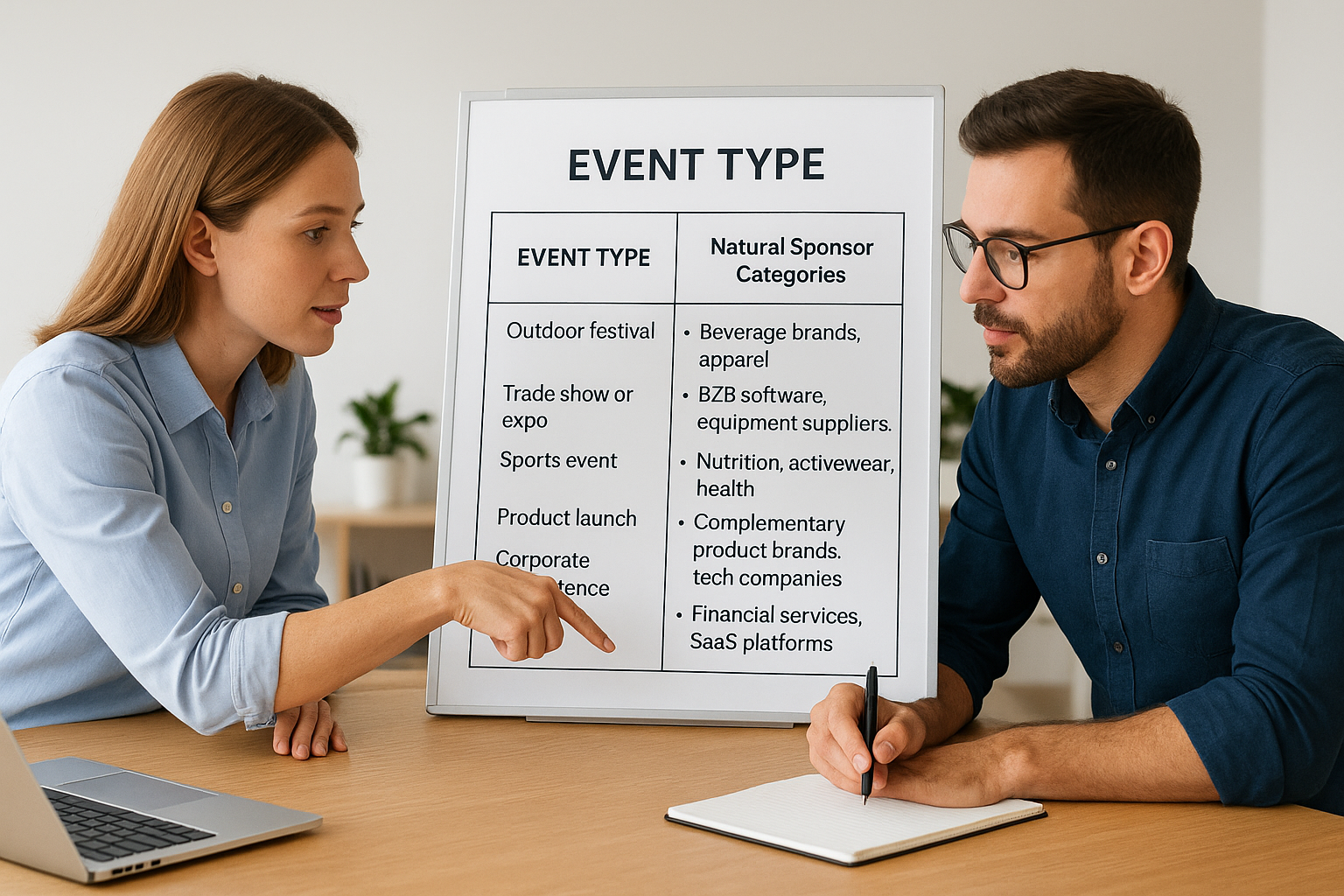
Use this quick alignment framework to identify your natural sponsor pool:
| Event Type | Natural Sponsor Categories |
|---|---|
| Outdoor festival | Beverage brands, apparel, lifestyle products |
| Trade show or expo | B2B software, equipment suppliers, professional services |
| Sports event | Nutrition, activewear, health and wellness brands |
| Product launch | Complementary product brands, tech companies, media partners |
| Corporate conference | Financial services, SaaS platforms, hospitality brands |
Once you identify your strongest sponsor categories, narrow your list to brands that already market to your audience through other channels. If a brand buys ads on the platforms your attendees use, they already consider that demographic worth spending money on. That’s your opening.
Step 2. How to get sponsors for an event, Build sponsorship assets and price them
Once you know your audience and your event’s sponsor fit, the next task is building the actual assets a sponsor pays for and putting a dollar value on each one. This step is where many organizers stall because pricing feels arbitrary. It doesn’t have to be. You’re packaging specific, deliverable touchpoints, and the price should reflect the real market value of the audience exposure and brand activation you’re providing.
Create your sponsorship tier structure
Most successful sponsorship programs use a tiered naming system (Title, Gold, Silver, Bronze is the most common) that groups deliverables by investment level. Each tier should represent a meaningfully different level of brand presence, not just a smaller logo. The goal is to give sponsors clear choices rather than a one-size-fits-all package they’ll try to negotiate down to nothing.
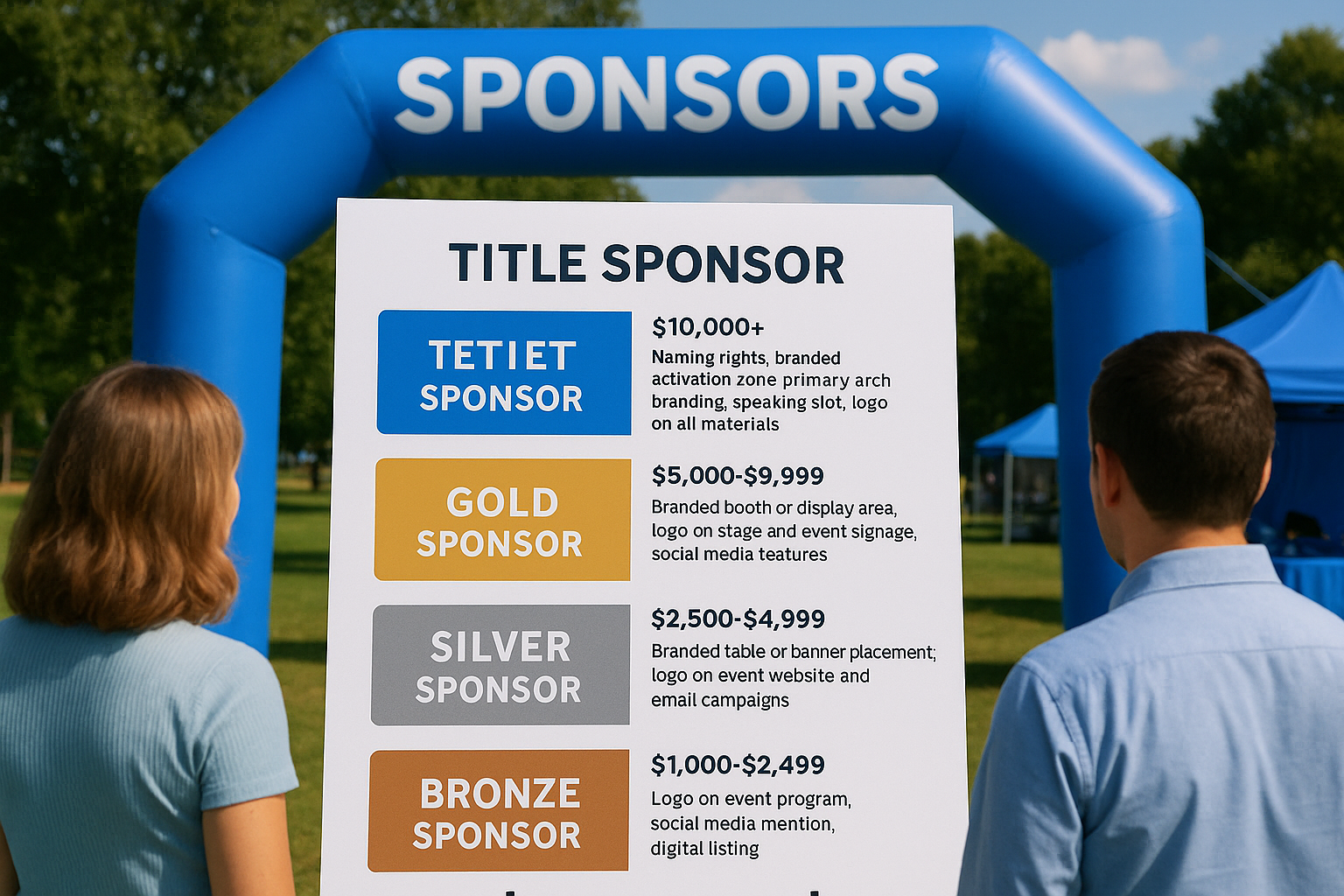
The more concrete and specific each tier’s deliverables are, the easier it is for a sponsor to justify the investment internally.
Here is a practical tier structure you can adapt directly to your event:
| Tier | Investment Range | Key Deliverables |
|---|---|---|
| Title Sponsor | $10,000+ | Naming rights, branded activation zone, primary arch branding, speaking slot, logo on all materials |
| Gold Sponsor | $5,000-$9,999 | Branded booth or display area, logo on stage and event signage, social media features |
| Silver Sponsor | $2,500-$4,999 | Branded table or banner placement, logo on event website and email campaigns |
| Bronze Sponsor | $1,000-$2,499 | Logo on event program, social media mention, digital listing |
Physical activation assets like custom branded inflatable arches or inflatable product replicas at your event entrance or main stage belong in your top tiers. Sponsors at higher investment levels should get immersive, three-dimensional brand presence that photographs well and drives real engagement, which is exactly the kind of experience that helps you answer the question of how to get sponsors for an event back year after year.
How to get sponsors for an event, Price each tier based on real value
Your pricing should start with your audience size and reach, not with a number you pulled from another event’s deck. Calculate the cost per impression across your total estimated touchpoints: attendee count, social reach, email list size, and any live stream or press coverage. Then cross-reference what similar audience demographics cost in traditional media channels like digital display or out-of-home advertising to anchor your pricing in the real world.
Set your Title Sponsor price at roughly 10 to 15 percent of your total event budget as a baseline, then build your lower tiers proportionally. Adjust up if you’re offering exclusive category rights, like being the only beverage brand allowed on-site, because that exclusivity has measurable value and sponsors will pay for it.
Step 3. How to get sponsors for an event, Find sponsor targets and build a shortlist
Knowing how to get sponsors for an event depends heavily on targeting the right companies from the start. Pitching 200 random brands wastes your time and weakens your credibility. Instead, build a focused shortlist of 20 to 40 companies that already show a demonstrated interest in your audience and event category. Quality of targets matters far more than volume of outreach.
How to get sponsors for an event Start with brands already in your orbit
The easiest sponsors to land are companies that already market to your exact audience through other channels. Start by looking at who advertises in the media your attendees consume: podcasts, newsletters, social accounts, and publications that overlap with your event’s theme. If a brand is already paying to reach your crowd somewhere else, they’ve already made the internal decision that your demographic is worth marketing dollars.
The fastest path to a yes is targeting brands that already know your audience is worth their budget.
Pull your initial list from three sources: brands that sponsored similar events in your region or industry over the past two years, companies that advertise heavily during the season your event runs, and local or regional businesses with a clear geographic stake in your attendee base. Industry associations, event programs, and social media pages from comparable events are all useful places to spot repeat sponsors.
Filter your list using four criteria
Not every brand on your initial list belongs on your final shortlist. Run each candidate through four quick qualification filters before you invest any real outreach effort. This step cuts your list to the companies most likely to say yes and keeps your pitch energy focused where it counts.
Use these four filters to qualify each prospect:
- Budget fit: Does the company’s size and marketing spend align with your sponsorship tiers? Regional chains and national consumer brands typically have event sponsorship budgets; early-stage startups often do not.
- Audience alignment: Does the brand’s customer profile match your attendee demographics in age, income, interest, or geography?
- Category exclusivity potential: Can you offer this brand exclusivity in their product category, meaning no direct competitor on-site? That detail adds measurable value to your pitch.
- Decision-maker accessibility: Can you find a specific marketing manager, brand partnerships lead, or sponsorship coordinator at the company using LinkedIn or the company’s website?
Once your shortlist clears all four filters, log each prospect in a tracking spreadsheet with columns for company name, contact name, contact email, tier fit, outreach date, and follow-up status. Keeping this organized from day one prevents strong leads from going cold while you’re busy managing other parts of your event.
Step 4. How to get sponsors for an event Reach out with a pitch that gets replies
Your shortlist is ready, and now the real work of how to get sponsors for an event begins: getting a real human being to respond to your outreach. Most organizers lose deals at this exact stage because they send the same generic message to every contact. Sponsors receive pitches constantly, and a templated, vague email goes straight to the trash. Your job is to make your outreach feel specific, relevant, and worth two minutes of their time.
Find the right contact before you write a word
Sending your pitch to a generic info@ address almost guarantees silence. Before you write a single line, identify the specific person who holds the budget and the authority to say yes. Look for titles like Brand Partnerships Manager, Sponsorship Lead, or Director of Marketing on LinkedIn. A quick search using the company name plus “sponsorships” or “event marketing” usually surfaces the right person within a few minutes.
Getting your pitch in front of the wrong person means it will never reach the right one, so invest the time to find the name before you hit send.
Once you have a name, verify their email format using the company’s press page or by checking how other employees at that same company list their contact info publicly. A simple search for “[firstname] [lastname] [companyname] email” often does the job without any extra tools.
How to get sponsors for an event, Write an outreach email that earns a response
Your first email should be short, specific, and focused entirely on the sponsor’s interest, not on how great your event is. Keep it under 150 words. Mention a concrete reason their brand fits your audience, state what you’re offering at a high level, and close with one clear next step. Avoid attachments in the first message; they trigger spam filters and add friction before you’ve even earned their attention.
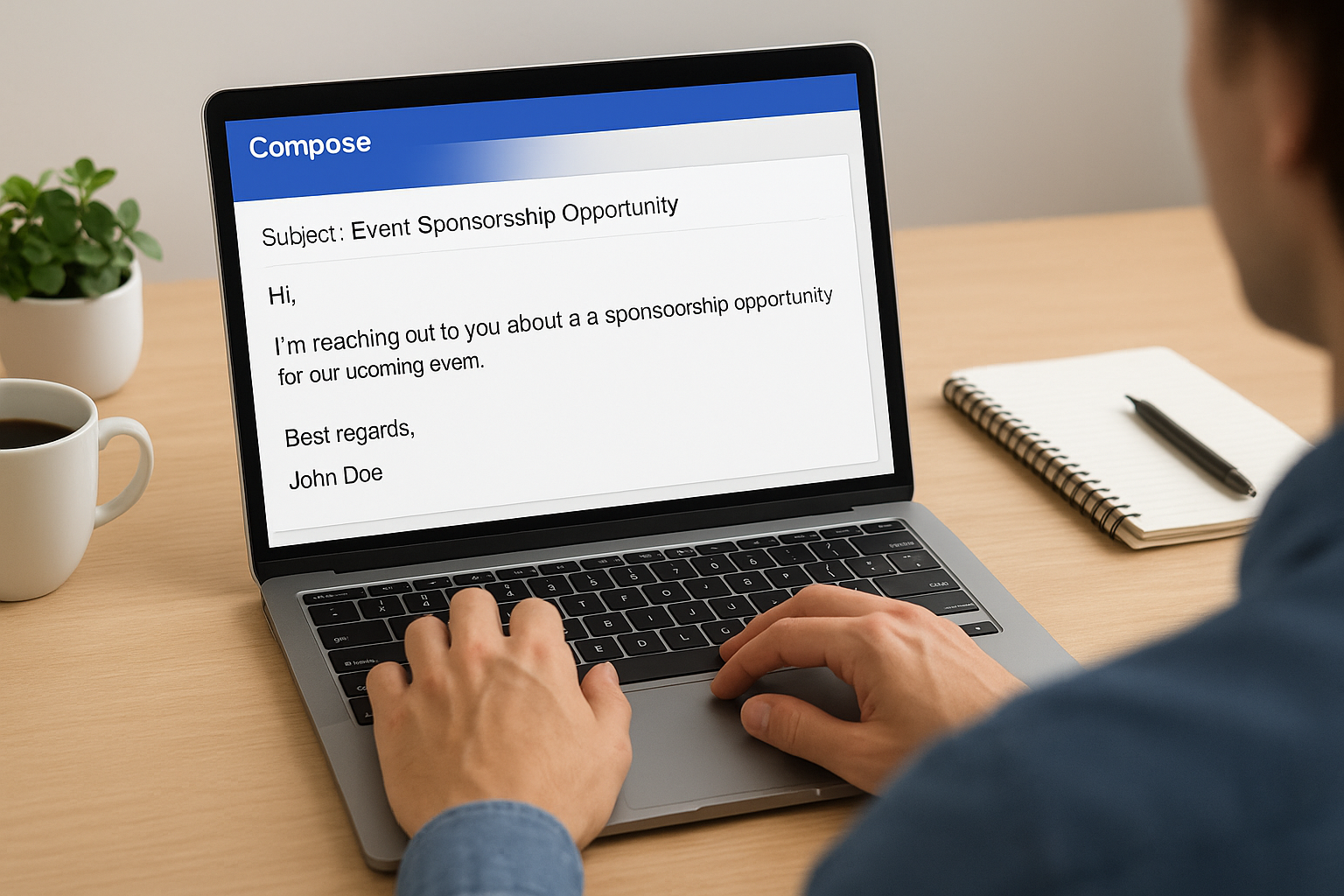
Use this template as your starting point:
Subject: [Event Name] Sponsorship Opportunity for [Brand Name]
Hi [First Name],
[Event Name] brings together [X attendees] [describe audience]
in [city] on [date].
Your brand reaches a similar crowd through [reference a channel
or campaign they run], which is why I think this is worth
15 minutes of your time.
We have a [Tier Name] opportunity that includes [2-3 specific
deliverables] and fits brands investing in [relevant category].
Would you be open to a quick call this week or next?
[Your Name]
[Title]
[Phone/Email]
Follow up once, five business days after your first email if you hear nothing. Keep that follow-up to two sentences: reference your original message and ask if they’d like the full sponsorship deck sent over.
Step 5. How to get sponsors for an event Run the sponsor meeting and make the ask
Getting a sponsor on a call is a real milestone in the process of how to get sponsors for an event, but the meeting itself is where deals are won or lost. Most organizers show up and present their deck from slide one to the last slide without ever pausing to hear what the sponsor actually cares about. That approach turns a conversation into a monologue, and monologues rarely close deals. Your job in the meeting is to listen first, present second, and ask clearly at the end.
Prepare before the call
Walk into every sponsor meeting with three things ready: your audience data summary, a printed or screen-ready version of your sponsorship tiers, and a list of five questions you’ll use to surface the sponsor’s actual goals before you pitch anything. Research the company’s recent campaigns, any events they’ve sponsored in the past 12 months, and their current marketing focus. Showing that you’ve done the homework signals that you’re a serious, professional partner rather than someone who mass-blasted a generic pitch.
Come in ready to ask questions like these early in the call:
- What does a successful event partnership look like for your team this year?
- Which audience segment are you most focused on reaching right now?
- Have you sponsored events before, and what worked or didn’t work from those?
How to get sponsors for an event Control the conversation structure
Open the meeting by setting a clear agenda in the first 60 seconds: you’ll spend the first half learning about their goals, then walk through the specific opportunities you’ve built that fit those goals. This structure keeps the meeting from drifting and positions your deck as a direct response to what they told you, not a canned presentation.
When sponsors feel heard before the pitch starts, they’re far more likely to stay engaged through the ask.
Keep your deck walkthrough under 10 minutes. Hit your audience size, your top-tier activation deliverables, and one or two concrete examples of what their brand presence would look like on the ground, whether that’s a branded inflatable arch at the event entrance or a custom activation zone tied to their product.
Make the ask and handle pushback
End the meeting by naming a specific tier and asking directly: “Based on what you’ve shared, I think the Gold level fits best. Does that feel like the right range for your team to evaluate?” A direct ask respects their time. If they push back on price, ask what budget range they’re working within before you offer a discount, so you can adjust the deliverables instead of just cutting the number.
Step 6. How to get sponsors for an event Write a proposal and close the agreement
After a productive sponsor meeting, the deal still isn’t done. Your next move in how to get sponsors for an event is turning the verbal interest from that call into a written proposal the sponsor can share internally and sign off on. Send the proposal within 24 hours of the meeting while your conversation is still fresh in their mind. Waiting longer lets competing priorities crowd you out.
Structure your proposal document
Your proposal should be clean, specific, and short enough to read in under five minutes. Sponsors don’t need a lengthy document. They need a clear statement of what they’re buying, what it costs, and what you’re both committing to. Use this structure as your template:
[Event Name] Sponsorship Proposal
Prepared for: [Company Name]
Date: [Date]
Contact: [Your Name, Title, Email, Phone]
EVENT OVERVIEW
Event name, date, location, format, expected attendance.
YOUR AUDIENCE
Key demographics, geographic reach, media and social reach.
SPONSORSHIP TIER: [Tier Name]
Investment: $[Amount]
Deliverables:
- [Specific deliverable 1]
- [Specific deliverable 2]
- [Specific deliverable 3]
- [Specific deliverable 4]
Category exclusivity: [Yes/No + details]
TIMELINE
Agreement signed by: [Date]
Initial payment due: [Date]
Final assets due from sponsor: [Date]
Event date: [Date]
Post-event report delivered: [Date]
NEXT STEPS
To confirm your sponsorship, please sign below and return
this document with your first payment by [Date].
Agreed by:
[Sponsor Name, Title, Date]
[Your Name, Title, Date]
Keep your deliverables list specific and countable, not vague. “Logo on all event signage” is weak. “Logo on 4 branded inflatable arches at event entrances, 1 main stage banner, and all printed programs” is something a sponsor can picture and defend to their team.
How to get sponsors for an event Close with a clear deadline and next step
Every proposal needs a firm response date built into the document itself. Without a deadline, follow-up becomes awkward and sponsors drift toward inaction. Set a signing deadline at least two weeks before your production cutoff so you have room to build or order any physical activation assets they’re paying for.
A proposal without a deadline is just a wish list.
If you don’t hear back by the deadline, send one direct follow-up email asking for a yes, a no, or a revised timeline. Clarity at this stage protects your event planning schedule and tells you whether to move on to the next prospect on your shortlist.
Step 7. How to get sponsors for an event Activate the sponsorship and prove ROI
Closing the agreement is not the finish line when you’re learning how to get sponsors for an event. The real work of building a long-term sponsor relationship happens on the ground at your event and in the report you send afterward. Sponsors who feel their investment was handled with care and delivered measurable, documented results become repeat partners. Sponsors who feel ignored after signing move on to other events next year.
How to get sponsors for an event Deliver every promised activation on time
Your signed proposal is a commitment, and every deliverable listed in it needs to show up exactly as described, without the sponsor having to chase you for updates. Assign one person on your team to own each sponsor’s activation from asset collection through setup. That person confirms brand files are received at least two weeks out, coordinates placement of physical assets like branded inflatable arches or activation structures, and does a walkthrough on event day to verify everything is in place before doors open.
A sponsor who shows up to your event and finds their logo missing or their activation zone undersized will not return, regardless of how good your pitch was.
Use this pre-event activation checklist to keep each sponsorship on track:
- Brand assets received (logo files, color specs, copy) by the agreed deadline
- Physical production confirmed and delivered (arches, banners, inflatable structures, signage)
- On-site staff briefed on sponsor placement and activation details
- Sponsor contact notified of setup time and day-of point of contact
- Photo and video coverage plan confirmed for the activation zone
How to get sponsors for an event Build and send a post-event report
Your post-event report is the single most powerful tool you have for renewing sponsors and attracting new ones. Send it within five business days of your event closing. The report should quantify every deliverable you promised and add context that helps the sponsor defend the spend internally with their leadership team.
Structure your report using these core components:
POST-EVENT SPONSORSHIP REPORT
Prepared for: [Company Name]
Event: [Event Name] | Date: [Date]
ATTENDANCE AND REACH
Total attendees: [X]
Social impressions from event content: [X]
Email recap reach: [X]
ACTIVATION HIGHLIGHTS
- [Deliverable 1]: [What was delivered + photo reference]
- [Deliverable 2]: [What was delivered + photo reference]
MEDIA AND PRESS
[Any coverage featuring sponsor brand or activation]
PHOTOS
[3 to 5 high-resolution images of sponsor's branded presence]
NEXT STEPS
We'd love to discuss [Event Name] [Next Year] sponsorship
opportunities. I'll follow up by [specific date].
Great tip how to get sponsors for an event ensure, a strong post-event report does not just confirm what happened. It gives the sponsor’s marketing team ready-made evidence they can drop directly into their internal performance reviews, which makes renewing with you the path of least resistance.
How to get sponsors for an event Wrap it up and move forward
Learning how to get sponsors for an event comes down to one repeatable process: know your audience, build assets worth buying, target the right companies, and deliver on every promise you make. Each step in this how to get sponsors for an event blueprint builds directly on the last, so skipping ahead or cutting corners on your audience data or proposal structure costs you deals that could have closed.
The sponsors you bring on this year become your foundation for next year. Treat every activation as proof of what you can deliver, and your post-event report becomes your strongest sales tool for the next pitch cycle. Brands remember partners who made them look good. Looking for more inspo? Checkout this awesome additional guide
If you’re building an activation zone that sponsors actually want to put their name on, custom inflatable structures and branded arches give you the physical presence that photographs well and drives real engagement. Request a quote for your event inflatables and build something worth sponsoring.
