
Most marketing ideas sound great on paper but fall flat where it matters most, in front of real people. The gap between a clever concept and an actual crowd reaction is where brands either win attention or waste budget. If you’re planning events, product launches, or brand activations in 2026, the pressure to stand out hasn’t let up. Audiences scroll past digital ads in milliseconds, so physical, tangible, impossible-to-ignore marketing tactics are pulling ahead.
At TMP Inflatables, we’ve spent over 20 years helping brands and agencies create exactly that kind of impact from their marketing ideas. From custom inflatable arches and giant product replicas to branded tents and inflatable costumes, we design and produce promotional products that stop people mid-step. We’ve seen firsthand which strategies generate buzz and which ones collect dust, and that experience shapes every recommendation in this list.
Below, you’ll find 11 proven, high-impact marketing ideas that work for events, experiential campaigns, and brand visibility in 2026. Some are budget-friendly. Some are bold. All of these marketing ideas are actionable and built around one principle: getting your brand noticed by real people, not just algorithms. https://www.youtube.com/embed/awQSFtc5dwA
1. Marketing Ideas Use custom inflatables as the hero asset
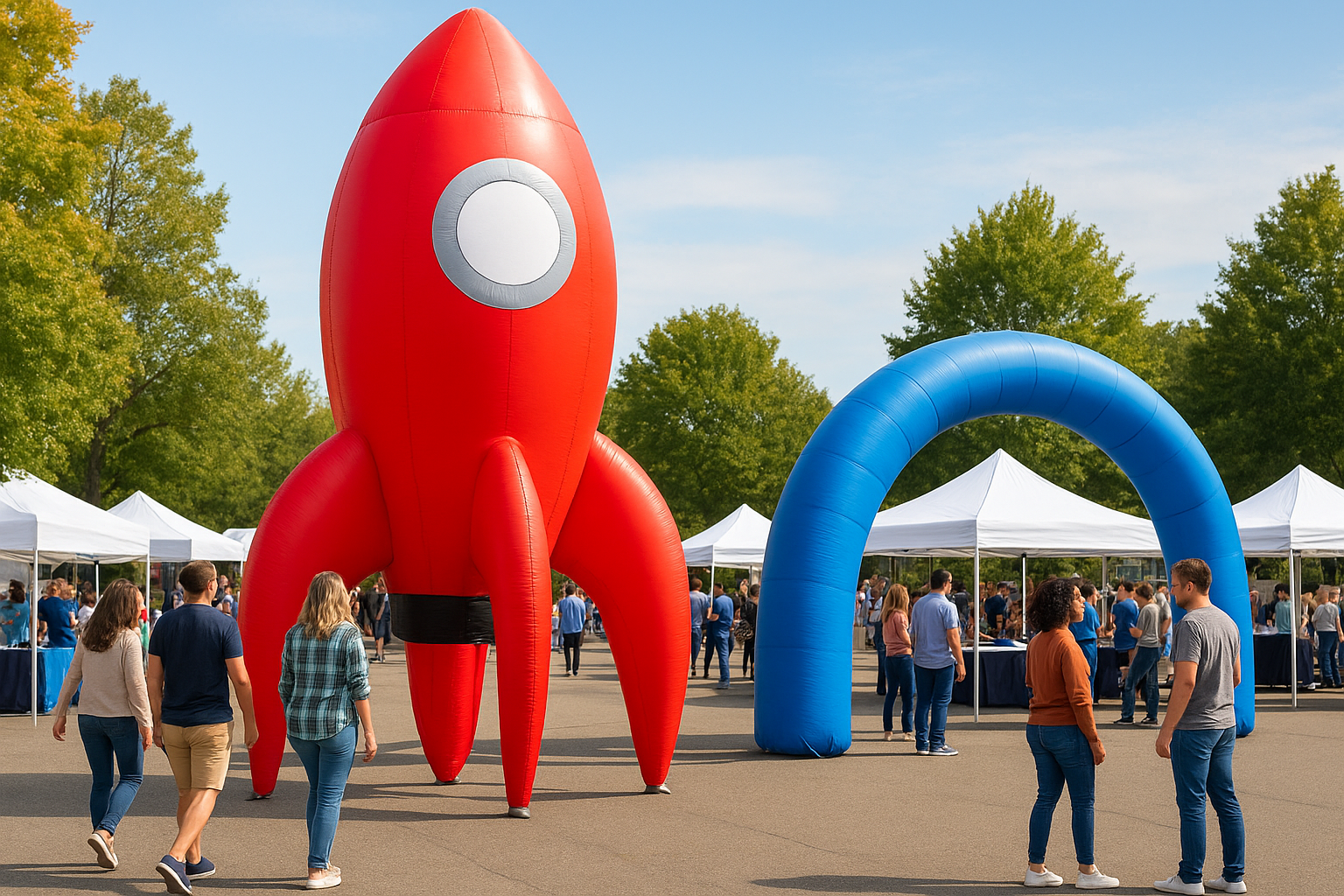
At a packed trade show or outdoor festival, your booth competes against dozens of others for the same eyeballs. A custom inflatable changes that math immediately. It draws attention from 50 feet away, creates a visual anchor for your brand, and gives people a reason to stop, look, and walk toward you rather than past you.
What makes this work at busy events
Inflatables work because scale and color cut through noise in a way that banners and printed backdrops simply cannot. A 15-foot inflatable replica of your product or a towering branded arch signals presence. People photograph it, point at it, and share it. Your brand becomes a landmark in the venue, which means attendees direct each other to your space without any prompting from your team.
At a busy event, becoming a landmark delivers more value than any paid media placement.
Where to use it: tents, arches, replicas, costumes
The format you choose depends on your goal. Each option serves a distinct purpose:
- Inflatable tents: branded environments for demos, VIP conversations, or product sampling
- Arches: high-traffic placements at race start lines, venue entrances, or brand checkpoints
- Giant product replicas: ideal for launches and photo moments that earn organic shares
- Inflatable costumes and mascots: let your team move through crowds and bring the brand directly to attendees
Planning and production timeline
Custom inflatables typically require 4 to 6 weeks of production time from approved artwork to delivery. Rush production is possible but adds cost. Give yourself at least 2 weeks before your event deadline to approve final proofs, arrange shipping, and run a test inflation at the venue or a similar space. Skipping the test inflation is the most common mistake brands make with this type of marketing idea, and it always shows.
Budget range and what drives cost
Entry-level custom inflatables start around $500 to $1,500 for simpler arch or tube designs. Complex product replicas or full branded tents can run $3,000 to $15,000 or more depending on size, detail, and material weight. The main cost drivers are size, structural complexity, and the number of color placements in your print.
Mistakes to avoid with safety and logistics
Always confirm anchor and tethering requirements with your venue before production finishes. Outdoor inflatables need ground stakes or weighted bases, and wind limits vary by product type. Never deploy a blower-dependent inflatable without a dedicated power source and a backup plan if the blower fails mid-event.
2. Marketing Ideas Build a modular pop-up booth you can reuse
A one-time booth build that you toss after a single event drains your budget fast. Modular pop-up systems give you a reusable, reconfigurable frame that adapts to different floor plans, venues, and brand campaigns without starting from scratch each time. This marketing idea pays for itself across multiple activations.
How a modular kit cuts cost across events
The core savings come from reusing structural components while swapping only the branded panels, graphics, or fabric skins between events. A kit you buy once can serve 10 events with minor updates between each. Per-event costs drop sharply after the second or third deployment, which matters when you’re running a full season of activations.
The more events you plan, the stronger the case for a modular system over single-use builds.
What to include in a “ready in 60 minutes” setup
Your kit should cover the essential structural and branding components without requiring a crew of six to assemble:
- Lightweight aluminum or pop-up frame with tool-free connections
- Branded fabric panels or tension displays that attach in minutes
- Folding counter or product display surface
- Built-in lighting with battery or standard outlet options
Shipping and storage considerations
Rolling travel cases and compression bags reduce shipping costs and protect components between events. Label every component clearly so your team can pack and unpack without a reference manual on-site.
Store your kit in a dry, climate-controlled space to extend the life of fabric prints and prevent frame corrosion between activations.
Budget range and staffing needs
Entry-level modular booth kits run $800 to $2,500, with premium systems reaching $5,000 or more for larger footprints. Most setups need two people and roughly 45 to 60 minutes to assemble without specialized tools.
3. Marketing Ideas Create a photo moment people want to share
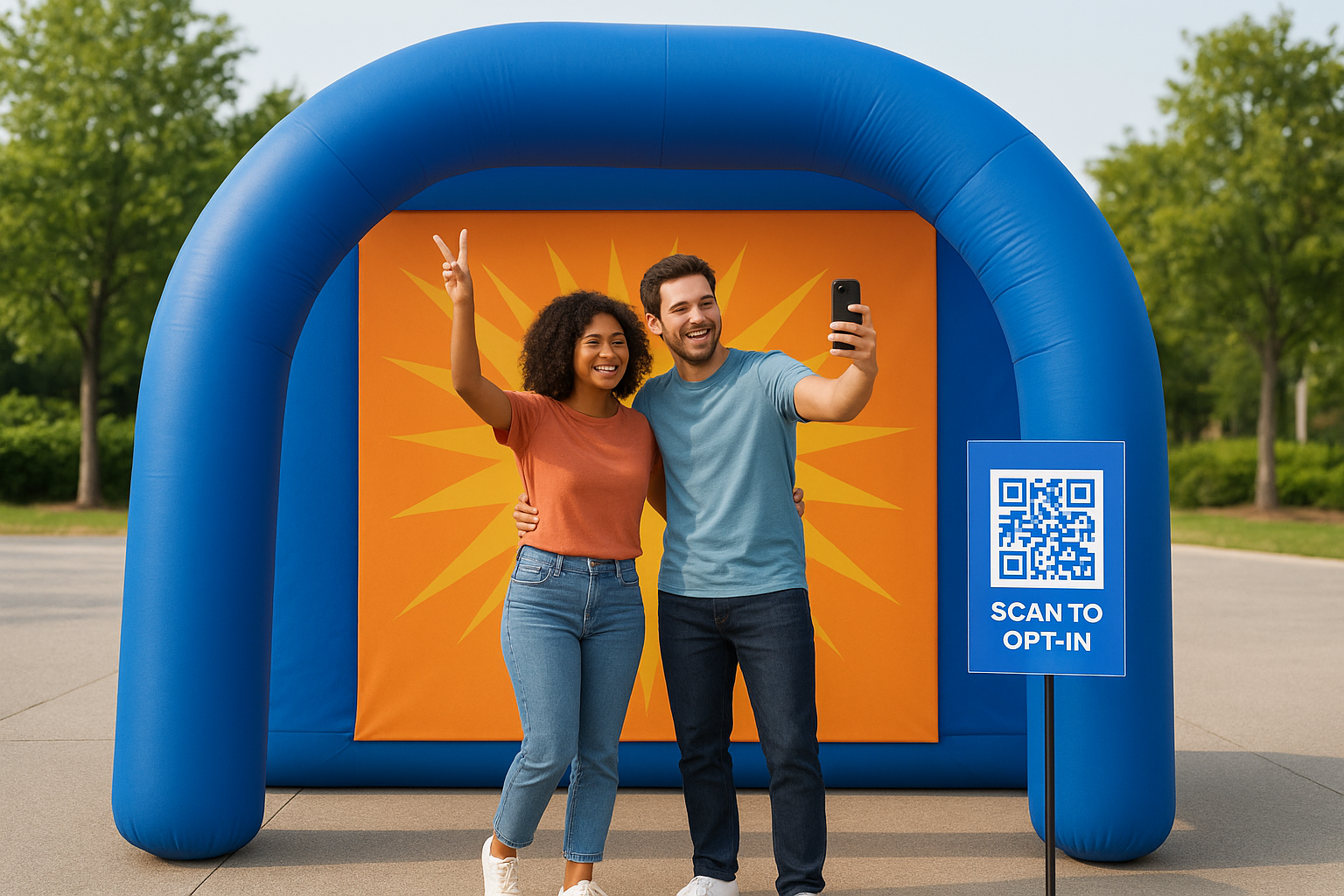
A well-designed photo moment is one of the most cost-effective marketing ideas you can run at a live event. When attendees photograph your branded installation and post it themselves, your brand reaches their networks without any additional spend. The key is designing a setup compelling enough that people actively seek it out rather than stumble past it.
What makes a photo moment share-worthy in 2026
Oversized props, bold color contrasts, and interactive elements drive the most shares in 2026. Attendees want to feel like they’re part of something visually interesting, not just standing in front of a logo. A giant inflatable product replica or a branded arch with strong visual depth gives people a natural frame that photographs well with a phone.
The best photo moments do the marketing work for you long after the event ends.
Placement, lighting, and line management
Position your photo moment near high foot traffic areas like entrances or main corridors, not tucked in a back corner. Natural lighting works best outdoors, but ring lights or LED panels make a significant difference in indoor venues where ambient light is flat. If lines form, that is a good sign, but assign one staff member to keep the flow moving.
How to capture opt-ins without killing the vibe
Place a simple QR code at eye level near the photo spot that links to a short opt-in form. Offer attendees their photo digitally in exchange for an email. Keep the form to two fields maximum so the experience stays fast and frictionless.
Budget range and production options
Basic branded photo moment setups start around $300 to $800 using printed backdrops and simple props. Adding a custom inflatable element pushes the budget to $1,500 or more but dramatically increases the visual impact and sharing rate.
4. Marketing Ideas Run an on-site game with prizes and a leaderboard
Adding a competitive game to your event activation turns passive attendees into active participants. A visible leaderboard creates urgency, repeat visits, and natural conversations around your booth. Among all the marketing ideas in this list, a well-run game consistently drives the longest booth dwell times.
Game formats that work for B2B and B2C Marketing Ideas
Simple skill-based games outperform complex digital setups in most event environments. Spin-to-win wheels, ring toss, trivia terminals, and digital reaction challenges work across both B2B and B2C audiences because the rules are immediately obvious. Keep rounds under 90 seconds so your team can cycle through a high volume of players throughout the day.
A game that takes too long to explain loses the crowd before it even starts.
How to connect gameplay to your offer
Tie your game directly to a product feature or brand message rather than running a generic experience. If you sell software, use a trivia game built around industry stats. If you sell physical products, let attendees test them as part of the challenge. The connection between gameplay and your offer makes the experience memorable and reinforces what you actually do.
Rules, fairness, and crowd control
Post your rules at eye level in large, readable text so players self-qualify before reaching your staff. Assign one dedicated team member to manage the line and enforce round limits during peak hours.
Budget range and prize strategy for Marketing Ideas
Game setups range from $200 for a simple wheel to $2,000 for a branded digital kiosk. Prize budgets of $500 to $1,500 cover most activations when you mix high-value hero prizes with lower-cost volume prizes.
5. Marketing Ideas Host micro-sessions and live demos every hour
Scheduled micro-sessions turn your booth into a destination rather than a static display. When attendees know a live demo runs at the top of every hour, they plan their time around your space. This is one of the most underused marketing ideas at trade shows, yet it consistently builds credibility and extends dwell time.
Why short sessions beat long presentations for Marketing Ideas
Attention at live events runs in short windows, typically 5 to 10 minutes before distraction pulls people away. Keeping your demo to 8 to 12 minutes lets you repeat it throughout the day and multiply your total reach without adding staff.
For these marketing ideas The more often you run your demo, the more total impressions you earn without any added media cost.
Running shorter sessions creates natural exit points, so your presenter can field two or three questions per slot without falling behind schedule.
How to structure a repeatable demo loop
Build a fixed script around a clear problem, solution, and proof sequence that any trained team member can deliver consistently. Anchor every session to one core outcome so attendees leave with a clear takeaway:
- Open with the problem (2 minutes)
- Show the solution (5 to 7 minutes)
- Close with one clear next step (1 to 2 minutes)
Audio, staging, and staffing checklist
A small PA speaker, a raised surface, and one dedicated presenter cover the basics for most setups. Assign a second staff member to manage crowd flow during peak session times. Run through this checklist before event day:
- Confirm venue audio rules and power access
- Test audio levels 30 minutes before doors open
- Brief your backup presenter on the script
Budget range and speaker lineup ideas
Basic audio and staging runs $200 to $800 for most events. Your own product specialists make the strongest presenters because they handle live questions with genuine depth.
6. Marketing Ideas Deploy a street team to drive foot traffic
A street team is one of the most direct marketing ideas for converting foot traffic into booth visits. Trained team members positioned outside your immediate footprint intercept attendees before they commit to a path through the venue, giving you a first-touch advantage over every competitor waiting passively in their booth.
Marketing Ideas that turn “walk-bys” into booth visits
Your street team’s single job is to create curiosity and give people a reason to walk over. Hand them a simple opening line tied to a benefit, not a product pitch. A personal invitation lands better than a flyer because it creates a moment of human connection that moves people off their current path.
The street team is your brand in motion, so brief them as carefully as you would a keynote presenter.
Scripts, routes, and tracking what worked
Give each team member one clear script with two or three natural variations so the conversation sounds genuine, not rehearsed. Assign specific zones or traffic corridors to avoid overlap. Track conversions by asking booth staff to log how each visitor heard about you so you can measure which routes delivered the highest yield.
Permits and venue rules to confirm early
Most venues restrict where and how you can approach attendees, so review the exhibitor handbook and confirm with show management at least two weeks before the event. Violating these rules risks removal from the floor.
Budget range and staffing model
Street team costs run $400 to $1,200 per day depending on headcount. A team of two to four people covers most mid-size event floors without spreading too thin.
7. Marketing Ideas Co-market with nearby brands at the event
Partnering with a complementary brand at the same event stretches your budget and doubles your reach without doubling your spend. Among all the marketing ideas in this list, co-marketing is one of the most underused, largely because brands wait too long to initiate the conversation.
How to pick the right partner fast for these marketing ideas
Look for brands that share your audience but don’t compete with your offer. A beverage company next to a fitness brand, or a tech firm next to a productivity consultancy, creates natural overlap without conflict. Reach out to exhibitors at least three weeks before the event so you have enough runway to align on a concept.
Avoid partners with mismatched brand positioning. If your brand runs premium and theirs runs discount, the combined experience sends a mixed signal to attendees.
Marketing Ideas Co-branded activations that feel natural
The best co-branded activations feel like one unified experience, not two separate booths sharing a wall. A shared photo moment, a joint demo, or a combined prize draw gives attendees a reason to engage with both brands in one visit.
When both brands contribute something distinct, the activation feels more valuable than anything either could build alone.
Splitting costs, leads, and responsibilities
Put your cost-sharing agreement in writing before the event, covering who owns which leads, how shared contacts get distributed, and who handles logistics. A simple one-page document prevents disputes after a successful activation.
Budget range and coordination timeline for these marketing ideas
Co-marketed activations typically cut individual costs by 30 to 50 percent depending on how evenly you split production and staffing. Allow at least two weeks for coordination to align on visuals, messaging, and setup responsibilities before event day.
8. Marketing Ideas Capture leads with QR and SMS, then follow up
QR codes and SMS opt-ins are among the most practical marketing ideas for events because they work without slowing foot traffic. Place a clearly labeled QR code at every touchpoint in your space, from your front counter to your photo moment, so marketing ideas that capture contact details stays frictionless for both your team and your visitors.
The simplest opt-in flow that still converts
A two-step flow works best: the attendee scans the QR code, lands on a short form with a name and one contact field, and submits. Keep the form to two fields maximum so the entire process takes under 30 seconds and doesn’t break the energy of your activation.
What to offer: instant value, not generic freebies
Give attendees something useful immediately after they opt in, such as a digital resource, an exclusive discount, or early access to a product launch. Generic prize draws produce low-quality leads because people submit for the reward, not because they’re interested in your offer.
The strength of your opt-in offer directly determines the quality of leads you walk away with.
Follow-up sequence timing for event leads
Send your first follow-up message within 24 hours while the event is still fresh in the attendee’s mind. A second touchpoint three to five days later maintains visibility without overwhelming the contact. Reference the event by name so the message reads as personal rather than automated.
Budget range and tools you can use for marketing ideas
Basic QR and SMS capture setups cost $0 to $100 per month at the entry level. Most teams need nothing more than a free QR generator and a simple form builder to run a clean, converting lead capture flow.
9. Marketing Ideas Book creators for live content from your booth
Bringing a content creator to your activation is one of the most scalable marketing ideas you can execute at a live event. A creator captures real-time footage that extends your brand’s reach far beyond the attendees physically present in the room.
How to brief creators so content matches the brand
Send a one-page brief before the event covering your brand voice, key messages, and content restrictions. A clear brief prevents off-brand content from publishing before your team can review it. Include these items at minimum:
- Three core brand messages to feature
- Off-limits topics or competitor names to avoid
- Required logo placement or product visibility guidelines
Content shot list: reels, interviews, walkthroughs
Give your creator a prioritized shot list so they maximize every hour on-site. Four formats consistently perform well: product walkthroughs at 30 to 60 seconds, quick attendee reaction interviews, behind-the-scenes setup reels, and live interaction clips at your inflatable display or photo moment.
A shot list keeps the creator focused and ensures you walk away with usable content, not just raw footage.
Usage rights and approvals without slowing down
Agree on usage rights in writing before the event, specifying where, how, and how long you can publish the content. Build a two to four hour same-day approval window into your agreement so content goes live while the event is still active and trending.
Budget range and creator selection criteria
Micro-creators with 10,000 to 50,000 engaged followers typically cost $300 to $1,500 per event day and often deliver stronger engagement rates than larger accounts. Prioritize creators whose existing audience matches your target buyer, not just those with the highest follower count.
10. Marketing Ideas Offer limited-edition swag that earns attention
Swag is one of the most underrated marketing ideas in the event toolkit, but only when it’s something people actually want to keep. Most branded giveaways end up discarded by the time attendees reach the parking lot. The difference between forgettable giveaways and swag that travels all day comes down to usefulness, quality, and perceived scarcity.
What makes swag “worth carrying” all day
Useful, well-made items travel further than cheap branded merchandise. Focus on items that solve an immediate problem at the event itself so your brand stays visible throughout the day:
- High-quality tote bags that hold all the materials attendees collect
- Portable chargers for phones running low after hours on the floor
- Insulated water bottles branded with your logo and a simple, clean design
Scarcity tactics that don’t feel gimmicky
Limiting your best items to specific actions drives engagement without feeling manipulative. Tie access to a booth visit, a demo watch, or a QR code scan rather than distributing items randomly. Telling attendees “we only have 75 of these today” creates urgency that moves people off the fence and into your space quickly.
Scarcity only works when the item genuinely deserves it, so start with quality.
Practical fulfillment: sizes, stock, and restocks
Order 20 percent more stock than you expect to need and split your inventory across morning and afternoon to pace distribution. For apparel items, stock more medium and large sizes than you anticipate needing.
Budget range and sourcing options
Quality swag typically runs $5 to $25 per unit depending on the item type. A total budget of $1,500 to $3,000 covers most mid-size event activations comfortably.
11. Marketing Ideas Stage a permitted stunt that makes the news
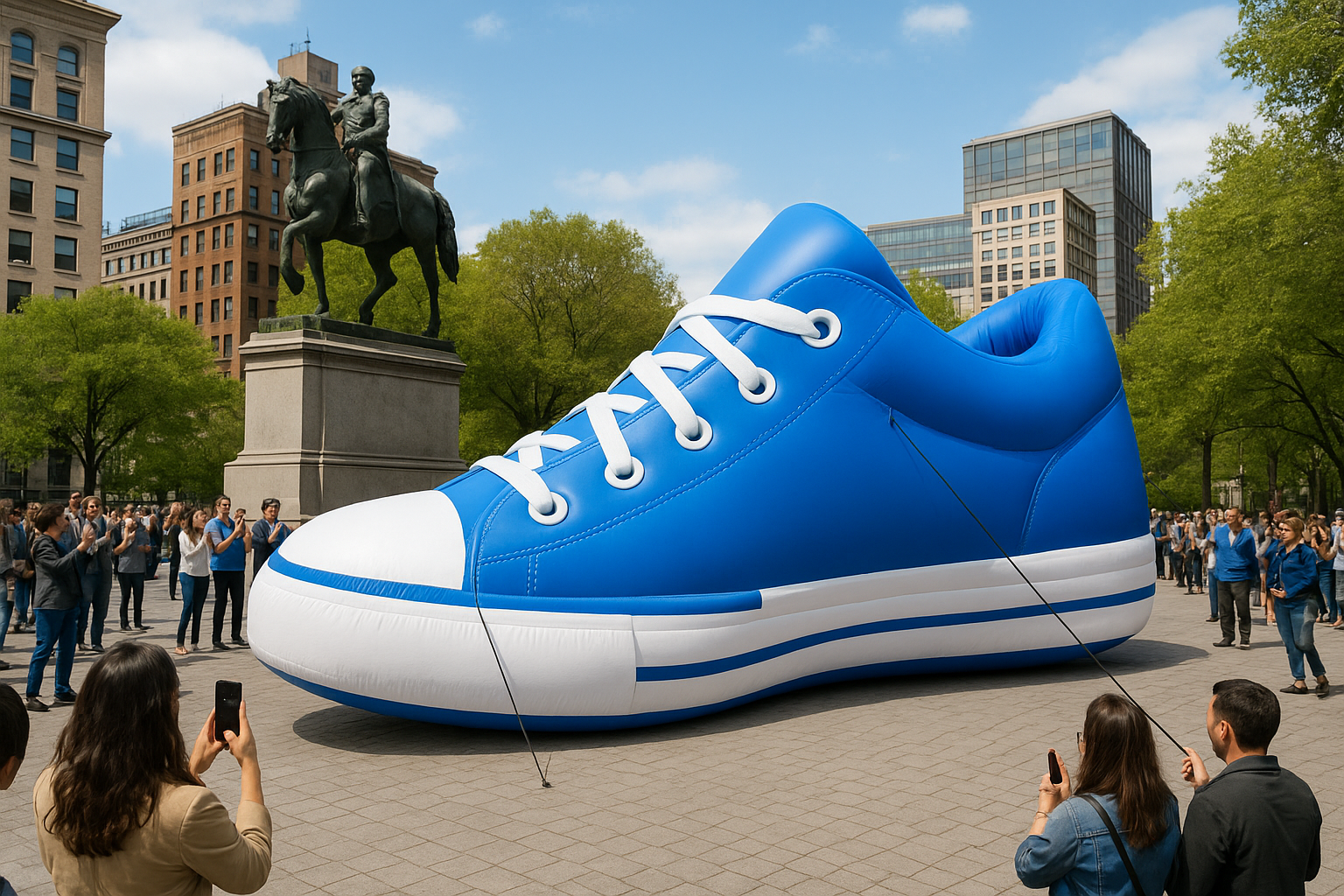
A well-executed stunt is one of the boldest marketing ideas available to event brands, and it earns attention that no paid placement can replicate. A stunt gives journalists, creators, and attendees a story worth telling, which means your brand travels far beyond the people who witnessed it in person.
What qualifies as a stunt that stays on-brand
Your stunt needs a direct connection to what your brand actually does or stands for. Deploying a giant inflatable version of your flagship product in a high-visibility public space works because it is visually undeniable and immediately links the spectacle to your business. Avoid spectacle for its own sake since an off-brand moment confuses audiences and dilutes the story you want told.
A stunt that makes the news but confuses people about what you sell has wasted its budget.
Safety, permissions, and risk management
Confirm all required permits with local authorities and venue management at least four weeks before your event. Public space stunts often require liability insurance, noise ordinances review, and crowd management plans. Assign a dedicated safety lead on-site who has authority to pause or cancel the activation if conditions change.
How to seed the story before the event
Brief two or three local journalists or creators a week in advance with a short preview, no full reveal, so they have a reason to show up. Send a one-paragraph pitch that states what, where, and why it matters.
Budget range and production needs
Stunt budgets typically run $2,000 to $10,000 depending on scale and custom fabrication. Inflatable stunts sit at the lower end of that range while delivering outsized visual impact.
What to do next for these Marketing Ideas
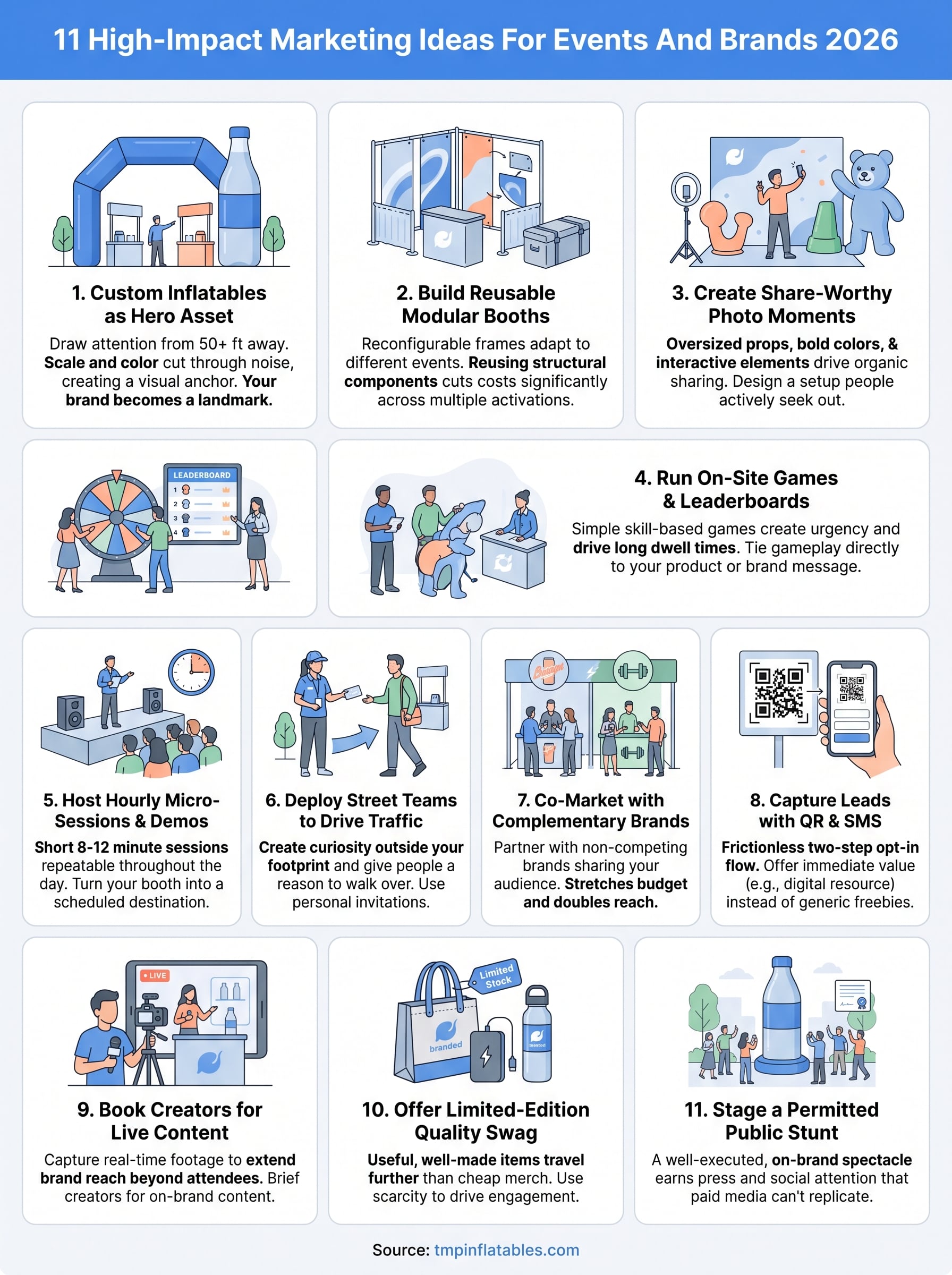
You now have 11 marketing ideas built for real events, real crowds, and real budgets. Each tactic on this list works independently, but the brands that generate the most attention typically combine two or three into a single cohesive activation. Start by identifying your primary goal, whether that is lead capture, brand visibility, or press coverage, and then select the tactics that move that needle most directly.
If a custom inflatable fits in your marketing ideas, the earlier you start the production process, the more options you have on size, detail, and design complexity. A rushed timeline limits your choices and adds unnecessary cost. Give yourself at least six weeks from brief to event day. TMP Inflatables has been designing and producing custom inflatables for over 20 years, and we can walk you through every option from arches and tents to full product replicas and mascots. Request a custom inflatable quote and tell us what you are planning.