
Every business exists somewhere specific, a city, a neighborhood, a stretch of highway where foot traffic actually matters. Local advertising is how you turn that physical presence into paying customers, and it remains one of the most cost-effective ways to grow a business that serves a defined area.
But “local” doesn’t mean small-scale or low-impact. A branded inflatable arch at a road race, a misting tent outside your storefront on a 95°F afternoon, a giant product replica visible from two blocks away, these are all forms of local advertising that stop people mid-step. At TMP Inflatables, we’ve spent over 20 years helping businesses and agencies create exactly that kind of physical, impossible-to-ignore presence at events, grand openings, and retail locations across North America.
This article breaks down what local advertising actually means, walks through proven tactics that work right now in 2026, and covers the platforms and tools worth your budget. Whether you’re planning a product launch or simply trying to drive more foot traffic to a single location, you’ll leave with a clear plan to make it happen.
What local advertising is and is not
Local advertising is the practice of directing your marketing efforts toward a specific geographic audience rather than a broad national or global one. The goal is straightforward: reach the people who can actually walk through your door, attend your event, or drive to your location. Unlike brand awareness campaigns built to blanket an entire country, local advertising concentrates your budget where it produces the most direct return.
Local advertising works because proximity matters. A customer two miles from your store is far more valuable to target than someone two thousand miles away who will never visit.
What local advertising actually looks like
Local advertising spans both digital and physical channels, and that range is wider than most people expect. On the digital side, Google Local Services Ads, geotargeted social media campaigns, and locally optimized search listings all qualify because they reach people based on where they are or where they intend to go. On the physical side, outdoor signage, event activations, branded inflatables, direct mail, and in-store promotions meet people in the specific places they already spend time.
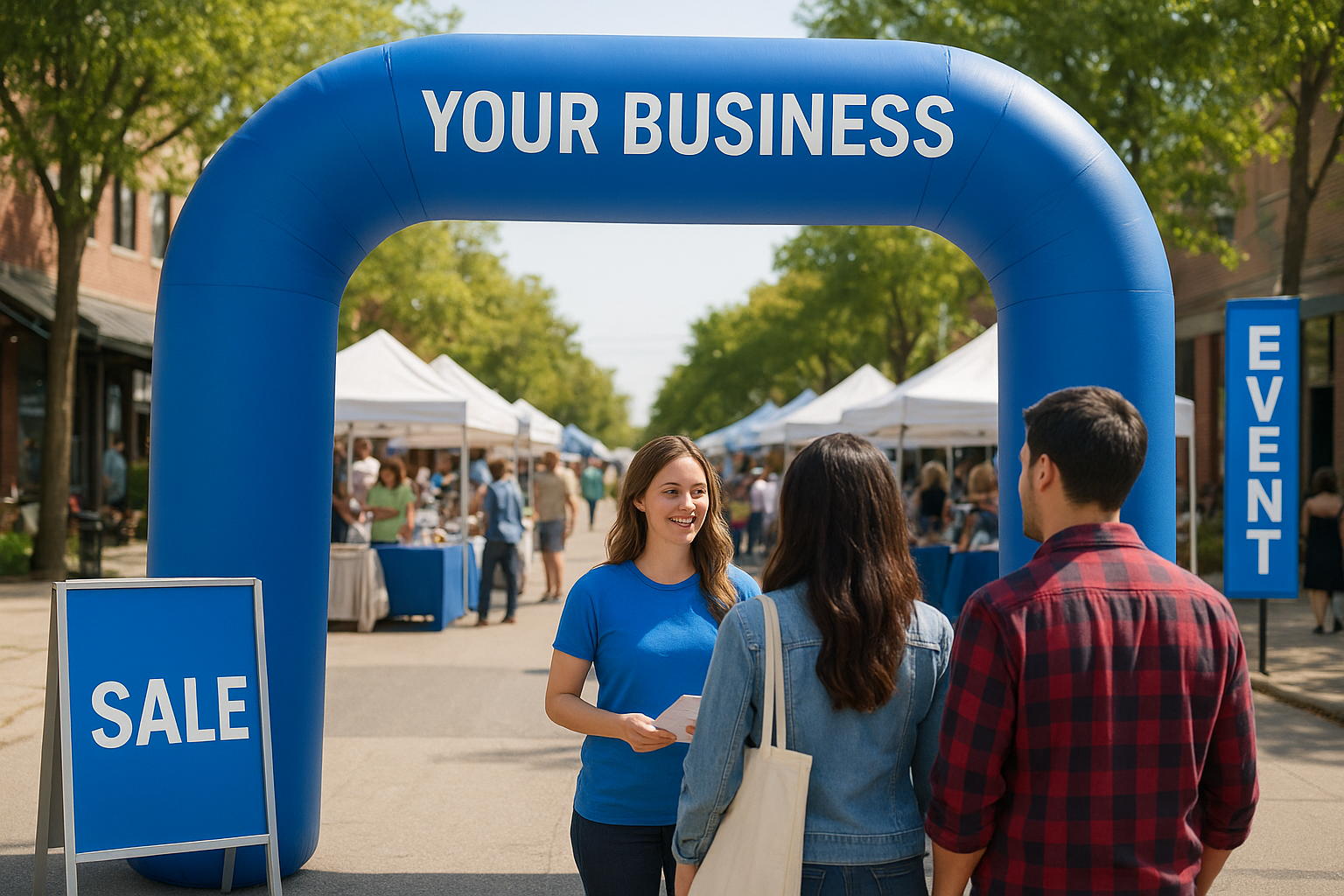
A defining characteristic of effective local advertising is that it connects your brand to a place and a moment. When you set up a giant branded arch at a street festival or a misting tent at the entrance to a summer market, you are not just promoting a product. You are embedding your brand into a specific community experience that people associate with being there. That kind of memory is difficult for digital ads alone to replicate.
What local advertising is not
Local advertising is not simply running a smaller version of a national campaign. Cutting your national ad budget and distributing the same creative across one market does not make it local. True local advertising is built around a specific community, using messaging, timing, and placements that are relevant to the people in that area and the events or seasons that matter to them.
It is also not identical to local SEO, even though the two frequently overlap. Local SEO helps people find you when they are already searching online. Local advertising actively puts your brand in front of people who may not be searching at all, which is a fundamentally different behavior to influence. Both are worth investing in, but they serve distinct functions and require separate strategies.
Finally, local advertising is not just for small businesses. Large regional brands, franchise operators, and national companies with physical locations all use local advertising strategies to drive foot traffic and build community relevance. Scale does not determine whether a tactic qualifies. Geographic intent does.
Why local advertising matters
Local advertising matters because most businesses generate the majority of their revenue from a relatively small radius. Searches with local intent lead to in-store visits at a remarkably high rate, which means spending your budget on audiences who cannot physically reach you is waste. Concentrating your spend on the right geography means every dollar works harder toward an actual transaction rather than a passive impression from someone two states away.
Proximity drives purchase decisions
People buy from businesses they see, remember, and trust. When someone walks past a branded inflatable structure outside a grand opening or spots a giant product replica at a local summer festival, that impression sticks in a way that a banner ad scrolled past on a phone rarely does. Physical proximity creates a level of brand familiarity that digital touchpoints take much longer to build on their own. Local advertising closes that gap faster because it meets people where they already are, in the streets, at events, and in front of storefronts they pass regularly.
The most effective local advertising does not just reach people in a geographic area. It becomes part of the physical environment those people move through every day.
Local competition is real and specific
Your direct competitors are not abstract national brands. They are the businesses within a few miles of yours, showing up in the same search results, at the same community events, and on the same streets. Winning local market share requires consistent visibility in your specific area, not just broad awareness across a larger market. A well-placed outdoor activation at a neighborhood event can shift buying decisions in ways that no amount of national media spend will replicate at the street level, simply because it puts your brand in front of the right people at exactly the right moment.
How to build a local advertising plan
Building a local advertising plan starts with clarity, not tools or budgets. Before you spend anything, you need to know exactly who you are trying to reach, where they spend time, and what action you want them to take. A plan built on those three answers will outperform any campaign that jumps straight to tactics without that foundation.
Define your geographic target and audience
Your geographic target should be tighter than you think. Start by looking at where your current customers actually come from. If you run a retail location, that radius might be three miles. If you operate at events or do installs across a metro area, it may span an entire city. Either way, map your real customer concentration before you decide where to advertise. This prevents wasted spend on zip codes that have never produced a transaction for you.
The more precisely you define your local audience, the more relevant your messaging becomes, and relevance directly drives conversion.
Once you have your geography locked, layer in the audience. Age, income level, lifestyle, and the types of events your customers attend all shape which channels and formats will actually reach them effectively.
Set a budget tied to specific outcomes
Guessing at a number and dividing it across channels is not a plan. Assign budget to specific outcomes, such as driving foot traffic to a grand opening, generating leads for a service area, or boosting attendance at a branded event. This forces you to think about what a converted customer is worth to you, which in turn tells you how much acquiring that customer should cost.
Start conservative, test one or two channels, measure actual results, then reallocate toward what works. Local advertising rewards consistency and iteration over big one-time pushes that lack follow-through. Treat your first campaign as a learning investment, not a guaranteed return.
Best local advertising channels in 2026
Not every channel deserves your budget, and spreading thin across too many platforms is one of the fastest ways to waste money in local advertising. The channels below consistently deliver measurable results for businesses targeting a specific geography, but the right mix for you depends on where your audience actually spends time.
Google Search and Local Services Ads
Google’s local search products remain the highest-intent advertising option available in 2026. When someone searches “event rental near me” or “promotional products in [city],” they are actively looking to spend money. Google Local Services Ads show up above standard search results and include a verification badge, which builds immediate trust. Pairing these with a fully optimized Google Business Profile gives you coverage for both paid and organic local search at the same time.
Physical and Event-Based Advertising
Digital channels capture people who are already searching, but physical advertising intercepts people who are not looking yet. This is where outdoor activations generate outsized impact. A branded inflatable arch at a street fair, a giant product replica at a trade show, or a misting tent outside a retail entrance during summer all turn high-traffic moments into direct brand impressions for everyone in that physical space.
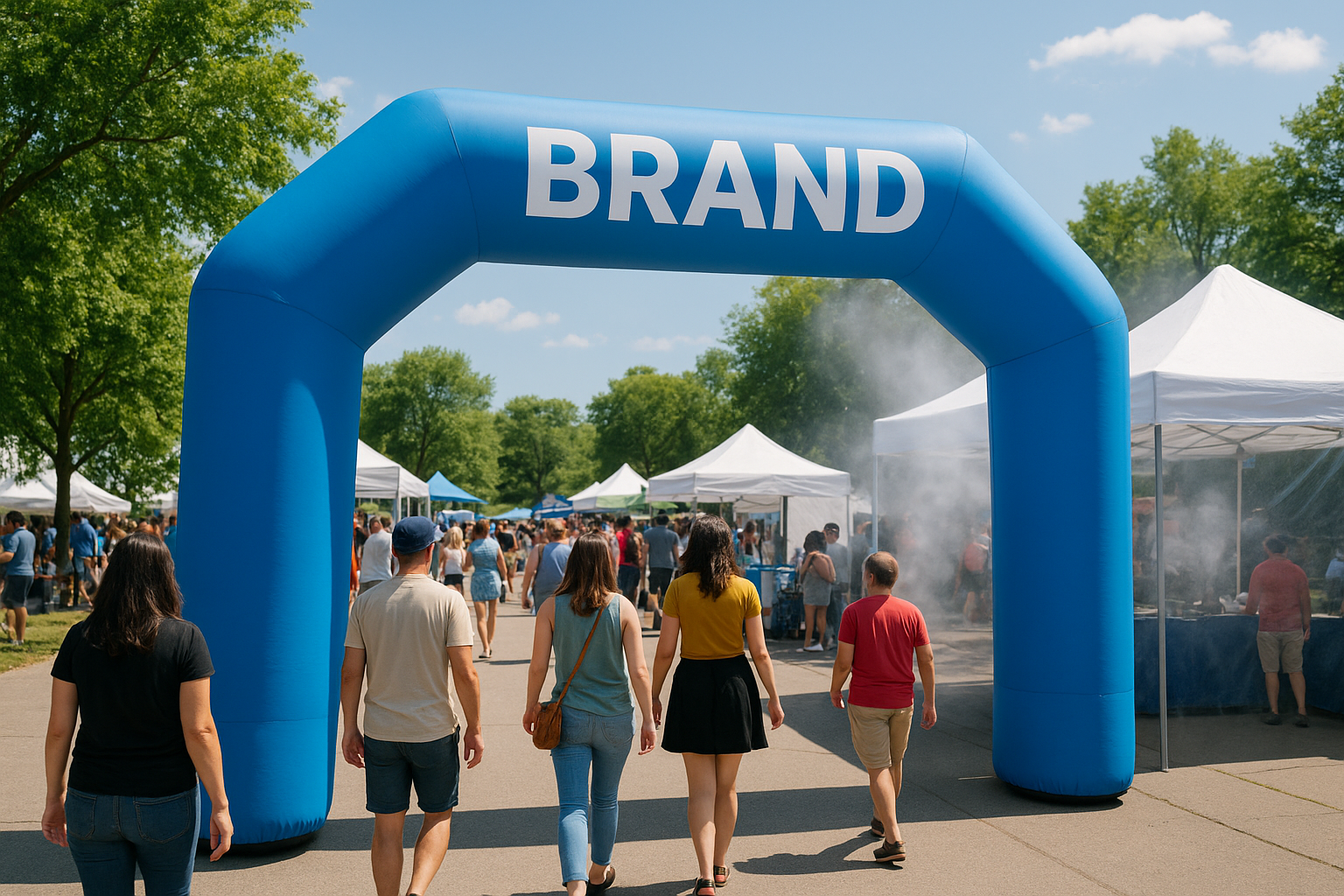
Physical advertising works especially well in local markets because the audience is already concentrated and present, which removes the targeting guesswork entirely.
Social Media with Geotargeting
Meta’s geotargeting tools let you serve ads to people within a defined radius of a specific address, which makes Facebook and Instagram genuinely useful for local campaigns. The key is using location-specific creative, not repurposed national content. Show the actual neighborhood, reference a local event, or feature your physical storefront. People respond to content that reflects where they live, and that relevance produces click-through rates that generic creative cannot match.
How to track performance and improve ROI
Running local advertising without tracking results is the same as guessing with your budget. You need clear metrics tied to the specific outcomes you defined in your plan, because without them you have no way to tell which channels are driving real customers and which ones are simply burning money. Set up your tracking before your campaign launches, not after.
Metrics worth tracking
The right metrics depend on your campaign goal, but several indicators apply across almost every local advertising effort. Tracking these consistently gives you a reliable picture of what is actually working.
- Foot traffic lift: Compare in-store visits during your campaign period against a baseline period using the same days of the week
- Call volume: Track inbound calls tied to specific campaigns using unique phone numbers per channel
- Coupon or promo code redemptions: Physical and digital offers with location-specific codes tell you exactly which placements converted
- Google Business Profile actions: Views, direction requests, and calls tracked inside your profile reflect direct local intent
- Cost per acquisition: Divide total channel spend by the number of customers gained through that channel
The metric that matters most is cost per acquisition, because it tells you whether a channel is profitable, not just active.
Use data to cut waste and reallocate
Once you have two to four weeks of data, review your cost per acquisition by channel and cut any placement that is not producing transactions at a rate that justifies its spend. Most local campaigns over-invest in one channel early and under-invest in the ones that are actually converting. Moving budget toward proven placements mid-campaign is one of the fastest ways to improve your overall return without increasing total spend.
Run this analysis at least monthly if you are running ongoing campaigns. Local markets shift with seasons, events, and competition, so a channel that underperforms in February may outperform in July. Consistent data review keeps your spending aligned with what your local audience is actually responding to right now.
Wrap-up and next steps
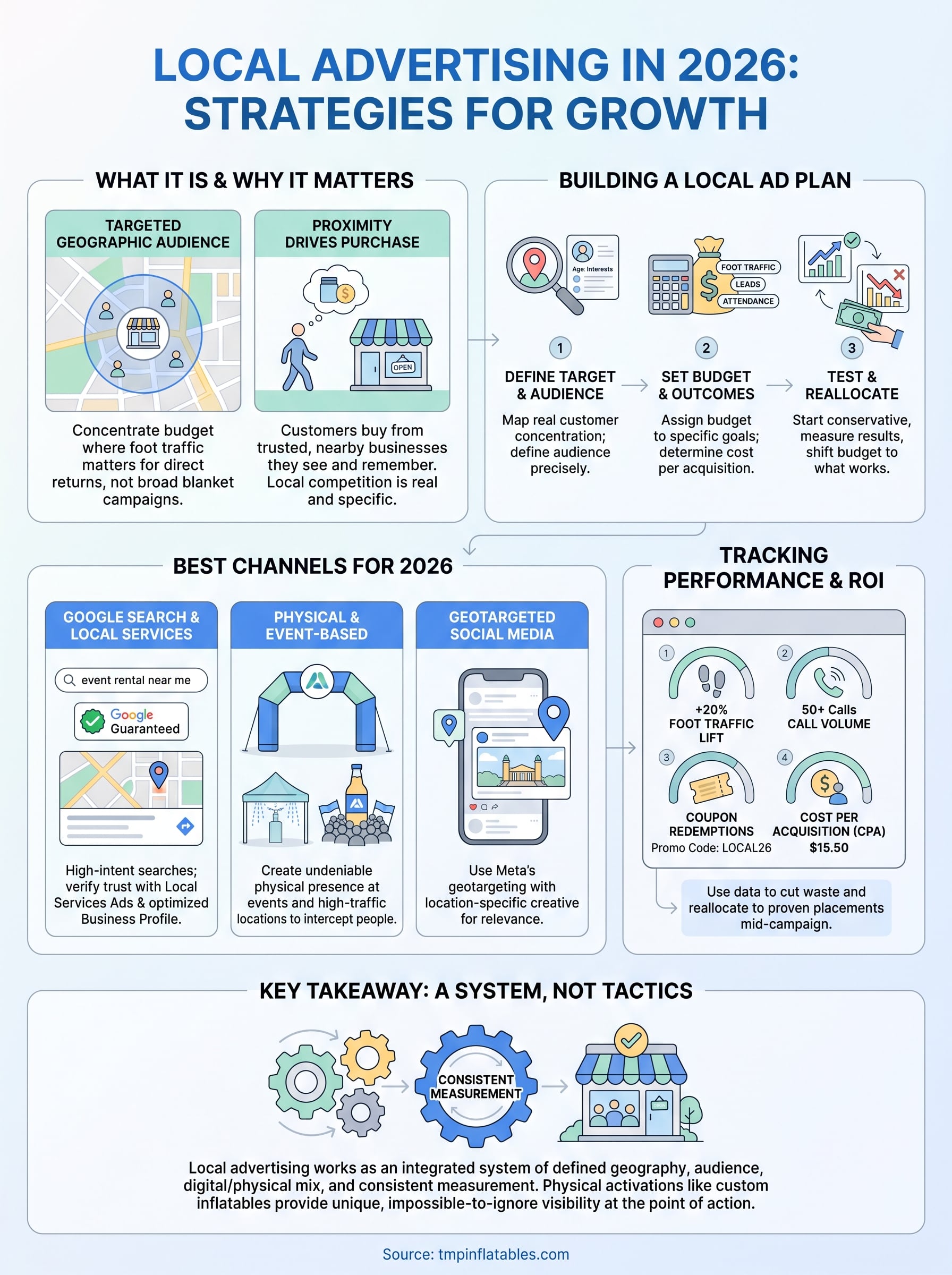
Local advertising works when you treat it as a system rather than a collection of one-off tactics. You need a defined geography, a clear audience, the right mix of digital and physical channels, and consistent measurement to know what is actually producing customers. Each element reinforces the others, and cutting corners on any one of them weakens the whole plan.
Physical activations remain one of the most underused tools in local advertising, especially for businesses competing at events, grand openings, and high-traffic outdoor locations. A well-placed branded arch, a towering product replica, or a custom misting tent does something digital ads simply cannot: it makes your brand impossible to ignore in the exact moment and place your customers are present. If you are planning an event or outdoor activation and want to know what a custom inflatable would cost for your specific setup, request a quote from TMP Inflatables and get the details you need to move forward.
