

From Mickey Mouse to Darth Vader, fictional characters shape how we see the world, and how brands connect with audiences. There’s a reason a 10-foot inflatable replica of a beloved mascot stops people in their tracks at a trade show or product launch. Recognition is instant, and the emotional connection runs deep.
At TMP Inflatables, we’ve spent over 20 years turning iconic characters and original brand mascots into larger-than-life inflatable costumes, replicas, and promotional displays. We’ve seen firsthand how the right character can transform an event from forgettable to unforgettable. But choosing which character to feature, or understanding what makes a character resonate, starts with knowing the classics and the storytelling roles behind them.
This article breaks down 11 of the most famous fictional characters across pop culture, from animation and film to literature. Along the way, you’ll also learn the key character roles used in storytelling, protagonist, antagonist, foil, and more, so you can better understand why certain figures stick with us for decades and how that power translates into real-world brand engagement.
1. TMP Inflatables Custom Inflatable Characters
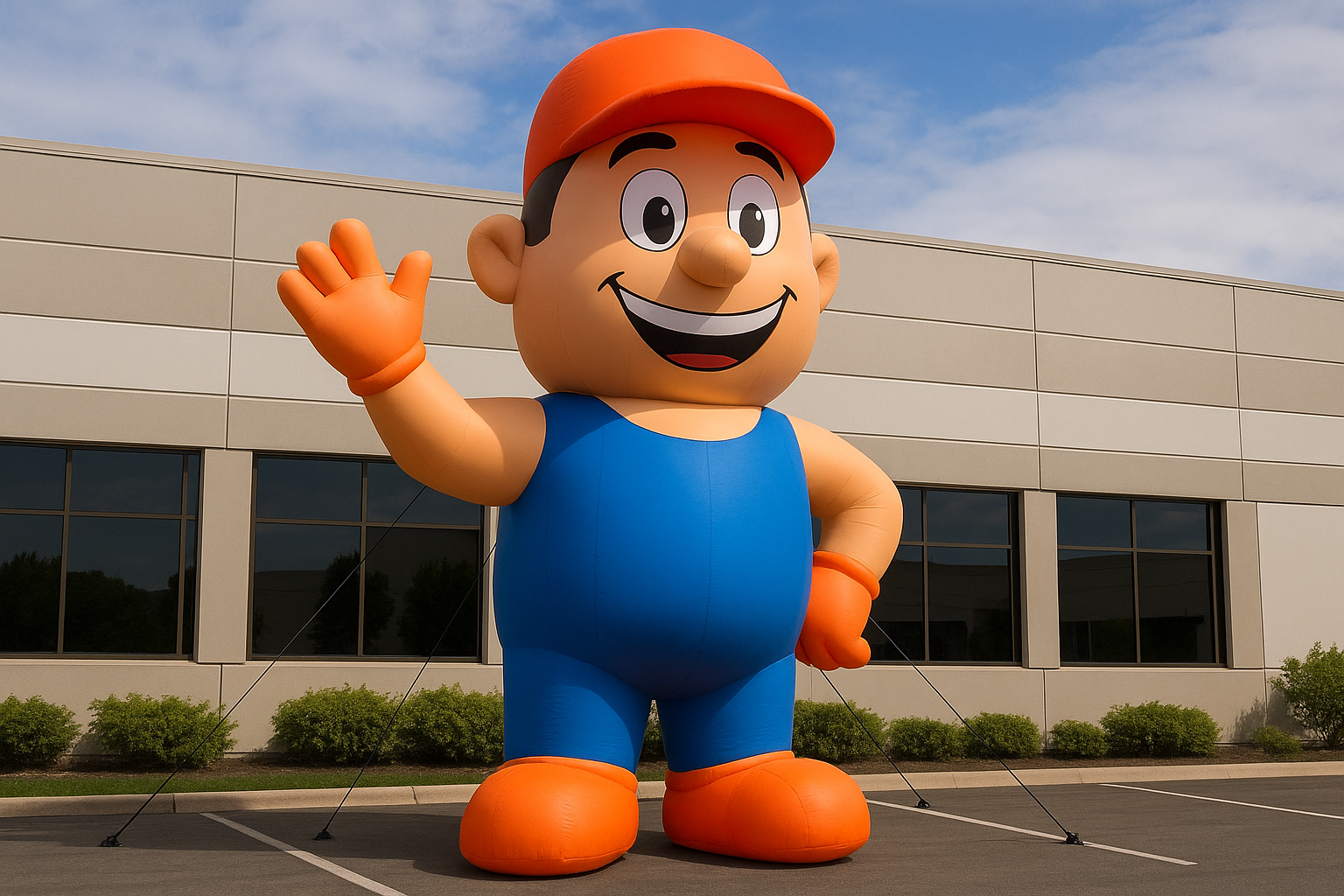
TMP Inflatables builds custom inflatable characters that replicate mascots, brand figures, cartoon icons, and original designs at scales that demand attention. Every piece is built to your exact specifications, from overall size and color palette to facial features and brand markings, so the final product is a physical representation of a character that your audience already knows and connects with emotionally.
What it is
A custom inflatable character from TMP is a large-format, air-supported replica of any figure you choose. Your options include a company mascot, a licensed character, a personified product, or a completely original creation developed from scratch. TMP manages the full project lifecycle, including concept development, design, manufacturing, and delivery, so you receive a finished, event-ready product without juggling multiple suppliers or guessing at production timelines.
Where you see it
These inflatable characters show up at trade shows, outdoor festivals, retail activations, sports events, and product launches across North America and internationally. Brands deploy them as centerpieces for experiential marketing booths, as walkabout costumes worn by brand ambassadors, and as freestanding outdoor displays anchored in front of storefronts, venues, or event entrances. Anywhere you need high foot traffic and fast brand recognition, an inflatable character earns its place.
Why it works
People respond to characters they recognize, or to striking figures they want to understand. A familiar face creates an immediate emotional response, and at 10 or 15 feet tall, that response happens within seconds of someone entering a space. The scale alone generates curiosity and foot traffic, but the character design is what keeps people engaged long enough to absorb your brand message and take action.
Recognition triggers trust, and trust is what turns a curious passerby into an engaged potential customer.
How to use it in your own work
Start by identifying the character or mascot that already resonates with your target audience, or partner with TMP’s design team to build one that fits your brand from the ground up. Think about placement and context: a trade show floor calls for something portable and space-efficient, while an outdoor activation can support a much larger footprint. Combine your inflatable with clear brand messaging positioned at eye level so the character draws the crowd and your signage handles the conversion.
2. Protagonist
The protagonist is the central figure a story follows from beginning to end. This character drives the plot forward, faces the core conflict, and carries the audience’s emotional investment through every scene. When you think about the characters that have stayed with you longest, they are almost always protagonists.
What it is
The protagonist is the character whose goals, choices, and growth form the backbone of a narrative. This role does not require the character to be purely good or likeable. What defines a protagonist is that the story tracks their journey and that the audience is invited to experience events through their perspective.
Where you see it
You find protagonists at the center of every major story format, from novels and films to video games and brand campaigns. Harry Potter, Katniss Everdeen, and Frodo Baggins all serve as protagonists in their respective worlds. The character anchoring the main conflict and resolution is always the protagonist.
The protagonist is the emotional anchor of any story, and without a strong one, audiences disengage fast.
Why it works
Audiences naturally follow the character they meet first and who faces the highest personal stakes. Protagonists create identification, meaning viewers and readers project themselves onto that figure and stay invested in the outcome until the final scene.
How to use it in your own work
When building a brand narrative or event experience, position your mascot or central figure as the protagonist. Give them a clear goal that mirrors what your audience wants, and let your product or service be the tool that helps them get there.
3. Antagonist
The antagonist is the force, figure, or entity that stands directly in the protagonist’s way. Without an antagonist, there is no meaningful conflict, and without conflict, there is no story. This role is one of the most misunderstood character types in fiction because many people equate it with pure villainy, but the antagonist’s actual function is more nuanced than that.
What it is
The antagonist is the opposing force that creates the central tension a protagonist must overcome. This character does not need to be evil to fill the role effectively.
They simply need goals or values that clash directly with the protagonist’s, generating the friction that moves a plot forward and forces meaningful choices.
Where you see it
Antagonists appear across every story format. Darth Vader in Star Wars, Nurse Ratched in One Flew Over the Cuckoo’s Nest, and Hannibal Lecter in The Silence of the Lambs are all iconic antagonist characters whose presence defines the entire arc of their stories.
The best antagonists believe they are right, and that conviction is exactly what makes them so compelling.
Why it works
Antagonists give the protagonist something to push against. Tension and stakes only exist when there is a credible threat or opposing force driving the narrative.
Audiences stay engaged because they want to know how the conflict resolves. Remove the antagonist, and the story collapses.
How to use it in your own work
In brand storytelling, the antagonist does not have to be a person. Frame a problem, a common frustration, or an industry pain point as the opposing force.
Let your brand narrative show how your product or service helps the protagonist overcome it cleanly and credibly.
4. Deuteragonist
The deuteragonist holds the second most important position in a story’s character hierarchy. This figure often shares significant screen or page time with the protagonist, giving the narrative depth and balance that a single central character cannot achieve on their own.
What it is
A deuteragonist is the second lead character whose own goals, perspective, and development run parallel to the protagonist’s throughout the story. This character is distinct from a simple sidekick because they carry independent narrative weight and often face their own internal conflicts rather than just existing to support the lead.
Where you see it
Deuteragonists appear across film, literature, and television consistently. Some of the most recognizable examples of characters who fill this role include:
- Samwise Gamgee in The Lord of the Rings
- Ron Weasley in the Harry Potter series
- Dr. Watson in Sherlock Holmes stories
A strong deuteragonist makes the protagonist’s journey feel larger and more credible by reflecting it through a different lens.
Why it works
Audiences benefit from two perspectives on the same world, which creates richer storytelling and gives writers more tools to explore theme and conflict. The deuteragonist also provides the protagonist with a sounding board and contrast point without directly opposing them the way an antagonist does.
How to use it in your own work
When building a brand narrative or campaign, consider pairing your central mascot or character with a secondary figure who represents a different segment of your audience. Two characters working toward the same brand goal let you speak to multiple customer perspectives within a single story arc.
5. Foil
A foil is a character specifically designed to highlight another character’s traits through direct contrast. The foil does not need to be an antagonist or even a rival. Their primary purpose is to throw the main character into sharper relief by embodying opposing qualities, making the protagonist’s defining features impossible to miss.
What it is
A foil is a supporting character whose traits, values, or behavior contrast so sharply with the protagonist’s that audiences see the lead more clearly as a result. The contrast can be subtle or dramatic, ranging from personality differences to opposing moral codes, but the effect is always the same: the foil clarifies who the protagonist really is.
Where you see it
Foil characters appear throughout classic and contemporary storytelling. Draco Malfoy serves as a foil to Harry Potter, emphasizing Harry’s humility against Draco’s arrogance. Similarly, Dr. Jekyll and Mr. Hyde present an extreme internal foil where two sides of the same character expose each other’s nature through direct opposition.
A well-placed foil does not just contrast the protagonist; it reveals something the protagonist could not communicate alone.
Why it works
Contrast is one of the most efficient storytelling tools available. When two characters share the same world but respond to it in opposite ways, audiences absorb character depth quickly without needing extended exposition or backstory.
How to use it in your own work
In brand storytelling, build a foil by pairing your central character with a figure who represents the problem your audience faces before your product enters the picture. The contrast between your mascot’s approach and the foil’s behavior makes your brand’s value clear instantly and without heavy-handed explanation.
6. Tertiary Character
A tertiary character occupies the outermost ring of a story’s cast. These figures appear briefly, often serving a single functional purpose before disappearing from the narrative entirely. They rarely get names or backstories, but their presence keeps a story’s world feeling lived-in and real.
What it is
This type of character is any supporting figure who appears in a story without carrying significant weight in the plot or theme. Think of the shopkeeper who hands over a key item, the bystander who reacts to an explosion, or the coworker who delivers a single relevant line. These minor characters exist to fill the world around the protagonist without demanding emotional investment from the audience.
Where you see it
Tertiary characters show up in every story format, from blockbuster films to novels to short-form brand content. The cab driver who gives the hero a tip, the news anchor reporting on the crisis, and the unnamed soldier in a battle scene all qualify. These figures contribute to world-building and atmosphere without stepping into the spotlight.
Tertiary characters are the texture of a story. Remove them, and the world feels hollow and unconvincing.
Why it works
Audiences accept a fictional world more readily when it feels populated and functional. Tertiary characters provide background credibility that lets the main cast operate in a believable environment rather than a vacuum.
How to use it in your own work
In brand events and activations, tertiary characters can take the form of costumed staff or background figures that reinforce your event’s theme. They direct foot traffic, add atmosphere, and make your central characters feel like part of a larger, cohesive story without competing for attention.
7. Confidant
A confidant is the character a protagonist trusts completely, sharing thoughts, fears, and plans that would otherwise stay hidden from the audience. This role is less about action and more about emotional access, giving writers a natural way to reveal inner states without resorting to clumsy internal monologue.
What it is
The confidant is a close ally or trusted figure who exists primarily to receive the protagonist’s disclosures. Their role is to listen, respond, and reflect rather than to drive the plot independently. What makes this character type distinct is that the information they hold shapes how audiences understand the protagonist’s true motivations rather than just their outward behavior.
Where you see it
Confidant characters appear across literature, film, and theater in consistent patterns. Some of the most recognized examples include:
- Horatio in Hamlet, who receives Hamlet’s most unguarded thoughts throughout the play
- Dr. Watson alongside Sherlock Holmes, making Holmes’ reasoning process visible through natural conversation rather than solitary reflection
Without a confidant, audiences often only see what a character does, not why they do it.
Why it works
Confidants give audiences direct access to interior conflict in a way that feels natural rather than forced. When a protagonist speaks openly to someone they trust, the exchange feels earned and believable, which deepens emotional investment without requiring heavy exposition.
How to use it in your own work
In brand storytelling, pair your central brand character with a confidant figure who voices the questions your audience is already asking internally. That dynamic lets your mascot explain its purpose and values naturally, without the interaction feeling like a pitch directed at the viewer.
8. Harry Potter
Harry Potter is one of the most recognized fictional characters in the world, introduced by J.K. Rowling in 1997 and followed across seven novels and eight films. His journey from an overlooked orphan to the wizard who defeats Voldemort made him a cultural touchstone for multiple generations of readers and viewers.
What it is
Harry Potter is the protagonist of his series, defined by courage, loyalty, and a willingness to sacrifice for others. He is not the most gifted student or the most powerful wizard in his world, but his moral core and determination set him apart from everyone around him and keep audiences invested through every installment.
Where you see it
You find Harry Potter’s image across books, films, theme parks, merchandise, and live events worldwide. The Wizarding World franchise spans Universal Studios attractions and a global licensing empire that keeps the character active in pop culture decades after the first book’s release.
Harry Potter proves that a character built on relatable vulnerability lasts far longer than one built on pure power.
Why it works
Audiences connect with Harry because his flaws and doubts mirror their own. He is not invincible. He gets things wrong, struggles with loss, and questions himself repeatedly. That authenticity drives identification in a way that flawless heroes rarely achieve.
How to use it in your own work
Study how Harry’s story positions an ordinary person facing extraordinary circumstances. When you build a brand character, give them real stakes and genuine limitations. Audiences trust characters who earn their wins rather than simply receive them, and that trust is what keeps a brand figure relevant long-term.
9. Darth Vader
Darth Vader is arguably the most iconic villain in cinematic history, introduced in George Lucas’s Star Wars in 1977. His black armor, mechanical breathing, and commanding presence turned him into a globally recognized symbol of power and menace that has endured for nearly five decades.
What it is
Darth Vader functions as the primary antagonist across the original Star Wars trilogy, but his character carries far more complexity than a standard villain role. His arc reveals a man consumed by fear and grief, and that tragic backstory transforms him from a figure of pure evil into something audiences find genuinely compelling and, eventually, sympathetic.
Where you see it
Darth Vader’s image appears on merchandise, theme park attractions, Halloween costumes, and advertising campaigns worldwide. Disney’s acquisition of the Star Wars franchise expanded his reach significantly, keeping him visible across streaming content, live experiences, and brand partnerships with major global companies.
Darth Vader proves that a villain with a credible internal conflict lands harder than one who is simply cruel for cruelty’s sake.
Why it works
Vader works because he represents a recognizable human failure: the choice to let fear drive destructive decisions. That theme resonates across cultures and age groups, which explains why his cultural footprint has only grown larger with time rather than fading.
How to use it in your own work
When designing a brand character or mascot, study how Vader’s visual design communicates personality instantly. His silhouette alone tells you everything about his role. Strong character design means your audience understands who your mascot is before a single word is spoken.
10. Hermione Granger
Hermione Granger is one of the most beloved supporting characters in modern fiction, introduced alongside Harry Potter in J.K. Rowling’s 1997 novel Harry Potter and the Philosopher’s Stone. She quickly became a cultural icon in her own right, widely recognized as a symbol of intelligence, preparation, and principled action.
What it is
Hermione functions as both a deuteragonist and confidant within the Harry Potter series, but her cultural impact extends well beyond her narrative role. She is defined by intellectual rigor and loyalty, traits that make her consistently the most competent person in the room without alienating the audience. Her character demonstrates that being prepared and principled is compelling rather than boring.
Where you see it
Hermione appears across books, films, merchandise, and stage productions including Harry Potter and the Cursed Child. Emma Watson’s portrayal in the film series gave her a globally recognized face, and her image and name continue to appear in educational campaigns, feminist discourse, and pop culture references far outside the original franchise.
Hermione proves that expertise and conviction are character traits audiences actively root for rather than resent.
Why it works
Her appeal comes from competence paired with vulnerability. She makes mistakes, faces social rejection, and carries real emotional weight throughout the series. That combination of high ability and genuine struggle makes her feel real rather than idealized.
How to use it in your own work
Build your brand character around a clear, demonstrable skill set rather than vague positivity. Give your mascot a specific strength your audience respects, and let that expertise drive the narrative forward.
11. Spider-Man
Spider-Man stands as one of the most enduring fictional characters in comic book history, created by Stan Lee and Steve Ditko and first appearing in Marvel Comics in 1962. His popularity has only grown since then, expanding across films, animated series, video games, and merchandise that reach audiences in every corner of the world.
What it is
Spider-Man is a protagonist built on relatable tension: the conflict between personal responsibility and the demands of an extraordinary life. Peter Parker is a teenager dealing with loss, financial pressure, and social awkwardness, and those ordinary struggles give his superhero identity emotional weight that pure fantasy characters rarely achieve.
Where you see it
His image appears across Marvel Cinematic Universe films, animated series, theme park attractions, and one of the best-selling video game franchises in PlayStation history. Multiple actors have portrayed him on screen, and each version attracts its own dedicated fanbase, which speaks to how flexible and durable his core identity remains across decades of adaptation.
Spider-Man’s longevity comes from the fact that his biggest battles are internal, not just physical.
Why it works
Peter Parker succeeds because failure is built into his story. He makes mistakes with real consequences, and audiences respect that honesty in a character designed to be aspirational.
How to use it in your own work
Let your brand character carry real stakes. Audiences invest in figures who can lose something meaningful, so give your mascot genuine challenges that your product or service helps resolve credibly.
Wrap-Up
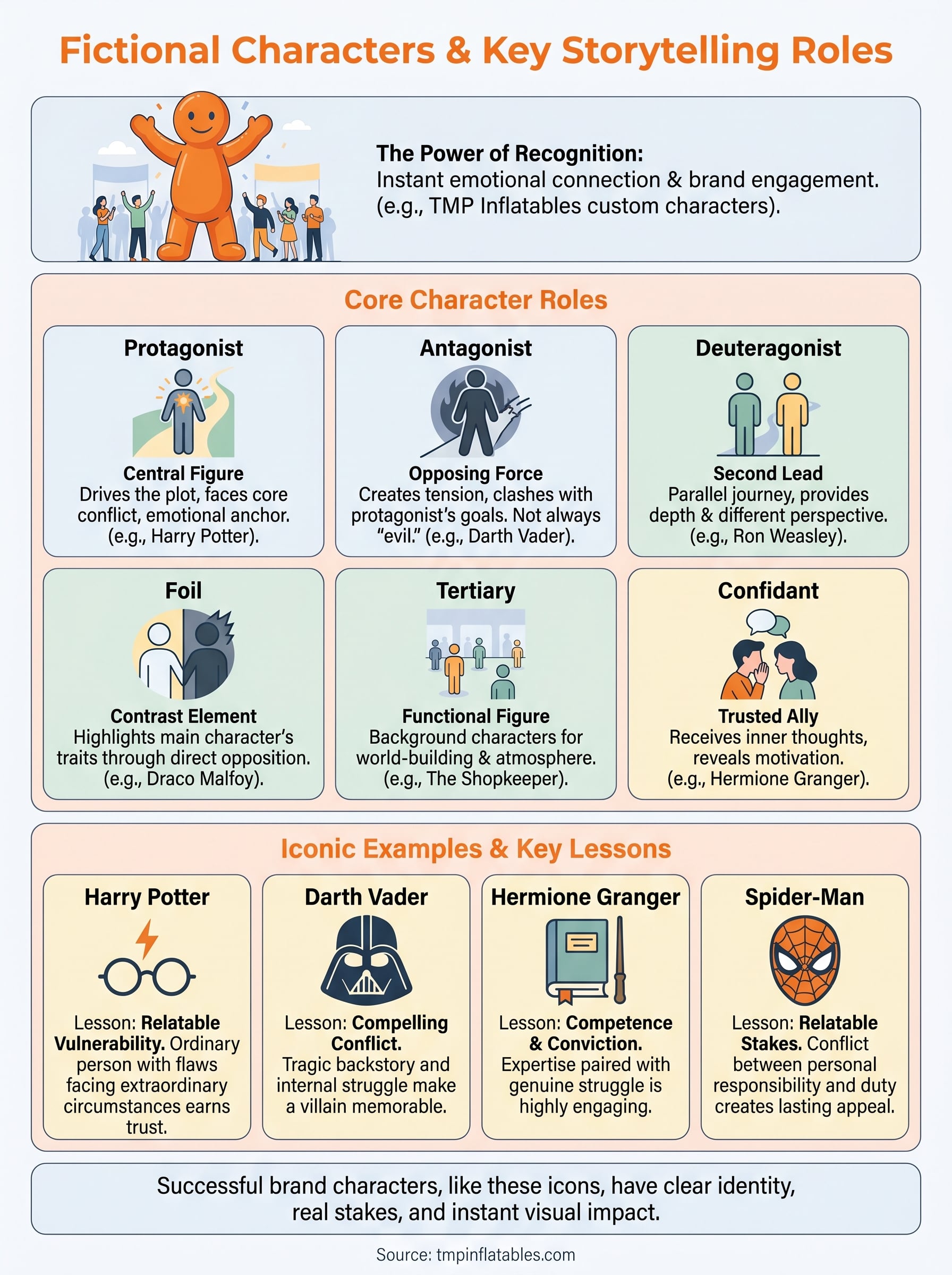
Fictional characters endure because they reflect something true about human experience. Whether you’re studying the protagonist’s journey, the antagonist’s opposition, or the foil’s contrast, each role serves a specific purpose that keeps audiences engaged and emotionally invested. The most iconic figures, from Harry Potter to Spider-Man, earn their place in culture by being honest about struggle and growth.
That same principle applies to brand characters. When your mascot carries a clear identity, real stakes, and visual impact that your audience recognizes instantly, it becomes a tool that drives genuine engagement at events, trade shows, and activations. TMP Inflatables has helped brands bring their characters to life at scale for over 20 years. If you’re ready to turn your brand figure into something that commands attention in any space, request a custom inflatable quote and let our team build it for you.
