

When outdoor temperatures climb past comfortable levels, a cooling station becomes one of the most practical ways to protect people from heat-related illness. Whether you’re managing a music festival, organizing a marathon, or running a large-scale brand activation, understanding what cooling stations are, and which type fits your situation, can make the difference between a successful event and a medical emergency.
The term covers more ground than most people realize. A cooling station can be anything from a public cooling center in a city building to a portable misting tent set up at a summer product launch. The common thread is simple: they all exist to bring body temperatures down and keep people safe when heat becomes a hazard.
At TMP Inflatables, we design and produce inflatable misting tents and branded cooling structures that event teams and marketing agencies deploy at outdoor activations across North America. We’ve been building these solutions since 2004, so we’ve seen firsthand how the right cooling setup transforms an event. This article breaks down what a cooling station actually is, the different types available, and how to choose the right one for your specific needs.
What a cooling station is and how it works
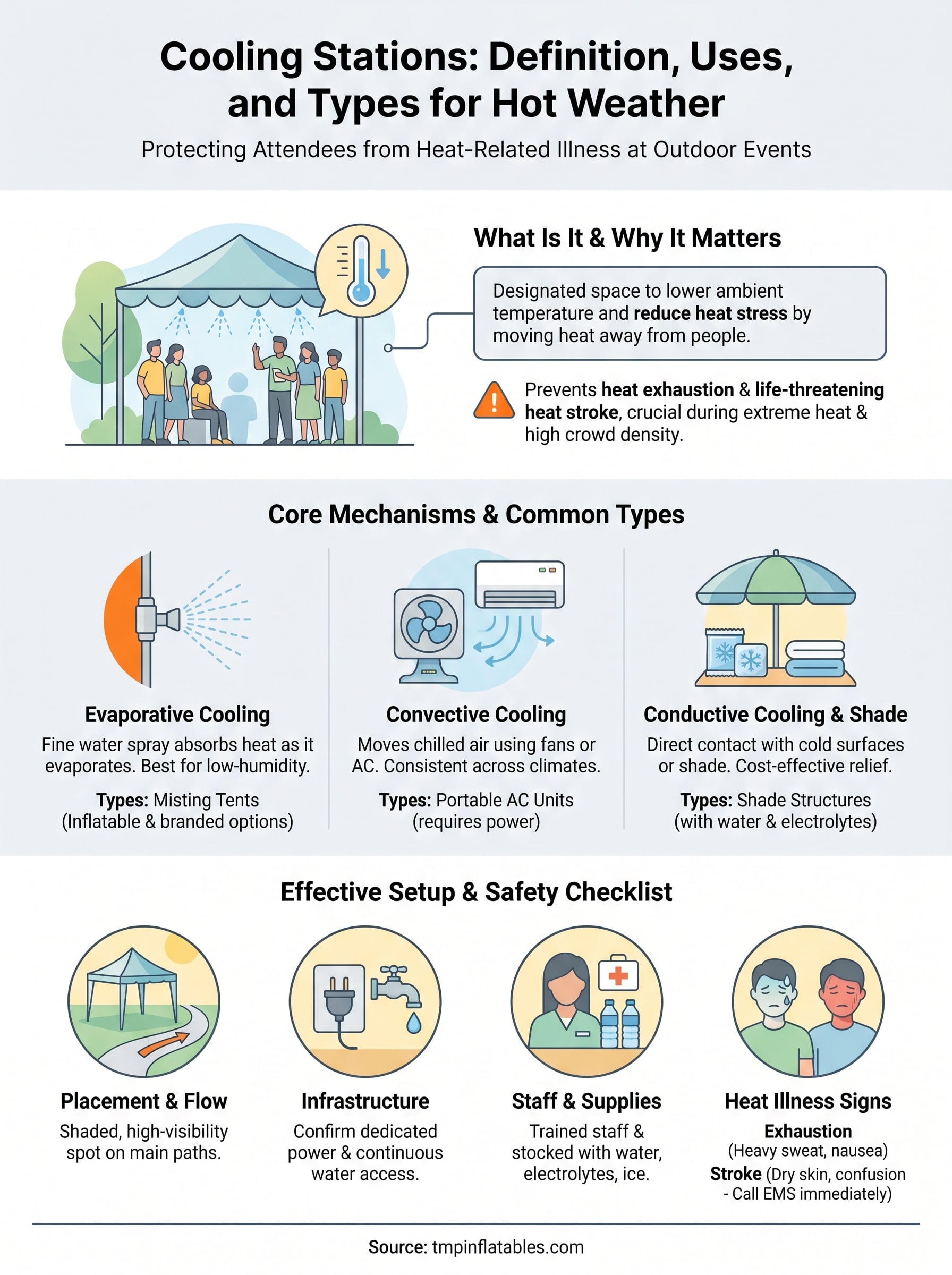
A cooling station is a designated space or structure built specifically to lower ambient temperature and reduce heat stress for the people inside or around it. The core function is straightforward: move heat away from people, whether through shade, cold air, water mist, or some combination of those three. The specific method depends on the type of station you’re using, the environment you’re operating in, and the number of people you need to serve at any given time.
A well-designed cooling station doesn’t just lower the temperature around it; it actively pulls heat away from the human body through conduction, convection, or evaporation.
The three core cooling mechanisms
Most cooling stations rely on one or more of three physical processes to bring temperatures down. Knowing which process drives your setup helps you match the right solution to your specific situation and climate.
Evaporative cooling works by spraying fine water droplets into the air. As those droplets evaporate, they absorb heat from the surrounding environment, which drops the ambient temperature noticeably. Misting tents work this way, and they perform best in low-humidity climates where the air can absorb moisture quickly.
Conductive cooling transfers heat directly through physical contact. Cold towels, ice packs, and chilled seating surfaces all work on this principle. You’ll typically find this method used inside first aid tents or medical recovery areas at large events rather than as a standalone public-facing structure.
Convective cooling moves chilled air through a space using fans or HVAC systems. Permanent cooling centers in libraries, community centers, and government buildings rely on this approach. Portable air-conditioned structures bring the same principle to temporary event settings.
What makes a cooling station effective
Placement and airflow are the two factors that determine whether your cooling station actually performs as intended. A structure positioned in direct sun with no air movement will struggle to maintain a comfortable interior temperature regardless of the cooling method it uses.
Shaded placement combined with either active airflow or misting consistently outperforms a cooling unit dropped in an exposed area with no thought given to orientation or foot traffic flow. Your goal is to get people out of radiant heat as quickly as possible once they enter the space.
Why cooling stations matter during extreme heat
Extreme heat kills more people in the United States than any other weather-related event. The CDC reports that heat-related illness is entirely preventable when proper cooling access is available, yet most outdoor events still treat it as an afterthought rather than a core safety requirement. A well-placed cooling station changes that calculus significantly.
The health risks of prolonged heat exposure
When your body absorbs more heat than it can release, your core temperature rises. At first, this produces heat exhaustion, with symptoms like heavy sweating, nausea, and weakness. Left unaddressed, heat exhaustion progresses to heat stroke, a life-threatening condition where the body’s temperature regulation fails entirely. Core temperatures above 104°F (40°C) can cause organ damage within minutes.
The window between someone feeling overheated and a full medical emergency can be shorter than most event organizers expect, which is why early access to cooling matters more than rapid response after symptoms appear.
The impact on crowds and large outdoor events
Large gatherings amplify heat risk in ways that are easy to underestimate. Crowd density traps radiant heat between people and reduces airflow to near zero at ground level. Direct sun exposure for several hours raises skin surface temperature dramatically, even when the ambient air temperature seems manageable. For event organizers, a single heat-related medical incident can trigger liability issues, negative press coverage, and forced shutdowns by local authorities. Providing visible, accessible cooling stations reduces that risk for everyone involved.
Common types of cooling stations for hot weather
Not every cooling station works in every setting. The right choice depends on your venue size, budget, crowd volume, and local humidity levels. Understanding what each type does well helps you make a practical decision before your event date arrives.
Misting tents and inflatable structures
Misting tents use fine water spray combined with shade to drop ambient temperatures by 10 to 20 degrees Fahrenheit in and around the structure. At TMP Inflatables, we build custom branded misting tents that serve dual purposes: they cool people down and they keep your brand visible throughout the event. These work best in drier climates where evaporation is rapid, making them a strong choice for outdoor festivals, product launches, and athletic events in the American Southwest or similar regions.
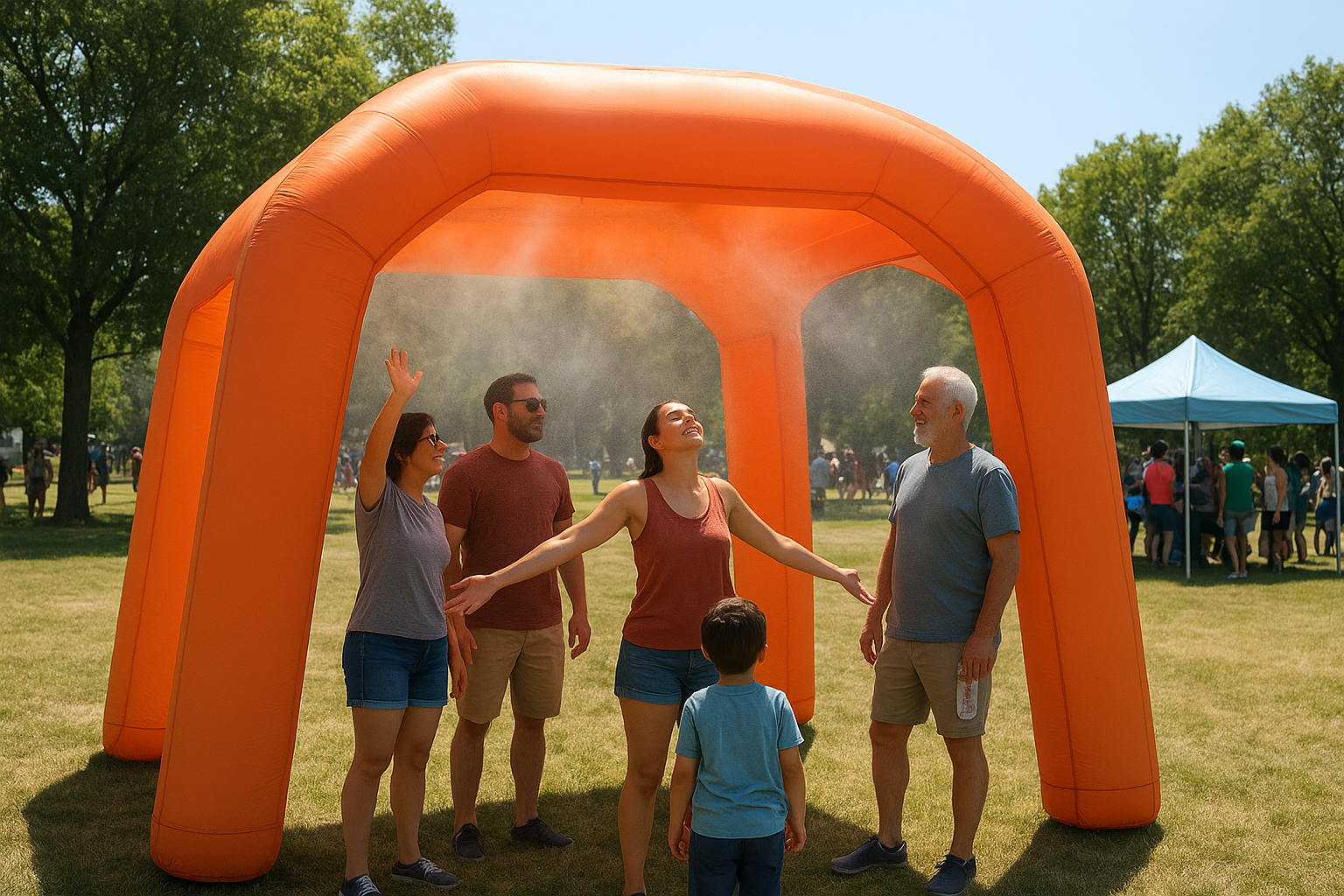
For experiential marketing events, a branded misting tent functions as both a safety asset and a high-traffic brand touchpoint that draws attendees in organically.
Portable air-conditioned units
Portable AC units paired with a tent or enclosed structure create a convective cooling environment that performs reliably regardless of humidity. These units pull in warm air, cool it mechanically, and circulate it through the space. They require a power source, which adds logistical planning to your setup, but they deliver consistent results across a wider range of climates than misting alone.
Shade structures with hydration access
A shaded canopy combined with water and electrolyte access represents the most accessible and cost-effective cooling station option. While it won’t lower air temperature the way misting or AC does, shade alone reduces radiant heat load significantly and buys your medical team critical response time when someone shows early heat stress symptoms.
How to set up a cooling station for an event
Setting up a cooling station effectively requires planning across four key areas: location, power, water access, and staffing. Getting even one of those wrong reduces the station’s effectiveness when temperatures peak and your crowd reaches its largest point during the event.
Find the right spot and prepare your infrastructure
Place your cooling station in a shaded area that aligns with your natural crowd flow. Keep it visible from main pathways so people find it without searching, because anyone experiencing heat stress will not walk far out of their way to reach relief.
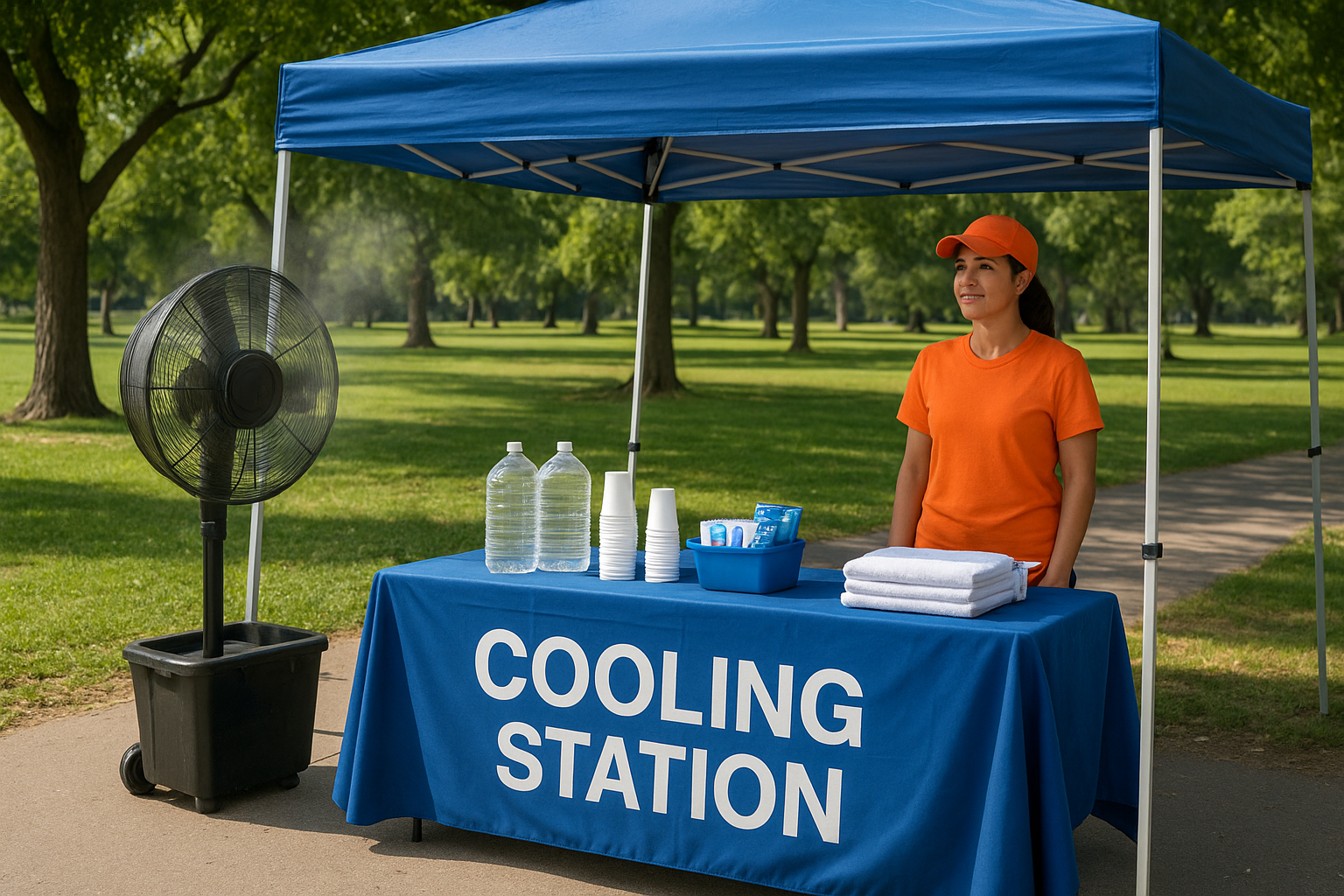
Most misting systems and portable AC units require a dedicated power supply, so verify your generator or venue capacity well before your event date. Water-fed systems also need a continuous supply line or holding tank sized for your expected peak attendance hours.
Confirm power and water access at least two weeks before your event so any gaps have time to get resolved without last-minute pressure.
Staff and equip the station before doors open
A cooling station with no personnel on-site becomes a passive structure rather than an active safety resource. Assign at least one trained staff member who can recognize early heat illness symptoms and assist attendees who show signs of distress throughout the event.
Stock the structure with cold water and electrolyte packets before your event begins, and keep cold towels or ice packs available for direct cooling. Resupply on a scheduled rotation rather than waiting for supplies to run out, because demand spikes unexpectedly during peak heat hours.
Safety checklist and heat illness warning signs
Running a cooling station without a clear safety protocol in place leaves you reactive instead of prepared. Heat illness can move fast, and your staff needs to recognize warning signs early enough to intervene before symptoms escalate into a medical emergency that requires EMS involvement.
Recognizing heat illness early
The human body sends clear signals before heat stroke sets in, and knowing those signals gives your team a window to act. Heat exhaustion typically presents as heavy sweating, pale or clammy skin, nausea, dizziness, and a weak but rapid pulse. At this stage, moving the person to your cooling station, providing cold water, and applying cold towels to the neck and wrists will usually reverse symptoms within 15 to 30 minutes.
If a person stops sweating, becomes confused, or loses consciousness, treat it as heat stroke immediately and call emergency services.
Heat stroke is the point where the body’s cooling system fails. Skin becomes hot and dry, breathing grows rapid, and the person may become disoriented or unresponsive. This requires emergency medical response, not just shade and water.
Pre-event safety checklist
Use this checklist before your event opens to confirm your setup is ready:
- Cooling station placed in a shaded, high-visibility location along main foot traffic routes
- Power and water supply tested and confirmed operational
- Cold water, electrolyte packets, and ice packs stocked and ready for resupply
- At least one trained staff member assigned to the station for each shift
- Emergency contact numbers posted visibly inside the structure
- Communication plan established between station staff and your event medical team
What to do next
A cooling station is not optional when you’re running an outdoor event in summer heat. You’ve seen how the right setup protects attendees from heat illness, draws foot traffic during your activation, and gives your brand a functional presence that people actively seek out. The type you choose, whether a misting tent, portable AC unit, or shaded hydration point, should match your climate, crowd size, and event format rather than default to whatever is easiest to source.
If you’re planning an outdoor activation and want a branded cooling structure that works as both a safety asset and a marketing tool, TMP Inflatables builds custom inflatable misting tents designed for exactly that purpose. We’ve worked with experiential marketing teams and event organizers across North America since 2004, and we handle the full process from concept to delivery. Request a custom cooling tent quote to get your project started.