

Summer events bring crowds, energy, and excitement, but they also bring heat. When temperatures climb past 90°F, an outdoor activation or trade show can go from buzzing to miserable in a hurry. That’s exactly why a cooling tent has become essential gear for event planners, marketing teams, and brand activation pros who refuse to let the weather sabotage their audience’s experience.
At TMP Inflatables, we’ve spent over 20 years designing and producing custom inflatable structures, including misting tents built specifically for hot-weather events. We’ve seen firsthand how the right cooling setup can mean the difference between guests lingering at your booth and walking right past it to find shade somewhere else.
This article breaks down five practical cooling tent options you can use at your next summer event, from misting systems and reflective materials to inflatable tent designs that manage airflow. We’ll cover what works, what doesn’t, and how to match the right solution to your event type and budget. Whether you’re running a brand activation, a festival booth, or an outdoor product launch, you’ll walk away with clear recommendations you can act on before the heat hits.
1. Custom inflatable misting tents
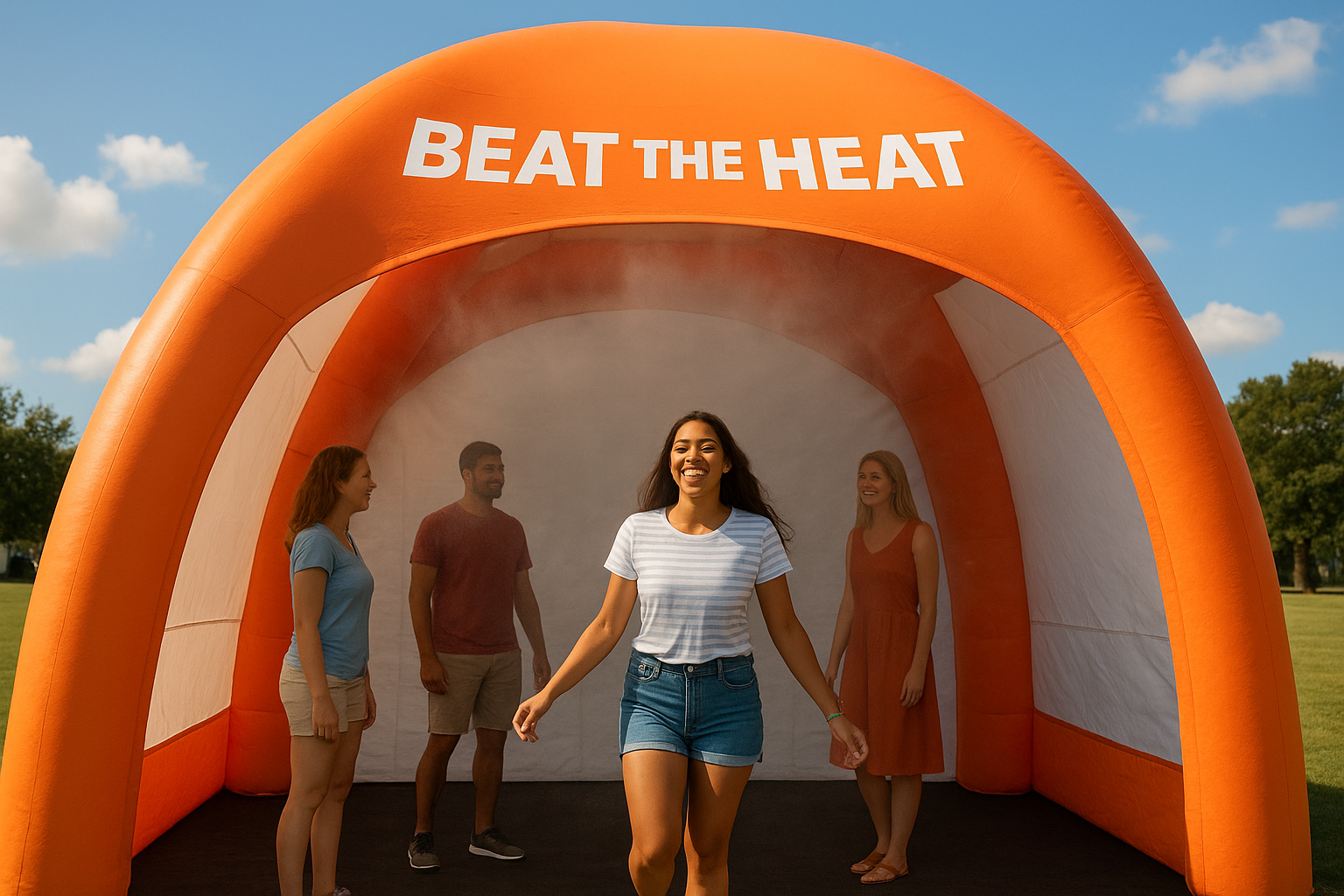
A custom inflatable misting tent combines a branded inflatable structure with an integrated misting system that drops indoor temperatures by 10 to 20 degrees Fahrenheit. Misting works by forcing water through high-pressure nozzles that produce a fine vapor, which evaporates quickly and pulls heat out of the surrounding air.
What it is and how it cools
The tent stays rigid with a continuous air blower, while misting nozzles run along the interior frame or canopy edges. As guests step inside, evaporative cooling takes effect almost immediately, making this one of the most effective cooling tent solutions for outdoor events in dry to moderate humidity climates.
When this option works best at events
This setup performs best at brand activations, product launches, and festival footprints where you want guests to stop, stay, and engage. If your event runs more than four hours in direct sun and you need a reason for people to come inside, a misting tent gives them that reason.
A misting tent does double duty: it draws guests in out of the heat and keeps them inside your branded space longer.
Branding and layout options to plan for
You can print your logo, colors, and messaging directly onto the inflatable panels, turning the structure into a high-visibility billboard. Plan your interior layout with a clear traffic flow so guests enter, engage with your activation, and exit without crowding the misting zones.
Water, drainage, and power needs
Your site needs a pressurized water supply and a 110V or 220V outlet for the blower and misting pump. Budget for drainage planning too, since misting tents produce runoff that puddles if the site isn’t properly graded.
Typical cost range and timeline
Custom inflatable misting tents typically run from $4,000 to $12,000 depending on size and print complexity. Production usually takes three to six weeks, so build that lead time into your planning calendar well before your event date.
2. Inflatable event tents built for shade and airflow
Not every event needs misting. A well-designed inflatable event tent blocks direct sunlight and channels airflow in ways a standard canopy cannot match, making it a strong cooling tent option when you want drier, cleaner guest experiences on-site.
How inflatable structures reduce heat load
Inflatable structures use continuous air pressure to hold walls taut, creating air gaps that reduce radiant heat transfer. The inflatable skin doesn’t conduct heat the way metal frames do, so interiors stay noticeably cooler during long sun exposure.
What to look for in fabric, seams, and ventilation
Prioritize UV-resistant coated fabrics with welded seams and mesh ventilation panels on opposing walls to drive passive airflow through the space.
Opposing vent panels that let air travel fully through the tent are the single most effective passive cooling feature to request.
Setup footprint, anchoring, and wind planning
Allow a footprint 20% larger than the tent itself to fit anchor stakes and blower lines. Always anchor every point and add sandbags in open outdoor spaces where gusts can exceed 20 mph.
Add-ons that boost cooling without soaking guests
Place battery-powered fans at entry points to push air through without adding moisture. A reflective ground cover underneath also blocks heat radiating up from hot pavement.
Typical cost range and timeline
Expect to pay $3,000 to $9,000 depending on size and custom branding. Production typically takes two to five weeks, so place your order well before your event date.
3. Pop-up shade tent with a portable misting system
A pop-up shade tent paired with a portable misting kit gives you a budget-friendly cooling tent option that you can assemble in under an hour without custom production lead times.
How this setup cools and where it struggles
Misting nozzles attached to the canopy frame drop air temperature by 10 to 15°F through evaporative cooling. In high-humidity climates, evaporation slows significantly and guests feel damp rather than refreshed.
What to look for in a misting kit and canopy
Choose a canopy with UV-blocking fabric rated 50+ UPF and a misting kit with brass nozzles over plastic ones for durability and finer droplet output.
Finer mist droplets evaporate before reaching guests, keeping the space cool without soaking anyone.
Water source options and how to avoid puddles
You can run the kit off a standard garden hose connection or a pressurized backpack reservoir. Set the tent on a gravel pad or absorbent ground cover to prevent standing water from forming underneath.
Best practices for nozzle placement and airflow
Mount nozzles along the perimeter, angled inward at 45 degrees, and keep one side of the canopy open to let air move through the space consistently.
Typical cost range and timeline
Expect to spend $300 to $1,500 for a quality canopy and misting kit combined. Because these are off-the-shelf products, you can source and receive them within a week of your event.
4. Air-conditioned tent zone with portable AC
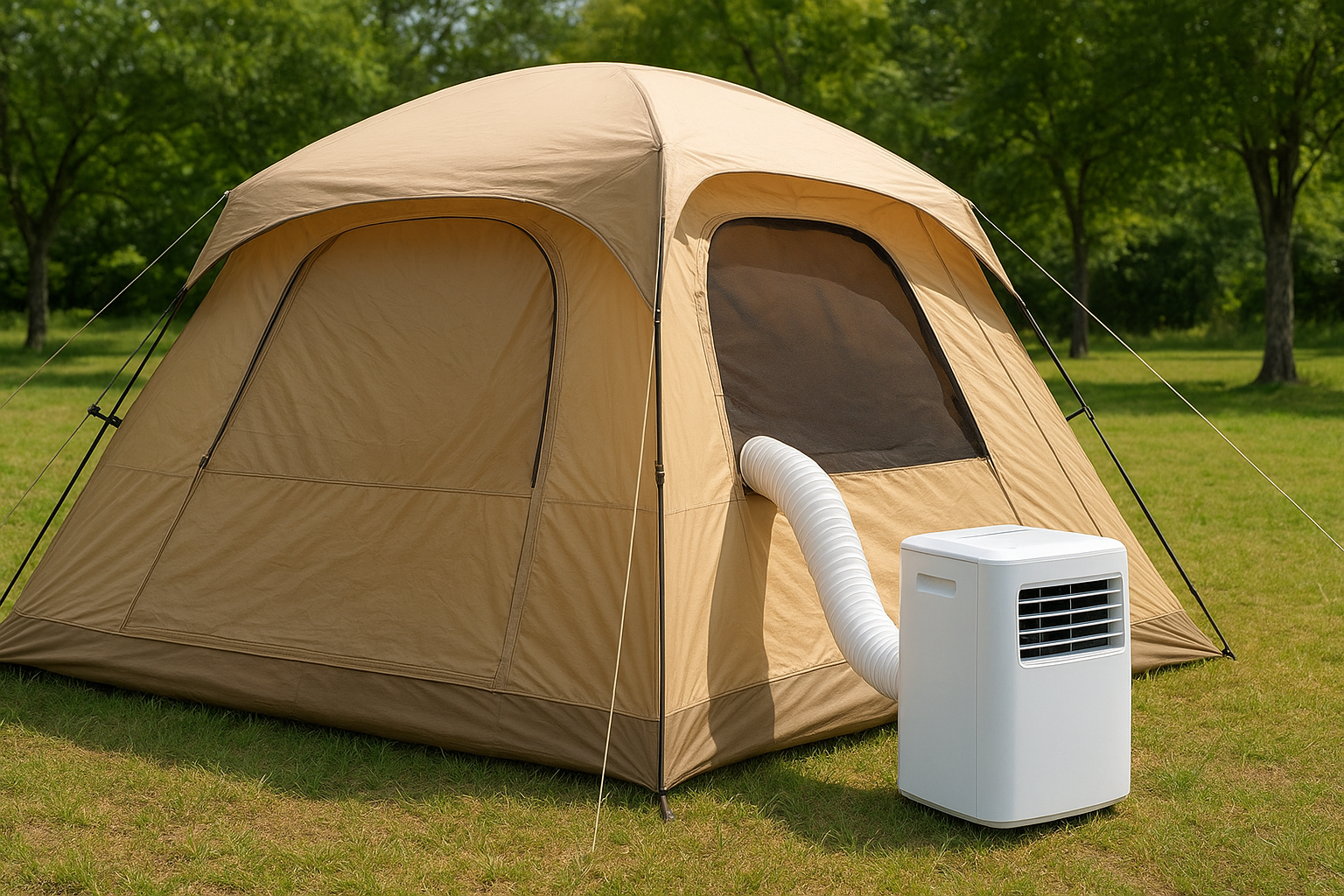
When humidity is high and misting leaves guests feeling damp, portable AC delivers reliable cooling tent comfort without adding moisture to the air.
How portable AC works in a tent environment
Portable units pull warm interior air across refrigerant coils and push chilled air back into the space. An exhaust duct carries the resulting hot air outside, so the unit actually lowers temperature rather than just recirculating it.
Tent features that make AC actually effective
Your tent needs sealed walls and zippered closures to hold conditioned air inside. Without tight seams, cool air escapes faster than the unit can replace it.
A leaky tent wastes most of your AC output before guests ever feel it.
Sizing portable AC and power for your tent
Plan 20 BTUs per square foot of tent space for adequate cooling. Your site also needs a dedicated power circuit rated for the unit’s amperage to avoid tripping breakers mid-event.
Managing condensation, ducts, and noise
Route the exhaust duct through a sealed wall port so hot air doesn’t re-enter the tent. Positioning the unit away from high-traffic zones also limits noise disruption for guests nearby.
Typical cost range and timeline
Rental rates typically run $150 to $500 per day. Since these are standard rental items, you can usually confirm availability and book within a week of your event date.
5. Blackout and hot-weather tents for all-day sun
A blackout tent uses dark, coated fabric to block solar radiation before it heats interior air, making it a solid passive cooling tent option when power and water access are limited on-site.
How blackout materials and coatings cut radiant heat
Blackout-coated polyester reflects UV rays and absorbs less radiant energy than standard canopy fabric, keeping interior temperatures noticeably lower under direct sun exposure.
Blackout fabric alone can reduce interior temperatures by up to 15°F compared to uncoated canopies in full sun.
Venting features that matter in high heat and humidity
Look for mesh ridge vents and low side vents that work together to pull hot air upward and out, since blackout fabric traps heat without consistent airflow moving through the space.
When this option makes sense for events and camping
This setup works best for all-day outdoor events or camping where no power source is available and you need a passive solution without misting or AC.
Common mistakes that trap heat inside
Sealing every entry point shuts out airflow along with bugs, and pitching the tent on exposed asphalt pulls radiant ground heat straight up into your space.
Typical cost range and timeline
Quality blackout event tents run $500 to $3,000 depending on size and frame type, and most ship as off-the-shelf products within a few days of ordering.
A simple way to choose the right cooling tent
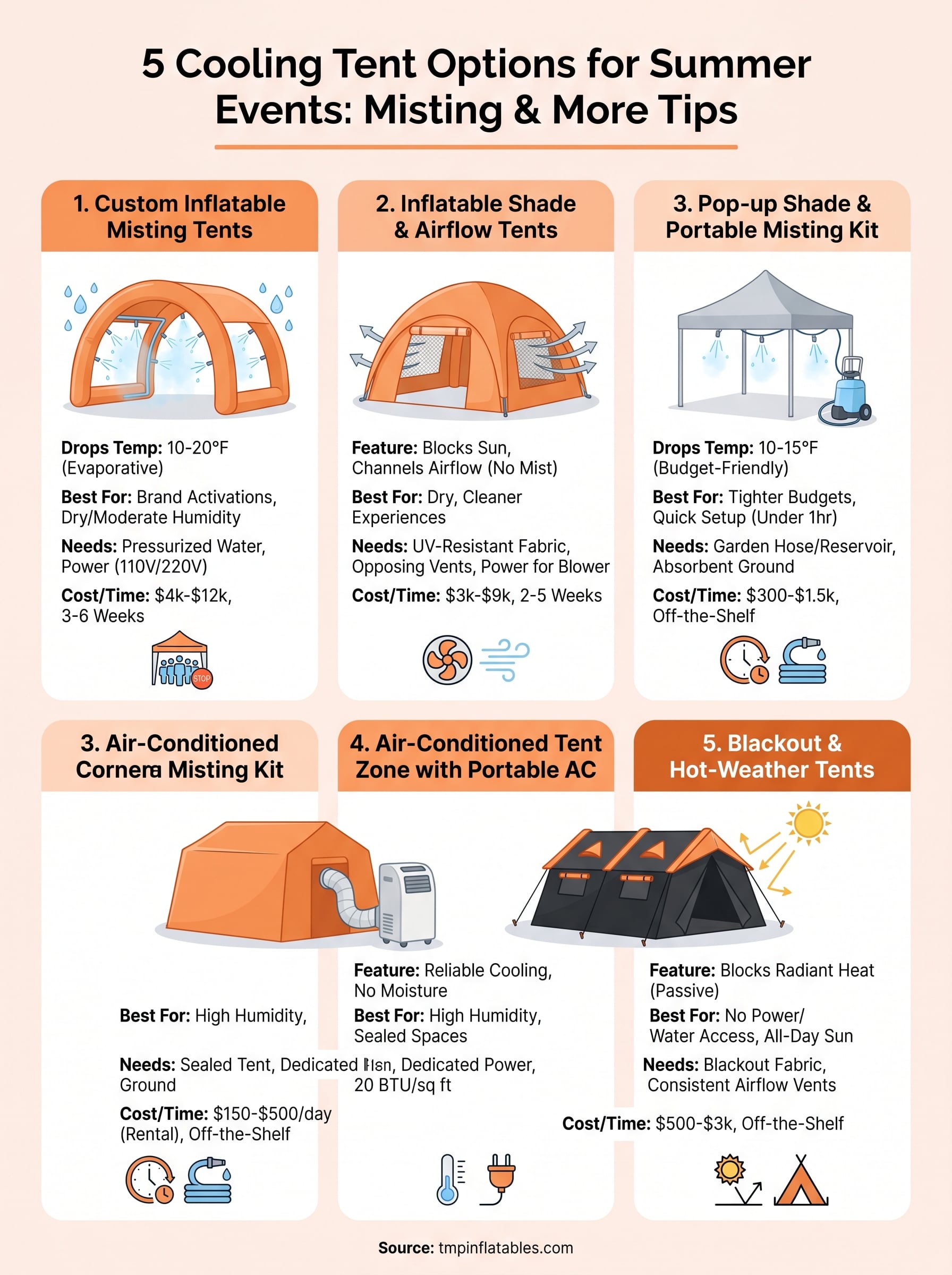
Picking the right cooling tent comes down to three questions: How humid is your location? Do you have access to power and water on-site? How long will guests spend inside the space? If you’re in a dry climate with full site utilities and a brand activation budget, a custom inflatable misting tent is your strongest option. If humidity is high, portable AC in a sealed tent gives you reliable comfort without the dampness.
For tighter budgets or last-minute events, a pop-up canopy with a misting kit or a blackout tent handles most situations without a long production lead time. If you want a structure that works as both a cooling solution and a branded marketing asset, an inflatable event tent earns its cost across multiple events.
Ready to build something custom for your next summer event? Request a quote for a custom inflatable misting tent and get a response from our team directly.
