

Every year, companies spend billions on corporate events, and for good reason. Whether it’s a product launch, a team retreat, or a massive trade show presence, these events shape how employees, clients, and partners experience a brand in real life. The challenge? Most corporate events look the same. Same ballroom setup, same podium, same forgettable afternoon.
That’s where smart planning and bold creative choices make the difference. At TMP Inflatables, we’ve spent over 20 years helping brands break through the visual noise at corporate events with custom inflatables, branded arches, inflatable tents, and attention-grabbing displays. We’ve seen firsthand what separates a forgettable gathering from one that people actually talk about, and it starts with understanding what type of event you’re planning and what it needs to accomplish.
This article breaks down the major types of corporate events, walks through real examples, and gives you creative concepts worth stealing for your next one. Whether you’re an event planner, a marketing director, or someone who just got handed the job of organizing the company conference, you’ll walk away with a clear picture of what’s possible and how to make it happen.
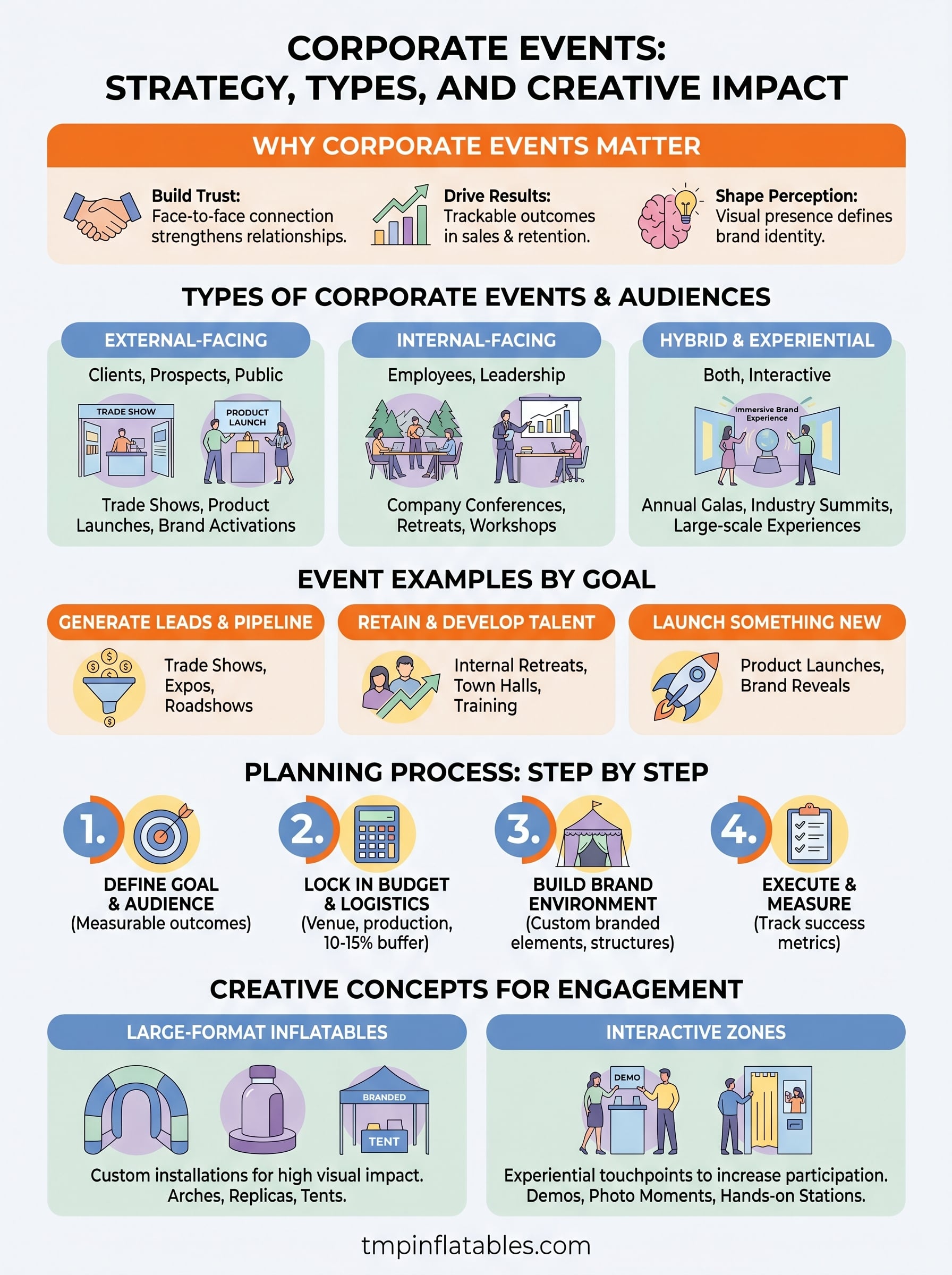
Why corporate events matter
Corporate events do something email campaigns, social posts, and digital ads simply cannot: they put real people in the same physical space and build trust through shared experience. When someone interacts with your brand in person, the impression runs deeper and lasts longer. Face-to-face interaction creates emotional connections that a well-crafted landing page will never replicate, and that strategic difference shows up in how clients remember you, how employees feel about their work, and how partners decide who to do business with long term.
In-person experiences consistently generate stronger brand recall and faster relationship development than any digital-only communication can deliver.
They strengthen relationships that digital channels can’t replace
Modern business runs on relationships, and relationships form faster and hold stronger when they’re built face-to-face. A corporate event, whether a conference, a product launch, or an internal company meeting, gives your team, clients, and partners a chance to interact in ways that a video call simply doesn’t allow. Body language, spontaneous conversation, and shared energy all play a role when people gather in person, and these factors accelerate trust in ways that no digital touchpoint can replicate.
Your clients also notice when you invest in bringing people together. A well-executed event signals that your organization values genuine connection and is willing to put real resources and attention behind that commitment. That message lands differently than anything you could send through an inbox.
They drive results you can actually measure
Beyond goodwill and brand sentiment, corporate events generate trackable outcomes across sales, employee retention, and client relationships. Product launches create pipeline. Trade shows surface qualified leads. Internal retreats improve morale and reduce turnover. When you plan with specific goals from the start, the return on your event investment becomes a number you can bring to any budget meeting with confidence.
Companies that treat events as a core marketing and communications channel consistently outperform those that rely entirely on digital outreach. Shared physical experiences build brand loyalty that takes years to develop through screens alone, and that loyalty translates directly into revenue.
They shape how people perceive your brand
The way your brand shows up at an event communicates your identity before anyone opens a brochure or hears a single word from a presenter. Your visual presence, from booth design to branded structures and large-format displays, tells attendees who you are the moment they walk in the door. Custom inflatables, branded environments, and creative physical installations give your brand a distinct personality that sticks in memory.
When your setup looks intentional, polished, and visually distinct, people notice and they remember it. When it looks generic, they forget it before they reach the parking lot. Brands that invest in standout visual presence consistently walk away from events with stronger recall and better conversations.
Types of corporate events and what they include
Corporate events fall into a few distinct categories depending on who they serve and what they’re designed to accomplish. Knowing the difference helps you make smarter decisions about budget allocation, venue selection, and the level of brand presentation your event actually requires. The right classification also shapes your goals, your guest list, and how you measure success.
External-facing events
External events are built for audiences outside your organization, including clients, prospects, industry peers, and the general public. Trade shows, product launches, brand activations, and sponsorship appearances all fall into this category. These events demand strong visual presence and clear brand messaging from the moment attendees arrive, because first impressions drive the conversations that follow and determine whether people remember your brand by the end of the day.
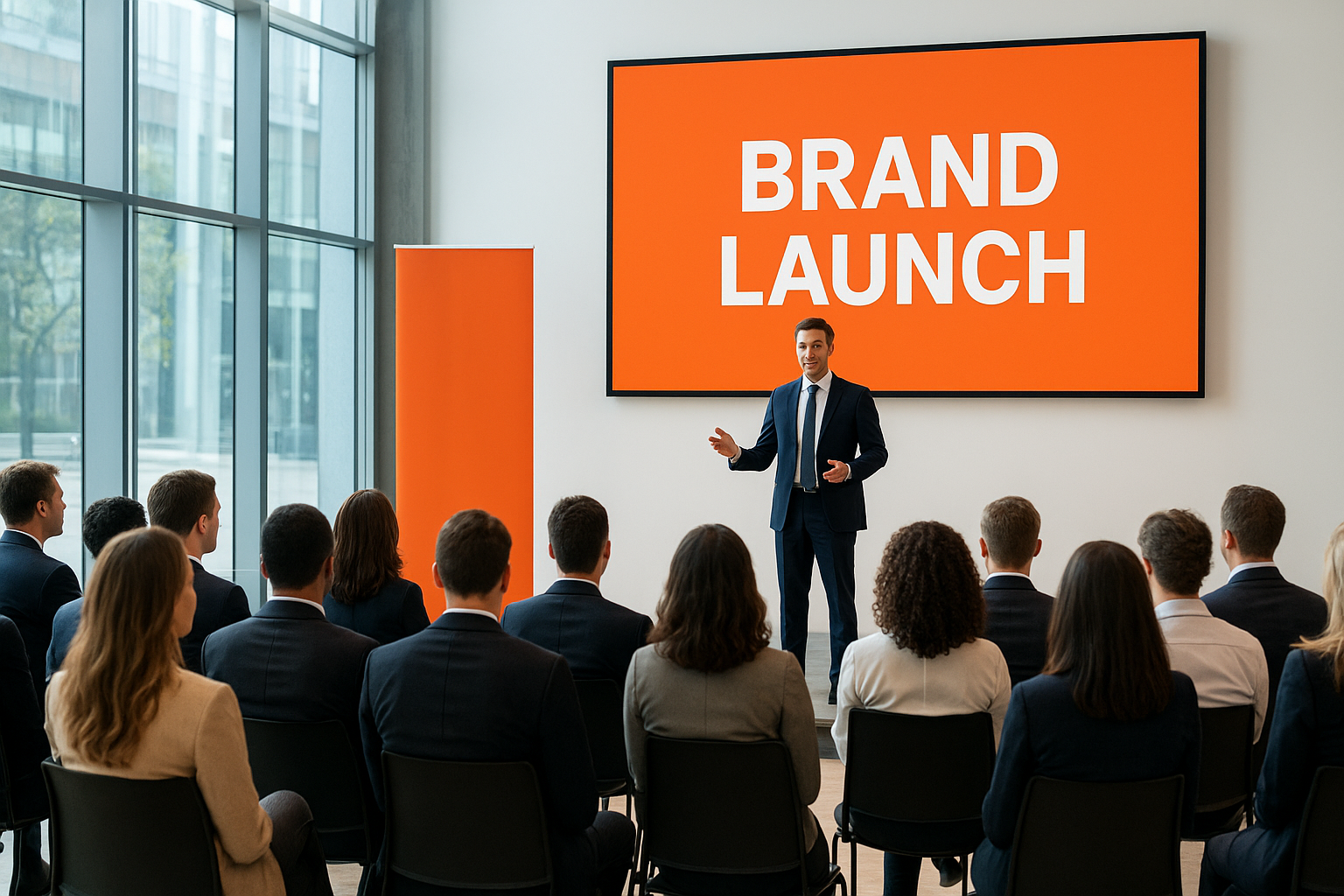
The bigger the crowd, the more your physical brand environment does the talking before a single handshake happens.
Internal-facing events
Internal corporate events focus on your own employees and leadership team. Company conferences, training seminars, town halls, team retreats, and annual award ceremonies all belong here. The goal shifts from attracting outside attention to building alignment, boosting morale, and reinforcing company culture across departments. These events are frequently underestimated, but they consistently rank among the highest-impact investments in employee retention and engagement.
- Company conferences and all-hands meetings
- Leadership and team retreats
- Training and development workshops
- Annual award ceremonies
- Town halls and internal product briefings
Hybrid and experiential events
Some corporate events blend both internal and external audiences, such as annual galas, industry summits, or large-scale brand experiences that bring clients and employees together under one roof. Experiential events layer interactive elements and immersive brand environments into the format, turning passive attendees into active participants. These formats take the most resources to pull off but consistently generate the strongest brand recall and post-event conversations.
Corporate event examples by goal
The most effective corporate events are designed around a single, clear objective rather than trying to accomplish everything at once. When your goal drives every decision, from venue selection to visual setup, your event performs better and your budget goes further. Knowing which goal your event serves also tells you how to measure success once it wraps.
Events built to generate leads and pipeline
Trade shows and industry conferences are the most common corporate events used for direct lead generation and client acquisition. Your booth presence, brand environment, and staff interactions are the primary tools you have to move a cold attendee toward a qualified conversation. Brands that invest in standout physical displays, including large-format inflatables, branded arches, and custom tent structures, consistently pull more foot traffic than those with standard table setups.
The difference between a booth that gets ignored and one that draws a crowd often comes down to how visible and visually distinct your brand environment is.
- Trade shows and industry expos
- Branded activations at third-party events
- Sponsored outdoor festivals or sporting events
- Roadshow stops targeting specific regional markets
Events built to retain and develop talent
Internal retreats, training programs, and annual company conferences serve your workforce directly and pay dividends in employee engagement and retention. When people feel like their employer invests in meaningful experiences and real connection, they stay longer and perform better. These events also give leadership a live opportunity to communicate strategy, celebrate wins, and reset priorities across teams.
- Company all-hands meetings and town halls
- Leadership development workshops
- Annual employee recognition ceremonies
- Team-building retreats
Events built to launch something new
Product launches and brand reveal events create urgency and momentum that no press release can match. A live audience amplifies the energy of a new product introduction and gives your team a concrete milestone to rally around before, during, and after the event itself.
How to plan a corporate event step by step
Planning corporate events without a clear process leads to wasted budget and missed goals. Every successful event follows a structured sequence: set your objective first, then build everything else around it. Skipping steps early almost always creates expensive problems later, so working through a reliable framework from the start saves both time and money.
The goal you define before planning begins determines every decision you’ll make about venue, format, budget, and measurement.
Define your goal and audience
Your event goal and your target audience are the two variables that shape every other decision in the planning process. Before you book a venue or set a budget, write down exactly what you want attendees to do, feel, or decide by the end of the event. Specific goals, like generating 50 qualified sales conversations or improving employee satisfaction scores, give your planning team a concrete target to build toward.
- Set one primary goal with measurable outcomes
- Define who is attending and what they need from the event
- Identify success metrics before the planning process moves forward
Lock in your budget and logistics
Budget clarity and logistical planning go together because every venue choice, catering decision, and design element carries a cost. Break your total budget into categories, including venue, production, staffing, brand environment, and contingency. Allocating a 10 to 15 percent contingency buffer protects you from the surprises that show up in almost every event.
- Venue and space rental
- Branding, displays, and physical installations
- Catering and audiovisual production
- Staffing and on-site management
Build your brand environment
Your physical environment communicates your brand before the first speaker takes the stage or the first handshake happens. Custom branded elements, including inflatable arches, tent structures, and large-format displays, transform a generic space into one that reflects your brand identity and draws people in from across the room.
Creative concepts that boost engagement
Generic setups produce generic results. The corporate events that people remember share one trait: they give attendees something to look at, interact with, or talk about that they didn’t expect to encounter. Bringing bold creative choices into your event environment shifts the energy in the room before a single scheduled activity begins, and that shift shapes how every conversation, presentation, and interaction lands for the rest of the day.
The moment your environment surprises someone, it earns their attention, and attention is the most valuable currency at any event.
Large-format inflatables and branded structures
Custom inflatable installations are among the highest-impact, lowest-footprint additions you can bring to any event space. A towering product replica, a branded archway at the entrance, or a custom inflatable tent as your main activation zone immediately communicates that your brand is serious about the experience. These structures work outdoors and indoors, scale to almost any venue size, and carry your logo and colors at a scale that no banner stand can match.
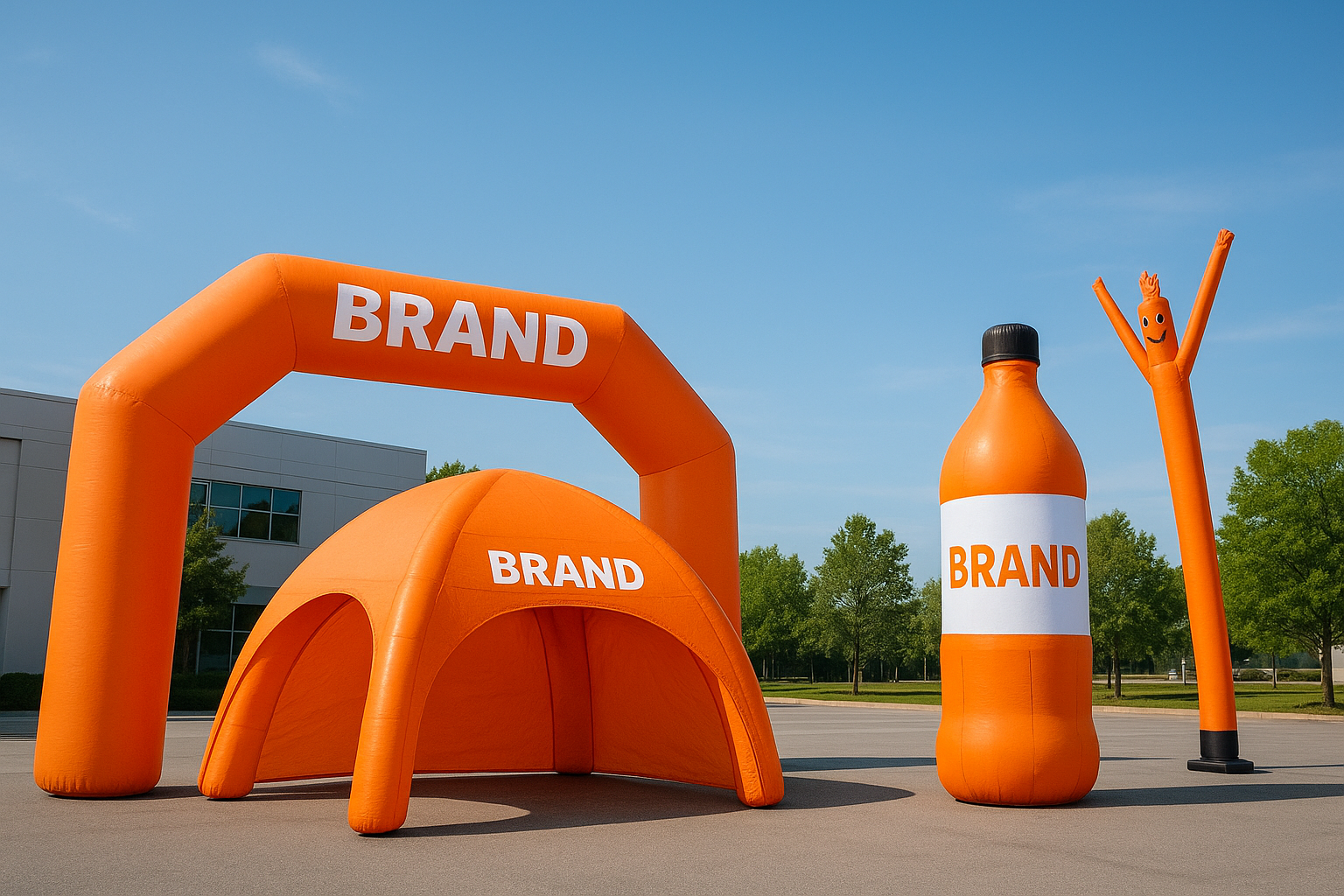
- Branded inflatable arches at entrances and registration points
- Giant product replicas for launches and trade show booths
- Custom inflatable tents for branded activation zones
- Air dancers and tube figures for outdoor event perimeters
Interactive zones and experiential touchpoints
Passive audiences disengage quickly. Building interactive zones into your event layout, where attendees can try something, build something, or participate in something, gives people a reason to move through the space and spend more time in your brand environment. Experiential touchpoints like product demos, branded photo moments, or hands-on stations turn observers into participants, and participants leave with a stronger impression than any seated audience member will.
Consider pairing interactive stations with branded physical structures to anchor each zone visually. When every touchpoint in your space looks intentional and connected to each other, the event feels cohesive rather than assembled from disconnected pieces.
Next steps for your next event
Corporate events reward the brands that plan with intention and show up with a visual presence that matches their ambition. You now have a clear picture of the major event types, what each one is designed to accomplish, and the creative concepts that separate forgettable gatherings from ones that generate real results. The next move is yours: pick your primary goal, define your audience, and start building an event environment that earns attention the moment people walk in.
Your physical brand environment is one of the most visible decisions you’ll make in the entire planning process. Custom inflatables, branded arches, and inflatable tent structures give your setup a presence that standard displays simply cannot match, whether you’re running an outdoor activation, a trade show booth, or a company launch event. If you’re ready to bring a bold visual element to your next event, request a custom inflatable quote and our team will help you build something worth noticing.


