

Custom fabrication is the process of designing and building a product from scratch to meet a specific need, no off-the-shelf shortcuts, no one-size-fits-all compromises. It spans industries from structural steel and architectural metalwork to something you might not immediately think of: promotional inflatables, branded tents, and larger-than-life product replicas.
At TMP Inflatables, custom fabrication is what we do every day. Since 2004, we’ve designed and produced inflatables for experiential marketing agencies, event planners, and brand teams across North America and beyond. Every project starts as a concept and moves through a real fabrication process, material selection, pattern engineering, digital printing, and assembly, before it ships to a client’s event or activation. That hands-on production experience gives us a practical understanding of what custom fabrication actually involves, regardless of the material or industry.
This article breaks down the full definition of custom fabrication, walks through how the process works from start to finish, and shares real examples that show the range of what’s possible. Whether you’re sourcing metal components or exploring inflatable brand activations, the fundamentals are the same, and they’re worth understanding before you invest.
What counts as custom fabrication
Custom fabrication covers any manufacturing process where a product is built to a specific design rather than pulled from existing inventory. The dimensions, materials, and construction method all respond to what you need, not what a factory already produces in bulk. You see this across metal fabrication, architectural construction, and branded marketing products. The trigger is always a requirement that standard products can’t meet, whether that’s a structural component with unusual tolerances or a giant inflatable shaped exactly like your product.
Custom fabrication starts with intent: you’re not adapting what exists, you’re building what doesn’t exist yet.
The core distinction: custom vs. standard
Standard products are manufactured in consistent runs with fixed specs. Custom fabrication flips that sequence: the specs come from you first, and the manufacturing process follows from there. A steel beam cut to a standard length is stock inventory. That same beam welded, drilled, and finished to match an architect’s drawing becomes fabricated metalwork. The same logic applies to inflatables: a generic arch is a stock product, while a branded, shaped, and printed arch built to your event measurements is a custom fabrication job. The distinction is not about complexity, it is about origin.
Where custom fabrication shows up across industries
The range is wider than most people expect. Industrial and structural applications include custom metal frames, brackets, enclosures, and architectural elements built to engineering specs. On the brand and marketing side, you have product replicas, inflatable tents, mascot costumes, and trade show displays built from materials like PVC, nylon, and coated fabric. The fabrication process shares core principles across all of these: design review, material selection, cutting and forming, assembly, and final quality check. What changes is the material and the end use, not the discipline required to build it correctly.
Why custom fabrication matters
When standard products fall short, custom fabrication fills the gap. A stock product is built for the average use case. Your project might not be average. Whether you’re engineering a structural component that needs to fit inside an unusual space or building a branded inflatable that needs to match your exact product shape, off-the-shelf options create compromises you can’t afford.
The business case for building custom
Investing in custom fabrication pays off in fit, function, and impact. A product built to your exact specs eliminates the workarounds, modifications, and performance gaps that come with forcing standard products into non-standard situations. For marketing teams, this translates directly into brand consistency and event-ready builds that arrive looking exactly as designed.
Custom fabrication gives you a product that does the specific job you need it to do, nothing more, nothing less.
Brands and businesses that rely on visual impact and precision get the most out of custom builds. When your inflatable tent, product replica, or display has to perform at a live event with no room for error, getting the specs right from the start matters more than saving time by picking something generic.
How the custom fabrication process works
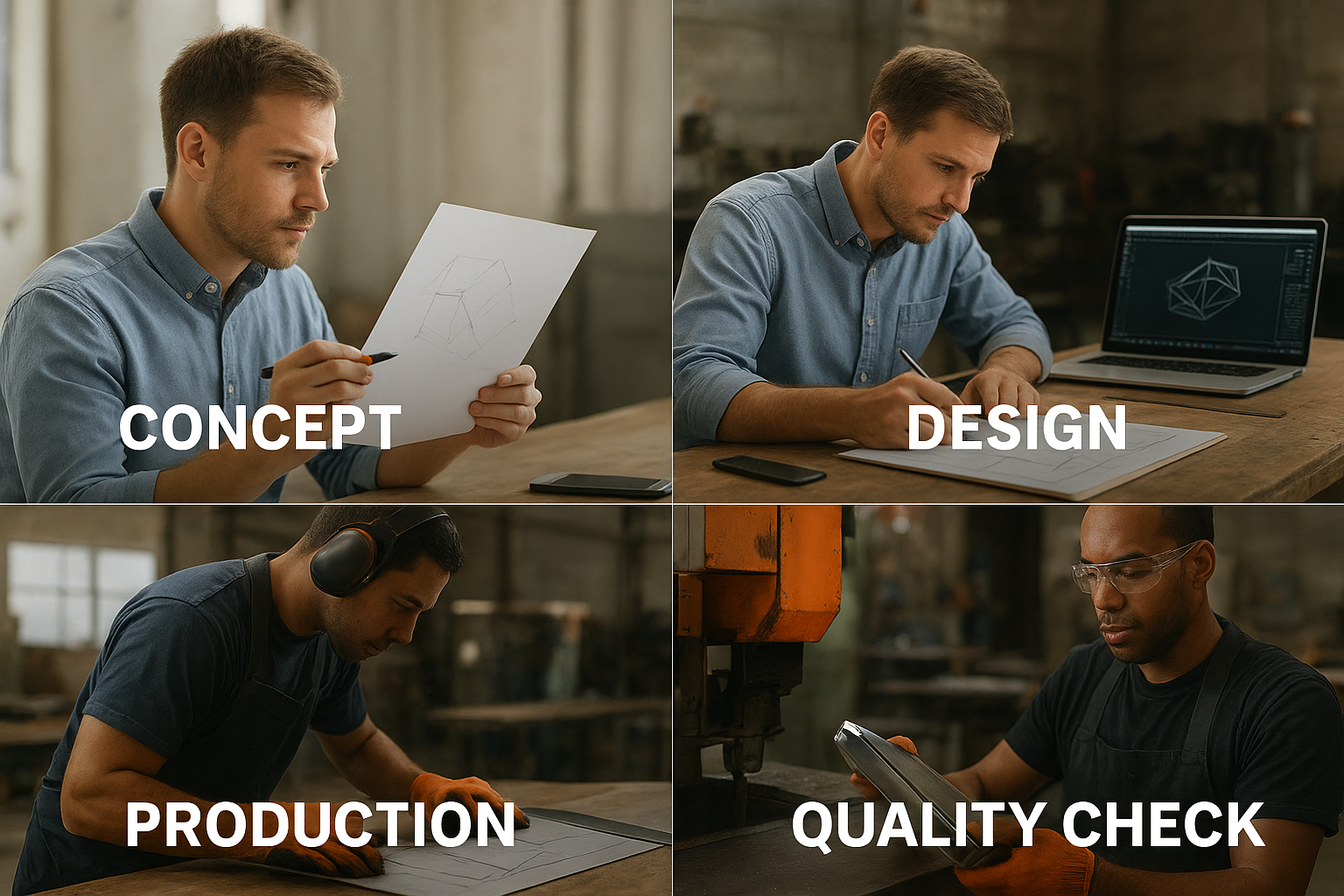
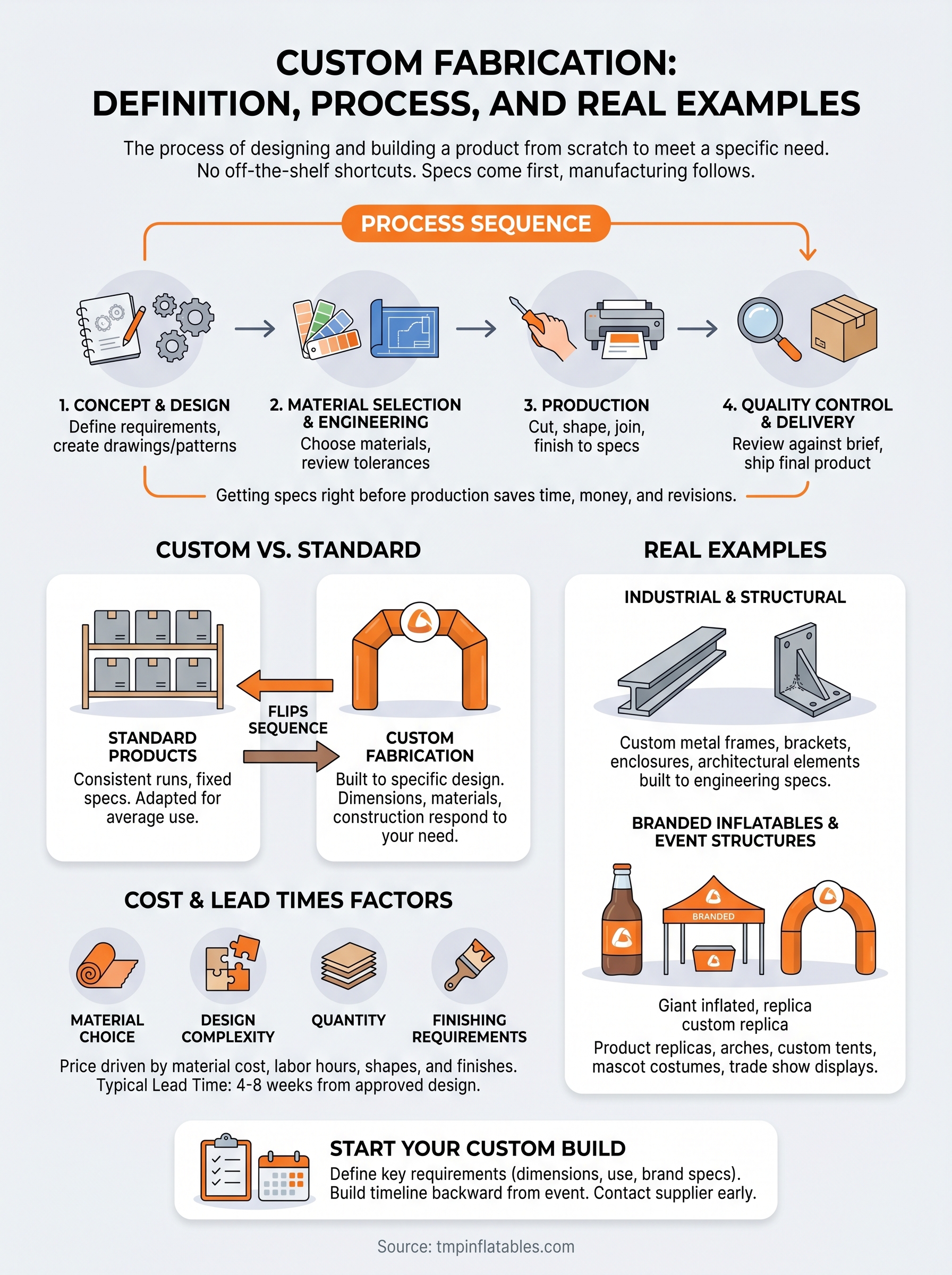
Every custom fabrication project follows a predictable sequence of steps, even when the final product looks completely different from job to job. You start with a concept, move through design and engineering, then into production and quality control, before the finished product ships to you. Knowing this sequence upfront helps you plan ahead and ask the right questions early.
From brief to build
The process opens with a design and specification phase where your requirements get translated into technical drawings or patterns. A fabricator reviews materials, tolerances, and construction methods before any cutting or forming begins. Once the design is locked, production starts: materials are cut, shaped, joined, and finished according to your approved specs.
Getting your specs right before production starts saves you time, money, and revisions down the line.
After production, most projects move through a review and quality check against the original brief. This is where fit, finish, and performance issues surface before the final product ships. Skipping this step to save time almost always costs more in corrections later, so build review time into your project timeline from day one.
Real examples of custom fabrication
Custom fabrication looks different depending on the industry, but the underlying logic stays consistent: a specific need drives a purpose-built product. Seeing concrete examples helps you recognize where custom fabrication fits your own project and what the output actually looks like when the process works correctly.
Structural and industrial builds
In construction and manufacturing, custom fabrication typically produces brackets, enclosures, frames, and architectural metalwork built to engineering drawings. A facility might need a steel support structure with exact load ratings and mounting points that no stock product matches. The fabricator works from those drawings, cuts and welds to spec, and delivers a component that fits the space and performs to the required standard.
Branded inflatables and event structures
On the marketing side, product replicas, branded arches, custom tents, and mascot costumes are all fabrication jobs. A brand launching a new product might commission a 10-foot inflatable version of the product itself, printed in exact brand colors, built to set up in under 20 minutes at a live activation. That project involves pattern engineering, material selection, seam construction, and digital printing before anything ships.
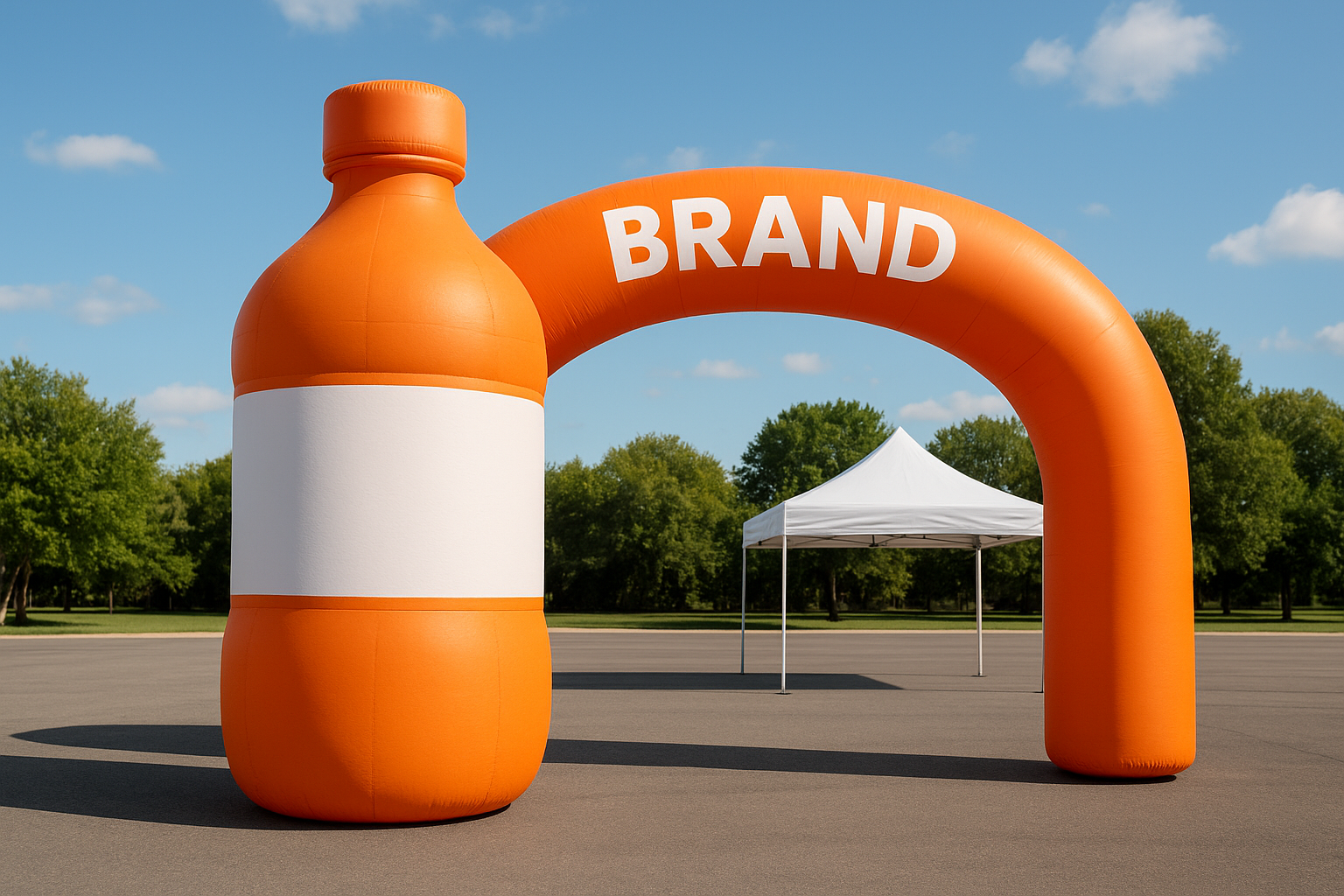
The best custom fabrication examples share one trait: the finished product could not have come from a catalog.
Cost, lead times, and what affects pricing
Custom fabrication pricing varies widely because every project starts from a different place. A simple branded arch costs far less than a multi-piece inflatable product replica with full-color printing. The variables that drive your final price are material choice, design complexity, quantity, and finishing requirements. Understanding those factors before you request a quote helps you set a realistic budget and avoid surprises mid-project.
The more detail you bring to your initial brief, the more accurate your first quote will be.
What drives the cost
Material cost and labor hours are the two biggest line items in any custom build. Complex shapes require more pattern pieces, more seams, and more assembly time. Specialty finishes, custom printing, and structural reinforcements all add to both material spend and production hours. Ordering in higher quantities typically reduces your per-unit cost, so if you need the same product for multiple events, plan your full volume upfront.
What to expect for lead times
Most custom fabrication projects run 4 to 8 weeks from approved design to delivery, depending on complexity and your supplier’s current production schedule. Rush timelines are possible but usually carry additional costs. Build your event dates backward from that window and submit your brief early so production delays don’t compress your setup time.
Where to start with a custom build
Starting a custom fabrication project is straightforward when you come prepared. Before you contact a supplier, write down your key requirements: the dimensions you need, the end use, where the product will be displayed, and any brand or print specs that apply. The more complete your brief, the faster a fabricator can give you an accurate quote and flag any design constraints early.
Your timeline matters as much as your specs. Production windows run 4 to 8 weeks on most custom builds, so contact your supplier well before your event or launch date. Waiting until the last minute limits your options and pushes up your cost.
TMP Inflatables has handled custom builds for brands and agencies across North America since 2004. If you have a project in mind and want a clear number to plan around, request a custom inflatable quote and our team will respond directly.