

Your event has one shot to grab attention from a distance, and custom outdoor event signage does that job better than almost anything else. Whether you’re marking an entrance, promoting a product launch, or branding a trade show booth that sits under open sky, the signage you choose determines how visible and memorable your presence actually is. But not all signage holds up equally once wind, rain, and direct sunlight enter the picture.
Picking the right type, material, and design matters more than most people realize. A banner that looks sharp indoors can fade, tear, or flap uselessly after a few hours outside. Inflatable structures, archways, flags, and tension displays each solve different problems, and each comes with trade-offs worth understanding before you spend your budget. That’s exactly what this article breaks down.
At TMP Inflatables, we’ve spent over 20 years manufacturing custom inflatable signage for outdoor events across North America. From giant rooftop ads to branded arches and event tents, we’ve seen what works and what doesn’t. This guide pulls from that hands-on experience to help you choose the right signage for your next outdoor event, covering types, materials, and practical tips that actually hold up when it counts.
Why custom outdoor event signage matters
When people walk past your event space, they decide in seconds whether to stop or keep moving. Signage is often the first thing they see, and it shapes their entire impression of your brand before anyone says a word. At crowded outdoor venues, where dozens of competitors compete for the same eyes, a forgettable sign is as good as no sign at all.
First impressions happen fast
Outdoor events are noisy, visually cluttered environments. Your signage needs to cut through that noise from across a parking lot, a fairground, or a busy street. Custom signage lets you control the exact colors, shapes, and messaging that align with your brand, so you’re not relying on standard templates that blend into the background.
When your sign matches your brand identity precisely, it builds trust before a single conversation starts.
Tall inflatable arches, branded tents, and large-format displays are specifically designed to be visible at a distance, which generic signage rarely achieves. The difference between standing out and blending in often comes down to whether your signage was built for your specific context or pulled off a shelf.
Generic signage costs you more than you think
Many event organizers underestimate the cost of weak visibility. Foot traffic that walks past your space is revenue you don’t recover, and replacing flimsy signage that fails mid-event adds unexpected expense. Investing in custom outdoor event signage built for the actual conditions you’ll face, whether that’s wind, direct sun, or rain, protects both your budget and your brand on the day it matters most.
Cheap materials buckle, fade, or collapse at exactly the wrong moment. Purpose-built signage holds up, keeps your messaging clear, and eliminates the scramble to fix or replace something while your event is running.
What counts as custom outdoor event signage
Custom outdoor event signage covers any branded, weather-resistant display you design specifically for your event or promotion. The "custom" part means it’s built around your brand identity, not a generic template. The "outdoor" requirement means the materials hold up against UV exposure, wind, and rain without losing structural integrity or print quality mid-event.
Signage that isn’t built for outdoor conditions isn’t outdoor signage, it’s indoor signage placed outside.
More than just banners
Most people picture vinyl banners when they hear "outdoor signage," but the category is much wider. Your options span a full range of formats, each built for specific visibility goals:
- Inflatable arches and entryway structures
- Branded event tents and custom domes
- Giant product replicas and air dancers
- Large-format flags and rooftop inflatables
What makes it "custom"
Custom means you control the shape, size, color, and messaging. A standard arch becomes custom when it carries your exact logo, brand colors, and specific text. That distinction matters because purpose-built pieces create recognition that generic signage simply cannot replicate at scale.
Your supplier also needs accurate brand assets to produce it correctly. Providing exact color codes and high-resolution logo files upfront ensures the finished product actually matches your vision.
Types of outdoor event signage by use case
Matching the right signage format to your specific situation saves time, money, and last-minute fixes. Different events create different visibility challenges, and the best custom outdoor event signage solves the specific problem in front of you, not a generic one.
High-visibility entrances and event marking
Inflatable arches and entryway structures work best when you need to mark a location people can spot from a distance. They create a physical landmark that pulls foot traffic toward your space. Air dancers and giant product replicas serve a similar purpose by adding vertical height and motion, both of which trigger attention naturally.
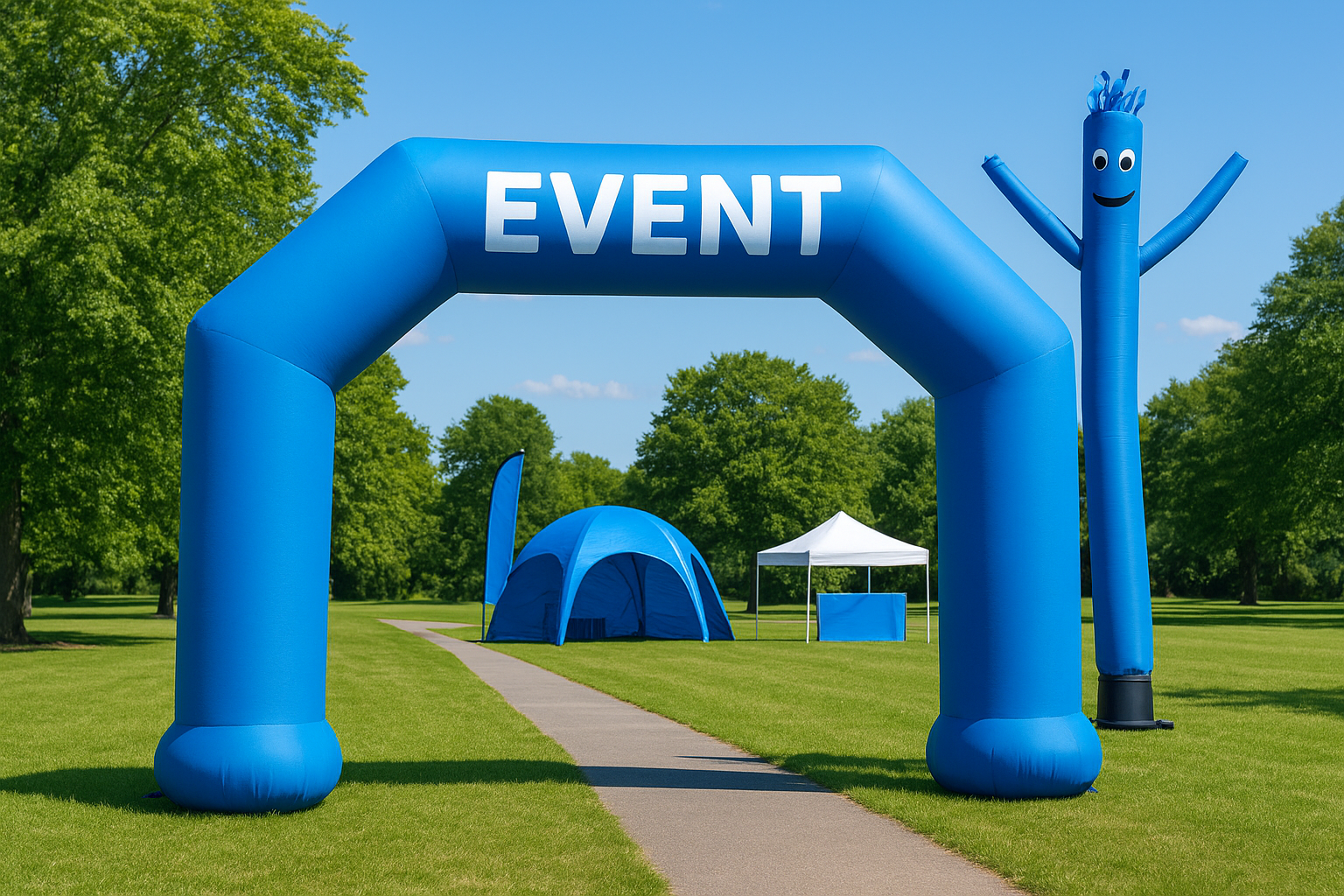
The taller and more distinctive your entrance signage, the easier you make it for attendees to find you before they even check a map.
Brand activation and product promotions
Branded event tents, custom domes, and rooftop inflatables fit situations where you need sustained brand exposure over hours or days. These formats display your logo and messaging across a large surface area without requiring constant attention.
Flags and large-format banners work well for perimeter branding, reinforcing your identity throughout the event footprint. Splitting your signage across multiple formats extends your visual reach well beyond a single focal point.
Materials and print methods that hold up outdoors
The material your signage uses determines how long it looks sharp once it’s exposed to sun, wind, and rain. Custom outdoor event signage built from the wrong fabric or substrate fails fast, and replacing it mid-event isn’t an option most organizers have. Knowing your material choices before you order saves you from that problem entirely.
Materials that resist outdoor conditions
Oxford polyester and heavy-duty nylon are the two most common base materials for inflatable outdoor structures. Both resist tearing under wind load and hold color well under UV exposure. For flat-format signage like banners and flags, 600D polyester or reinforced vinyl gives you the durability needed to survive multi-day events without fading or fraying at the edges.
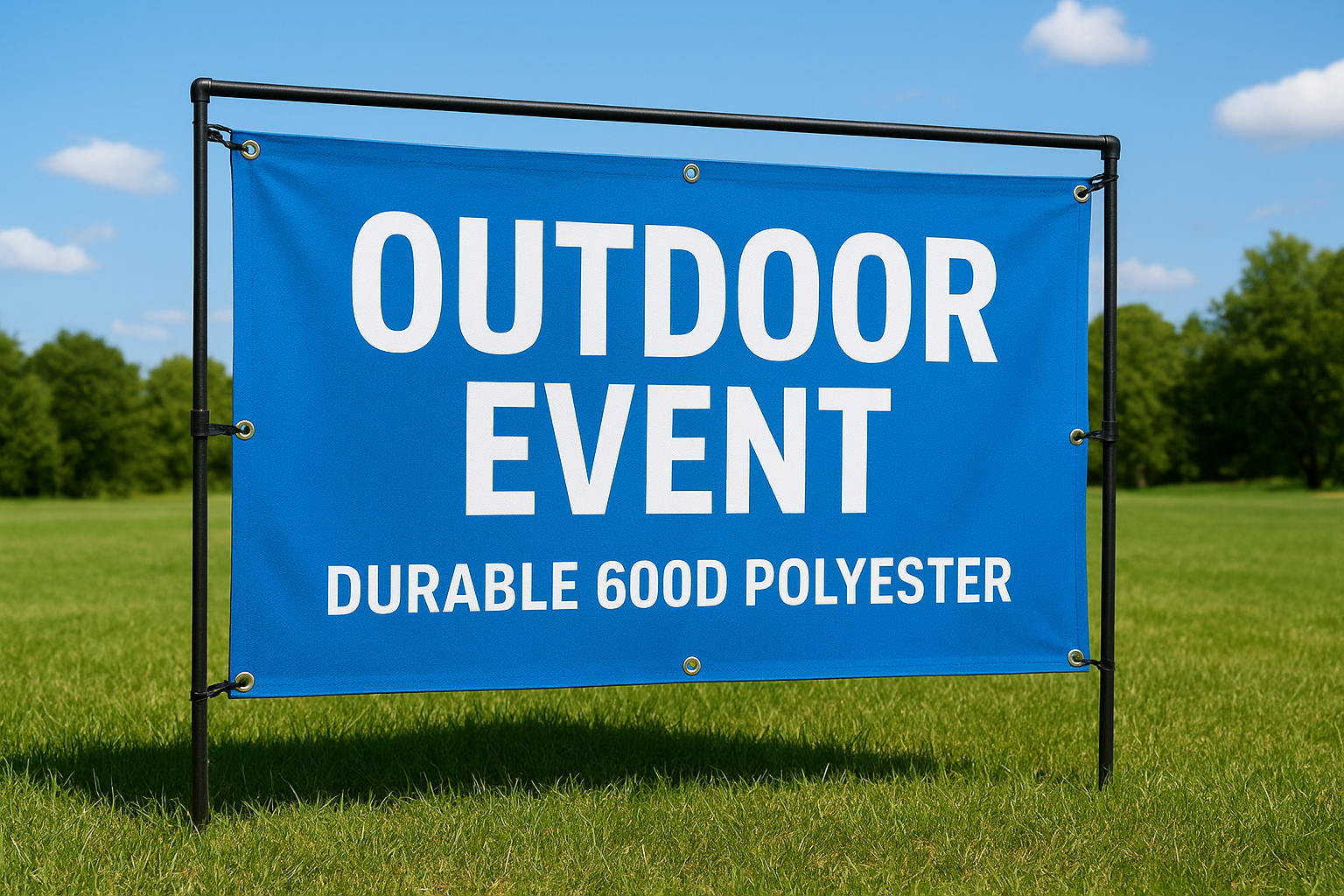
The heavier the material weight, the better it handles sustained wind without losing shape or legibility.
Print methods built for weather exposure
Dye sublimation printing bonds color directly into the fabric rather than sitting on top of the surface, which makes it far more resistant to fading from sunlight. For rigid or vinyl surfaces, UV-resistant ink printing protects your messaging from washing out after rain exposure. Whichever method you use, always confirm that the inks carry an outdoor rating before approving a production run.
How to choose, design, and set up signage
Getting your signage right comes down to three decisions made in sequence: what format fits your venue, what design communicates your brand at distance, and how you plan to install it safely on event day.
Choose your format based on venue constraints
Wind exposure, surface access, and available footprint all determine which signage type works for your specific location. An inflatable arch needs ground anchoring space; a rooftop balloon requires structural access. Match your format to your physical constraints first, then work backward to size and design.
Choosing a format your venue can’t support wastes budget and creates last-minute problems you can’t fix on-site.
Before ordering custom outdoor event signage, confirm anchor points, power access, and permit requirements your venue enforces. Many outdoor locations require organizers to submit signage specifications in advance.
Design for distance, not close-up detail
Large, simple typography and high-contrast color combinations read clearly from 50 feet away. Fine details and small text disappear at distance, so keep your design focused on one primary message and your logo, nothing more.
Set up and test your signage at least one day before the event to catch fit or anchoring issues while you still have time to address them.
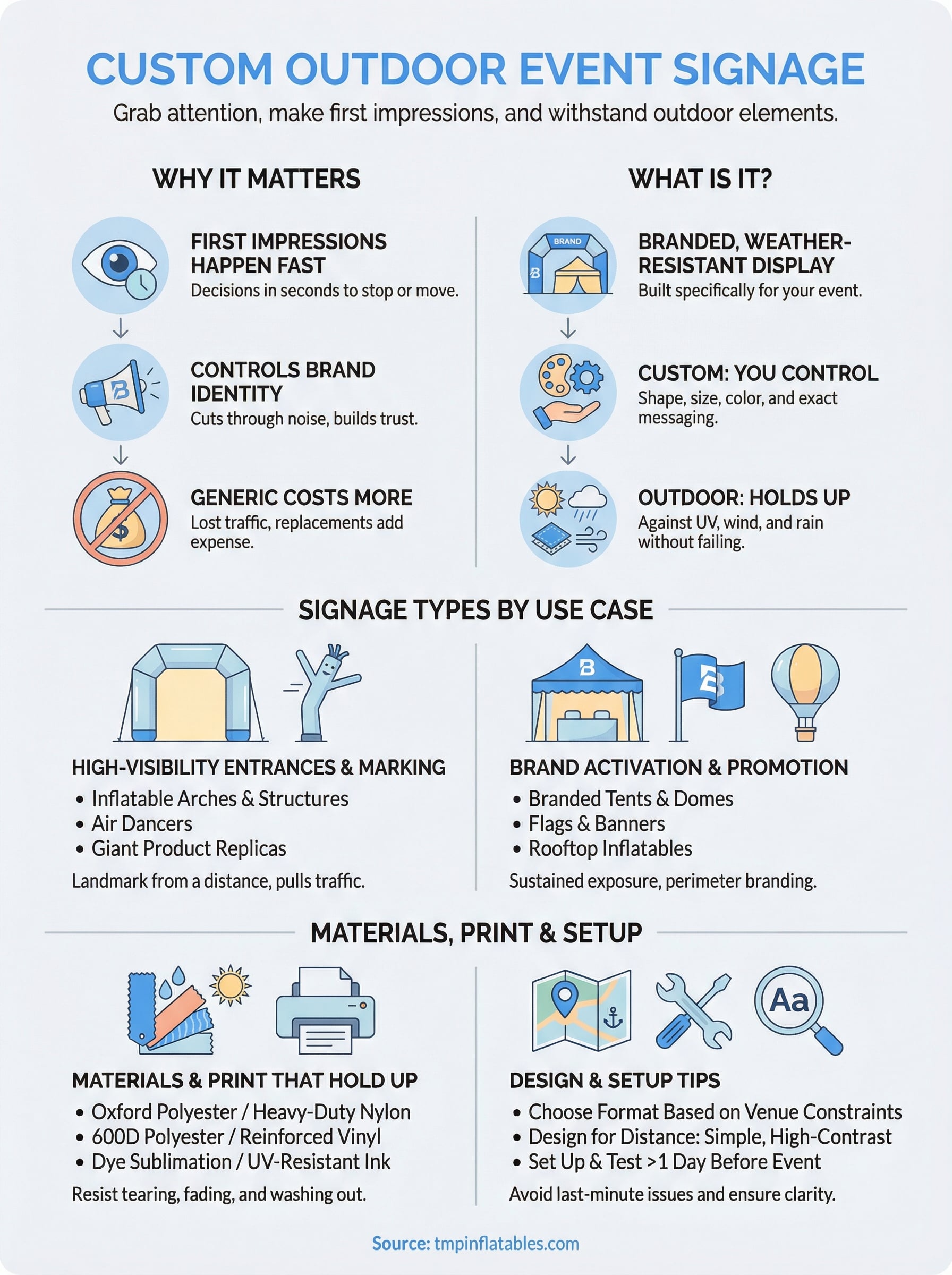
Next steps for your event signage
You now have a solid foundation for selecting, designing, and installing custom outdoor event signage that actually performs on the day you need it most. The next move is straightforward: define your venue constraints, lock your format choice to those constraints, and get your brand assets ready before you contact a supplier.
Start by confirming your event date, venue access rules, and any permit requirements your location enforces. The earlier you confirm those details, the more production time your supplier has to build signage that matches your exact specs. Rushing production increases the risk of fit and print errors that surface after your deadline, not before it.
When you’re ready to move forward, explore TMP Inflatables’ full range of custom inflatable signage to find formats built specifically for outdoor events. Our in-house design team works directly with you from concept through delivery, and every piece ships with the outdoor durability your event actually requires.