
Every product launch, festival, trade show, or brand activation starts with the same thing: someone has to plan it, run it, and make sure nothing falls apart. That’s event management in a nutshell, the process of bringing an event from idea to execution. Whether you’re organizing a 50-person corporate gathering or a 10,000-person outdoor festival, the core principles stay the same. And if you’re just getting started, understanding those principles is the difference between an event that lands and one that doesn’t.
The scope of event management covers more than most people expect. It includes budgeting, logistics, vendor coordination, marketing, on-site operations, and post-event analysis. It also includes the physical and visual elements that shape how attendees experience your event, things like signage, structures, displays, and branded installations. These aren’t afterthoughts. They’re the pieces that turn a parking lot into an experience and a booth into a destination people actually walk toward.
That’s where our work at TMP Inflatables fits in. Since 2004, we’ve designed and produced custom inflatables, tents, arches, costumes, giant product replicas, misting stations, for experiential marketing agencies, event planners, and brands across North America, the Caribbean, and Latin America. We’ve seen firsthand what separates well-managed events from chaotic ones, and a lot of it comes down to preparation. This article breaks down exactly what event management means, walks through the key steps involved, and includes real examples so you can start applying these ideas right away, whether you’re planning your first event or tightening up your process.
What event management means and what it includes
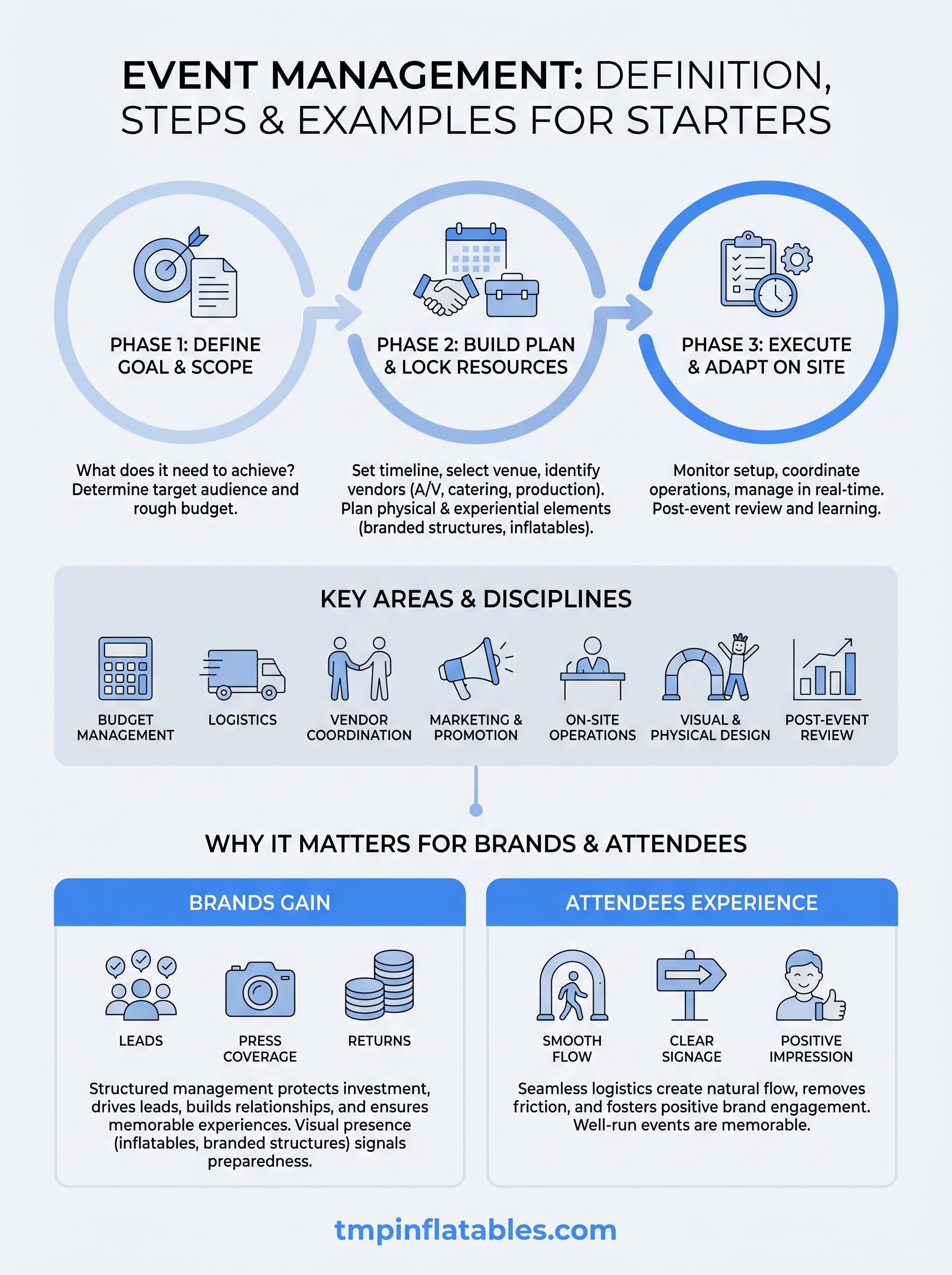
Event management is the discipline of planning, organizing, and executing events from start to finish. It covers everything that needs to happen before anyone walks through the door, while the event is running, and after the last attendee leaves. The term applies to a wide range of event types: corporate conferences, product launches, trade shows, music festivals, brand activations, sporting events, and private celebrations. What ties them all together is the same underlying process: defining a goal, building a plan, assembling the right people and resources, and delivering an experience that actually hits the mark.
The core definition
At its most basic, event management means taking an idea and turning it into a real, functioning event. That sounds straightforward, but it involves dozens of interconnected decisions and tasks running in parallel. You’re not just booking a venue and sending invitations. You’re coordinating vendors, managing timelines, controlling a budget, and handling the unexpected in real time. A missed delivery, a permit issue, or an A/V failure can derail hours of preparation if you haven’t planned for it. Strong event management anticipates those problems before they become crises and builds enough flexibility into the plan to absorb them without derailing the whole operation.
The goal of event management isn’t just to make an event happen. It’s to make it happen well, on time, and in a way that leaves attendees and clients satisfied.
What falls under the event management umbrella
Most people underestimate how many disciplines event management pulls from. It draws from project management, marketing, logistics, finance, design, and communications all at once. Each event will weight those areas differently depending on type and scale, but all of them show up in some form. A small corporate dinner and a 5,000-person outdoor brand activation both require the same fundamental thinking, the scope just changes.
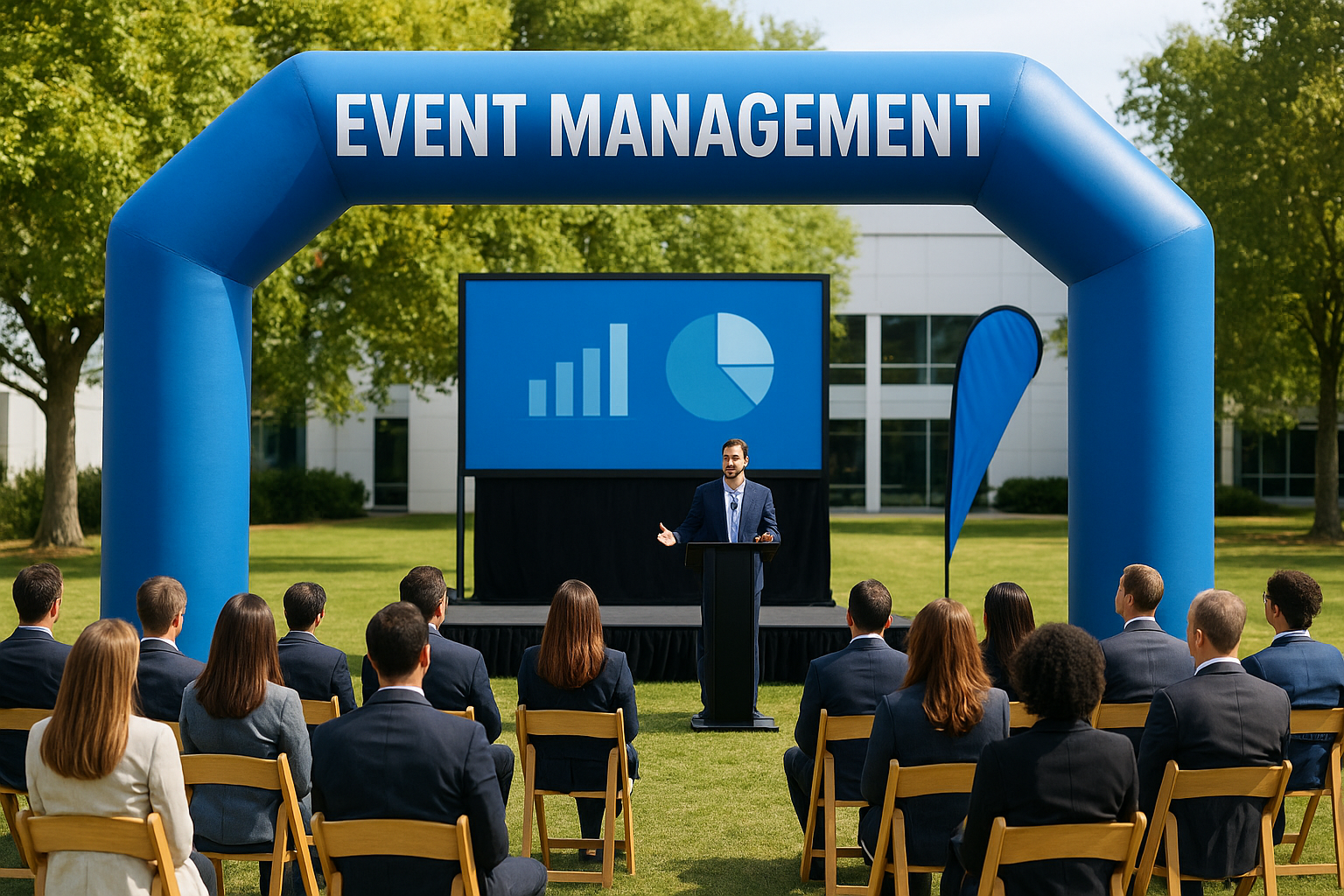
Here’s a breakdown of the main areas event management covers:
- Strategy and goal setting: defining what the event needs to achieve and for whom
- Venue selection and site planning: choosing the right space and mapping how it will be used
- Vendor coordination: sourcing and managing suppliers for catering, A/V, production, rentals, and branded installations
- Marketing and promotion: driving attendance and building awareness before the event date
- On-site operations: managing the event as it runs, from registration to teardown
- Visual and physical design: branded structures, signage, displays, inflatables, and other elements that shape how the space looks and feels
- Budget management: tracking spend and keeping costs aligned with expectations
- Post-event review: measuring results and capturing learnings for next time
Visual and physical elements deserve more attention than they typically receive. The way a space looks and feels directly influences how attendees engage with it. A well-placed branded arch, a custom inflatable replica of your product, or a misting tent at a summer activation are not decorations. They’re functional tools that direct foot traffic, reinforce brand identity, and create the kind of memorable moments people share and talk about well after the event ends. When you approach event management as a complete discipline, those physical elements become part of the strategy, not an afterthought you deal with the week before. Looking for more information? Check out this awesome blog.
Why event management matters for brands and attendees
Good event management produces results that poor planning simply cannot. Brands that treat events as a strategic tool rather than a logistical obligation consistently get more out of them: more leads, stronger relationships, and measurable returns. For attendees, the difference between a well-run event and a poorly managed one is felt immediately, in the flow of the space, the quality of the experience, and whether they walk away with a positive impression of your brand.
What brands gain from managing events well
When you invest in structured event management, you protect the investment itself. Events cost real money, and every missed detail shrinks your return. Proper planning ensures your budget goes toward the elements that actually move the needle: the right venue, the right audience, and the right visual and experiential components that make your brand memorable. A well-executed activation or trade show appearance can generate leads, press coverage, and audience sharing that pays back the cost many times over.
The brands that get the most from events are the ones that plan with a clear outcome in mind, not just a date on the calendar.
Your visual presence is a core part of that strategy. Branded structures, custom inflatables, and large-format displays signal to attendees that your brand is prepared and worth their attention. That first impression shapes how people engage with everything else at your booth or activation, before anyone has said a word to them.
What attendees actually experience
Attendees never see the planning behind an event; they experience the results of it. When logistics run smoothly, lines move, spaces feel comfortable, signage is clear, and the flow of the event feels natural. People don’t think about what’s working when it works. They only notice when something breaks down.
Friction is the enemy of a good event. Confusing layouts, long waits, and technical failures all stick to your brand whether you intended them or not. Strong event management removes those friction points before they show up, so attendees spend their time engaging with your brand instead of dealing with problems. That shift in attention is exactly what makes events worth running in the first place.
How event management works step by step
Event management follows a predictable sequence even when the events themselves look completely different. Whether you’re running a trade show booth or a full outdoor brand activation, the process breaks into three core phases: pre-event planning, on-site execution, and post-event review. Skipping steps in any phase creates problems in the next one, so the order matters as much as the tasks themselves.
Phase 1: Define the goal and scope
Before you book anything or spend a dollar, you need a clear answer to one question: what does this event need to accomplish? That answer drives every decision after it. A product launch has different requirements than a corporate conference, and a brand activation at a summer festival calls for different physical elements and vendor relationships than a trade show exhibit. Locking down your goal, your target audience, and your rough budget at the start keeps your planning focused and prevents scope from expanding until your timeline can’t absorb it.
If you can’t define what success looks like before the event, you won’t be able to measure it after.
Phase 2: Build the plan and lock in resources
Once you know what you’re working toward, you move into the core planning stage. This is where you select your venue, set your production timeline, identify vendors, and pull together the physical and experiential components that will shape the event. For many events, that includes branded structures like custom inflatables, arches, tents, or large-format displays that define the look of your space and direct how attendees move through it. You lock in contracts, confirm logistics, and build contingency plans for the scenarios most likely to go wrong.

A solid plan at this stage also includes a detailed run-of-show document that outlines every task, who owns it, and when it needs to happen. That document becomes your operating guide on event day and gives your team a shared reference point when things shift unexpectedly.
Phase 3: Execute and adapt on site
On event day, your role shifts from planner to operator. You monitor setup, confirm vendor arrivals, and stay close enough to the action to catch problems before they compound. After the event wraps, you pull together results, review what worked, and document what to adjust the next time around.
Core roles, vendors, and timelines
Every event runs on a network of people and relationships working in parallel. Knowing who owns what and when each piece needs to be in place is central to effective event management. Without that clarity, tasks fall through the gaps, vendors get conflicting instructions, and your timeline starts slipping before the event even gets close.
The key roles involved
Most events have a core team that divides responsibility across a few distinct functions. The event manager or project lead holds the overall plan and keeps everyone accountable. Below that, you typically have people handling logistics and vendor coordination, someone covering marketing and promotions, and an on-site operations lead who manages setup through teardown. On larger events, those roles split further. On smaller ones, a single person might cover two or three of them.
The cleaner your role assignments are from the start, the fewer things fall through the gaps during execution.
Vendors you’ll rely on
Your vendor list depends on the type of event, but most activations pull from the same core categories. A/V and production companies handle sound, lighting, and staging. Catering and hospitality vendors manage food and service. Rentals cover furniture, flooring, and temporary structures. For branded environments, you’ll work with suppliers who produce custom physical elements like inflatable structures, arches, branded tents, and large-format displays. These are the pieces that define how your space looks from across a room. Treating your vendor relationships as partnerships rather than transactions pays off during the moments when you need quick turnarounds or last-minute adjustments.
How timelines actually work
Your timeline is the backbone of your entire operation. Most large events require a planning window of three to six months, with key milestones locked in well before event day. Venue contracts and permits need to happen first, followed by vendor bookings, then production of branded materials and physical installations. Custom fabrication, including inflatables, printed structures, and specialty displays, requires lead time you can’t recover if you wait too long. Build your timeline backward from the event date and assign firm deadlines to every deliverable. That structure keeps your team aligned and gives vendors the runway they need to deliver on time.
Budgeting, logistics, and risk planning
These three areas sit at the center of every event management decision you make. Get them right, and your event runs with the kind of control that frees you to handle surprises. Ignore them, and small problems compound into expensive failures. Most first-time event planners underestimate how tightly these three areas connect: your budget shapes your logistics options, and your logistics expose your risk.
Building and tracking your budget
Your budget is not a number you set once and forget. It’s a living document you update throughout the entire planning process. Start by listing every cost category: venue, production, staffing, marketing, branded materials, catering, permits, and contingency. Assign realistic estimates to each, then track actual spend against those estimates as contracts come in. The categories where budgets most commonly slip are production and branded physical installations, because custom fabrication costs are easy to underestimate if you’ve never sourced them before.
A useful starting framework breaks your budget into fixed costs and variable costs. Fixed costs stay the same regardless of attendance: venue rental, custom inflatables, branded structures, and A/V equipment. Variable costs shift with headcount: catering, printed materials, and staffing. Knowing the difference helps you identify where you have flexibility and where you don’t.
Managing logistics without losing track
Logistics covers the physical movement of everything and everyone your event depends on. That includes vendor delivery windows, setup sequences, equipment storage, and crew scheduling. The single most effective tool for managing logistics is a detailed master schedule that assigns every task an owner and a deadline. Without that, two vendors show up at the same loading dock at the same time, or a branded structure arrives with no one on site to receive it.
If your logistics plan only works when everything goes right, it’s not a plan.
Planning for what can go wrong
Risk planning means identifying the scenarios most likely to disrupt your event and building a response before they happen. Weather is the most common variable for outdoor events. Equipment failure, vendor no-shows, and permit delays are close behind. For each risk you identify, assign a clear backup option or mitigation step so your team knows exactly what to do when something shifts. You won’t prevent every problem, but you can absolutely control how fast you recover from one.
Examples of event management in real life
Seeing event management applied across different contexts makes the principles easier to grasp and apply. The same core process runs through every type of event, but the physical environment, audience, and success metrics shift depending on what you’re producing. These three examples show how that plays out in practice.
Trade shows and brand activations
Trade shows are one of the most competitive environments in event management. Every exhibitor occupies a defined footprint, and your job is to make your space the one attendees walk toward and stay at. Brands that succeed at trade shows treat the physical environment as a strategic asset. That means custom-built structures, large-format branded displays, inflatable product replicas, and clearly defined zones that signal what your company does from across the room. A 10×10 booth with minimal visual presence disappears into the noise, while a branded arch or towering inflatable draws a crowd before your team says a single word.
What you put in the space is never just decoration. It communicates your brand’s scale, personality, and attention to detail before any conversation begins.
Outdoor festivals and large-scale events
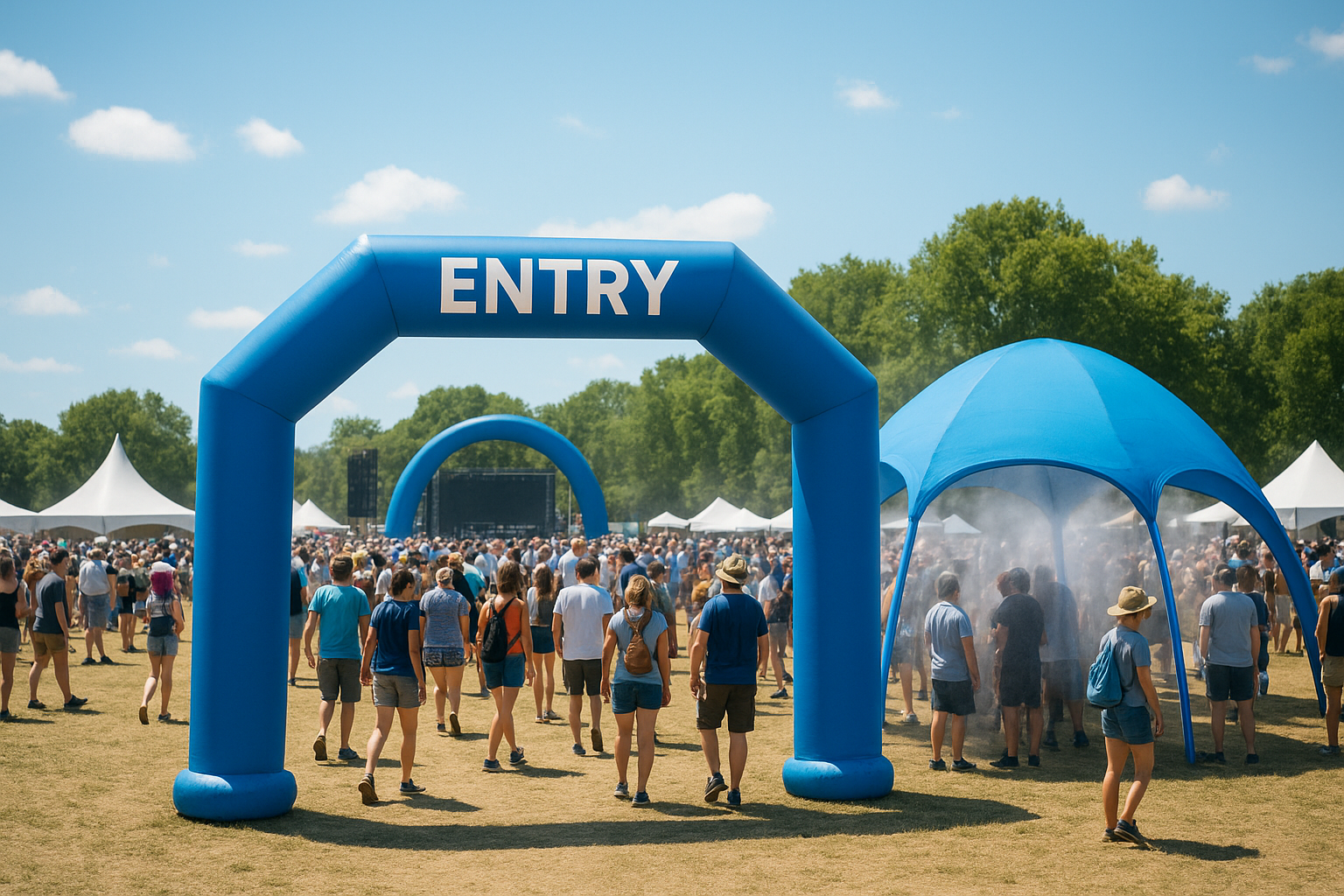
Outdoor events introduce variables that indoor venues eliminate: weather, crowd flow, site infrastructure, and the need for structures that can handle real-world conditions. A summer brand activation at a music festival, for example, requires misting tents to keep attendees comfortable, branded arches to mark entry and exit points, and inflatable installations that hold up in wind and heat while staying visually consistent. Logistics at this scale demand detailed site maps, strict vendor delivery windows, and a clear setup sequence so your team builds out the space in the right order without blocking access for other vendors.
Corporate events and product launches
Corporate events and product launches run on precision. Your audience expects a polished experience, and every detail either reinforces or undercuts the message you’re trying to deliver. A product launch, for instance, might use a custom inflatable replica of the product itself as the centerpiece of the space, paired with branded tents and signage that guide attendees through the reveal in a deliberate sequence. The physical environment tells the story before anyone takes the stage, which means production planning and branded fabrication need to happen well ahead of the event date.
Final takeaways
Event management is a discipline that rewards preparation. Every section of this article points to the same truth: the events that land well are the ones where someone thought carefully about goals, timelines, budgets, vendors, and the physical environment long before the first attendee arrived. You don’t need to be an expert to apply these principles. You need a clear process, the right partners, and enough lead time to make decisions before they become emergencies.
The physical elements of your event carry more weight than most planners initially expect. Branded structures, custom inflatables, arches, and tents shape how attendees experience your space and engage with your brand. If you’re building out an event environment and need custom inflatable installations that hold up in real-world conditions, request a quote from TMP Inflatables to start the conversation. We’ve been producing branded inflatables for events across North America and beyond since 2004.
