

Billboards get ignored. Digital ads get skipped. But a 20-foot inflatable product replica at a street festival? That stops people mid-step. Event marketing is how brands break through the noise by showing up physically, creating moments people actually remember. It’s one of the few strategies where your audience chooses to engage with your brand rather than being interrupted by it.
This article breaks down what event marketing is, how it works, and why it delivers returns that other channels struggle to match. You’ll get a clear definition, proven strategies for planning and promotion, real-world examples, and a practical framework for measuring ROI so you can justify every dollar spent.
At TMP Inflatables, we’ve spent over 20 years helping brands, agencies, and event teams create high-visibility activations, from custom inflatable arches and branded tents to larger-than-life product replicas and mascot costumes. We’ve seen firsthand what makes event marketing succeed and what causes it to fall flat. Everything in this guide reflects that hands-on experience, built to help you plan smarter and execute stronger whether you’re launching a product, activating a sponsorship, or showing up at your next trade show.
What event marketing is and what it is not
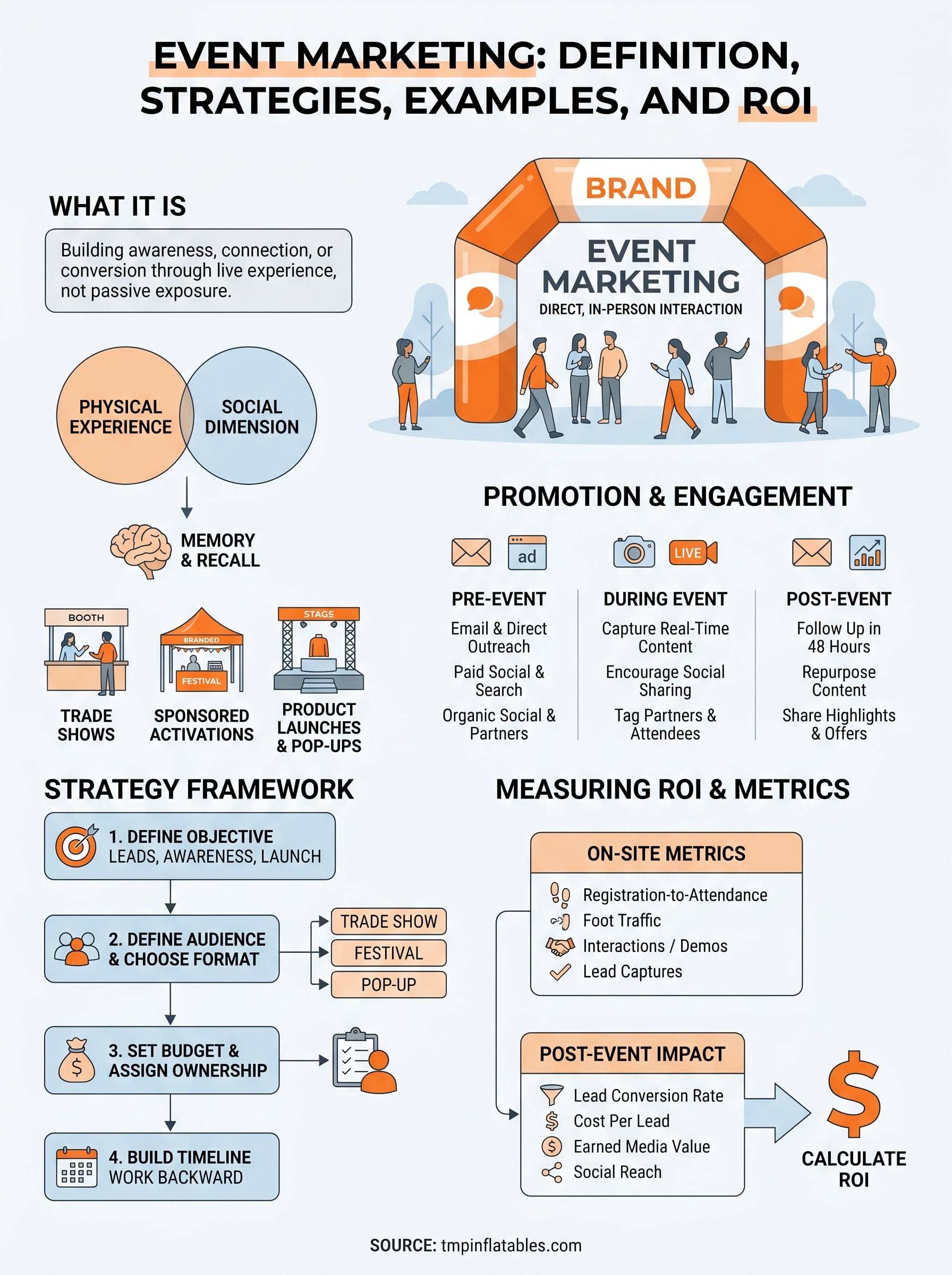
Event marketing is a strategy where a brand creates or sponsors a live experience to engage a target audience directly. That experience could be a product launch, a trade show presence, a pop-up activation, a festival sponsorship, or a community event. The defining characteristic is direct, in-person interaction between your brand and your audience, where the goal is building awareness, connection, or conversion through experience rather than passive exposure. Unlike most marketing channels, event marketing puts your brand in the same physical space as your audience at a moment when they have already chosen to show up.
When your audience actively participates in a brand experience rather than being interrupted by one, they retain more, trust more, and share more.
The core definition
Every format of event marketing shares the same foundation: your brand shows up in a real-world environment and gives people a reason to engage. A branded inflatable arch at a charity race, a product demo tent at a summer festival, a mascot costume at a retail opening, and a custom display at a trade show all qualify. What connects them is that your audience is present by choice, and your brand earns their attention by providing something worth their time.
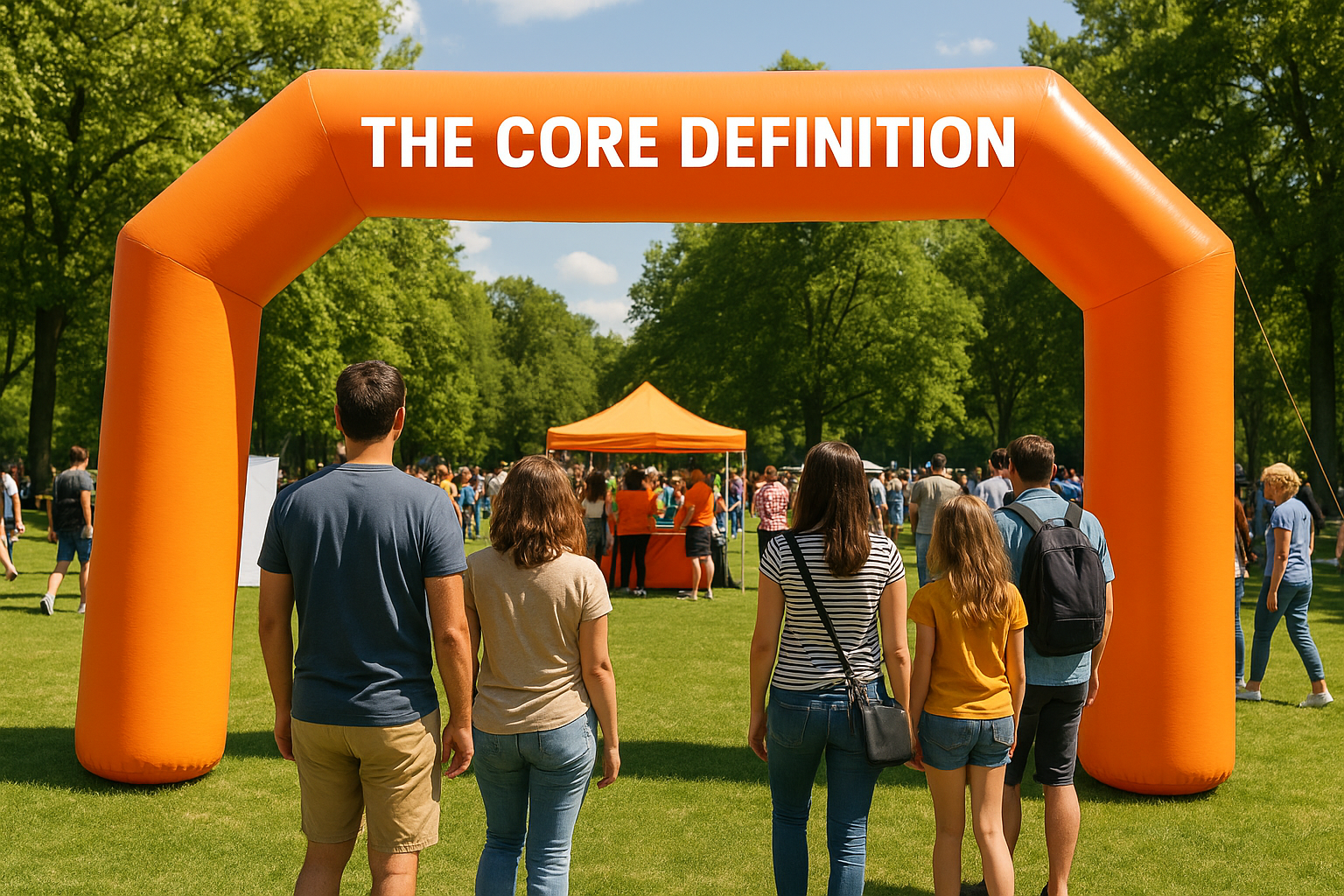
What separates event marketing from general marketing is the sensory and social dimension. People see, hear, and interact with your brand in a live context. They photograph your activation. They talk to your team. They share the moment with the people standing next to them. That type of engagement creates a different category of memory than a banner ad or a sponsored post. Research from the Event Marketing Institute has consistently shown that live experiences drive stronger brand recall and purchase intent than digital-only campaigns, precisely because the memory is tied to a physical, emotional moment rather than a screen.
What event marketing is not
Event marketing is not the same as event management. Event management covers the operational side of running a gathering: booking venues, coordinating vendors, managing timelines, and handling logistics. Event marketing is about strategy and brand objectives, using a live gathering as a channel to reach and influence a specific audience. Many activations require both disciplines, but confusing them causes problems. If your team only thinks about logistics, the brand purpose gets lost. If your team only thinks about brand strategy, the execution falls apart.
It is also not the same as experiential marketing, though the two overlap significantly. Experiential marketing focuses on fully immersive brand environments designed to surround the participant. Event marketing is broader: it includes any brand activity connected to a live gathering, even if the interaction is relatively brief or indirect. A branded tent at a city fair is event marketing. A multi-zone, interactive brand world inside that tent leans into experiential marketing. Both are valid; they just require different levels of investment and planning.
Finally, event marketing is not a strategy reserved for large enterprise budgets. A well-placed custom inflatable, a branded archway, or a single eye-catching structure can create the kind of visual footprint that draws a crowd and generates social sharing without requiring a full-scale production. What matters is matching the scale of your activation to your goals and your audience. A regional brand launching a product at a local event can achieve outsized results with the right physical presence and a clear message. Budget determines scale, not impact, and that distinction matters when you are planning your next activation.
Why event marketing works for brands and agencies
Event marketing consistently outperforms passive channels because it removes the barriers that digital advertising constantly fights against. Ad blockers, short attention spans, and banner blindness have made it harder than ever to reach an audience through screens alone. A live event eliminates those barriers by placing your brand in a context where people are already engaged, curious, and open to new experiences. Your audience is not scrolling past you; they are standing in front of you.
The psychology behind live engagement
Human memory is deeply tied to physical experience and emotion. When someone touches your product, talks to your team, or walks through a branded space, their brain encodes that interaction differently than it does a static ad. Research published through Harvard Business Review has shown that emotionally engaging experiences increase both retention and purchase likelihood because the memory carries sensory weight. That is why a well-executed activation stays with someone for days, while a digital ad fades in seconds. The experience becomes the association, and that association is what drives brand preference over time.
People remember what they felt at your event long after they forget what your ad said.
Your goal in any live activation is to give your audience something worth remembering. That could be the spectacle of a giant inflatable structure at the entrance of a venue, a hands-on product trial, or a conversation with someone from your team who genuinely knows the product. The format matters less than the quality of the moment you create.
What agencies gain from event-based campaigns
For agencies, event marketing delivers something clients find difficult to argue with: visible, measurable proof of work. A branded activation produces photography, social sharing, foot traffic data, lead captures, and direct audience feedback, all in a single execution. That gives your agency a concrete story to tell when reporting results. Clients can see the crowd, the coverage, and the engagement numbers rather than relying on abstract impressions.
Beyond reporting, live activations let agencies demonstrate creative depth in ways that static campaigns cannot. A custom inflatable display or a branded tent structure translates a client’s visual identity into a physical form that occupies real space and commands real attention. That level of execution builds trust with clients, reinforces your agency’s creative reputation, and generates the kind of case study material that wins future business. Every strong activation becomes evidence that your team can deliver at scale.
Types of event marketing and when to use each
Not every format fits every goal. The type of event marketing you choose should match your audience’s habits, your campaign objectives, and the level of brand control you need. Picking the wrong format wastes budget and dilutes your message, while picking the right one amplifies everything else you spend on it.
Trade shows and industry conferences
Trade shows give you direct access to buyers who are already in a decision-making mindset. Your audience arrives prepared to evaluate vendors, compare options, and make purchasing decisions. That means your activation needs to command attention from the moment they enter the floor. Use this format when your goal is lead generation, competitive positioning, or launching a product to a professional audience. Physical presence matters here, including:
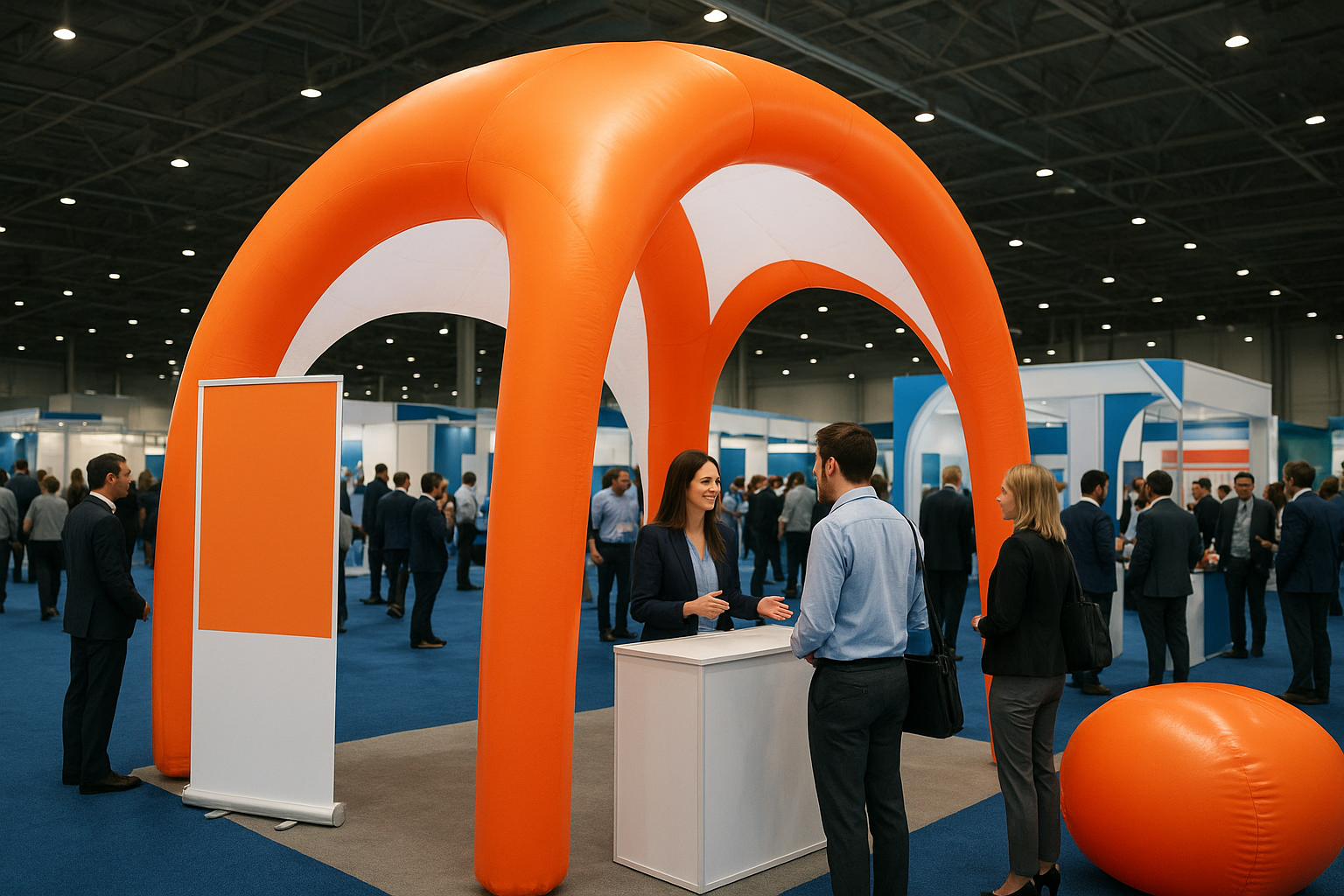
- Custom display structures and branded backdrops that anchor your booth
- Large-format inflatable displays that rise above standard setups on a crowded floor
- Product replica inflatables that communicate scale and detail without a word of copy
Sponsored activations and public events
When you sponsor a festival, race, sports event, or community gathering, your brand borrows the existing audience that the event organizer has already built. People arrive relaxed, social, and open to discovery. That context makes branded physical presence highly effective because your brand becomes part of an experience your audience already wants to be part of.
Sponsoring an event your audience already loves gives your brand instant context without having to build the occasion yourself.
Your success in a sponsored setting depends on how visible and functional your activation is. A branded structure people walk through, rest under, or photograph carries far more impact than a logo printed on a banner nobody stops to read.
Product launches and branded pop-ups
Product launches and pop-ups give you full control over the experience. You set the environment, the message, the flow, and the interaction. That control makes this format ideal when you are introducing something new and need to shape how people encounter it for the first time. Branded tents, custom inflatables, and product replica displays work well here because they let you scale the visual statement to match the weight of the launch.
Pop-ups also work well for brands testing a new market or reaching an audience in a location they do not currently occupy. You can move in, generate measurable impact, and evaluate the response before committing to anything longer-term.
How to build an event marketing strategy step by step
A strategy without structure collapses under the weight of execution. Before you book a venue or design a single asset, you need a documented plan that connects your objectives to your tactics and holds every decision to the same standard. Event marketing rewards preparation far more than improvisation, and the brands that see the strongest returns treat planning as a discipline rather than a checklist.
Start with a clear objective
Every strong event marketing strategy starts with a single, specific question: what does success look like? Your answer determines every decision that follows, from the format you choose to the metrics you track after the event. Common objectives include generating qualified leads, launching a product to a new audience, deepening loyalty with existing customers, and driving awareness in a new market. Pick one primary objective and build around it. Trying to accomplish everything at once dilutes your focus and makes it harder to evaluate what actually worked.
The clearest strategies start with one well-defined goal, not five competing priorities.
Define your audience and choose your format
Once you know your objective, you need to know exactly who you are trying to reach. Your audience profile shapes every format decision. A B2B audience of procurement managers calls for a trade show presence with a structured demo experience. A consumer audience discovering your brand for the first time responds better to a pop-up or a sponsored activation at an event they already attend. Match your format to the habits and context of your audience, not to what is easiest to produce.
Set your budget and assign ownership
Your budget determines what is possible, so establish it early and be specific. Break your total spend into categories: production costs (structures, inflatables, display materials), logistics (shipping, staffing, equipment), and promotion (pre-event advertising, social content, outreach). Assign a clear owner to each category so no line item gets overlooked. Vague budgets create scope creep and surprises that undermine your execution.
Build your timeline backward from the event date
Start with your event date and work backward through every major milestone. Custom production for inflatable structures, branded tents, and large-format displays typically requires several weeks of lead time. Factor in design reviews, shipping windows, and setup time so nothing arrives late. A clear timeline with assigned deadlines gives your team the structure to move fast without losing control of quality or brand consistency.
Promotion channels that actually drive registrations
Getting people to show up is a separate challenge from creating a great activation. Your event marketing plan needs a promotion strategy that reaches the right people, in the right context, with enough lead time to drive action. Most failed events are not bad activations; they are under-promoted ones. The channels you choose and how you sequence them determine whether your audience actually walks through the door.
Email marketing and direct outreach
Email remains one of the highest-converting channels for event promotion because it reaches people who have already expressed interest in your brand. Start with your existing contact list and segment it by relevance to the event. A product launch for a specific category should go to buyers and prospects in that category first, not your entire database. Personalized subject lines and clear event details including date, location, and what someone gains by attending consistently outperform generic blast messages.
Your most likely registrants are already in your contact list; the goal is to give them a specific, compelling reason to act now.
For B2B events and trade show appearances, supplement email with direct outreach from your sales or account teams. A short personal message from someone your prospect already knows carries far more weight than a broadcast send, especially when seats or booth meetings are limited.
Paid social and search advertising
Paid channels let you reach audiences beyond your existing contacts, which matters when your goal is acquiring new customers or expanding into a new market. Meta advertising gives you precise demographic and interest-based targeting for consumer-facing events. LinkedIn works better when your audience is professional, such as agency buyers, brand managers, or procurement teams attending an industry conference.
Keep your ad creative visual and specific. Show the activation, the location, and what someone gets from attending. Vague awareness ads waste budget; direct response ads with a clear call to action and a registration link convert.
Organic social and partner amplification
Organic posts build anticipation in the weeks leading up to your event, but consistent posting with behind-the-scenes content performs better than a single announcement. Show the production process, the build of your inflatable structures, the setup of your branded tent, or a teaser of what visitors will experience. That kind of content generates genuine curiosity because it shows real effort behind the activation.
Partner amplification extends your reach without additional ad spend. Ask co-sponsors, venue partners, and speakers to share event details with their own audiences. Each partner brings a qualified segment you would otherwise need to buy access to through paid channels.
How to market during and after the event
Most event marketing plans focus heavily on pre-event promotion and then go quiet once the activation starts. That is a missed opportunity. The event itself and the days that follow are when your audience is most engaged, most likely to share, and most open to taking the next step with your brand. What you do during and after the activation determines whether your investment generates lasting returns or disappears once the tent comes down.
Capture content while the activation runs
Your event is producing real-time content the moment doors open. Assign someone specifically to capture photo and video during the activation, not as an afterthought but as a defined role with a shot list. Prioritize footage of people engaging with your brand: interacting with your inflatable structures, walking through your branded arch, or wearing your mascot costume. Authentic crowd moments perform better on social than polished product shots because they show your audience that other people chose to show up.
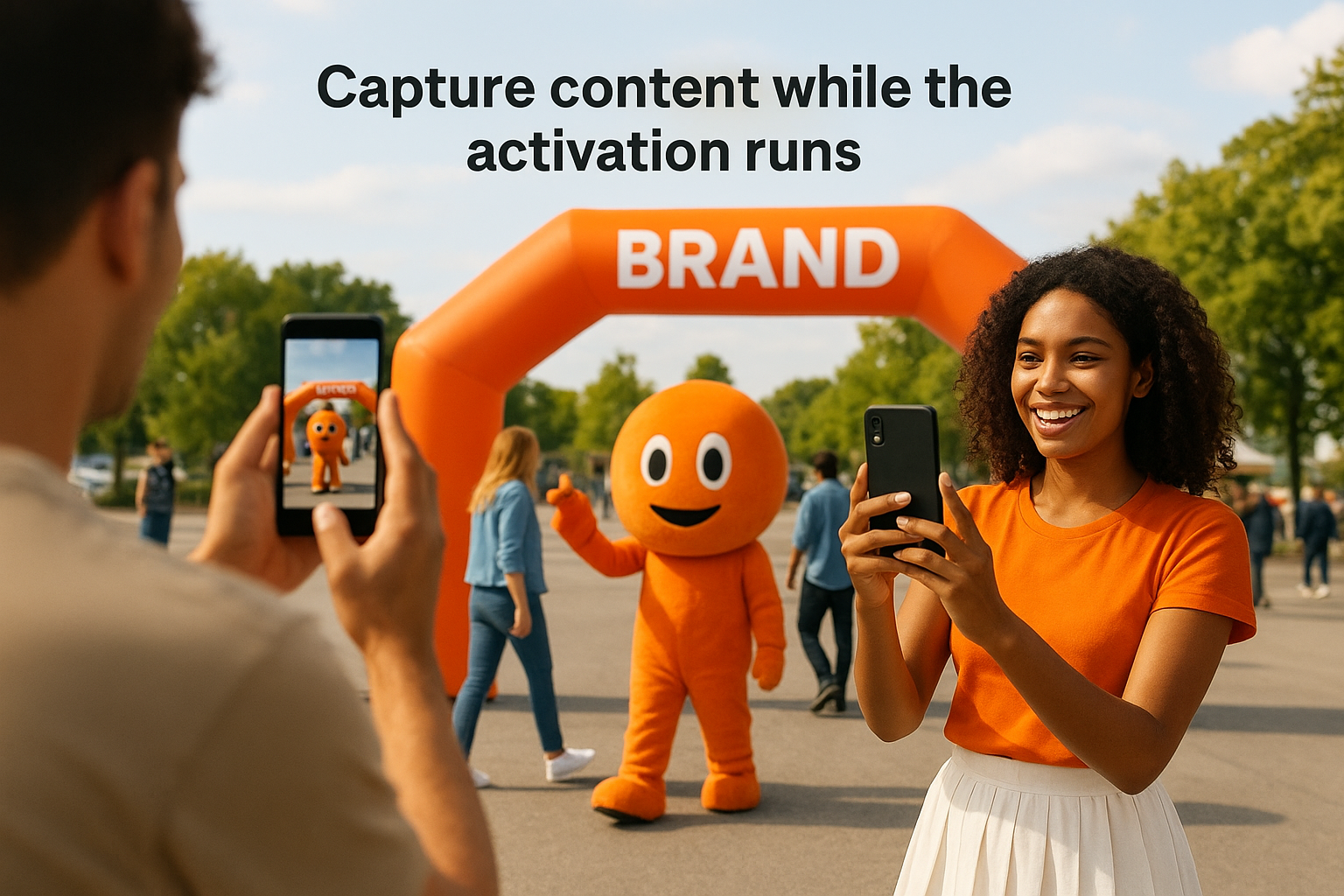
The content you capture during the event extends your reach to audiences who were not there in person.
Post short clips and photos throughout the day across your active social channels. Tag the venue, any co-sponsors, and key attendees when relevant. Encourage your on-site team to share directly from their own accounts to expand organic reach without any additional ad spend. Live coverage gives your off-site audience a reason to pay attention and creates urgency around your brand in real time.
Follow up to extend the event’s reach
Your follow-up window is short. Send a post-event email within 48 hours to everyone who registered, attended, or interacted with your team. Include a brief recap of what happened, a link to your best content from the day, and a specific next step, whether that is booking a call, visiting your site, or redeeming an offer tied to the event. A timely follow-up converts the goodwill you built in person into measurable pipeline activity before the memory fades.
Repurpose your event content across channels in the weeks that follow. A strong activation produces enough material for multiple social posts, a recap blog, and supporting ad creative that keeps your brand visible long after the event ends. Compile your best footage into a highlight reel you can use as social proof for future campaigns or share with prospects who ask what your brand activations look like in practice. The event ends on the day; its marketing value does not have to.
Event marketing ROI and metrics to track
Measuring event marketing return requires tracking the right numbers at the right stages, not just counting attendees and calling it a success. ROI from live activations is real and trackable, but only if you define your metrics before the event starts rather than scrambling to justify spend after it ends. The framework below gives you a consistent structure for evaluating performance across every activation you run.
Metrics to capture before and during the event
Your pre-event and on-site data sets the baseline you need to calculate actual return. Registration-to-attendance rate tells you how effective your promotion channels were and whether your audience followed through on their interest. On-site, track foot traffic to your activation, the number of brand interactions or demos completed, and lead captures with qualifying information. If you use a branded structure like an inflatable arch or tent, measure how many people entered or engaged with it directly versus passing by without stopping. That ratio tells you whether your physical presence was pulling its weight.
The metrics you collect on the day are only useful if you recorded your cost and goal benchmarks before the event started.
A simple tracking sheet for your team to complete in real time prevents gaps in your data. Include fields for hourly foot traffic estimates, lead capture counts, and notable social shares or press mentions that occur during the activation.
Post-event metrics that measure business impact
Once the event ends, shift your focus to downstream results. Connect the leads you captured to your CRM and track how many convert to qualified opportunities within 30, 60, and 90 days. Your cost per lead from the event gives you a direct comparison point against your other acquisition channels, and most brands that run structured activations find the number compares favorably once the full conversion rate is factored in.
Beyond leads, measure earned media and social reach generated by the activation. Sum the impressions from posts your team published, attendee shares that tagged your brand, and any coverage from partners or press. Assign a conservative dollar value to that reach using your standard paid media cost-per-impression benchmarks. Adding earned media value to your lead pipeline gives you a fuller picture of total return and makes the ROI case significantly stronger when reporting to clients or internal stakeholders. Track these numbers consistently across events and your data will start to reveal which formats, locations, and activation types deliver the strongest return for your specific audience and goals.
Final takeaways
Event marketing works because it puts your brand in a space your audience has already chosen to enter. You earn attention without interrupting anyone, and the physical presence you create, whether a branded tent, a custom inflatable structure, or a product replica, does the heavy lifting before a single conversation starts. The strategies in this guide give you a repeatable framework: set a clear objective, match your format to your audience, promote through the right channels, capture content on the day, follow up fast, and track the numbers that actually reflect business impact.
The brands and agencies that see the strongest returns from live activations treat every element of the experience as intentional, including the physical structures that define how your audience first sees you. If you are planning an activation and need a custom inflatable that commands attention, request a quote from TMP Inflatables and let us help you build something worth stopping for.

