
Banner ads get scrolled past. Email blasts get archived. But a 40-foot inflatable product replica planted in the middle of a city square? That stops people mid-step. The brands pulling crowds and earning organic buzz right now aren’t just advertising, they’re creating moments people want to step into, touch, and share. That’s exactly why marketers and agencies keep searching for fresh experiential marketing activation ideas that deliver real impact, not just impressions on a dashboard.
The challenge is moving from “we should do something cool” to experiential marketing activation ideas that your team can execute on budget and on deadline. You need ideas that are visually dominant, physically engaging, and built around your brand’s message, not generic stunts that could belong to anyone. That’s where strategic use of custom inflatables, branded environments, and immersive structures becomes a serious advantage.
At TMP Inflatables, we’ve spent over 20 years designing and producing custom inflatables, inflatable tents, arches, costumes, and promotional structures for experiential marketing agencies and brand teams across North America. We’ve seen firsthand what experiential marketing activation ideas come to life that generate lines around the block and what falls flat. This article pulls from that experience to give you nine proven activation ideas you can adapt for product launches, festivals, trade shows, and street-level campaigns, plus practical guidance on how to bring each one to life. https://www.youtube.com/embed/PKH9EdumyKw
1. Experiential Marketing Activation Ideas that Use custom inflatables as your landmark moment
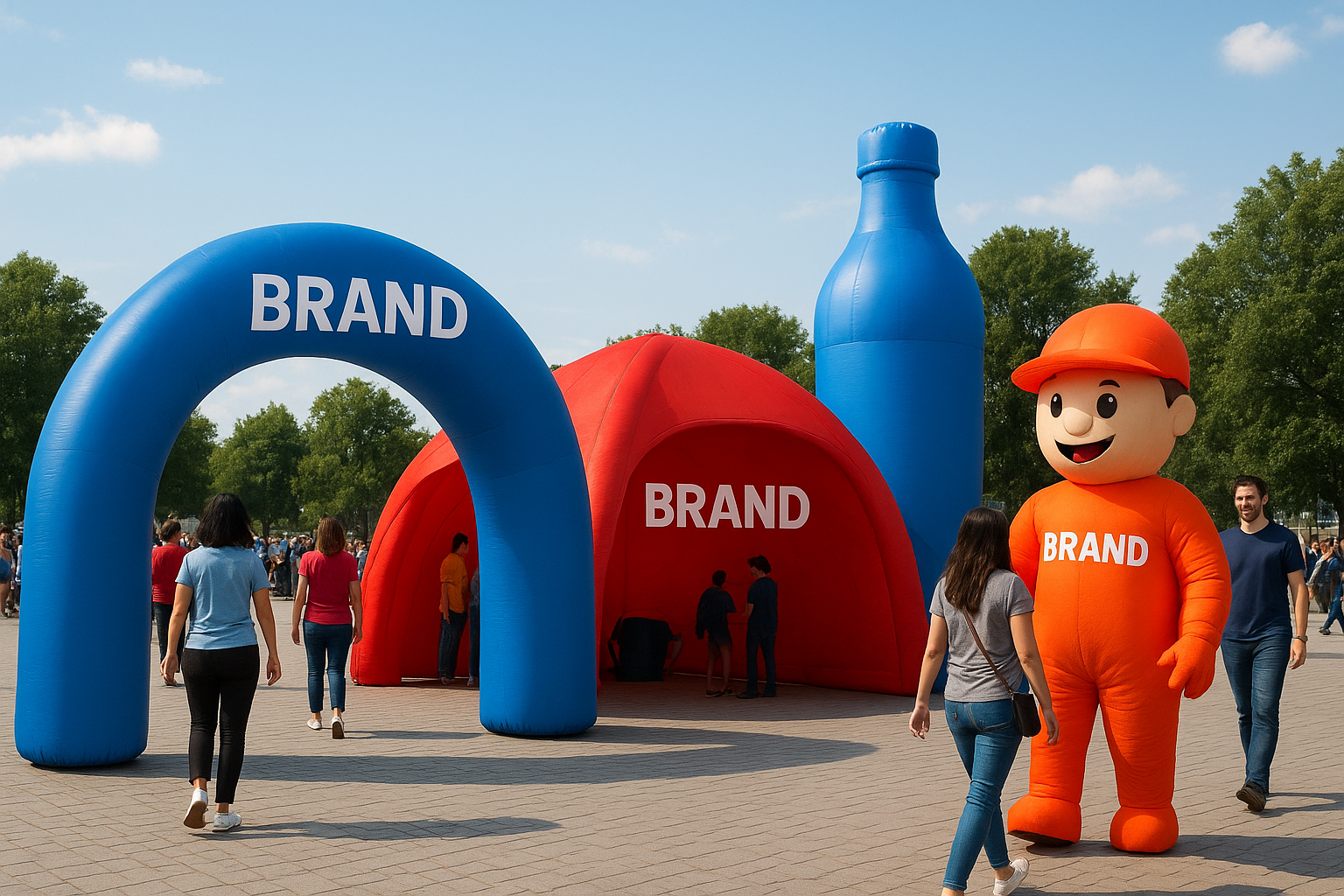
Custom inflatables are one of the most reliable experiential marketing activation ideas because they create an instant visual anchor for your entire event. A branded inflatable structure transforms any open space into a destination people navigate toward, not past.
What it is
A custom inflatable is a purpose-built, large-scale branded structure fabricated from durable PVC or nylon materials. Your team works with a manufacturer to design it from scratch, matching your brand colors, logo, and specific messaging into a structure that can range from a simple 10-foot arch to a 50-foot product replica.
Experiential Marketing Activation Ideas that stops foot traffic
People respond to scale. When something is significantly larger than expected, the human brain flags it as worth investigating. A giant replica of your product or a boldly branded inflatable tent creates a focal point that draws attention from hundreds of feet away, pulling foot traffic naturally toward your setup.
A structure that’s visible from a distance does your marketing work before a single staff member opens their mouth.
What to build: arches, tents, replicas, costumes
Your choice of inflatable depends on your goal. Inflatable arches mark entry points and frame your brand at the start of the experience. Inflatable tents create enclosed branded spaces useful for product demos, VIP areas, or misting zones at summer events. Product replicas turn your item into a photo moment. Inflatable costumes and mascots give your team a mobile, walking landmark that roams the crowd and drives interaction.
How to execute it safely and smoothly
Work with your supplier early on site permits and surface requirements. Most inflatables anchor via sandbags or ground stakes, so you need to confirm what the venue allows. Build in a two-hour setup window minimum, and always have a dedicated staff member monitoring the blower unit throughout the activation.
Experiential Marketing Activation Ideas Budget and timeline ranges
Custom inflatables typically run between $2,000 and $15,000 depending on size, complexity, and turnaround speed. Plan for a production lead time of three to six weeks for a straightforward design. Rush orders are possible but cost more, so brief your supplier as early as possible.
Metrics to track
Track foot traffic conversion rate (how many people who pass by actually enter your space), photo engagements, and social mentions tied to the structure. For enclosed tents, measure dwell time using staff clickers or simple timestamped lead capture.
2. Experiential Marketing Activation Ideas that Build a “prize reveal” interactive booth
A prize reveal booth turns passive attendees into active participants. This format works across nearly every industry and pairs well with other experiential marketing activation ideas on this list.
What it is
This activation is a branded game structure where attendees complete a simple action to uncover a prize or discount. Common formats include spin wheels, digital scratch-offs, and button-press reveals.
Experiential Marketing Activation Ideas and why this drives lines and buzz
People watch other people win. When someone reacts with excitement at your booth, bystanders stop and join the line. That social proof builds organic crowd momentum faster than almost any other booth format.
The sight of someone winning something is one of the most reliable crowd magnets at any live event.
Interaction mechanics that feel fair and fun
Keep the mechanic simple and fast, finishing in under 30 seconds. Avoid setups where people feel the outcome is rigged or where losing feels punishing. Every participant should walk away with something, even if it’s a discount code.
Data capture that doesn’t kill the vibe
Collect one piece of contact information, typically an email, before the reveal. Use a tablet with a clean, single-field form. Long surveys at the point of play cut your participation rate significantly.
Budget and timeline ranges
Expect to spend $500 to $3,000 on booth structure, branding, and prizes. Digital versions cost more upfront but reduce per-event prize expenses. Most builds carry a lead time of one to three weeks.
Experiential Marketing Activation Ideas and their Metrics to track
Track total interactions and email capture rate alongside cost per lead. Compare lead quality against your other channels after the event to measure real return.
3. Experiential Marketing Activation Ideas that Turn your audience into the activation with a live mural
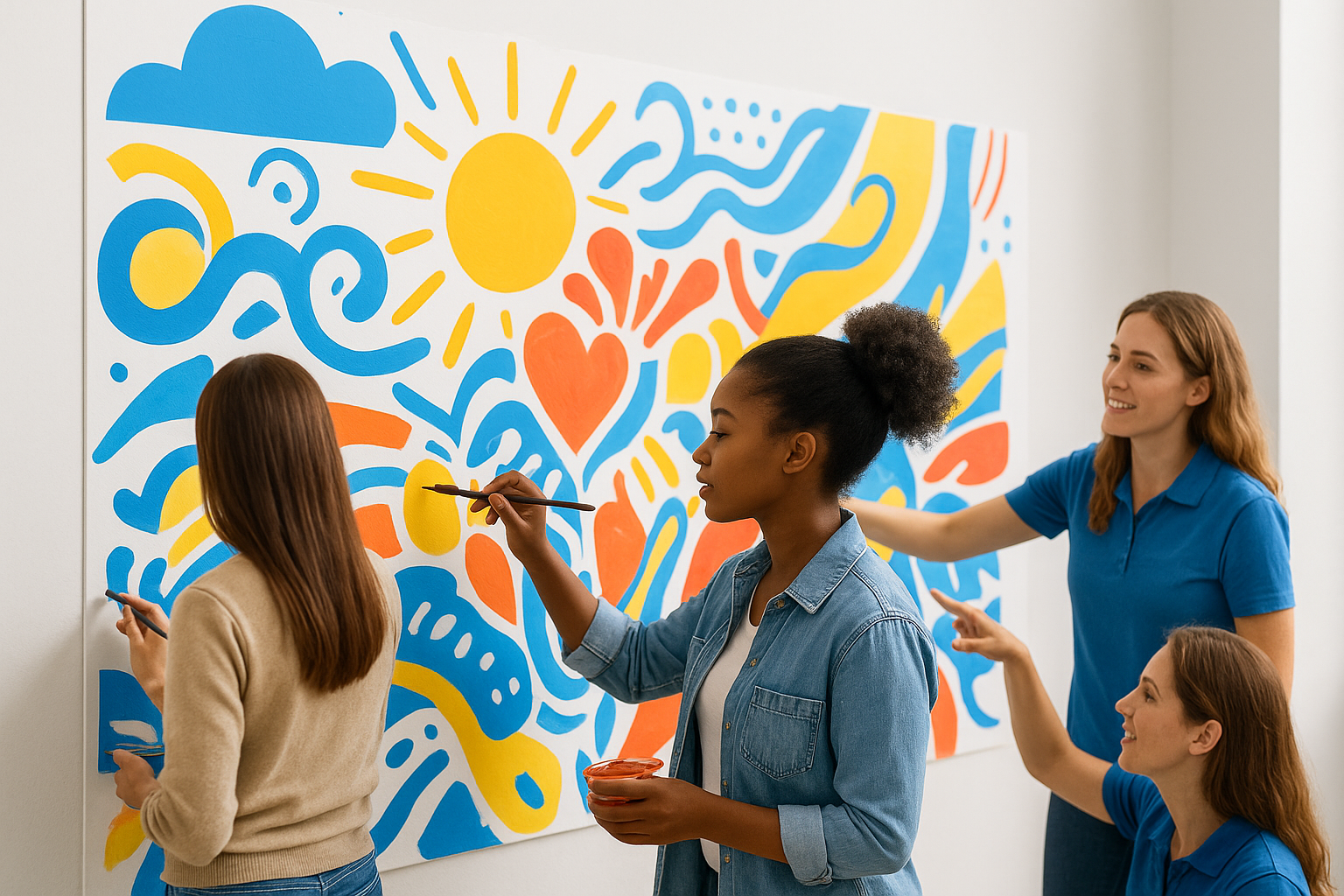
A live mural is one of the more underused experiential marketing activation ideas because it requires planning upfront, but the payoff is a physical artifact that tells your brand’s story entirely through the hands of your audience.
What it is
A live mural activation gives attendees a designated canvas and a set of materials to add their mark to a shared piece of brand art. The canvas grows throughout the event, transforming into a completed collaborative piece by the time the event closes.
Experiential Marketing Activation Ideas and Why this creates real community energy
People feel genuine ownership over something they helped build. Unlike passive giveaways, a mural gives your audience a creative role in the activation itself, which builds stronger emotional connection to your brand.
When someone can point to a wall and say “I made that part,” your brand becomes part of their story.
How to design the mural so anyone can participate
Use pre-outlined sections or templates so participants don’t need artistic skill to contribute. Numbered zones, fill-in shapes, and stamp pads lower the barrier and keep the final piece visually cohesive regardless of artistic ability.
Staffing, materials, and crowd flow
Assign two dedicated staff members to guide participants, manage materials, and keep the queue moving. Use fast-drying paints or markers to prevent smearing and reduce wait times between turns.
Experiential Marketing Activation Ideas and required Budget and timeline ranges
Expect to spend $800 to $2,500 depending on canvas size and material quality. Most setups need only one week of prep time.
Metrics to track
Track total contributions and dwell time at the mural station. Post-event, photograph the finished piece and measure social shares tied to the image.
4. Experiential Marketing Activation Ideas that Create a sensory product test zone people can’t ignore
A sensory product test zone is one of the most direct experiential marketing activation ideas you can deploy because it removes every layer of abstraction between your brand and your audience. Instead of telling people what your product does, you let them experience it firsthand.
What it is
A sensory test zone is a dedicated physical space where attendees interact directly with your product under controlled, branded conditions. You design the space so every element reinforces the specific claim you want to prove.
Experiential Marketing Activation Ideas and Why this builds trust fast
Nothing builds credibility faster than direct sensory evidence. When someone experiences your product’s benefit with their own hands, eyes, or taste buds, no marketing copy can match the conviction that moment creates.
Letting someone prove your claim to themselves in 60 seconds does more conversion work than a month of ad spend.
Experiential Marketing Activation Ideas and How to design the test so it proves one claim
Focus your test on a single measurable outcome. Pick the one benefit your product delivers better than anything else and build the entire interaction around demonstrating exactly that, nothing more.
Safety, waivers, and risk planning
Collect digital waivers on a tablet before any physical interaction begins. Brief your staff on basic liability protocols and establish a clear escalation plan for any incident before the event opens.
Budget and timeline ranges
Expect to spend $1,500 to $5,000 depending on product complexity and booth build requirements. Most setups carry a two to four week production lead time.
Experiential Marketing Activation Ideas and the Metrics to track
Track conversion rate from test to lead capture or purchase alongside dwell time and post-event survey scores measuring shifts in product perception.
5. Experiential Marketing Activation Ideas that Run a mobile pop-up that hits multiple neighborhoods
A mobile pop-up is one of the most flexible experiential marketing activation ideas you can deploy when your target audience doesn’t gather in one place. Instead of waiting for people to find you, you bring the brand directly to them.
What it is
A mobile pop-up is a branded, portable activation unit that travels between multiple locations across a single day or a multi-day campaign. Your team loads the setup into a van or trailer, arrives at each stop, builds out the experience, and moves on to the next location on a preset schedule.
Why it works when audiences feel fragmented
Modern audiences don’t cluster in one neighborhood anymore. A multi-stop approach lets you reach people in their own environment rather than asking them to travel to yours. That removes friction and increases the number of genuine interactions your team captures per campaign.
Meeting people where they already are changes the dynamic from interruption to welcome arrival.
Route planning, permits, and timing
Map your route around foot traffic data and audience demographics before you finalize any stops. Check local permit requirements at least three weeks out, since some municipalities require separate approvals for each location. Build 15-minute buffer windows between stops to absorb delays.
On-site setup that packs down fast
Every piece of your setup should load and unload in under 20 minutes. Prioritize lightweight branded structures like inflatable arches or collapsible canopies that two staff members can deploy without tools.
Budget and timeline ranges
Expect to spend $3,000 to $8,000 per campaign day, covering vehicle logistics, permits, staff, and materials. Plan a two to four week prep window for route approvals and asset production.
Metrics to track
Track total interactions per stop and compare engagement rates across locations. Use timestamped lead capture to identify which neighborhoods delivered the highest-quality audience for future route planning.
6. Experiential Marketing Activation Ideas that Launch a QR scavenger hunt with physical checkpoints
A QR scavenger hunt gives your audience a reason to stay longer and explore more of your event space. This format ranks among the more strategic experiential marketing activation ideas because it turns passive attendance into active, mission-driven participation across your entire footprint.
What it is
A QR scavenger hunt places branded physical markers at multiple locations across your event or campaign space. Participants scan each code to unlock the next clue, collect points, or complete a small challenge, building toward a final reward at the last checkpoint.
Why it keeps people engaged longer
Movement extends dwell time. When attendees have a goal to chase, they stay on-site longer and interact with more of your brand touchpoints than they would during a passive walkthrough. That extended exposure directly strengthens brand recall after the event ends.
The more intentional steps someone takes inside your activation, the harder your brand becomes to forget.
How to design clues that don’t frustrate people
Keep each clue solvable in under two minutes without requiring specialized knowledge. Test every checkpoint with someone outside your team before launch day. If a clue stumbles your tester, it will stop dozens of real attendees cold at the event.
What to place at checkpoints for maximum payoff
Each checkpoint should deliver a small, immediate reward to keep momentum going. Strong options include:
- Branded sample or collectible item
- Unique discount code tied to that stop
- Exclusive digital content unlock
Budget and timeline ranges
Expect to spend $1,000 to $4,000 covering QR infrastructure, checkpoint staffing, and prizes. Allow two to three weeks of prep time for approvals and asset production.
Metrics to track
Track completion rate per checkpoint and total hunt completions alongside lead capture volume at the final stop.
7. Experiential Marketing Activation Ideas that Offer live personalization people will actually keep
Live personalization turns a branded item into something personal and irreplaceable. It’s one of the most effective experiential marketing activation ideas for boosting perceived value because the item stops being a generic giveaway the moment it carries someone’s name, initials, or custom design.
What it is
A live personalization station is a branded production booth where attendees receive a customized item created on the spot, such as an engraved tumbler, a printed tote, or a monogrammed hat. The personalization happens in real time, in front of the recipient.
Why it increases perceived value
People attach meaning to objects made specifically for them. A personalized item rarely ends up in a trash bag after an event, which extends your brand’s physical presence far beyond the activation day itself.
An item someone helped create becomes a daily reminder of your brand without any additional spend on your part.
Personalization options that scale in real time
Choose a single, fast-turnaround format so your booth keeps moving. Strong options include heat-press printing, laser engraving, and embroidery. Each of these can turn a blank item into a finished, branded keepsake in under five minutes.
Line management, inventory, and fulfillment
Use a ticketed queue system to prevent crowding and set realistic wait-time expectations. Keep enough blank inventory on hand to cover twice your expected attendance volume and restock checkpoints before each rush period.
Budget and timeline ranges
Expect to spend $2,000 to $6,000 covering equipment rental, blank inventory, and staffing. Most setups require two to three weeks of lead time for equipment sourcing and brand asset preparation.
Metrics to track
Track total items personalized and average wait time per attendee. Follow up by monitoring how often the finished items appear in user-generated social content in the weeks following the event.
8. Experiential Marketing Activation Ideas that Combine a content set with a roaming moment
Pairing a fixed content studio zone with a roaming activation gives you two separate touchpoints that feed the same campaign story. Together, these two experiential marketing activation ideas amplify each other’s reach without requiring you to double your budget.
Idea 8: Build a creator-ready content studio zone
A content studio gives attendees a professionally lit, branded backdrop to create photos or short videos they’ll actually post. Set up ring lights, a clean background, and a branded prop kit so every piece of content leaving the zone carries your visual identity without any extra prompting.
Idea 9: Add a roaming “surprise and delight” element
Your roaming team member carries unexpected branded gifts or experiences through the crowd, reaching people who never approach your main footprint. This format rewards passive attendees and extends your brand presence well beyond the activation perimeter.
The combination of a fixed creative anchor and a mobile touchpoint means your brand finds people, not the other way around.
How to connect both ideas into one story
Use a shared visual element, such as a color, prop, or phrase, that ties your studio and your roaming moments together. When someone encounters the roaming element and recognizes it from the studio, you’ve built a coherent brand narrative across two separate interactions.
What to build and staff for repeatable runs
Assign two staff to the studio and one dedicated roaming brand ambassador. Keep your studio setup modular so it packs down in under 30 minutes for multi-stop campaigns. Prioritize:
- Lightweight framing and a collapsible branded backdrop
- A prop kit that fits inside a single carry bag
Budget and timeline ranges
Expect to spend $2,500 to $6,000 for both elements combined. Allow two to three weeks for prop production and background fabrication.
Metrics to track
Track total content pieces created at the studio alongside your roaming team’s interaction count. Monitor organic social posts tagged to your brand in the 72 hours following the event.
Experiential Marketing Activation Ideas that Bring it all together
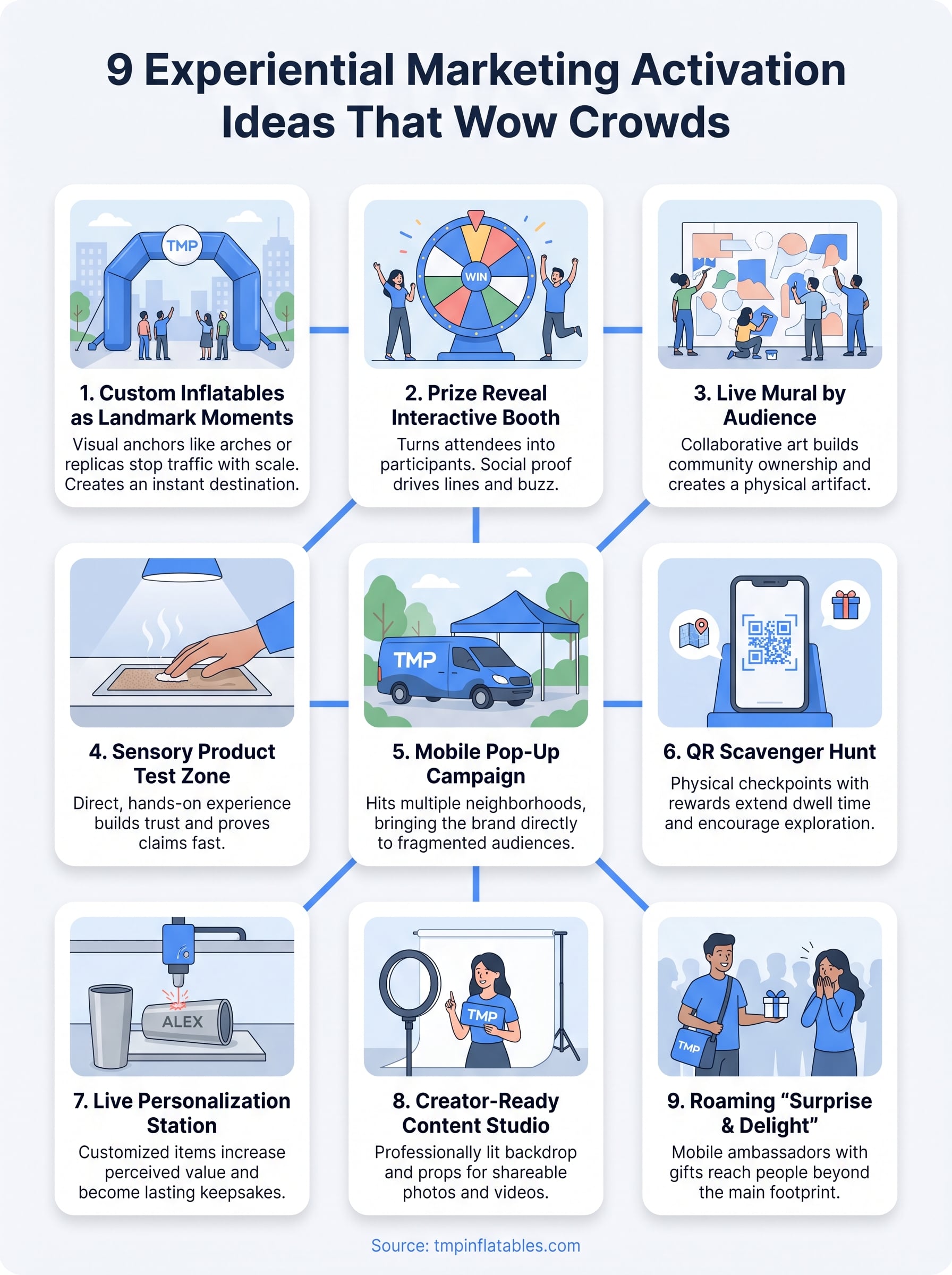
All of the experiential marketing activation ideas on this list works because it gives your audience something to do, feel, or take home. The strongest campaigns don’t pick one tactic in isolation. They combine a visual anchor like a custom inflatable with an interactive layer, a shareable moment, and a reason to stay longer. That layered approach is what turns a single event into a campaign people talk about after they leave.
Your next step is deciding which combination fits your brand, your budget, and your timeline. Start with the element that creates the most immediate visual impact for your specific venue, then build the interactive and content layers around it. The sooner you lock in your structure and brand assets, the more production time you have to get every detail right. If a custom inflatable structure belongs in your plan, request a quote for your activation and our team will help you build it out from concept to delivery. Looking for more info? Check out this video