

People skip ads. They scroll past banners. They tune out commercials. But they don’t ignore something they can walk through, touch, or photograph with friends. That’s the core idea behind experiential marketing, a strategy built on real-world, interactive brand experiences that stick with people long after the event ends.
At TMP Inflatables, we’ve spent over 20 years designing and producing custom inflatables, from branded arches and inflatable tents to giant product replicas and costumes, for agencies and brands running exactly these kinds of campaigns. We’ve seen firsthand what works, what falls flat, and what turns a simple activation into something people actually talk about. That hands-on experience shapes everything in this guide.
Below, you’ll get a clear definition of experiential marketing, real examples worth studying, and practical tips for building a campaign that earns attention instead of buying it. Whether you’re planning a product launch, a trade show booth, or a street-level activation, this is where you start.
What experiential marketing is and is not
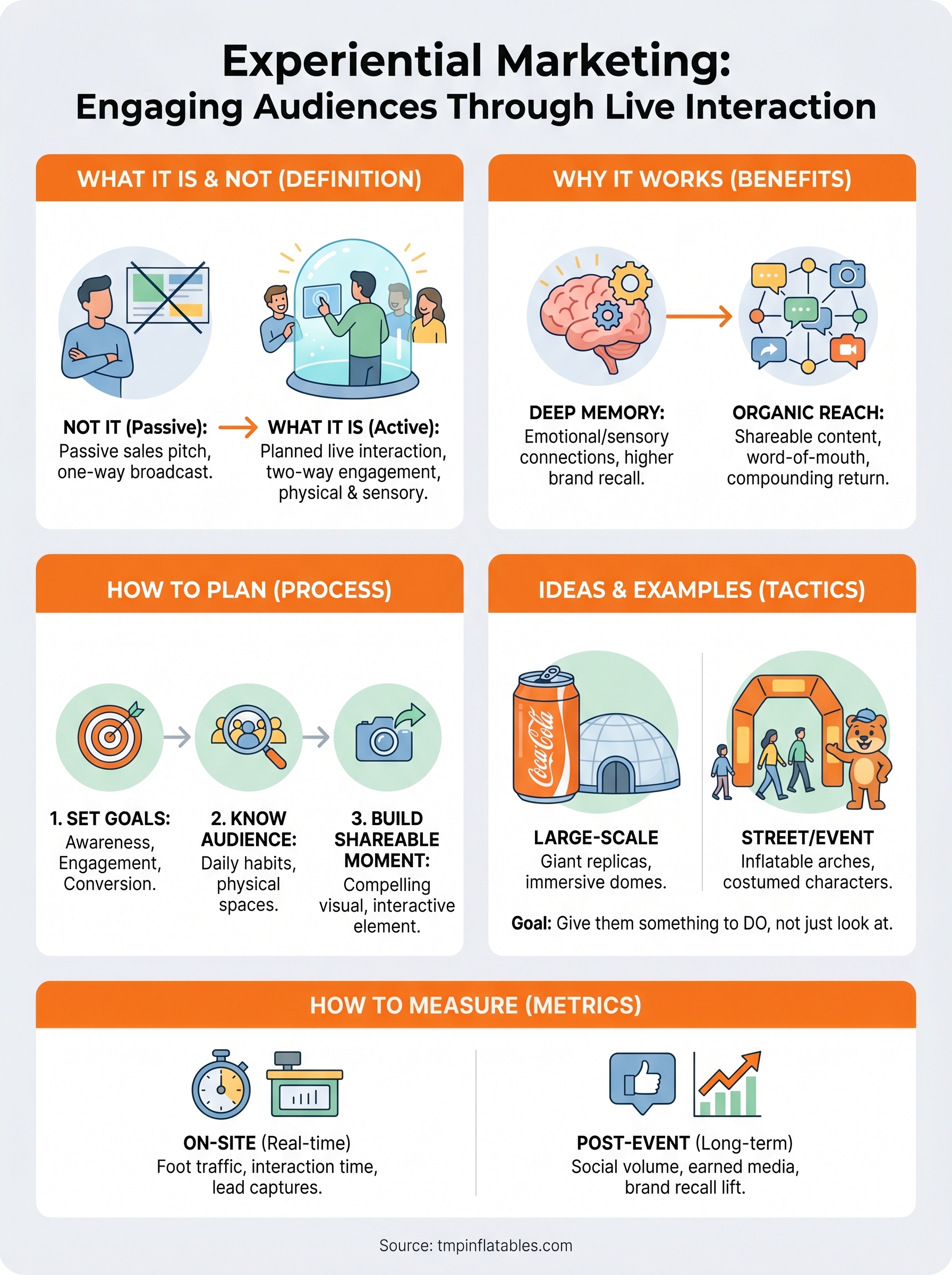
Experiential marketing puts your audience inside the brand story rather than broadcasting it at them. Instead of telling someone your product is refreshing, you build a live, interactive moment where they feel it, share it, and remember it. The difference is direct: passive advertising asks for attention, while experiential marketing earns it through genuine participation.
What it is
At its core, experiential marketing is any planned, live interaction between a brand and its audience that creates real, two-way engagement. That covers a wide range, from a branded activation at a festival and a giant product replica people can climb into, to an inflatable arch at your sponsored event or an immersive dome at a trade show. The physical, sensory component is what separates it from digital campaigns. People don’t just see your brand; they experience it with their full attention.
The goal is not reach. It is depth. One person who genuinely interacts with your brand is worth far more than a thousand passive viewers.
What it is not
Experiential marketing is not a sales pitch with decorations. Handing out branded pens at a booth is not experiential marketing. Running a product demonstration that a crowd can only watch from a distance is not experiential marketing either. Passive exposure without meaningful interaction misses the point entirely.
Your effort also should not be confused with event marketing, though the two overlap often. Event marketing promotes attendance at a specific occasion. Experiential marketing uses that occasion, or invents one, to build a two-way connection between your brand and real people. Your audience should walk away with a story worth telling, not just a flyer they toss in the bin.
Why experiential marketing works
The human brain stores experiential memories differently from information it simply reads or hears. When your audience physically interacts with your brand, they form emotional and sensory connections that outlast any advertisement. That’s the fundamental reason experiential marketing consistently outperforms passive formats in brand recall.
Memory and emotion drive decisions
Active participation triggers deeper cognitive processing than passive viewing does. Your audience isn’t just watching; they are deciding, moving, and feeling something real. That level of engagement builds genuine brand affinity in ways a banner ad never will.
The most persuasive message is the one your audience delivers to themselves through direct experience.
Your audience also tends to attach the positive emotions from the activation directly to your brand, which influences purchase decisions long after the event ends.
Experiences generate organic reach
A well-designed activation produces content your audience creates and shares willingly. People photograph and post moments that feel worth sharing, and your brand travels with every one of those posts. That organic word-of-mouth reach multiplies your campaign well beyond the original footprint without additional media spend.
When your brand becomes the backdrop for a genuine personal moment, it earns positive association at no extra cost. That is a compounding return that paid impressions rarely deliver.
How to plan an experiential campaign
A strong experiential marketing campaign starts with a clear objective and a defined audience. Before you book a venue or order a custom inflatable arch, you need to know exactly what you want people to feel and do when they encounter your brand.
Set your goals first
Awareness, engagement, and conversion are three distinct goals that each shape your campaign differently. Decide which one drives this specific activation, because that choice determines everything from your format to your budget. Common goal types include:
- Brand awareness: maximize visibility and impressions in a physical space
- Engagement: drive direct interaction with your product or activation structure
- Conversion: move attendees toward a purchase or lead submission on the spot
Design around your audience
Your audience’s daily habits and physical spaces tell you where to show up and what kind of experience will actually resonate. A brand targeting young professionals at a summer festival needs a very different activation than one reaching retail buyers at a trade show.
The best campaigns start with the audience and work backward to the brand, not the other way around.
Build in a shareable moment
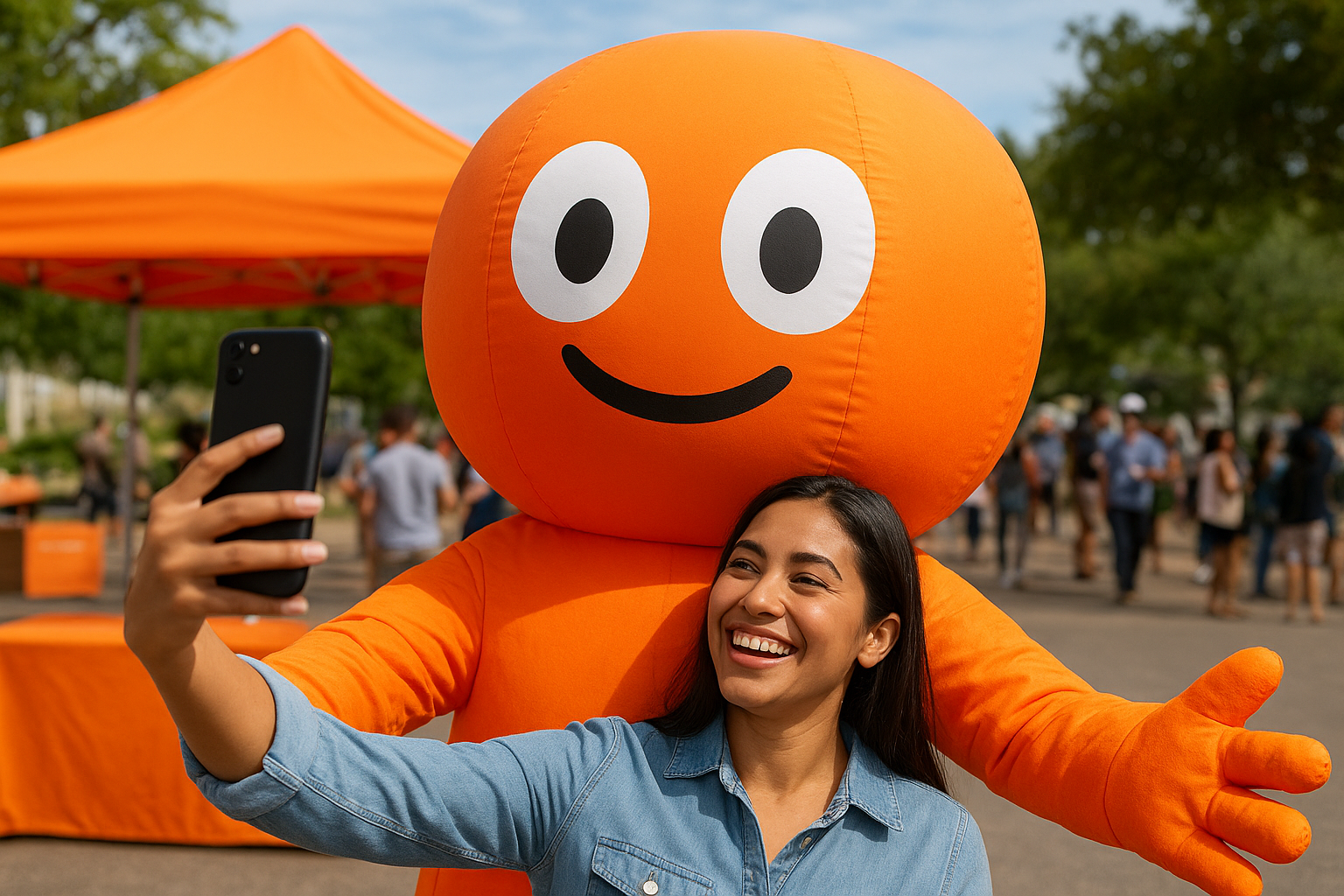
Every physical touchpoint in your activation should give your audience a natural reason to pull out their phone. A single compelling visual element, like a giant branded structure or an interactive costume character, can turn attendees into content creators who extend your reach at no additional cost.
Experiential marketing ideas and examples
The strongest experiential marketing ideas share one quality: they give your audience something to do, not just something to look at. The format can range widely depending on your budget, venue, and goals, but the examples below show the types of activations that consistently earn attention and social sharing.
Large-scale physical activations
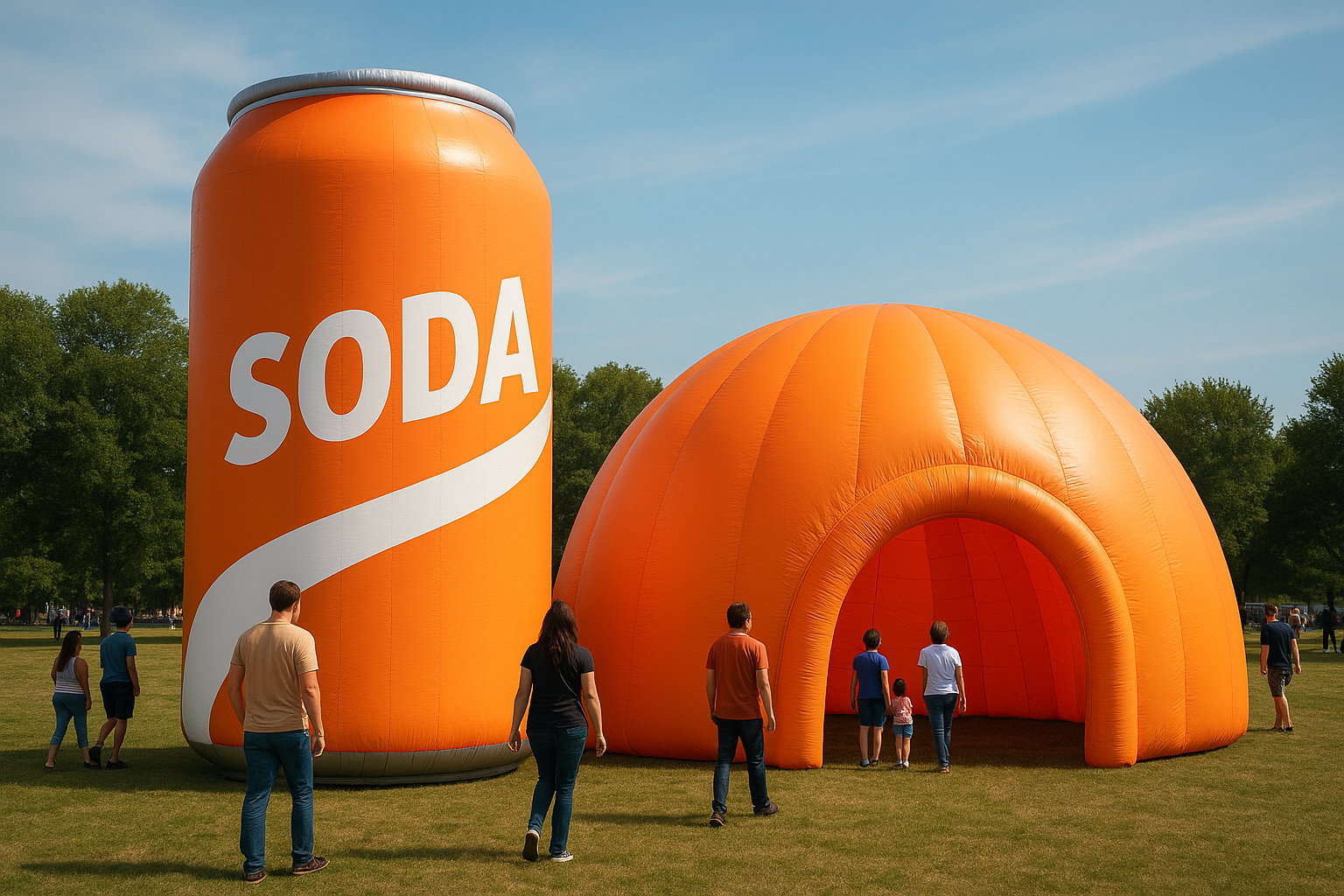
Giant product replicas and branded inflatable structures are among the most effective tools in a live activation. A towering replica of your product placed at a festival entrance stops foot traffic immediately. Custom inflatable domes work well for immersive brand environments where you control every sensory detail inside, making them a strong fit for product launches and brand experiences that need to feel distinct from the surrounding event.
Street-level and event activations
The most memorable activations meet your audience where they already are, rather than asking them to find you.
Inflatable archways at sponsored races and community events put your brand at a high-traffic chokepoint that every attendee physically passes through. Costumed brand characters and mascots let your team create direct, personal interactions at retail locations, trade shows, or outdoor festivals. Both formats are portable, reusable, and built for repeat deployment across multiple campaign dates.
How to measure experiential marketing
Measuring experiential marketing requires a different approach than measuring digital ads. You can’t rely solely on click-through rates or impressions. Instead, you track a mix of real-time on-site data and longer-term brand signals to build a complete picture of what your activation actually delivered.
On-site metrics
Foot traffic and direct interactions are your starting point. Count how many people engaged with your activation, how long they stayed, and how many conversations your team had. Track lead captures, product sign-ups, or on-site purchases if your goals include conversion. These numbers give you the raw scale of your reach during the event itself.
What happens at the event is only half the story; the other half plays out in the days and weeks that follow.
Post-event impact
Social content volume and earned media coverage tell you how far your activation traveled beyond its physical location. Track mentions, tagged posts, and any press your event generated. Survey a sample of attendees to measure brand recall and sentiment shifts compared to your baseline before the campaign. Pairing those qualitative results with hard metrics like sales lift or web traffic in the weeks following the event gives you the clearest read on total return.
Putting experiential marketing to work
Experiential marketing works because it replaces passive exposure with real interaction. Every tactic in this guide points to the same conclusion: your audience remembers what they experience, not what they see in a feed. The brands that earn lasting attention build moments people walk through, touch, and share with their own networks.
Your next step is deciding what that moment looks like for your brand. A custom inflatable structure, a branded arch, an immersive dome, or a costumed character can anchor your entire activation and give attendees a clear reason to stop and engage. The physical element is often the difference between a campaign that generates real content and one that gets overlooked entirely.
Ready to build something your audience will actually remember? Request a custom inflatable quote and we’ll help you design the right structure for your next campaign.