
Your booth has about three seconds to stop someone mid-stride on a crowded expo floor. That’s the reality of trade show displays, they’re not just backdrops, they’re your first handshake with every potential customer walking past. Whether you’re exhibiting at a regional conference or a major industry expo, the display you choose shapes how attendees perceive your brand before a single conversation happens. And with options ranging from simple tabletop setups to fully custom inflatable structures, knowing what’s out there (and what it costs) matters more than most exhibitors realize.
At TMP Inflatables, we’ve spent over 20 years designing and producing custom inflatable displays, tents, arches, product replicas, characters, for brands that refuse to blend in at events. We’ve seen firsthand what works on the show floor and what gets ignored. That experience is baked into this guide. Here, we break down the main types of trade show displays, walk through realistic pricing, and cover the differences between portable, modular, and custom-built options so you can make a confident decision for your next event. We love Trade Show Displays!
Why trade show displays matter for your goals
Trade shows put you in a room with hundreds of competitors and thousands of potential buyers at the same time. Your display is the physical representation of your brand in that environment, and it does the heavy lifting before your sales team says a single word. Whether you’re launching a product, building relationships, or generating leads, the booth you build either supports those goals or works against them. Getting this right is not optional when you’re competing for limited attention across a crowded floor.
The attention problem on a busy show floor
Attendees at major industry expos move fast, and they’re making quick judgments about which booths deserve a stop. Visual impact is not a secondary concern; it’s the core function of any effective trade show display. Height, dimension, color, and motion all signal to a passing attendee that something worth their time is happening at your booth.
Well designed Trade Show Displays doesn’t just attract foot traffic, it attracts the right foot traffic by communicating your brand focus immediately.
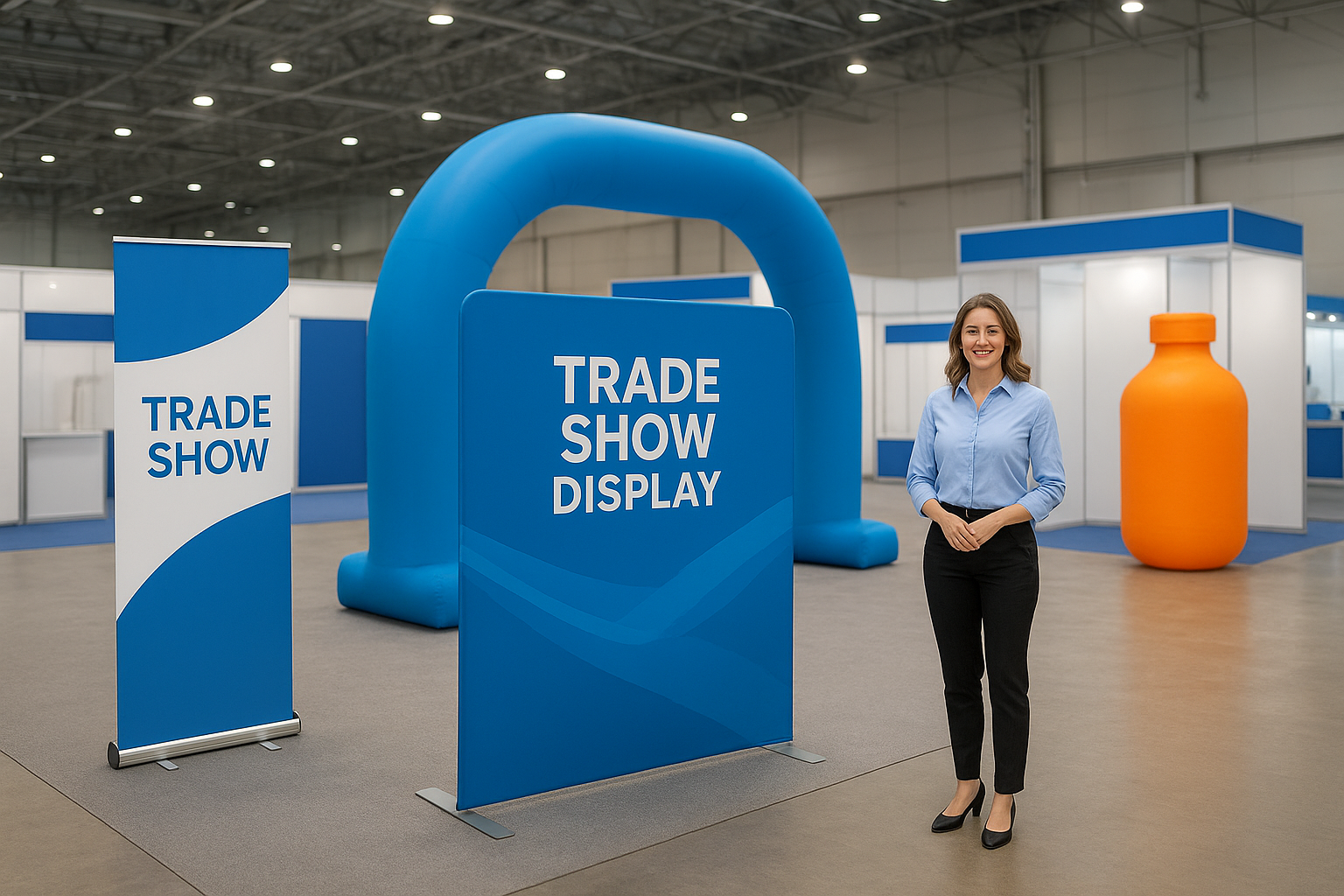
Custom Trade Show Displays like inflatable product replicas or branded arches perform especially well in this context because they break the visual pattern of a row filled with flat banners and identical pop-up frames. Attendees notice contrast, and the booths that create it collect more stops, more conversations, and more qualified contacts by the end of the day.
How Trade Show Displays connect to real business outcomes
Your display choice directly affects lead volume and quality. A booth that clearly communicates what you do and who you serve attracts the right visitors and naturally filters out those who are not a fit. That sharpens every conversation your team has and reduces the time spent on unqualified contacts.
Beyond the show itself, strong trade show displays extend your reach through post-event brand recall. Attendees who photograph an eye-catching structure, share it, or simply remember it weeks later continue working for your brand long after the event ends. A forgettable booth stops performing the moment the lights go out.
Types of trade show displays and booth setups
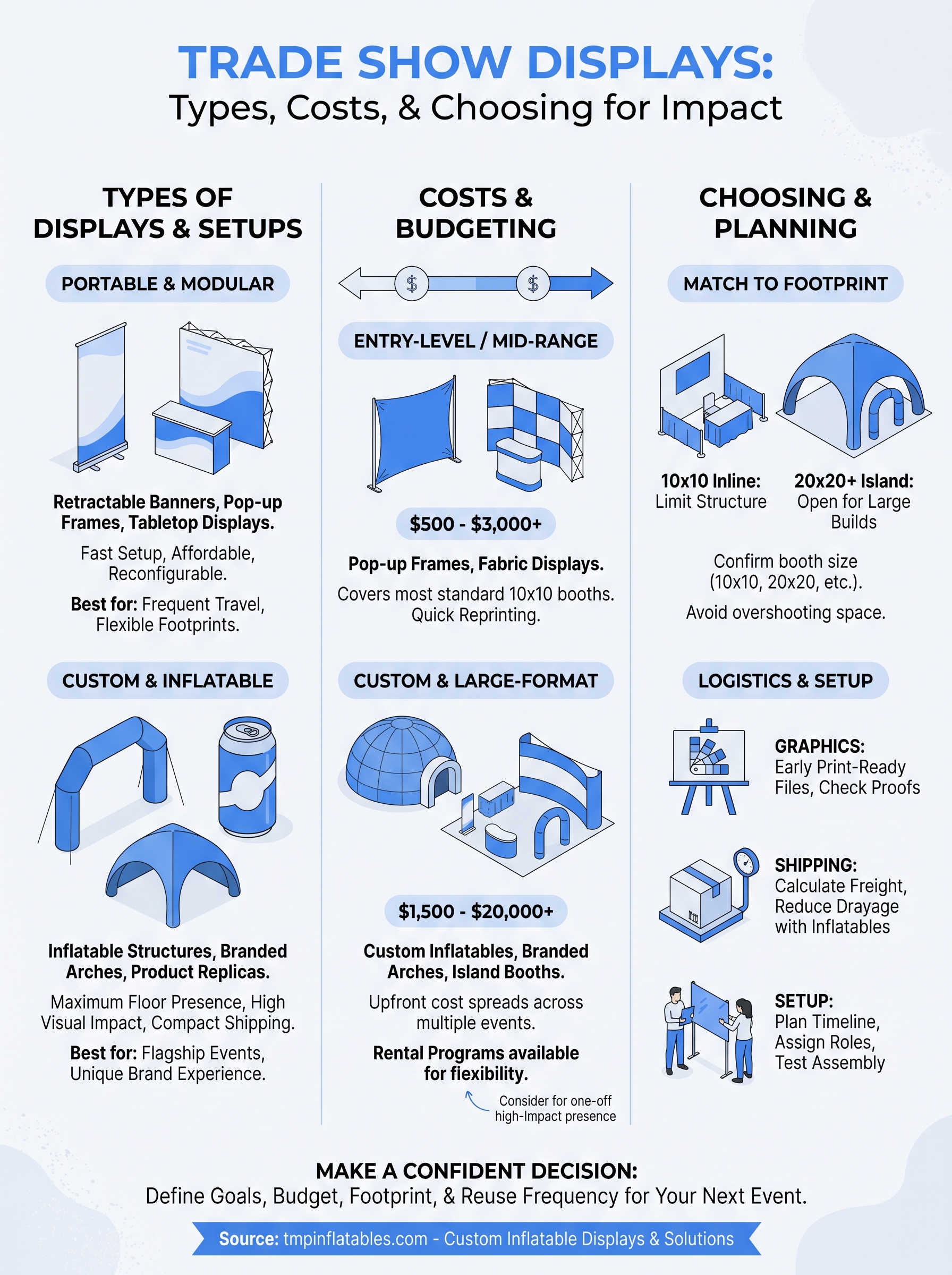
The display category you choose sets the foundation for everything else in your exhibit plan. Portable systems suit exhibitors who travel frequently or need fast setup, while large-format custom builds fit brands that want maximum floor presence at flagship events. Understanding what each category delivers helps you match the right structure to your specific show goals.
Portable and modular trade show displays
Pop-up frames, retractable banners, and tabletop displays fall into this group. Retractable banners are the most common entry point, easy to pack, quick to assemble, and affordable to print. Modular systems let you reconfigure the same components across different booth sizes, which saves money when your footprint changes from show to show.
Portable does not mean weak in terms of impact; strong graphic design on a modular frame can still stop foot traffic effectively.
Custom Inflatables for Trade Show Displays
Custom trade show displays go beyond standard hardware and create physical presence that flat panels cannot match. Inflatable structures, branded arches, and oversized product replicas ship in compact bags, inflate in minutes, and draw attention from across the hall.
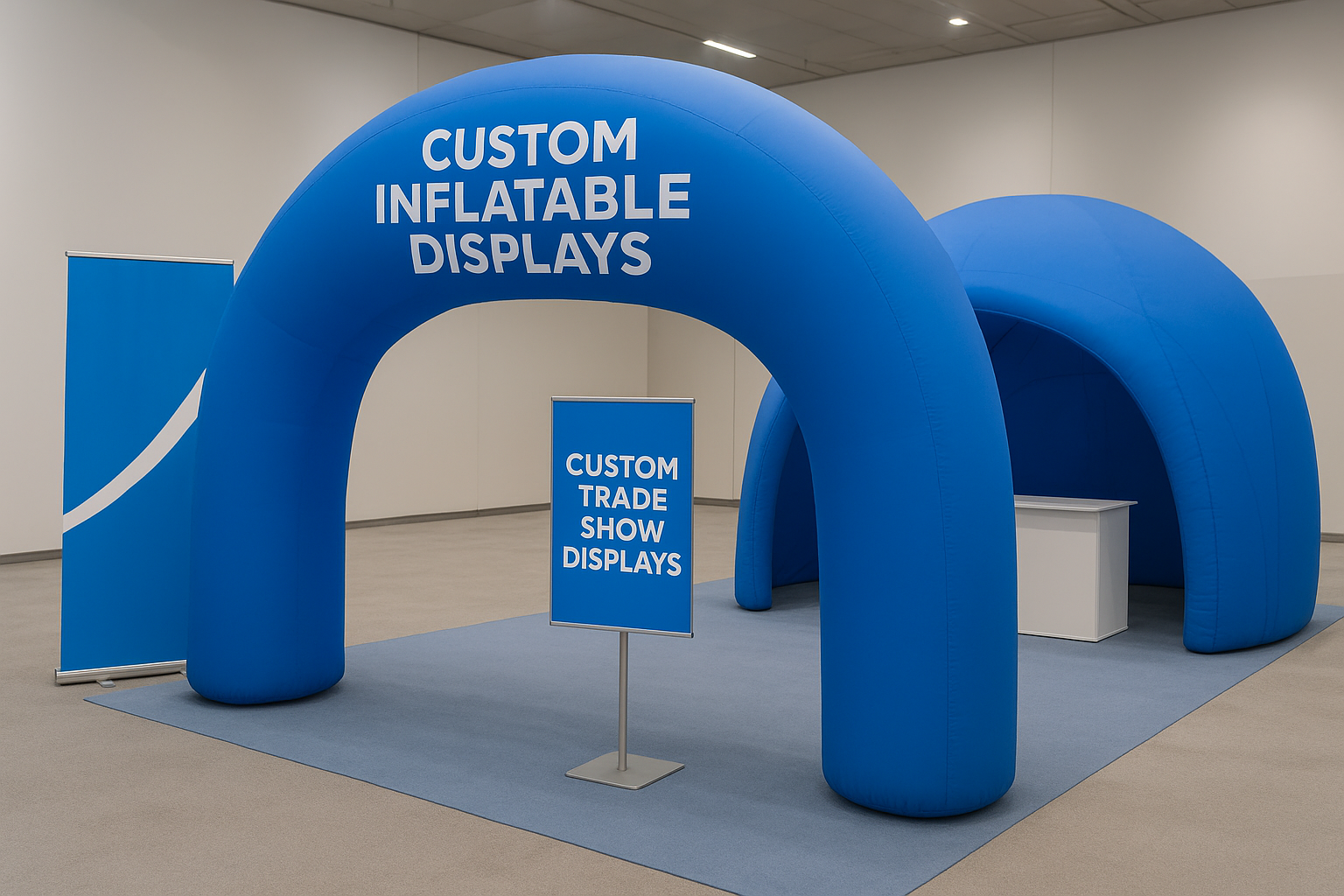
These builds give you a large-format look without a large-format crate. Inflatable tents and branded domes also double as functional spaces, creating enclosed environments for product demos, sampling, or private client meetings at busy events.
Trade show display costs and budgeting
Budget is one of the first filters that shapes your display options, and the range across trade show displays is wide enough to surprise most first-time exhibitors. A basic retractable banner can cost as little as $100 to $500, while a fully custom inflatable structure or large modular island booth can reach $5,000 to $20,000 or more. Knowing where your number lands before you start shopping prevents scope creep and keeps your decision-making focused.
Entry-level and mid-range options
Pop-up frames and fabric tension displays sit in the $500 to $3,000 range and cover most standard 10×10 booth needs. These options travel easily, reprint quickly when your messaging changes, and work well for companies running multiple regional shows per year where keeping the per-event cost low is a real priority.
How to choose the right Trade Show Displays for your event
Choosing the right display starts with being honest about your show goals and how much physical space you’re working with. A brand running five regional shows a year needs a different solution than a company anchoring a single flagship booth at a national expo. Before you browse trade show displays, define what success looks like at the specific event you’re planning for.
Match your Trade Show displays to your booth footprint
Your assigned booth size is the first hard constraint. A 10×10 inline space limits how much structure you can bring in, while a 20×20 or larger island booth opens up room for inflatable arches, freestanding product replicas, and enclosed tent structures. Confirm your exact dimensions with the show organizer before you commit to any hardware purchase or custom fabrication.
Overshooting your footprint with an oversized display creates a cramped experience that frustrates attendees instead of drawing them in.
Factor in how often you’ll reuse it
Frequency of use shifts the math on what’s worth spending. If you exhibit four or more times per year, investing in a durable custom build pays off faster because the cost spreads across many events. For one-off appearances, a rental or a lightweight modular kit often makes more financial sense and reduces storage and logistics headaches between shows.
How to plan graphics, shipping, and setup
Logistics are where many exhibitors lose time and money they didn’t budget for. Getting your graphics, freight, and on-site assembly locked down early removes the last-minute scrambling that can undermine an otherwise strong trade show displays plan.
Get your graphics right the first time
Submit your artwork files as early as the production schedule allows. Most suppliers require print-ready files in vector format at the correct dimensions, and sending low-resolution images at the last minute causes delays or forces reprints at your expense. Confirm bleed, resolution, and color profile requirements directly with your vendor before a designer touches the layout.
Reviewing a physical proof before final production catches color shifts that look correct on screen but print noticeably off under trade show lighting.
Ship smart and set up fast
Calculate your total freight weight and dimensions early in the planning process, since drayage fees at convention centers are charged by the hundredweight and catch exhibitors off guard regularly. Inflatable structures and fabric displays pack into significantly smaller cases than rigid panel systems, which reduces both shipping costs and storage requirements between events.
Build your setup timeline backward from the show’s exhibitor move-in deadline. Assign roles before you arrive so each team member knows exactly what they’re responsible for, and always run a test assembly before the actual event.
Next steps
You now have a complete picture of trade show displays: what they cost, how to choose between portable and custom options, and how to handle graphics, shipping, and setup before show day. The next move is matching that knowledge to a specific event and a specific budget. Start by confirming your booth dimensions and show dates, then work backward to determine what type of display fits your goals and timeline.
If a custom inflatable structure, a branded arch, or a large-format product replica belongs in your exhibit plan, the sooner you start the design conversation, the more production flexibility you have. Rushed timelines limit your options and drive up costs. Bringing in a supplier early keeps both in check.
TMP Inflatables has been building custom inflatable displays for brands across North America since 2004. When you’re ready to move forward, request a custom display quote and we’ll get the conversation started.
Looking for more inspiration? Checkout this Board on Pinterest