
Setting up a traditional pole tent after a long day of hiking or hauling gear to a festival site gets old fast. That’s why more campers and outdoor event teams are switching to inflatable air tents, structures that inflate in minutes with a pump instead of forty-five minutes of wrestling with poles and stakes. If you’re comparing brands, sizes, and price points before you buy, you already know the market is crowded with options that look similar but perform very differently once the wind picks up.
This guide breaks down which inflatable air tents actually hold air pressure overnight, which ones pack down small enough for a car trunk, and which inflatable canopy tents are worth the extra cost versus a cheap inflatable tents option that might leak air by night two.
We’ve spent two decades at TMP Inflatables designing and producing air-beam structures for events across North America, so we know what separates high quality inflatable tents from flimsy knockoffs. Below, you’ll find our ten picks for 2026, covering everything from budget-friendly weekend setups to serious four-season shelters. Check out this amazing list of Inflatable Air Tents:
1. Coody Familia Inflatable AirTent 17.2 for families and groups
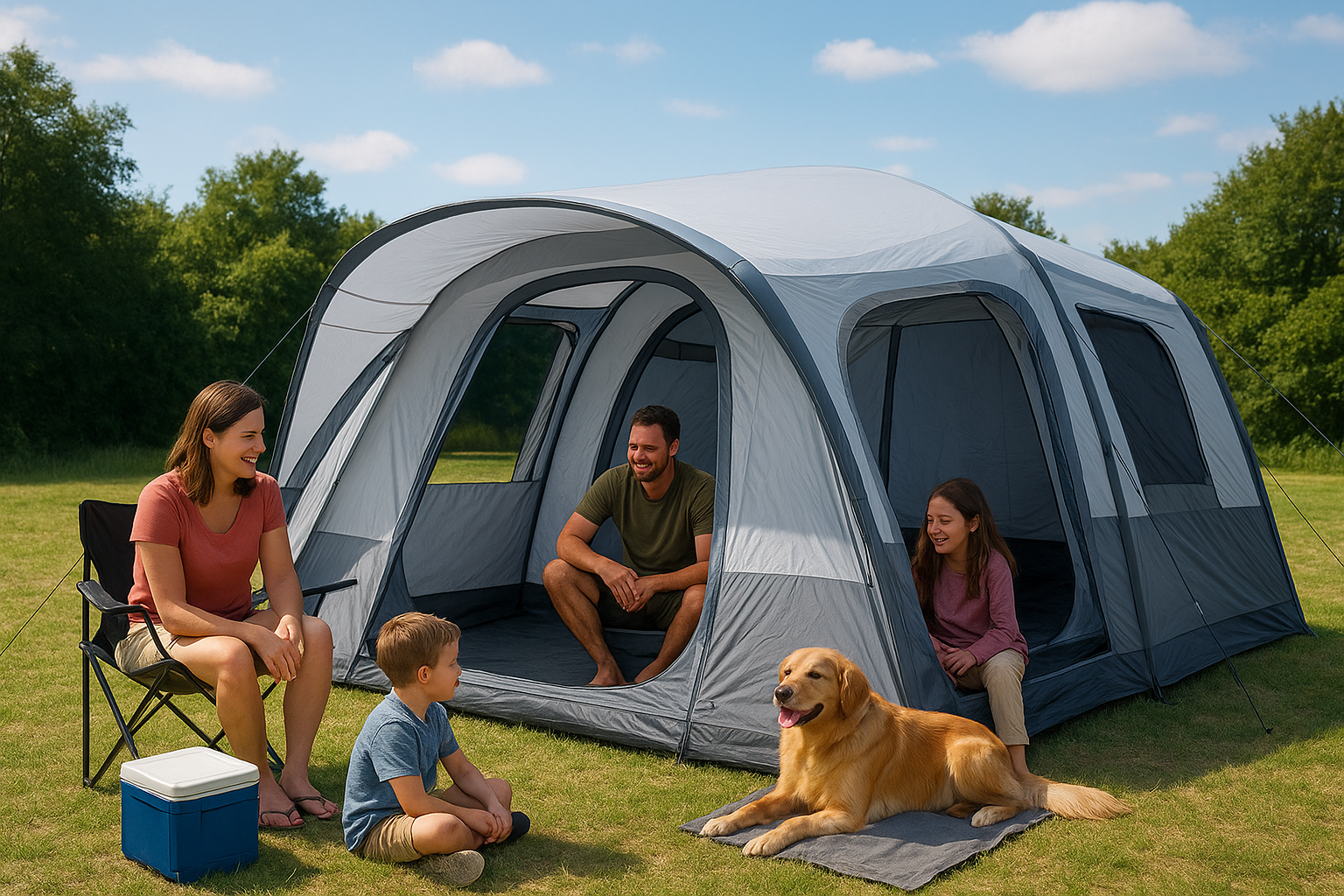
The Coody Familia Inflatable AirTent 17.2 tops this list because it solves the biggest headache of group camping: setting up enough livable space without spending an hour on assembly. This is a large inflatable air tent built for families who camp with kids, gear, and sometimes a dog that refuses to sleep outside the tent. At roughly 17 feet of usable footprint, it splits into separate sleeping and living zones, so you’re not stepping over sleeping bags every time someone needs the cooler.
Key features for these Inflatable Air Tents
Coody built the 17.2 with a double-layer polyester shell rated for light rain and wind gusts up to 30 mph, backed by taped seams that keep water from creeping through the stitching. The air beams replace the usual aluminum or fiberglass poles entirely, which means fewer breakage points after a rough trip in the truck bed. Ventilation comes from mesh panels on two sides plus a roof vent, so condensation doesn’t turn the tent into a sauna on humid nights.
- Sleeps 6 to 8 people comfortably
- Two-room layout with a removable center divider
- PVC-coated air beams rated for 20+ PSI
- Blackout-style fabric in the sleeping compartment
- Multiple gear lofts and internal storage pockets
A family tent only earns its price tag if it holds air pressure through a full weekend, not just the first night.
Setup and portability for these Inflatable Air Tents
One person can inflate the Familia AirTent 17.2 in about 8 to 10 minutes using the included high-volume pump, and that number holds up even for campers who’ve never touched an inflatable structure before. The single valve system feeds air to all beams simultaneously, so you’re not chasing down individual chambers like you would with a cheaper multi-valve design. Packed size runs slightly larger than a traditional pole tent because of the beam material, but it still compresses into a duffel that fits most SUV trunks without needing a roof rack.
Breakdown takes about as long as setup, which matters more than most buyers realize until they’re packing up in the rain at 6 a.m. Deflation happens fast once you open the valve, and the fabric folds down into a manageable bundle rather than the stiff, awkward roll you get with heavier canvas tents.
Who it’s for
Families of four to eight, car camping groups, and event teams needing a livable base camp for weekend festivals are the obvious fit here. If you’re comparing inflatable outdoor tents for a multi-day trip where you’ll actually be living in the space rather than just sleeping in it, the extra room justifies the extra weight. Solo campers or minimalist backpackers should skip this one and look further down this list toward the compact options.
Price for these Inflatable Air Tents
Expect to pay between $450 and $600 depending on the retailer and whether the bundle includes the pump and footprint. That price sits above entry-level pole tents but well below premium four-season inflatable shelters, which makes sense given the room size and beam-count involved. It’s not the cheapest option on this list, but among high quality inflatable tents built for actual family use rather than a single festival weekend, it holds its value better than lighter competitors that start losing air pressure after a few outings.
2. RBM Outdoors Panda Air Tent for four-season camping
Winter camping trips and shoulder-season backpacking put a different kind of stress on gear than a summer weekend at the lake, and the RBM Outdoors Panda Air Tent is built specifically for that punishment. This is one of the few inflatable air tents on the market rated for snow load and sustained sub-freezing temperatures, which puts it in a different category than the family-focused shelters above. RBM designed the Panda around a reinforced beam structure that resists the kind of collapse you’d see from a heavy overnight snowfall on a lighter frame.
Key features for these Inflatable Air Tents
The shell uses a 210D ripstop nylon with a fully taped floor seam, and the beams run thicker than most three-season inflatable tents to handle wind loads above 40 mph. RBM also added a snow skirt around the base, which blocks drafts and keeps meltwater from seeping under the floor.
- Four-season rated fabric and beam construction
- Snow skirt with stake-down points
- Reinforced guy-out anchors at every beam junction
- Low-profile dome shape to shed wind
- Two-person capacity with vestibule storage
A tent rated for four seasons only earns that label if it survives a real snow load, not just a marketing photo.
Setup and portability for these Inflatable Air Tents
Inflation takes roughly 6 minutes with the included pump, faster than the Familia AirTent 17.2 simply because the Panda covers less square footage. The tradeoff is a tighter interior, so this isn’t the tent you inflate expecting family-tent headroom. Packed weight sits around 12 pounds, light enough for a backcountry approach hike but heavier than true ultralight backpacking shelters that skip air beams entirely.
Who it’s for
Winter campers, alpine trekkers, and anyone camping somewhere temperatures regularly drop below freezing will get the most value here. Couples who camp year-round rather than just in summer should look at this before settling for a three-season tent that struggles once frost sets in. Casual car campers who only camp between May and September don’t need this level of weather protection and would be better served by a lighter, cheaper option.
Price for these Inflatable Air Tents
The Panda Air Tent runs between $520 and $650, depending on whether you add the optional vestibule extension. That price reflects the heavier fabric and reinforced beams rather than any premium branding, and buyers comparing inflatable outdoor tents for genuine winter use will find that cost justified once they’ve weathered a storm in it.
3. Zempire Pro TXL V2 for extreme weather protection
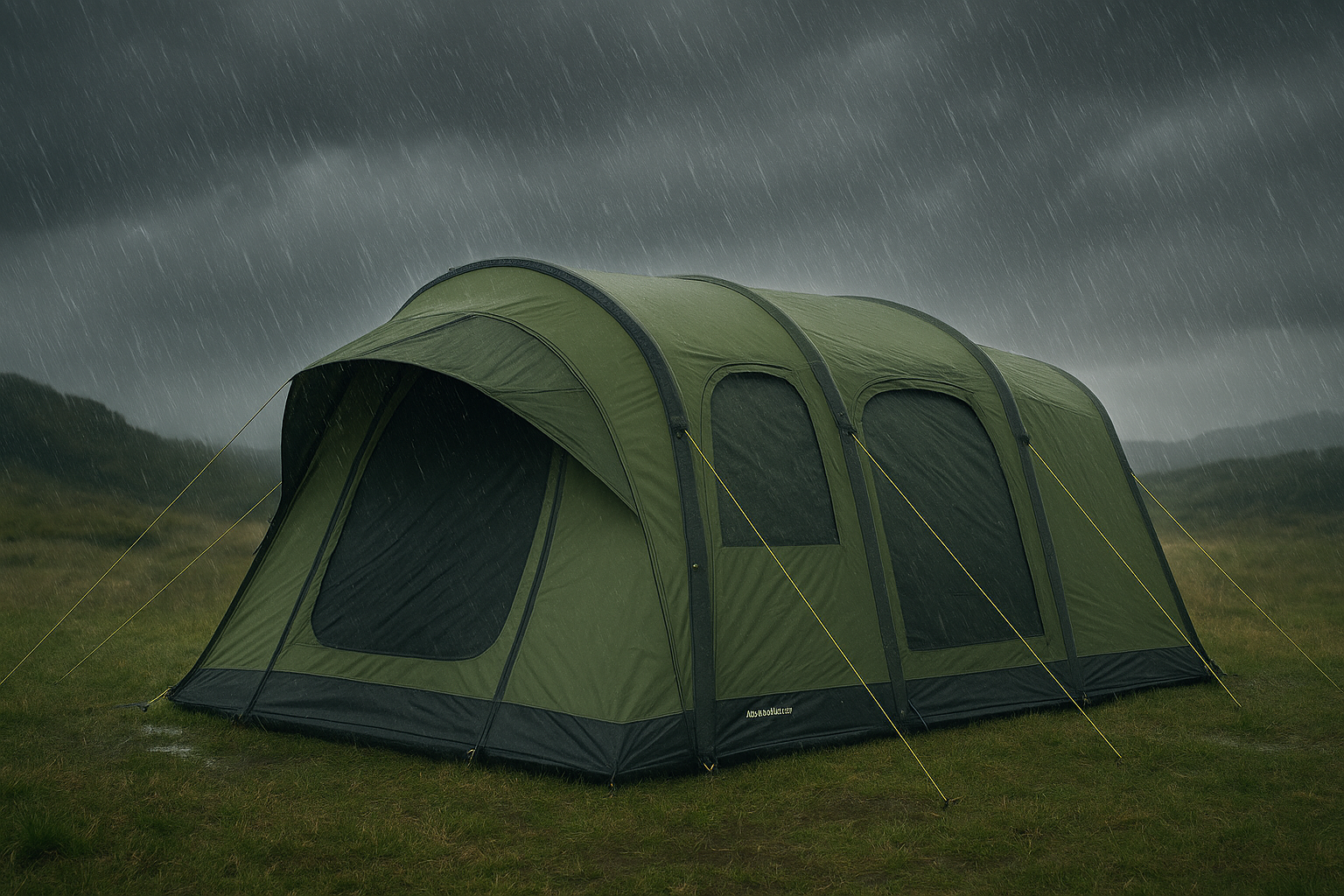
Where the Panda handles cold, the Zempire Pro TXL V2 handles wind and driving rain, and it’s earned a reputation among Australian and European overlanders for surviving conditions that would flatten a lesser tent. This is one of the toughest inflatable air tents built for expedition-style trips, storm camping, and anyone who’s tired of watching a cheap frame bend sideways in a gust. Zempire built its reputation on air-beam tech well before it became trendy, and the Pro TXL V2 shows two decades of refinement in a single product.
Key features for these Inflatable Air Tents
The fly uses a heavyweight 150D polyester with a hydrostatic head rating well above what most three-season tents offer, and the floor gets a separate waterproof groundsheet rather than a stitched-in liner. Zempire’s AirVolution beam system runs dual-chamber construction, so a puncture in one chamber doesn’t collapse the whole structure, a detail that matters more than most spec sheets let on.
- Dual-chamber air beams for redundancy
- Storm-rated guy lines with tensioners at every anchor point
- Full-coverage fly with extended vestibule
- Sleeps 4 to 5 with gear room to spare
- Wind-tunnel tested design, per Zempire’s published specs
A tent that survives a storm isn’t the one with the most features, it’s the one that keeps every beam inflated when a gust hits at 3 a.m.
Setup and portability for these Inflatable Air Tents
Inflation takes about 7 minutes, and the dual-chamber beams mean you’re managing two pump connections instead of one, a small tradeoff for the added safety margin. Packed size runs bulkier than the Panda, closer to 15 pounds, which puts it firmly in car-camping or short-hike territory rather than backcountry ultralight use. Breakdown is straightforward once you’ve done it twice, though first-timers should practice at home before relying on it in the field.
Who it’s for
Storm-chasing campers, coastal trip planners, and anyone pitching a tent in genuinely unpredictable weather will get the most from this one. Overlanders and van-lifers who need a shelter that survives repeated setup in variable climates should put this ahead of lighter three-season options. Weekend campers sticking to calm inland sites don’t need this level of storm protection and would save money going with a lighter build.
Price for these Inflatable Air Tents
The Pro TXL V2 sits in the premium bracket, typically $700 to $850 depending on the retailer and bundle. That’s a real jump from the family and winter tents above, but buyers researching inflatable tents sale listings for genuine storm protection will find few competitors matching this beam redundancy at any price.
4. Coody Aurora Dome for a luxury glamping setup
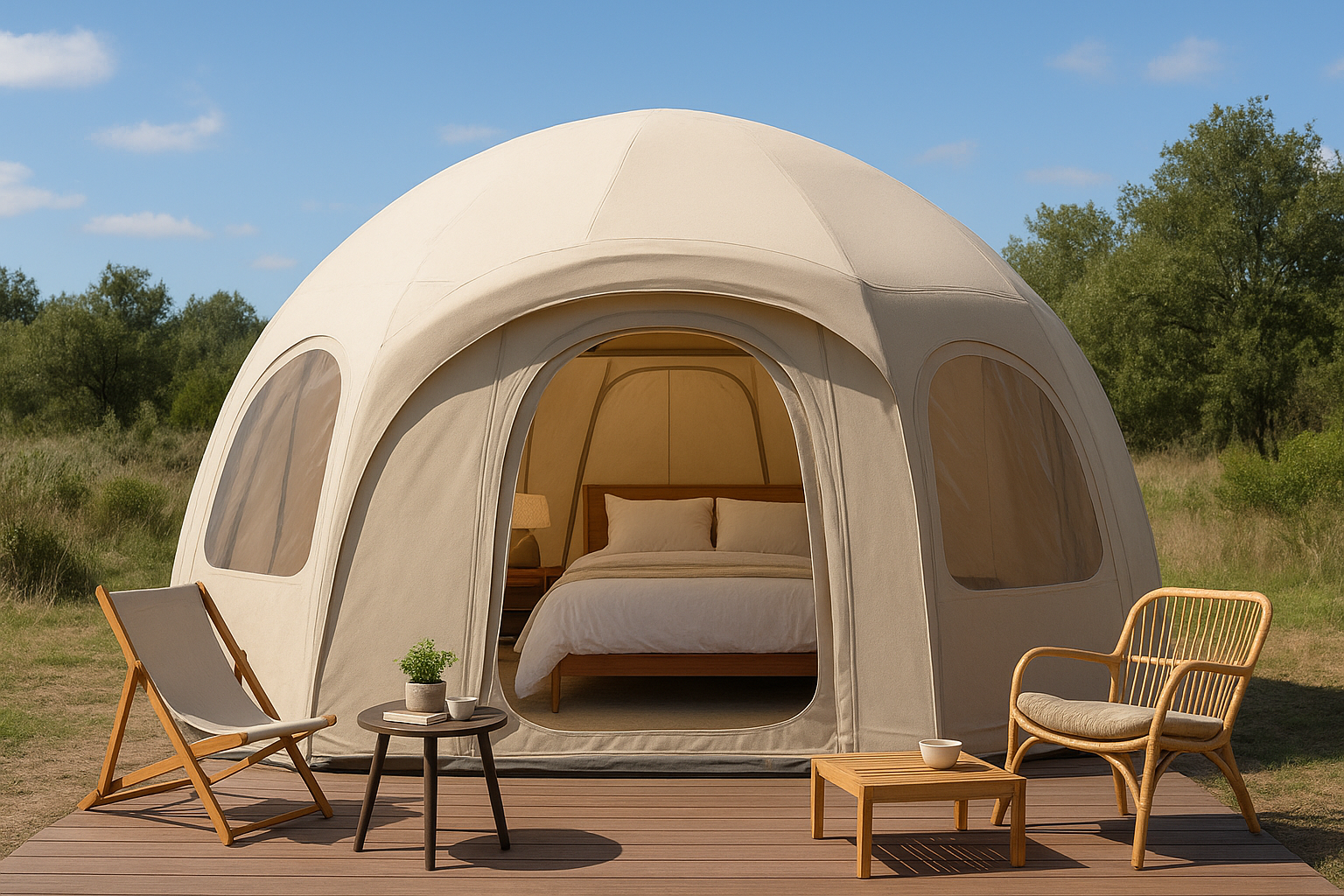
Glamping trips don’t need beam redundancy or snow skirts, they need headroom, style, and a setup that doesn’t ruin the aesthetic with tangled poles. The Coody Aurora Dome answers that brief directly. It’s built for campers who want the comfort of a boutique hotel room without hauling a hard-sided structure across a festival field or a backyard event. Among inflatable air tents marketed for upscale outdoor stays, the Aurora Dome stands out for its rounded silhouette and near-vertical walls that make the interior feel bigger than the footprint suggests.
Key features for these Inflatable Air Tents
Coody dressed the Aurora Dome in a heavyweight cotton-polyester blend that looks nothing like standard tent nylon, giving it a warmer, more textured appearance suited to styled photos and branded events. Large clear-panel windows let in natural light during the day, and a lockable zip entry adds a security touch that budget tents skip entirely.
- Domed silhouette with 6.5-foot peak height
- Cotton-polyester blend shell with a soft matte finish
- Large mesh-and-clear window panels
- Interior wiring channels for string lights or fans
- Optional flooring and furniture packages available
Glamping gear earns its price by looking as good in daylight as it performs at midnight.
Setup and portability
Inflation runs close to 10 minutes since the dome shape uses more beam length than a standard ridge tent, and Coody recommends two people for the initial setup even though a single high-volume pump can technically do it alone. Once inflated, the structure holds its shape well in calm conditions, though it’s not built for the wind loads the Zempire Pro TXL V2 handles. Packed weight lands around 20 pounds, heavier than the camping-focused tents on this list, which reflects the upgraded fabric rather than any excess in the beam count.
Who it’s for
Event planners, glamping site operators, and campers hosting a milestone weekend will get the most out of the Aurora Dome. Anyone browsing inflatable pop up tents purely for durability on a rugged trail should look elsewhere, since this model prioritizes appearance and comfort over storm resistance. Brands running a pop-up hospitality lounge at an outdoor event will also find the Aurora Dome doubles well as a branded structure.
Price for these Inflatable Air Tents
Expect to pay between $900 and $1,200 depending on flooring and furniture add-ons, placing it firmly in the premium bracket among high quality inflatable tents. That price buys the fabric upgrade and finished look, not extra weather protection, so buyers should match the spend to the use case rather than assuming premium means indestructible.
5. Zempire Evo TM V2 for mid-size family trips
Not every family needs the massive footprint of the Familia AirTent 17.2, and the Zempire Evo TM V2 fills that gap for smaller households who still want room to move. This model sits in the middle of Zempire’s lineup, built for trips where you’re camping for a few nights rather than settling into a base camp for a week. Among inflatable outdoor tents aimed at four-person families, the Evo TM V2 balances weight, price, and livable space better than most competitors in its bracket.
Key features
Zempire equips the Evo TM V2 with its AirVolution single-chamber beam system, simpler than the dual-chamber setup on the Pro TXL V2 but still durable enough for regular family use. The tent uses a 150D polyester fly with taped seams and a bathtub-style floor that keeps ground moisture out during wet-grass mornings.
- Sleeps 4 with a single sleeping compartment
- Front awning doubles as a shaded porch
- Mesh ventilation on both side panels
- Color-coded valves for faster inflation
- Compatible with Zempire’s optional carpet accessory
Mid-size families don’t need every feature, they need a tent that sets up fast and holds air through the whole trip.
Setup and portability for these Inflatable Air Tents
Inflation takes about 5 minutes thanks to the color-coded single-chamber valves, which is faster than the Familia AirTent 17.2 simply because there’s less beam length to fill. Packed weight comes in around 14 pounds, manageable for one adult to carry from the car to a campsite without a second trip. Breakdown mirrors setup speed, and the awning poles pack separately, so nothing gets tangled with the main beam bag during storage.
Who it’s for
Families of three to four who camp a handful of weekends each season are the clear target here. Buyers searching inflatable pop up tents for a reliable but not overbuilt option will find the Evo TM V2 hits that middle ground without the bulk of larger group tents. Solo campers and storm-chasers should look elsewhere on this list, since the single-chamber beams and standard fly don’t match the extreme-weather builds covered above.
Price for these Inflatable Air Tents
The Evo TM V2 typically runs $480 to $580, positioning it just above the Familia AirTent 17.2 despite the smaller footprint, a difference that comes down to Zempire’s beam engineering rather than size alone. For families comparing inflatable tents sale listings this season, it’s one of the stronger value picks between the budget and premium tiers.
6. Coody 13.6 Familia AirTent for multi-room comfort
Somewhere between the massive 17.2 and the compact tents further down this list sits the Coody 13.6 Familia AirTent, built for families who want separate sleeping quarters without hauling a base-camp-sized structure. This model keeps the two-room layout that made the 17.2 popular but trims the footprint down to roughly 13.6 feet, which makes it easier to pitch on tighter campsites or smaller backyard lots. Among inflatable air tents designed for multi-room comfort, the 13.6 hits a sweet spot for households of four to six who still want a privacy divider between the living area and the sleeping bags.
Key features for these Inflatable Air Tents
Coody kept most of the 17.2’s construction here, including the double-layer polyester shell and taped seams, just scaled to a smaller frame. The removable center divider still splits the tent into two usable zones, and the roof vent plus side mesh panels keep airflow moving even with four people inside.
- Sleeps 4 to 6 people
- Removable divider for two-zone layout
- PVC-coated beams rated for 20+ PSI
- Mesh ventilation on two walls plus roof vent
- Interior storage pockets and a small gear loft
A multi-room tent only works if the divider holds up night after night, not just on the showroom floor.
Setup and portability
Inflation takes about 7 minutes with the same single-valve pump system used across Coody’s lineup, a touch faster than the 17.2 simply because there’s less beam length to fill. Packed weight lands around 16 pounds, light enough for one adult to carry from a parking lot to a campsite without a second trip. Breakdown follows the same quick-release valve process, so campers already familiar with the 17.2 won’t need to relearn anything switching to this size.
Who it’s for
Smaller families, couples camping with one or two kids, and groups who want separated sleeping space without the bulk of a larger shelter should look here first. Buyers researching inflatable canopy tents or multi-room options for a weekend trip will find this size easier to pitch solo compared to the 17.2. Large groups needing separate zones for eight or more people should still step up to the bigger model instead.
Price for these Inflatable Air Tents
Expect to pay between $400 and $520, positioning it just below the 17.2 despite offering nearly the same feature set in a smaller package. That gap makes the 13.6 one of the better mid-range picks for families who don’t need every square foot the larger tent offers.
7. Coody 8.0 Air Tent for couples and solo campers
Not every trip calls for a multi-room setup, and the Coody 8.0 Air Tent covers the campers who just need a compact, reliable shelter for one or two people. Trimming the footprint down from the 13.6 and 17.2 models means less fabric to haul, less setup time, and a lower price tag without giving up the beam construction that makes Coody’s lineup dependable. Among inflatable pop up tents built for smaller groups, the 8.0 keeps the essentials without the extra bulk you don’t need on a short trip.
Key features for these Inflatable Air Tents
Coody scaled the same double-layer polyester shell down to a single-room layout here, keeping the taped seams and PVC-coated beams that show up across the brand’s larger tents. A single roof vent plus mesh door panel handle airflow, which works fine for one or two sleepers but wouldn’t cut it in a bigger tent with more body heat to move.
- Sleeps 1 to 2 people
- Single-room layout with a small gear vestibule
- PVC-coated beams rated for 20+ PSI
- Mesh door panel and roof vent for airflow
- Compact stuff sack included
A solo tent doesn’t need extra rooms, it needs to go up fast and pack down small enough to forget it’s even in the trunk.
Setup and portability
Inflation takes around 4 minutes, the fastest of any Coody model on this list, since there’s a fraction of the beam length to fill compared to the 13.6 or 17.2. Packed weight comes in around 9 pounds, light enough to carry in one hand from the car to a tent pad without breaking a sweat. Breakdown follows the same quick-release valve system as the rest of the Coody lineup, so anyone who’s used a bigger Familia AirTent won’t need to learn a new process here.
Who it’s for
Solo campers, couples on a weekend trip, and festival-goers who just need a place to crash between sets are the clear fit. Shoppers comparing inflatable outdoor tents for a minimalist car-camping setup will find the 8.0 easier to pitch alone than any multi-room option on this list. Families or groups needing separate sleeping zones should skip this one and look at the 13.6 or 17.2 instead.
Price for these Inflatable Air Tents
The Coody 8.0 typically runs $220 to $300, making it one of the more affordable options here without dipping into the flimsier builds you’ll find browsing generic cheap inflatable tents listings. That price reflects the smaller beam count and simpler layout, not a drop in construction quality, so solo campers get real durability without paying for room they won’t use.
8. Zempire Aerospeed 10 for ultralight, fast setup
Speed is the whole pitch with the Zempire Aerospeed 10. Where most of the tents on this list trade a few extra minutes for extra room or weather protection, the Aerospeed 10 strips things down so you can get shelter up almost as fast as you can unroll a sleeping pad. It’s built for campers who move sites often, whether that’s a multi-stop road trip or a festival circuit where you’re breaking camp every couple of days. Among inflatable air tents aimed at speed over square footage, this one leads the pack.
Key features
Zempire trimmed the Aerospeed 10 down to a single-hoop beam design instead of the multi-beam frames used on the Evo TM V2 or Pro TXL V2, which cuts both weight and inflation time. The fly still uses a 150D polyester with taped seams, so you’re not sacrificing waterproofing for speed, just the extra room and reinforcement that heavier tents carry.
- Single-hoop AirVolution beam for rapid inflation
- 150D polyester fly with taped seams
- Sleeps 2 with a small gear vestibule
- One-way valve for near-instant deflation
- Compact carry bag under 10 pounds total
Speed only matters if the tent still holds its shape once it’s up, and the Aerospeed 10 does both.
Setup and portability for these Inflatable Air Tents
Inflation takes about 90 seconds with the included pump, the fastest number on this entire list, and that’s not a marketing exaggeration since the single-hoop design leaves almost nothing for the pump to fill. Breakdown is just as quick: open the one-way valve and the beam collapses in seconds, letting you stuff the tent back into its bag without the folding routine larger inflatable tents require. Packed weight sits around 8 pounds, light enough to strap to a bike rack or toss in a daypack for a short hike to a campsite.
Who it’s for
Festival campers, bikepackers, and anyone doing back-to-back site changes will get the most value from the Aerospeed 10. Buyers comparing inflatable pop up tents specifically for speed, rather than interior space, should put this at the top of their shortlist. Families and anyone needing separate sleeping zones should look toward the Coody 13.6 or 17.2 instead, since this tent sacrifices room for setup time.
Price for these Inflatable Air Tents
The Aerospeed 10 typically runs $350 to $420, a fair price given the beam engineering packed into such a light structure. It’s not the cheapest tent here, but for campers prioritizing speed over space, it beats out slower budget options by a wide margin.
9. Coody AirTarp for shade and canopy-style shelter
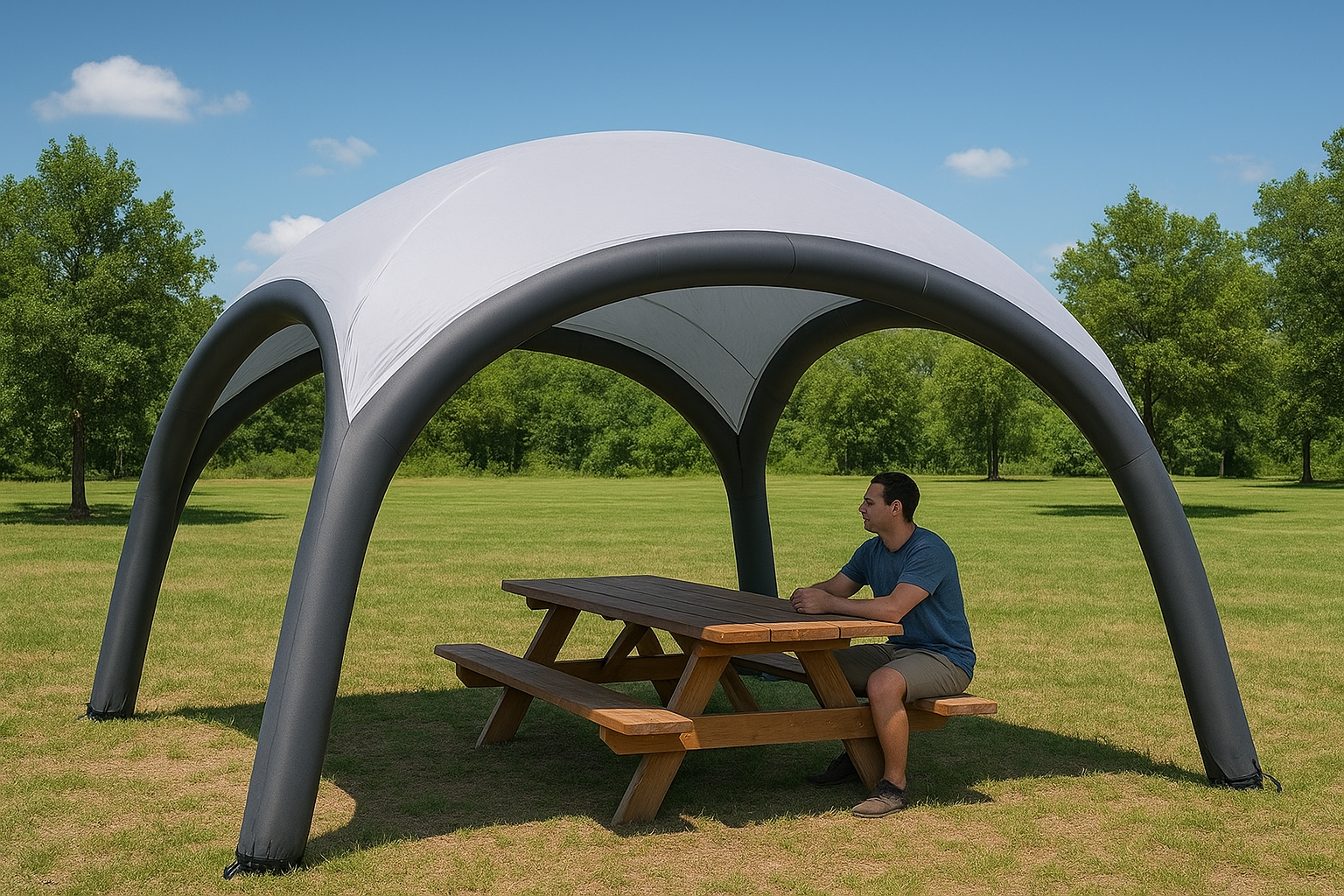
Sometimes you don’t need a tent at all, you need shade over a picnic table or a spot to escape the sun between activities, and that’s exactly what the Coody AirTarp delivers. This isn’t a sleeping shelter in the traditional sense. It’s an open-sided canopy that uses the same air-beam technology as Coody’s tents but skips the walls and floor entirely. Among inflatable canopy tents built for day use rather than overnight camping, the AirTarp covers the most ground for the least setup effort.
Key features for these Inflatable Air Tents
Coody built the AirTarp around two arched air beams that support a wide polyester canopy, leaving the sides completely open for airflow and easy access from any direction. The fabric carries a UV-resistant coating rated to block a significant share of solar exposure, which matters more at a midday trailhead than most campers realize until they’re standing in direct sun with nowhere to go.
- Open-sided canopy with dual arched beams
- UV-resistant polyester top panel
- Roughly 10×10 feet of shaded footprint
- Stake-down points at all four corners
- Optional side wall attachments sold separately
Shade shelters earn their keep by going up before everyone’s already sunburned, not after.
Setup and portability for these Inflatable Air Tents
Inflation takes about 3 minutes since there’s far less beam length than any full tent on this list, and one person can manage the whole process without help. Once the beams are firm, staking the four corners takes another minute or two, and that step matters more here than on enclosed tents since there’s no floor weight holding the structure down in wind. Packed weight comes in around 11 pounds, and the canopy folds into a bag long enough to strap across a cooler or truck bed rather than a duffel.
Who it’s for
Day campers, tailgaters, beach trip organizers, and anyone running a booth at an outdoor market will get the most use from the AirTarp. Event teams comparing inflatable outdoor tents for shade rather than sleeping space should look here before defaulting to a pole-based canopy that takes twice as long to pitch. Overnight campers and anyone needing weather protection from rain or wind should pair this with an actual tent instead, since the open sides offer zero rain coverage once wind picks up.
Price for these Inflatable Air Tents
The Coody AirTarp typically runs $180 to $260, depending on whether you add the optional side walls. That price puts it near the bottom of this list, and for buyers browsing inflatable tents sale listings purely for shade coverage rather than shelter, it’s hard to beat the setup speed at that cost.
10. Coody Bestona for budget-friendly camping
Rounding out this list is the Coody Bestona, built for campers who want a real air-beam tent without paying premium prices for features they’ll never use. This is Coody’s entry-level model, and it’s aimed squarely at first-time inflatable tent buyers who aren’t sure yet whether they’ll camp three weekends a year or thirty. Among inflatable air tents priced for occasional use, the Bestona strips out the extras and keeps the core beam technology that makes the whole category worth switching to in the first place.
Key features for these Inflatable Air Tents
Coody uses a single-layer polyester shell here instead of the double-layer fabric on the Familia AirTent line, which keeps costs down but also means slightly less protection against sustained heavy rain. The beams still run PVC-coated construction, just at a lower PSI rating than Coody’s premium models, enough for calm-weather car camping but not built for storm conditions.
- Sleeps 2 to 4 people
- Single-room layout with no divider
- PVC-coated beams rated for lighter wind loads
- Basic mesh door panel for ventilation
- Included pump and repair patch kit
A budget tent earns its price by doing the basics well, not by pretending to be something it isn’t.
Setup and portability for these Inflatable Air Tents
Inflation takes about 5 minutes with the included pump, comparable to Coody’s mid-size models despite the lighter fabric, since the beam layout stays simple. Packed weight sits around 10 pounds, easy for one person to carry, though the stuff sack runs a bit tighter than the pricier Coody tents since there’s less room built into the packaging design. Breakdown follows the same quick-release valve process used across the brand’s lineup, so campers upgrading from this tent later won’t need to relearn anything.
Who it’s for
First-time inflatable tent buyers, casual weekend campers, and anyone testing whether air-beam tents suit their camping style before spending more should start here. Shoppers searching cheap inflatable tents who still want a legitimate beam structure, rather than a flimsy knockoff, will find the Bestona a safer bet than unbranded listings at a similar price. Anyone camping in consistently rough weather or needing multi-room space should look further up this list instead.
Price for these Inflatable Air Tents
The Bestona typically runs $150 to $220, making it the most affordable tent on this list and a genuine entry point into inflatable camping gear. For buyers comparing inflatable tents sale listings on price alone, this is where that search should end, since it delivers real beam construction at a price close to a basic pole tent.
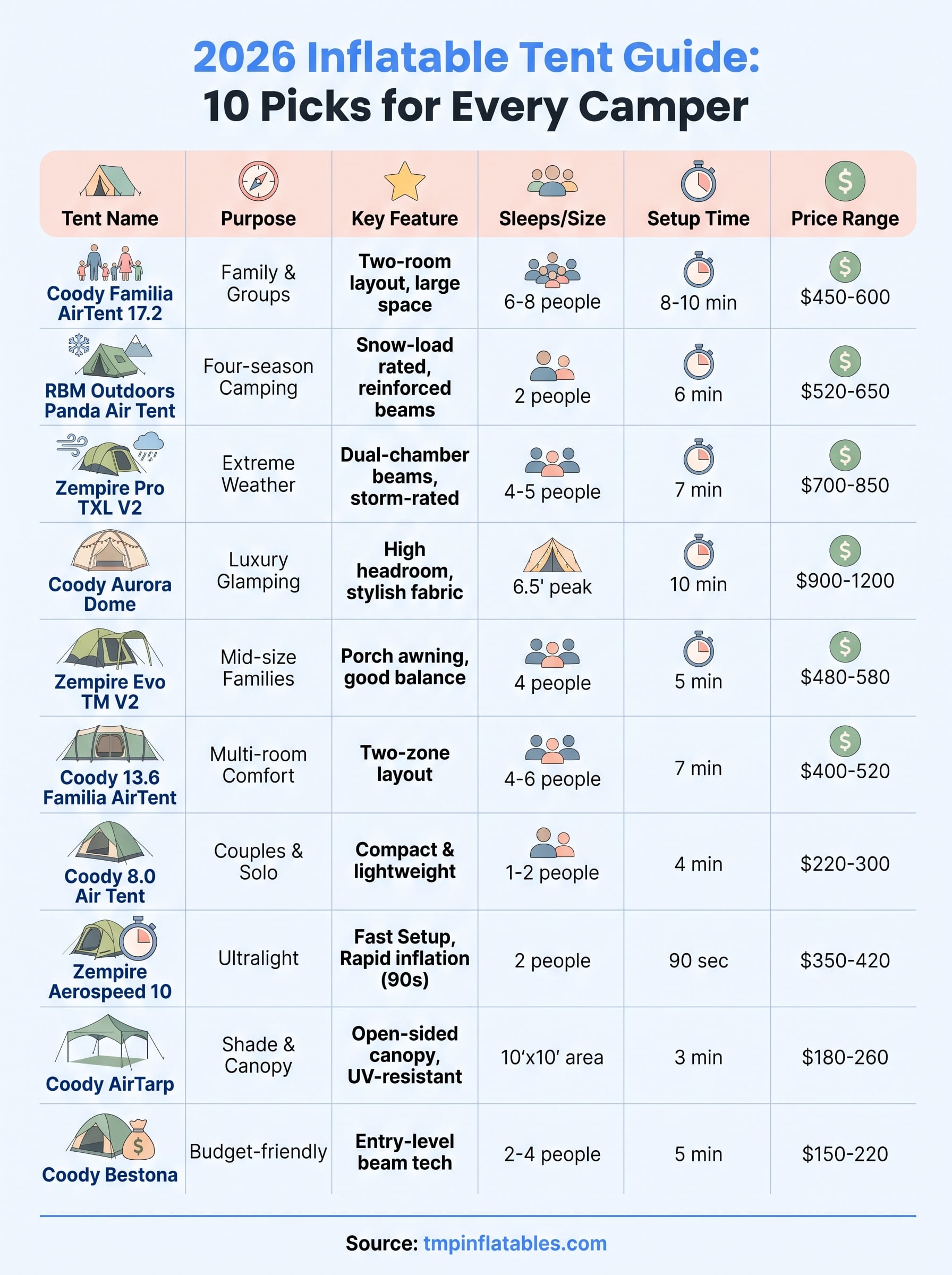
Picking the Inflatable Air Tents that fit your trip
The right pick from this list depends on how you actually camp, not which tent has the flashiest spec sheet. Families need room and a divider, storm chasers need dual-chamber beams, and festival-goers need something that inflates in under two minutes. Match your trip type to the categories above and you’ll skip the buyer’s remorse that comes with grabbing whatever inflatable air tents show up first in a search result. Did you know branded camping events are on the rise? Click here to learn why
Going beyond personal camping gear is where our own work at TMP Inflatables comes in. Event teams, brands, and agencies often need something these off-the-shelf tents can’t offer: custom branding, oversized structures, or a shape built specifically for a product launch or trade show floor. We’ve spent twenty years designing air-beam structures for exactly that kind of project. If your next event calls for something more specific than what’s on a retail shelf, get a custom quote and we’ll help you design it right.