

You’ve got a race, a trade show booth, or a store opening coming up, and you need something big enough to spot from three blocks away. That’s exactly what an inflatable arch does. It’s a large air-filled structure, usually shaped like a rainbow or A-frame, branded with your logo and set up as an entrance, finish line, or focal point for your event. Runners look for it. Shoppers walk through it. Cameras find it first.
Choosing the right one isn’t as simple as picking a size off a website, though. You need to think about span width, wind rating, print quality, and whether you need a standard entrance piece or an inflatable finish line arch built to survive a full race season outdoors. Pricing swings widely based on material and blower setup, and a lot of buyers get burned by cheap vinyl that tears after two uses.
This guide walks through what these arches are actually made of, the common sizes and shapes used for races, entrances, and trade shows, and what separates a durable custom build from a throwaway promotional piece. By the end, you’ll know exactly what to ask a supplier before you order.
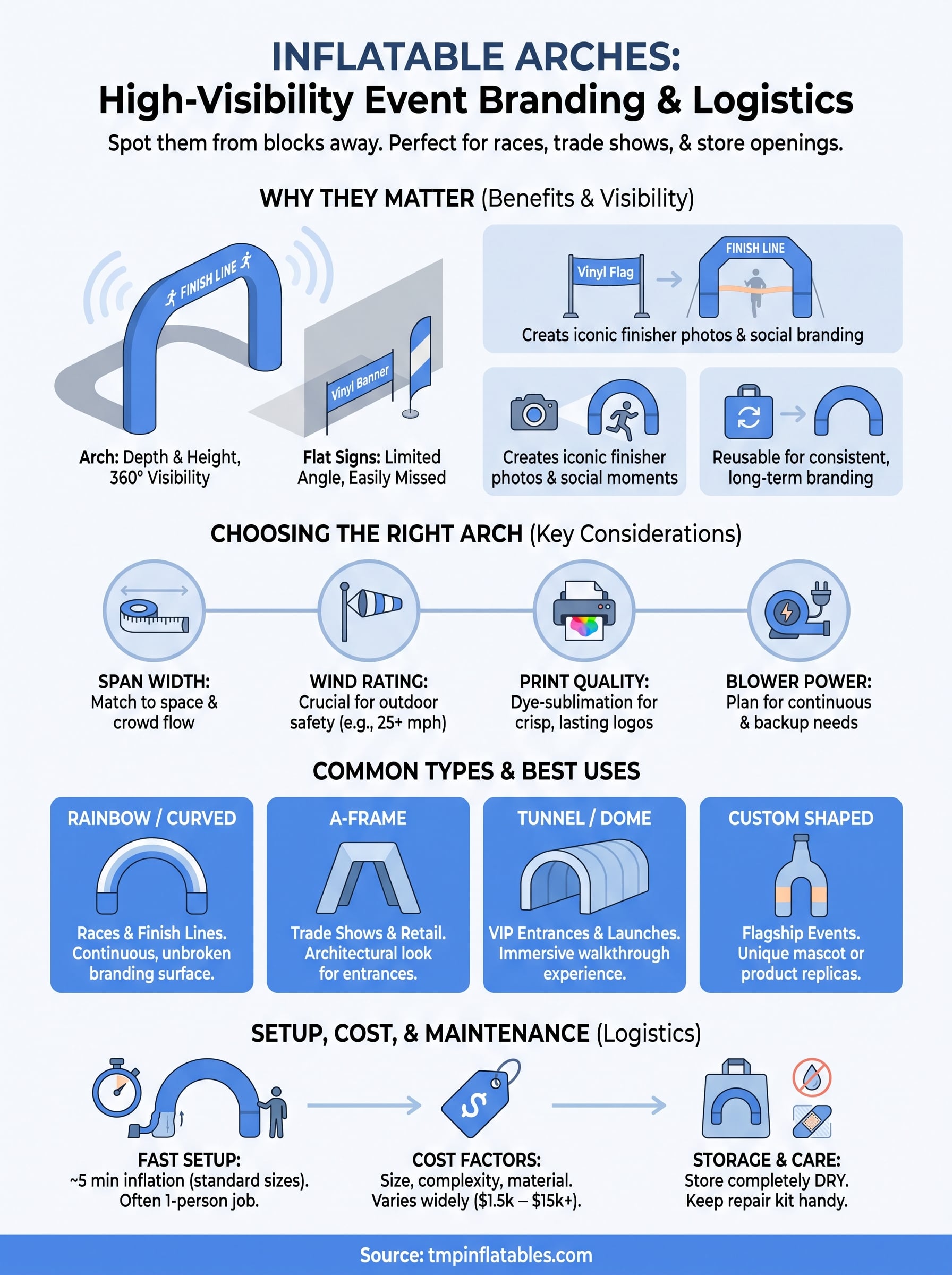
Why an Inflatable Arch is a must have for events and brand activations
An inflatable arch works because it solves a problem every event marketer faces: getting noticed from a distance in a crowded space. A parking lot full of tents, a street lined with sponsor banners, a convention floor packed with booths, none of that competes with a 20-foot rainbow of color rising above everything else. Attendees don’t have to search for you. They walk toward the arch because it’s the biggest thing in their field of view, and your logo happens to be printed across it in six-foot letters.
An Inflatable Arch provides Visibility that outperforms flat signage
Banners and pop-up flags are flat, which means they disappear the moment someone’s standing at an angle to them. An arch inflatable structure has depth and height working in its favor, so it reads clearly from the side, from across a field, and from a drone shot if you’re covering the event on social media. That’s a real advantage for brands paying for booth space or event sponsorship and trying to justify the spend with impressions, and it’s the same logic behind marketing with inflatable promo products generally.
A flat banner competes for attention. An inflatable arch owns the skyline.
An Inflatable Arch provides The finish line as a brand moment
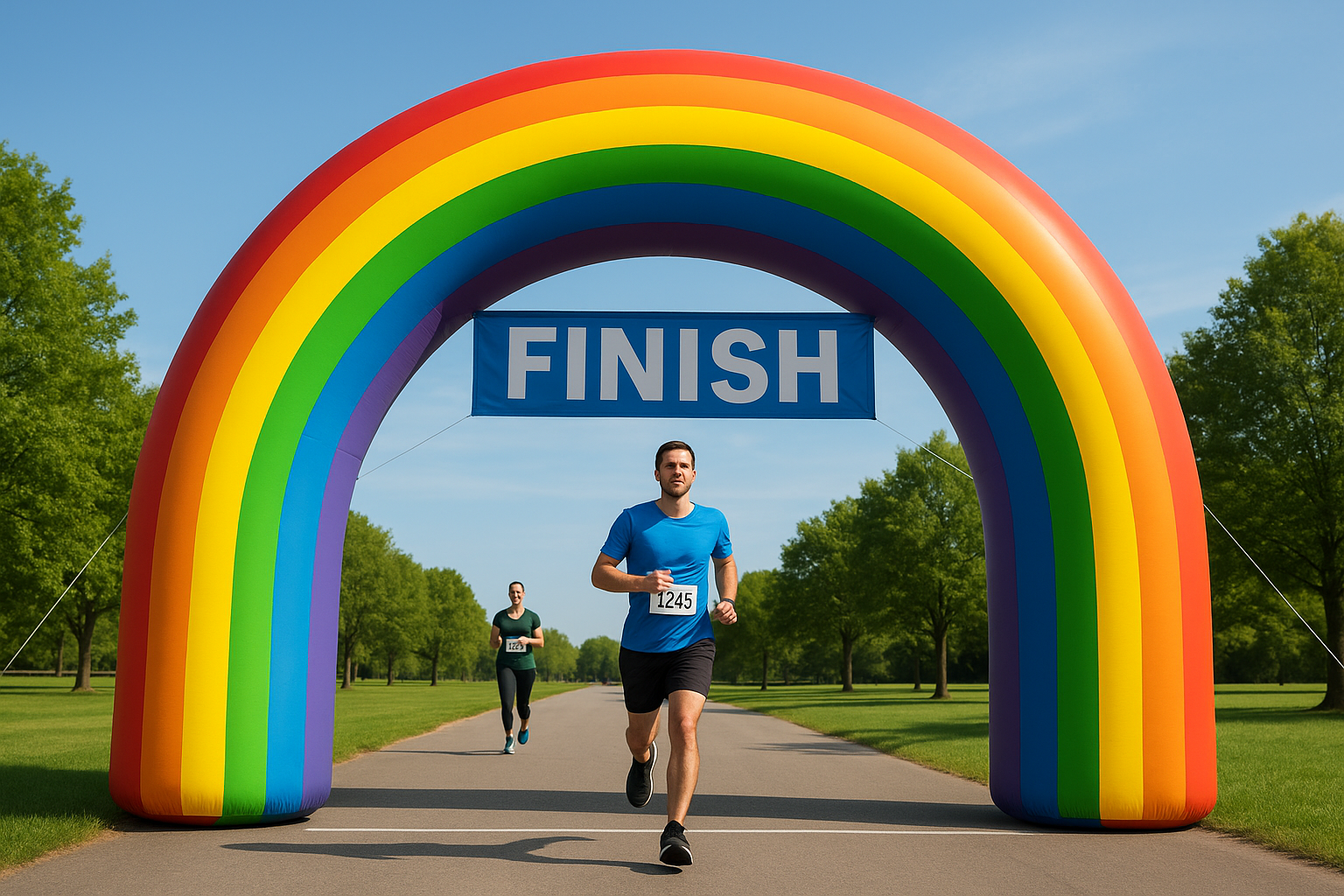
Race organizers understand this better than anyone, which is why an inflatable finish line arch has become close to standard equipment for 5Ks, marathons, and charity runs. Runners spend the entire race with that arch in their mental picture of the finish. It shows up in every finisher photo, every livestream, every local news clip of the event. Put your sponsor’s name on an inflatable start finish arch and you get free repeated exposure through months of race recaps and social shares, long after the timing chips are packed away. This is also where an inflatable race arch earns its cost back fastest, because a single event can generate thousands of tagged photos without you spending another dollar on media, which is why arches anchor so many soccer and sports brand activations.
How an Inflatable Arch can stack up against other promo formats
Here’s how an inflatable arch compares to the other tools marketers usually reach for at the same events:
| Format | Visibility distance | Branding surface | Reusable across events |
|---|---|---|---|
| Inflatable arch | 200+ yards | Full curved surface, both sides | Yes, with proper storage |
| Vinyl banner | 30-50 yards | Flat, one side | Yes, but fades and tears faster |
| Pop-up tent | 50-75 yards | Canopy and side walls | Yes |
| Flag/feather banner | 40-60 yards | Narrow strip | Yes |
The table makes the case on its own: nothing else in a typical event kit matches an arch’s combination of range and branding real estate.
An Inflatable Arch can Transform an entrance into a photo op
Outside of races, an inflatable entrance arch does the same job for store openings, product launches, and trade show floors, and it’s worth knowing whether to buy or rent an inflatable archway for that kind of use. It marks the threshold people walk through, which naturally becomes the spot they stop to take a picture. Real estate developers use them at community open houses. Retail chains use them for grand openings and seasonal sales. The arch gives people a reason to pause right where you want them, in front of your branding, at the exact moment they’re forming a first impression of the event.
An Inflatable Arch provides Consistent branding across a season of events
Because a well-built arch is designed to survive repeated setup and teardown, it becomes a recurring brand asset rather than a one-time expense. A regional running series or a retailer running pop-up activations across multiple cities can use the same arch at every stop, which builds visual consistency that a stack of disposable banners never achieves. Runners and shoppers start to recognize the shape and color scheme before they can even read the logo, and that kind of repeated exposure is exactly what builds brand recall over a season instead of a single afternoon.
How to choose the right inflatable arch for your event
Selecting the right inflatable arch starts with measuring the space it needs to fill, not scrolling through a catalog for whatever looks impressive. A 10-foot arch over a narrow trail entrance reads fine, but drop that same size into a wide boulevard start line and it disappears next to the crowd. Race organizers shopping for an inflatable arch for race day should measure the actual course width and add a few feet of clearance on each side so runners three-wide can pass through without brushing the legs.
Match the span to your space
Span width determines everything else about the build, from the blower size to the amount of rebar or sandbags needed to anchor it. A typical finish line arch runs 15 to 20 feet wide and 12 to 15 feet tall, big enough to photograph well but still manageable for one or two people to set up. Trade show entrances usually go narrower, since booth aisles rarely exceed 10 feet, while retail grand openings often stretch wider to frame a storefront or parking lot entrance.
Check the wind rating before anything else
Wind is what actually ends events early, not rain. Ask any supplier for the wind rating in miles per hour before you ask about color options, and confirm what anchoring method that rating assumes, since the wind speeds inflatables can handle depend entirely on how they’re anchored.
An arch with no wind rating on file is a liability, not a decoration.
Outdoor races and beachfront activations need arches rated for at least 25 to 30 mph with proper ground stakes or water-filled bags, since a sudden gust can flatten an unrated structure in seconds.
Decide on print method and branding needs for the Inflatable Arch
Dye-sublimation printing bonds ink directly into the fabric fibers, so the graphics stay crisp instead of peeling like a cheap vinyl decal after a few outdoor uses. This matters most for sponsors expecting their logo to survive an entire race season, not just opening day. Ask whether the print wraps continuously around the curve of the arch or gets pieced together in panels, since seams break up a logo and look unfinished in photos.
Plan for blower power and backup
Every inflatable arch runs on a continuous-duty blower, and a dead blower means a collapsed arch mid-event, so work through an inflatable power needs checklist before event day. Bring these questions to your supplier before ordering:
- What amperage does the blower draw, and will it run on standard extension cords?
- Is a backup blower included or available as a rental add-on?
- How loud is the blower, and does that matter near a start line announcer?
- What’s the expected runtime on a generator if outlets aren’t available onsite?
Getting these answers upfront saves you from troubleshooting on event morning.
Inflatable Arch Types and their best uses
Not every event needs the same shape. An inflatable arch comes in a handful of standard silhouettes, and browsing 100+ designs for custom inflatable arches makes it clear that picking the wrong one wastes money on features you don’t need or leaves you short on branding space where it counts most.
An Inflatable Arch type: Classic rainbow arch
The rainbow, or curved, arch is the shape most people picture when they hear the term, and it’s the go-to for races. The continuous curve of a round arch gives sponsors one unbroken surface to print across, which is why timing companies and race directors default to it for finish lines. Runners see the full logo from a quarter mile out, and the shape photographs well from almost any angle.
Inflatable Arch A Must Have
A-frame arch
An A-frame arch uses two straight or slightly angled legs meeting at a peak instead of a smooth curve. Like the inflatable square archway, it’s a common choice for trade show entrances and retail storefronts, where a sharper, more architectural look fits better against a building facade or booth backdrop. The flat panels also make it easier to print separate logos on each leg rather than one wraparound design.
Tunnel and dome arches
A tunnel arch stretches the entrance format into a short walkthrough, giving guests several feet of branded surface on both sides as they pass through instead of a single frame, and the best inflatable tunnel suppliers build these for team sports as well as brand events. Dome-style structures push this further, functioning almost like a small inflatable tent with an open arch cut into the front. These work well for product launches or VIP entrances where you want people to linger inside the branded space for a photo, not just walk under it.
The shape you pick should match how long you want people standing under your logo, not just how it looks in a render.
Custom shaped arches
Custom molds can turn an arch inflatable into a branded object itself, a bottle shape, a mascot silhouette, or a product replica with an opening built into the design. These cost more and take longer to produce, but they’re unmatched for a flagship product launch or a one-off activation where a generic rainbow shape won’t cut it.
| Arch type | Best use | Branding surface |
|---|---|---|
| Rainbow/curved | Race finish lines, start lines | Continuous curved surface |
| A-frame | Trade show entrances, retail | Two flat panels |
| Tunnel/dome | VIP entrances, product launches | Interior and exterior walls |
| Custom shaped | Flagship launches, mascots | Fully sculpted surface |
Matching shape to purpose keeps the arch working as hard as the budget spent on it.
Setup, cost, and maintenance considerations
Budgeting for an inflatable arch means looking past the sticker price and into what it actually takes to run one for a full season. A cheap arch that needs replacing after three events costs more over a year than a well-built one that survives fifty. Factor in setup labor, storage space, and repair supplies before you compare quotes side by side.
Setup time and crew size
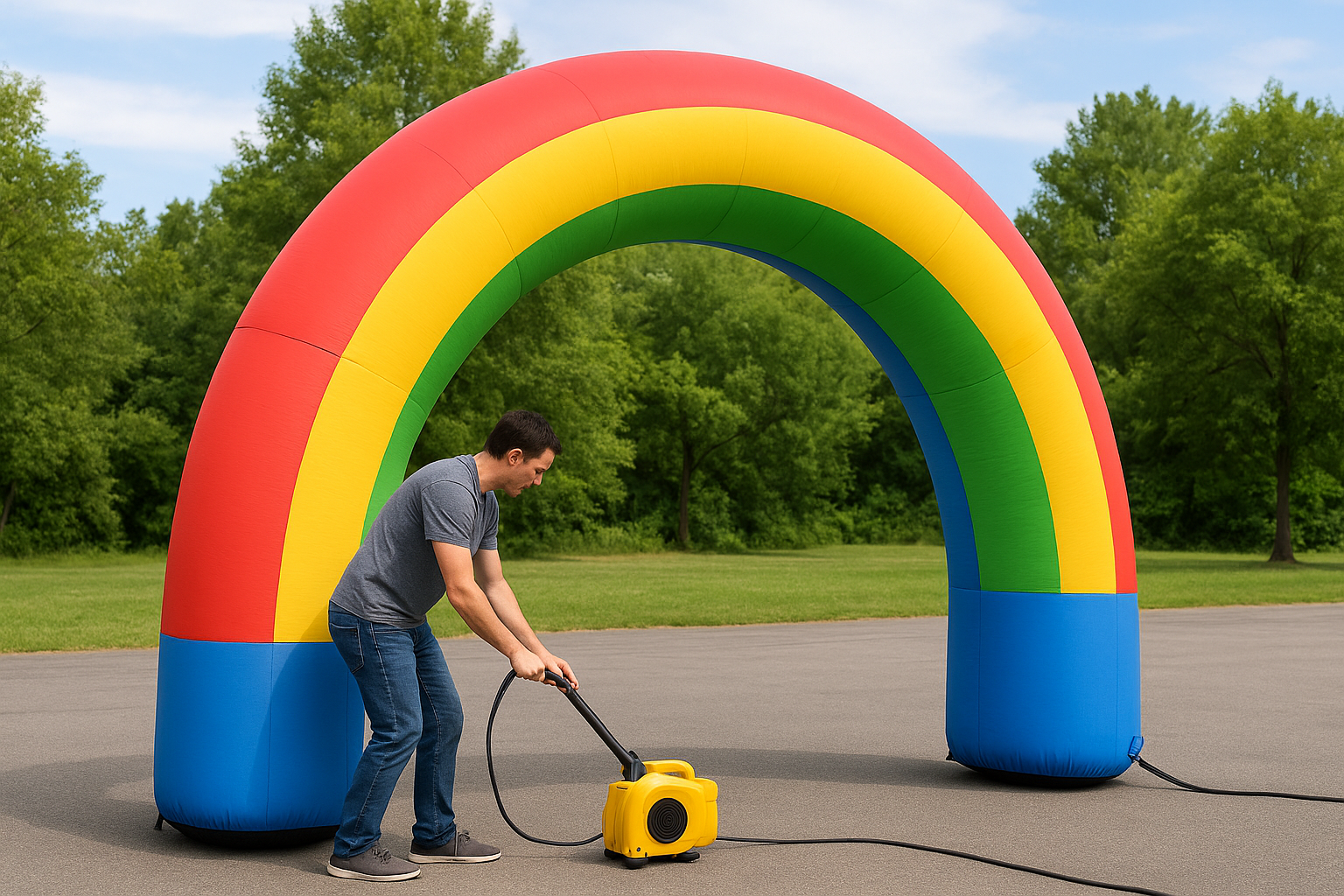
Getting an arch upright is faster than most first-time buyers expect. A standard 15 to 20-foot rainbow arch inflates in under five minutes once the blower is running, and one person can usually stake and secure it alone. Larger custom shapes or tunnel arches take longer, sometimes 15 to 20 minutes, and benefit from a two-person crew to guide the fabric while it fills so seams don’t twist.
What arches actually cost
Price depends on span, print complexity, and fabric grade, not just square footage, and the real costs and hidden fees of a custom inflatables budget are worth reviewing before you sign anything. Here’s a general range for common setups:
| Arch type | Typical span | Price range (custom, printed) |
|---|---|---|
| Standard rainbow arch | 15-20 ft | $1,800-$3,500 |
| A-frame entrance arch | 10-15 ft | $1,800-$4,000 |
| Tunnel/dome arch | 20-30 ft | $4,000-$8,000+ |
| Custom shaped arch | Varies | $6,000-$15,000+ |
Generic, unbranded arches sit lower, but anything printed with your logo through dye-sublimation carries a setup fee for the design file even before production starts, and the best inflatable fabrics and materials add to that base price too.
Cheap fabric costs less once and more every time after.
Storage, cleaning, and repairs
Once deflated, an arch folds down to the size of a large duffel bag, so storage isn’t the issue most buyers assume it’ll be. Problems show up when arches get packed away wet or dirty, since trapped moisture breeds mildew that eats through seams over months in a closet or trailer. Rinse the fabric with mild soap and water after outdoor events, let it dry completely before folding, and check seams and grommets for wear each time it comes out of storage.
Keep a repair kit on hand
Small punctures happen, especially at races where stakes and gear end up near the base, so learn how to repair inflatables before you need to. A basic kit should include:
- Fabric patches matched to your arch’s material
- PVC-safe adhesive or sealant
- Spare blower fuse or extension cord
- Zip ties for quick anchor fixes
Working with a supplier who builds arches in-house, like TMP Inflatables, means replacement panels and blower parts are easier to source when something eventually needs fixing.
Bringing your entrance to life
An inflatable arch earns its keep the moment it’s inflated. It pulls eyes from across a parking lot, frames every finisher photo at a race, and turns a plain doorway into the spot where people stop to take a picture with your logo behind them. Get the span right, confirm the wind rating, pick a shape that matches how long you want people standing under it, and you’ve got a piece of branding that outlasts a season of banners. Looking for more inspo? Checkout some event decor ideas here.
The suppliers who cut corners on fabric and print quality cost you more in replacements than they ever save upfront. Work with a team that builds these structures in-house, tests them for real event conditions, and stands behind the blower and stitching long after the invoice is paid. If you’re ready to spec out an arch for your next race, storefront, or trade show floor, request pricing for a custom inflatable arch and start with real numbers instead of guesswork.


