

Setting up camp shouldn’t feel like solving a puzzle with 47 pole segments and zero patience left. That’s exactly why inflatable tents have taken off in recent years, they replace traditional pole frameworks with air beams that you pump up in minutes. Whether you’re heading into the backcountry, setting up a glamping retreat, or organizing an outdoor event that needs reliable shelter, inflatable tents offer a faster, simpler setup without sacrificing structural integrity.
But not all inflatable tents are built the same. Some handle heavy wind and rain like champs. Others look great on a product page and fall apart at the first gust. Durability, beam pressure systems, and overall build quality vary wildly between brands, and those differences matter when you’re choosing a tent that needs to perform in real conditions. The right pick depends on how and where you plan to use it.
At TMP Inflatables, we’ve been designing and manufacturing custom inflatable structures since 2004, including inflatable tents built for brand activations, trade shows, and large-scale outdoor events. That hands-on experience gives us a sharp eye for what separates a quality inflatable tent from a forgettable one. In this guide, we break down 12 of the best inflatable tents across camping, glamping, and event use so you can find the right fit for your next adventure or activation.
1. TMP Inflatables Custom Inflatable Tents
TMP Inflatables has been building custom inflatable structures since 2004, which puts them in a different category from most brands on this list. Rather than selling a product off a shelf, TMP designs and manufactures inflatable tents to match your specific event, campaign, or branding needs. That distinction matters when your structure needs to carry a brand identity, fit a precise footprint, or deliver a consistent professional appearance across multiple deployments.
Best use cases
TMP’s custom tents are built for commercial and marketing applications, not weekend camping trips. They fit best when you have a measurable business objective tied to the structure and need it to perform reliably in front of an audience.
Common use cases include:
- Brand activations at outdoor festivals, concerts, and sporting events
- Trade show exhibits requiring a distinctive, attention-holding shelter
- Corporate outdoor events and product launches
- Pop-up retail experiences and seasonal marketing installations
- Sponsorship zones and fan engagement areas at sports venues
Customization options
TMP works with you directly to define every aspect of the structure. Shape, size, color, and configuration are all open variables, meaning you’re not adapting your event to a tent, you’re building a tent that fits your event. Options scale from compact branded canopies to large-format domes and tunnel structures covering hundreds of square feet. If you have a structural or spatial requirement that off-the-shelf products can’t meet, this manufacturing-first approach is the practical solution.
Branding and print quality
TMP integrates full-color, high-resolution graphics directly into the tent fabric rather than relying on banners or add-on signage. Your logo, brand colors, product imagery, and campaign messaging become part of the structure itself, not an afterthought layered on top.
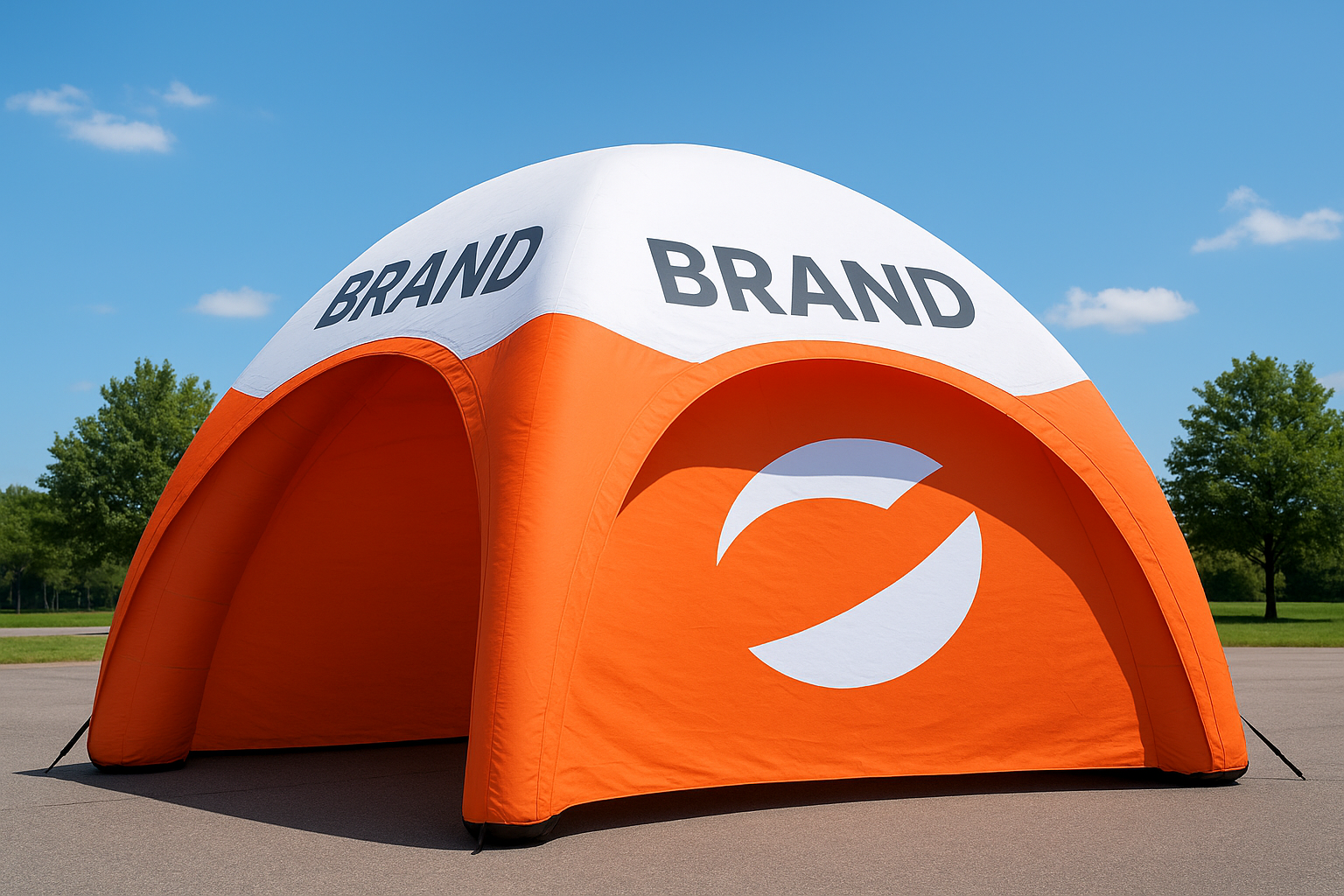
When you need a shelter that doubles as a marketing asset, integrated print quality is what separates a professional activation from a tent with a banner zip-tied to a frame.
Printing uses durable, weather-resistant inks and materials designed to hold up across repeated event deployments through varying weather conditions. For brands running multiple events with the same structure across a season, that durability and color consistency pays off quickly compared to reprinting graphics each time.
Setup, power, and anchoring needs
TMP’s custom structures use air beam inflation technology, which cuts setup time significantly compared to traditional pole tents of a similar size. Each unit ships with the necessary inflation hardware and clear instructions covering anchoring requirements and recommended crew size for your specific build. Most installations need a small crew and a standard electric pump, with no specialized rigging knowledge required.
Typical price range
Custom pricing depends on size, structural complexity, print coverage, and order volume. TMP does not list fixed retail prices because each project is scoped individually based on your needs. You can contact their team directly at tmpinflatables.com to get a project-specific quote.
For marketing and event budgets, custom inflatable tents from TMP represent a longer-term investment than renting a generic structure, but you end up with a reusable branded asset built exactly to your specifications that travels to every event ready to deploy.
2. Coody Familia AirTent 17.2
The Coody Familia AirTent 17.2 targets families who want more living space without the complexity of traditional pole tents. At 17.2 square meters of interior area, it fits comfortably alongside larger family inflatable tents on the market while keeping setup simple enough for two adults to manage without specialized equipment.
Best use cases
The Familia AirTent 17.2 works best for family camping trips lasting several nights, where the extra interior space pays off in comfort and organization. It suits campsite camping rather than backcountry use, given its size and weight.
- Weekend and extended family camping at established campgrounds
- Glamping setups with cots, camp furniture, and gear storage
- Couples or small families who want a dedicated sleeping room plus a shared living area
Space and livability
The tent offers a divided interior layout with a separate sleeping compartment and a front living area. Standing height in the main section reaches around 200 cm, which makes moving around camp far more comfortable than a low-profile backpacking shelter. Multiple windows and doors improve airflow and reduce that cramped, closed-in feeling on warmer nights.
If livability matters as much as shelter, the Familia’s interior layout gives you room to actually enjoy the space rather than just sleep in it.
Weather performance and materials
The polyester outer shell holds up in moderate rain, and the taped seams reduce leak points at high-stress areas. Coody rates the fabric at around 3000mm hydrostatic head, which handles steady rainfall without issue. Performance drops in prolonged heavy storms, so this tent suits three-season camping better than harsh or unpredictable conditions.
Setup, pump, and pack size
Two adults can inflate and pitch the AirTent 17.2 in roughly 10 to 15 minutes using the included hand pump, though an electric pump cuts that time significantly. The packed size runs larger than comparable pole tents, so you’ll want a roomy car boot rather than a bike rack or backpack.
Typical price range
The Coody Familia AirTent 17.2 typically sells in the $400 to $600 USD range, depending on the retailer and any seasonal discounts.
3. Dometic Inflatable Air Frame Tent
Dometic brings the same engineering discipline it applies to portable cooling and power systems to its inflatable tents lineup. The result is a shelter that feels deliberate and well-considered rather than simply functional. Built for campers who want reliability in changing weather, the Dometic Air Frame tent positions itself as a premium option in the family camping segment.
Best use cases
Dometic’s Air Frame tent targets campers who prioritize build quality and weather readiness over cutting the lowest possible price point. You’ll get the most value from it on trips where conditions are unpredictable and you need confidence in your shelter.
- Extended camping trips at sites with mixed or wet weather
- Couples and small families who camp regularly through the season
- Glamping setups where comfort and durability both matter
Build quality and weather resistance
The Air Frame uses reinforced polyester fabric with a hydrostatic head rating around 3000mm to 4000mm, which handles sustained rain without letting water push through the seams. Dometic applies taped or welded seams at stress points, reducing the most common failure areas in budget inflatable designs. The air beams themselves are constructed with a drop-stitch or TPU bladder system that maintains pressure over time better than basic valves you find on entry-level tents.
A tent that holds its beam pressure through a cold night is one less thing you’re troubleshooting at 6 a.m. in the rain.
Interior layout and ventilation
The interior delivers usable standing height throughout most of the living area, with ventilation panels positioned to create airflow even when the doors are closed. Dometic integrates mesh inner walls and vented fly panels that help manage condensation, which is a real issue in airtight structures during temperature swings.
Setup, pump, and replacement parts
You can pitch the Air Frame in under 15 minutes using a standard electric pump. Dometic also stocks replacement bladders and valve components through its service network, which is a genuine advantage over brands where sourcing a replacement part means buying a new tent.
Typical price range
Expect to pay $700 to $1,100 USD depending on the size configuration and where you purchase.
4. Heimplanet The Cave
Heimplanet built The Cave around a geodesic air frame structure, which makes it one of the most technically distinctive inflatable tents on the market. Designed for two people, it’s a compact, performance-oriented shelter that targets serious campers who want structural reliability in demanding outdoor conditions rather than maximum square footage.
Best use cases
The Cave suits experienced solo travelers and two-person teams who prioritize shelter performance over interior space. It handles environments where weather can shift fast and you need confidence in your structure.
- Mountainside and exposed ridge camping where wind and precipitation are consistent risks
- Festival camping where setup speed and footprint efficiency matter
- Adventure travel that mixes car camping with technical terrain
Geodesic stability and wind handling
The geodesic frame distributes load across multiple interconnected air beams rather than relying on a single spine or two parallel arches. This geometry means the structure stays rigid even when wind pressure hits from multiple angles. Heimplanet rates The Cave to handle winds up to around 100 km/h with proper guyline anchoring, which puts it well ahead of most consumer camping inflatables in raw storm-worthiness.
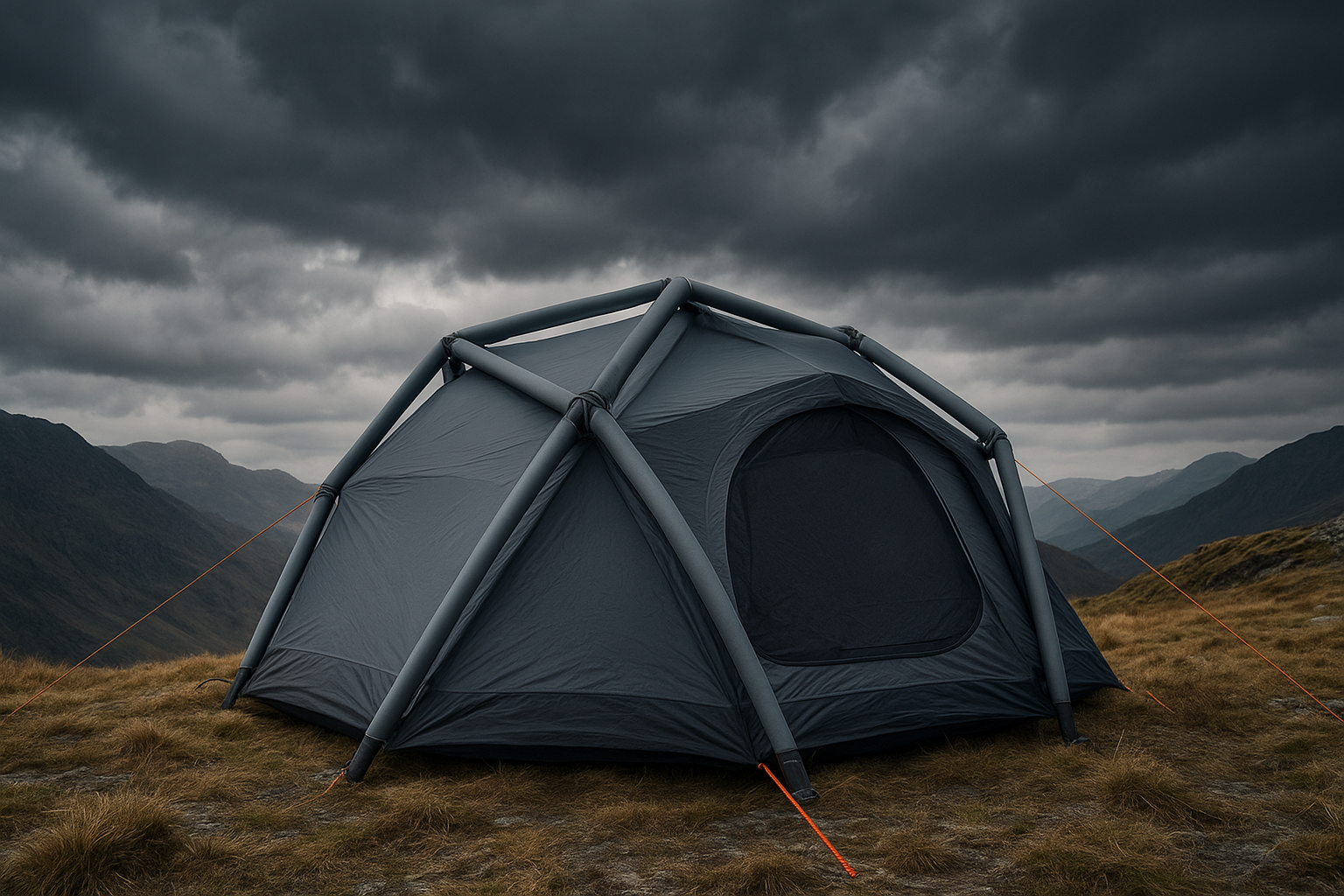
If you camp in places where the weather decides when you pack up, a geodesic air frame gives you meaningfully more margin than a standard tunnel design.
Ventilation and condensation control
The Cave uses mesh inner walls paired with a ventilated outer fly to create airflow that reduces condensation buildup overnight. Two-person shelters in cold or humid conditions often trap moisture against the inner wall, but the layered ventilation system here addresses that problem more effectively than most comparably sized tents.
Setup and packed weight
You can inflate The Cave in roughly five minutes using a standard pump. Packed weight comes in around 2.5 kg, which is genuinely lightweight for an inflatable structure with this level of structural integrity.
Typical price range
The Cave typically sells in the $600 to $750 USD range, reflecting its premium materials and engineering.
5. Outwell Colorado 5 Air
The Outwell Colorado 5 Air is a large-format family inflatable tent designed around the idea that camping with kids shouldn’t require sacrificing comfort or floor space. Outwell is a well-established European camping brand, and the Colorado 5 Air reflects years of feedback from families who need practical shelter that holds up through a full week on site.
Best use cases
This tent targets families of four or five who set up at an established campground for extended stays. It’s not built for quick overnight trips or technical terrain.
- Multi-night family camping at drive-up sites
- Glamping configurations with air beds, camp furniture, and full gear storage
- Groups who want a dedicated sleeping area separate from the communal living space
Family-friendly layout
The Colorado 5 Air divides its interior into two sleeping rooms and a central living area, giving families actual separation between sleep and social space. Standing height runs to around 200 cm throughout the main living section, so adults can move around without crouching. Large windows on multiple panels bring in natural light and reduce that closed-in feeling on longer stays.
When you’re spending five or six nights in one spot, having distinct zones for sleeping and living changes the quality of the whole trip.
Rain protection and groundsheet details
The outer flysheet carries a hydrostatic head rating of around 4000mm, which handles prolonged rain without pushing moisture through the seams. Outwell includes a sewn-in groundsheet across the sleeping compartments, keeping cold air and ground moisture from creeping in overnight. The living area uses a separate removable groundsheet, giving you flexibility to air out the interior during dry weather.
Setup time and valve system
Outwell uses its own Dual Valve System, which lets you inflate and deflate through a single port rather than hunting for multiple valves. Two adults can have the tent fully pitched in around 15 minutes with an electric pump.
Typical price range
The Colorado 5 Air typically sells in the $700 to $950 USD range, depending on the retailer and size variant.
6. Vango Sierra Air 500
Vango is one of the most recognized names in UK camping, and the Sierra Air 500 reflects that reputation for building practical, weather-capable shelters. It’s a five-person inflatable tent designed around the needs of families who camp frequently and want a structure that handles multiple trips across a full season without constant maintenance or repairs.
Best use cases
The Sierra Air 500 works best for families of four or five setting up at established campgrounds where you’re staying put for several nights. It’s built for drive-in sites rather than backpacking approaches.
- Multi-day family camping with full gear setup
- Rainy season trips where weather protection is the priority
- Families upgrading from a basic dome tent who want more interior organization
Porch and storage space
The Sierra Air 500 includes a generous front porch area that serves as a transition zone between the living space and the outside. You can store muddy boots, wet jackets, and bulky gear here without dragging it into the sleeping or living zones. That separation keeps the interior cleaner and drier during extended wet-weather stays. The porch headroom is tall enough to move through comfortably rather than hunching over every time you exit.
Venting, Airflow, and Darkened Bedrooms
Vango integrates its Sentinel Nightfall fabric in the sleeping compartment, which blocks out a significant portion of early morning light. This feature is a genuine advantage on summer trips when sunrise hits well before anyone wants to be awake. Ventilation panels positioned in the fly and inner wall let you manage airflow without opening a full door panel, which helps reduce condensation buildup through the night.
The combination of blackout fabric and active ventilation means you’re not choosing between sleeping in and waking up in a sweat.
Setup and Pitching Order Tips
Vango recommends inflating the main air frame beams before staking out the perimeter, which keeps the structure centered on your chosen pitch. A standard electric pump handles full inflation in under 12 minutes, and the color-coded valve system removes any guesswork about which beam you’re filling.
Typical price range
The Vango Sierra Air 500 typically sells in the $650 to $850 USD range, depending on the retailer and current availability.
7. Berghaus Air 400 Nightfall
Berghaus built the Air 400 Nightfall as a practical solution for families who camp through summer and lose sleep to early-morning light. This is a four-person inflatable tent designed with a blackout sleeping compartment at its core, giving you genuine darkness during the longest days of the year without needing to hang extra layers over the windows.
Best use cases
The Air 400 Nightfall suits families of three or four who camp at established campgrounds during warmer months. It’s a drive-up tent rather than a carry-in solution, and it rewards families who return to the same campsite year after year.
- Summer family camping where early sunrise disrupts sleep schedules
- Multi-night stays at established drive-in sites
- Couples and small families who want dedicated sleeping and living zones without paying for a larger footprint
Nightfall bedroom and sleep comfort
The Nightfall inner bedroom uses a fabric system that blocks out the majority of incoming light, which directly addresses the most common summer camping complaint. You get a dedicated sleeping compartment that functions more like a darkened room than a standard tent inner, making it far easier to rest when the sun rises at 5 a.m. and your kids would otherwise be up two hours too early.
If early sunrise has ever cost you a full day of energy on a camping trip, the Nightfall fabric is a straightforward fix that requires no extra gear.
Storm worthiness and guyline design
Berghaus equips the Air 400 with a reinforced outer flysheet rated to handle sustained rainfall, and the guyline attachment points are positioned to give the structure real lateral stability in wind. Multiple anchor points along the base and ridge let you tension the tent properly on soft or uneven ground without fighting the fabric into position.
Setup speed and pump requirements
You can pitch the Air 400 Nightfall in around 10 to 15 minutes using a standard electric pump. The color-coded valve system removes any guesswork about which beam to fill first or how to sequence the inflation process.
Typical price range
The Berghaus Air 400 Nightfall typically sells in the $600 to $800 USD range, depending on the retailer and current availability.
8. Quechua Inflatable Camping Tent
Quechua, the camping brand sold through Decathlon, has made a name for itself by delivering functional outdoor gear at accessible price points. Their inflatable camping tent lineup follows that same philosophy, targeting first-time campers and budget-conscious families who want a simpler setup without spending several hundred dollars on a premium brand.
Best use cases
Quechua’s inflatable tent is built for casual weekend campers who want to avoid the frustration of traditional pole assembly. It fits best on established campgrounds where conditions stay relatively predictable.
- Beginner campers trying inflatable tents for the first time
- Families running short weekend trips at drive-in sites
- Budget-focused buyers who camp a few times per season rather than every weekend
Value and ease of use
The standout feature of Quechua’s inflatable tent is how straightforward the setup process is. Decathlon designs these products specifically so that one or two people can pitch them quickly without reading a detailed manual first. For someone new to inflatable tents, that low learning curve is a real advantage. Price relative to competitors is equally compelling, sitting well below most comparable family-sized inflatables.
If you’re buying your first inflatable tent and want to understand what the format offers before committing to a premium purchase, Quechua gives you that entry point without overextending your budget.
Ventilation, blackout options, and comfort
Quechua includes mesh ventilation panels in the inner walls to move air through the sleeping compartment during warmer nights. Some models in the lineup offer partial darkening fabric in the sleeping area, though coverage and effectiveness fall short of dedicated blackout systems like those found in Berghaus or Vango products.
Durability tradeoffs to expect
The lower price point comes with real tradeoffs. Fabric thickness and beam pressure retention are noticeably lighter than mid-range and premium brands, which means the tent performs reliably in calm to moderate conditions but shows its limits faster in sustained wind or heavy rain. Seam quality and valve construction are the areas most likely to require attention after a full season of use.
Typical price range
Quechua inflatable tents typically sell in the $250 to $400 USD range, making them the most accessible entry point on this list.
9. Sönmez Outdoor London 360 Discover
The Sönmez Outdoor London 360 Discover sits at the premium end of inflatable tents, designed specifically for people who want a shelter that delivers an immersive outdoor experience without blocking the view. Its defining feature is a wraparound panoramic window system that runs across a significant portion of the tent’s exterior, letting natural light pour in from multiple angles simultaneously.
Best use cases
This tent targets glamping setups and upscale outdoor stays where aesthetics and atmosphere matter as much as basic shelter performance. It suits buyers who are willing to invest in a distinctive structure that stands apart from standard camping designs.
- Luxury glamping installations at private sites or boutique outdoor venues
- Extended stays where natural light and open views enhance the overall experience
- Couples or small families who prioritize design and comfort over rugged performance
Premium features and panoramic design
The London 360 Discover’s 360-degree window panels use a clear PVC material framed within the tent structure, creating an almost transparent wall effect on the most scenic side of your pitch. This design works best when you’re positioned facing a lake, treeline, or open landscape.
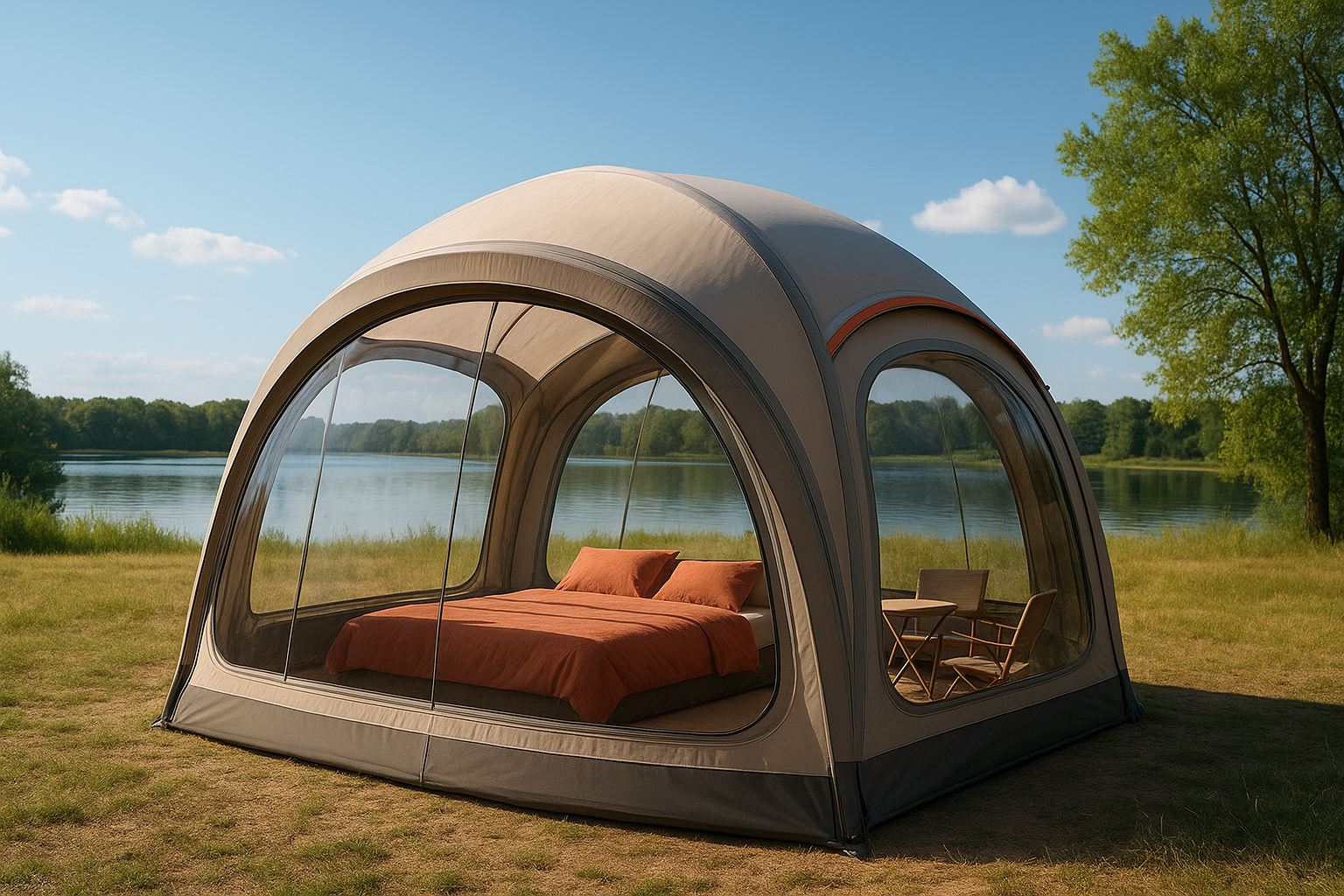
If the whole point of camping is to feel connected to your surroundings, a panoramic window system earns its price faster than almost any other tent feature.
Size, room options, and standing height
The interior offers generous standing height throughout the main living space, with room configurations that comfortably accommodate two adults and their gear. The floor plan prioritizes open, communal living space rather than divided sleeping compartments, which suits couples or close-knit groups who don’t need separate zones.
Transport, weight, and storage needs
The London 360 Discover runs heavier than most inflatable tents in its size class due to the additional framing and window materials. You’ll need a large vehicle with dedicated cargo space to transport it comfortably, and two people to handle setup efficiently.
Typical price range
The London 360 Discover typically sells in the $1,000 to $1,500 USD range, reflecting its premium materials and niche design focus.
10. Eurohike Genus 800 Air Tent
The Eurohike Genus 800 Air Tent is built for large groups and extended families who need serious interior square footage without assembling a forest of poles at the end of a long drive. Eurohike positions the Genus 800 as a practical entry in its inflatable tents lineup, targeting eight-person camping where headroom, organized zones, and reliable shelter coverage matter more than portability.
Best use cases
The Genus 800 performs best at established drive-in campgrounds where you arrive with a packed vehicle and plan to stay for several nights. This is not a quick-pitch shelter for two or three people; it’s built around the needs of larger groups who require real interior organization from day one.
- Large family reunions and multi-generational camping trips
- Group stays lasting three or more nights at serviced campgrounds
- Families with multiple children who need defined sleeping and living zones
Big-group capacity and layout
The Genus 800 stretches across multiple sleeping compartments and a communal living area large enough to seat the full group comfortably. Standing height throughout the main living section reaches around 200 cm, which lets adults move without crouching. The layout keeps sleeping zones separate from the communal area, a feature that matters when you’re managing different bedtimes and energy levels across eight people.
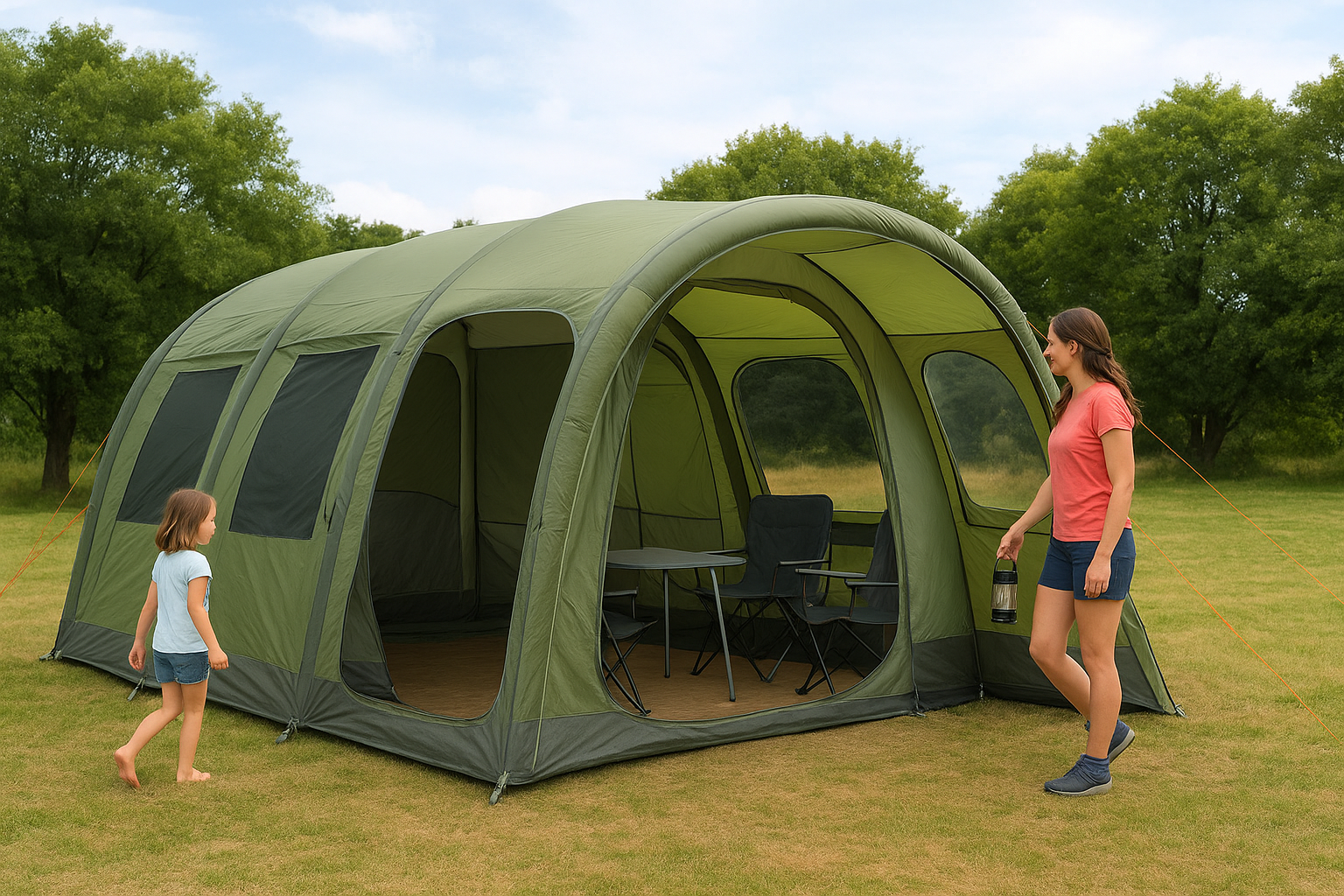
When you’re camping with a large group, distinct zones for sleeping and socializing prevent the kind of friction that cuts trips short.
Weather protection and ventilation
The outer flysheet carries a hydrostatic head rating capable of handling steady rainfall across multiple days. Eurohike builds ventilation panels into the fly and inner walls to manage condensation, which becomes a real issue in a sealed structure housing eight people overnight.
Setup complexity and footprint size
Setting up the Genus 800 takes two adults working together, and you should expect the process to run around 20 to 25 minutes using an electric pump. The footprint is substantial, so confirm your pitch dimensions before booking a site.
Typical price range
The Eurohike Genus 800 Air Tent typically sells in the $500 to $750 USD range, depending on the retailer and seasonal availability.
11. Alpkit Aeronaut 2 Air Tent
Alpkit built the Aeronaut 2 for campers who want the convenience of inflatable tents without paying a weight penalty in the field. This is a two-person shelter designed around the crossover between lightweight backpacking discipline and the simplified setup that air beam technology delivers, a combination that most brands have not managed to pull off cleanly.
Best use cases
The Aeronaut 2 works best for solo travelers and two-person teams who move frequently between sites and need a shelter that pitches fast without requiring a vehicle to haul it to the trailhead.
- Fast-moving trips where you relocate camp every one or two nights
- Festival camping where compact pack size and quick setup both matter
- Weekend getaways that combine hiking approaches with campsite overnights
Lightweight priorities and quick trips
Alpkit designed the Aeronaut 2 with weight reduction as a primary constraint, which separates it from most inflatable tents that favor interior volume over packability. The packed weight comes in around 1.7 to 2 kg, making it one of the lightest air frame two-person tents currently available. You can pitch it in under eight minutes using a compact hand pump, which means less time managing gear and more time in the environment you came to be in.
For campers who count grams and minutes equally, the Aeronaut 2 closes the gap between lightweight pole shelters and the setup convenience of an air frame design.
Stability, pitch, and livability
The single-arch air beam system keeps the pitching process straightforward, but it does trade some interior headroom for that simplicity. Livability is comfortable for two people sleeping side by side, though the sitting height rather than full standing height means you’ll be changing clothes horizontally. For a tent in this weight class, that is an expected and reasonable tradeoff.
Materials and expected lifespan
Alpkit uses a lightweight nylon outer with a TPU-coated air beam bladder that holds pressure reliably through overnight temperature drops. With proper storage and care between trips, the Aeronaut 2 holds up across multiple full seasons of regular use without significant performance degradation.
Typical price range
The Alpkit Aeronaut 2 Air Tent typically sells in the $350 to $500 USD range, depending on availability and your region.
12. X-GLOO Inflatable Dome Tent
X-GLOO produces modular inflatable dome tents built specifically for brand activations, outdoor exhibitions, and commercial events. Unlike the camping and glamping tents on this list, X-GLOO structures are engineered as marketing tools first and shelter solutions second, giving event professionals a structure that draws attention before anyone even walks through the entrance.
Best use cases
X-GLOO’s inflatable tents perform best when your primary goal is high-visibility brand presence at an outdoor event rather than overnight shelter. The dome shape creates a distinctive footprint that stands out against flat canopy competitors at any venue.
- Product launches and sponsorship activations at festivals and sporting events
- Trade show exhibit halls with outdoor components
- Corporate hospitality zones and VIP areas at major events
- Pop-up retail and seasonal brand installations
Brand activation and event visibility
X-GLOO integrates 360-degree print coverage across the dome exterior, which means your brand messaging faces every direction simultaneously rather than requiring visitors to walk around a banner display. The dome shape amplifies that visibility because it rises above surrounding structures and holds its form without sagging or wrinkling under typical outdoor conditions.
When every brand at an event is running a flat canopy, a dome structure with full exterior print coverage creates a category-of-one presence on the event floor.
Sizing, modular add-ons, and accessories
X-GLOO offers multiple dome diameters, ranging from compact 3-meter options to larger configurations exceeding 6 meters. The modular accessory system lets you add sidewall panels, entrance tunnels, and flooring components to build out a fully enclosed branded environment rather than an open-sided canopy.
Setup crew, airflow, and safety considerations
Setting up an X-GLOO dome requires two to three people working together, with total inflation and assembly time running approximately 15 to 20 minutes using the supplied electric blower. The structure uses continuous airflow rather than sealed pressure beams, which means the blower must remain running throughout the activation.
Typical price range
X-GLOO units typically sell in the $1,500 to $4,000 USD range, depending on dome size, print coverage, and accessory configuration.
Picking Your Inflatable Tent
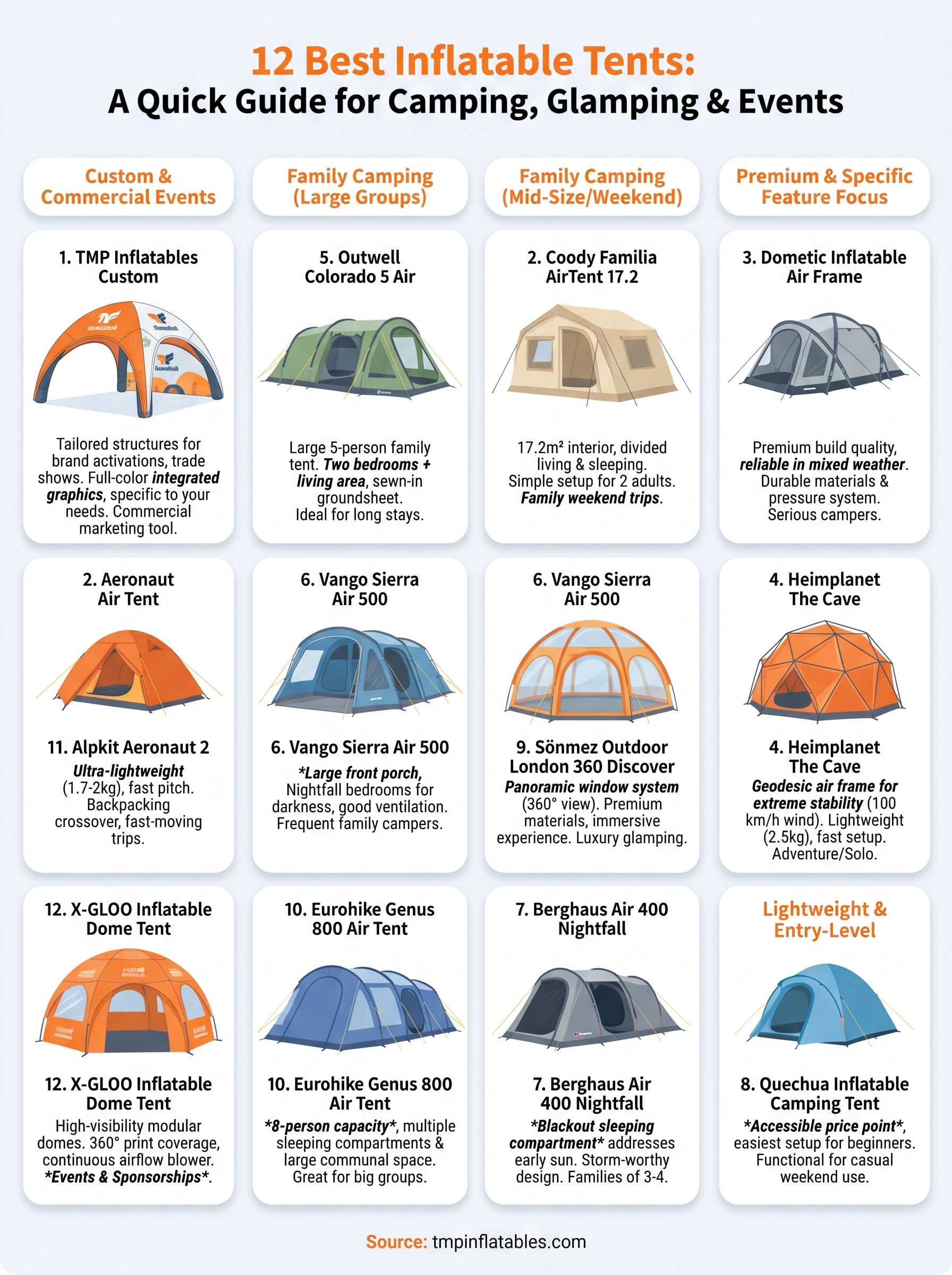
The right choice depends entirely on what you need the structure to do. If you’re camping with family, prioritize weather ratings, interior layout, and sleeping compartment separation. If you’re glamping, lean toward designs with standing height, natural light, and comfort-focused features. If you’re running an outdoor event or brand activation, focus on print quality, structural visibility, and setup speed.
Most inflatable tents on this list solve one or two of those problems well. Few solve all three. That’s why matching the tent to your actual use case matters more than chasing the highest-rated product.
For marketing teams and event professionals who need a custom-built structure that carries your brand rather than someone else’s logo, TMP Inflatables designs and manufactures inflatable tents built specifically around your requirements. Every detail gets scoped to your event, your footprint, and your audience. Request a custom quote to start the conversation.
