

Most trade show booths blend into a sea of sameness, same tables, same banners, same forgettable pitch. If you want people to actually stop, engage, and remember your brand, you need interactive trade show booth ideas that go beyond a tablecloth and a bowl of candy. The booths that pull real crowds are the ones that give attendees something to do, not just something to look at.
At TMP Inflatables, we’ve spent over 20 years building custom inflatables for trade shows, from branded structures and giant product replicas to eye-catching archways that stop foot traffic cold. We’ve seen firsthand what works on the show floor and what gets walked right past. That experience is baked into every recommendation below.
This article breaks down six proven booth ideas that drive genuine engagement, complete with practical tips you can actually execute at your next event. Whether you’re planning a product launch, a brand activation, or just trying to stand out in a packed expo hall, these ideas will help you turn passive walkers into active participants.
1. Branded inflatable booth landmark
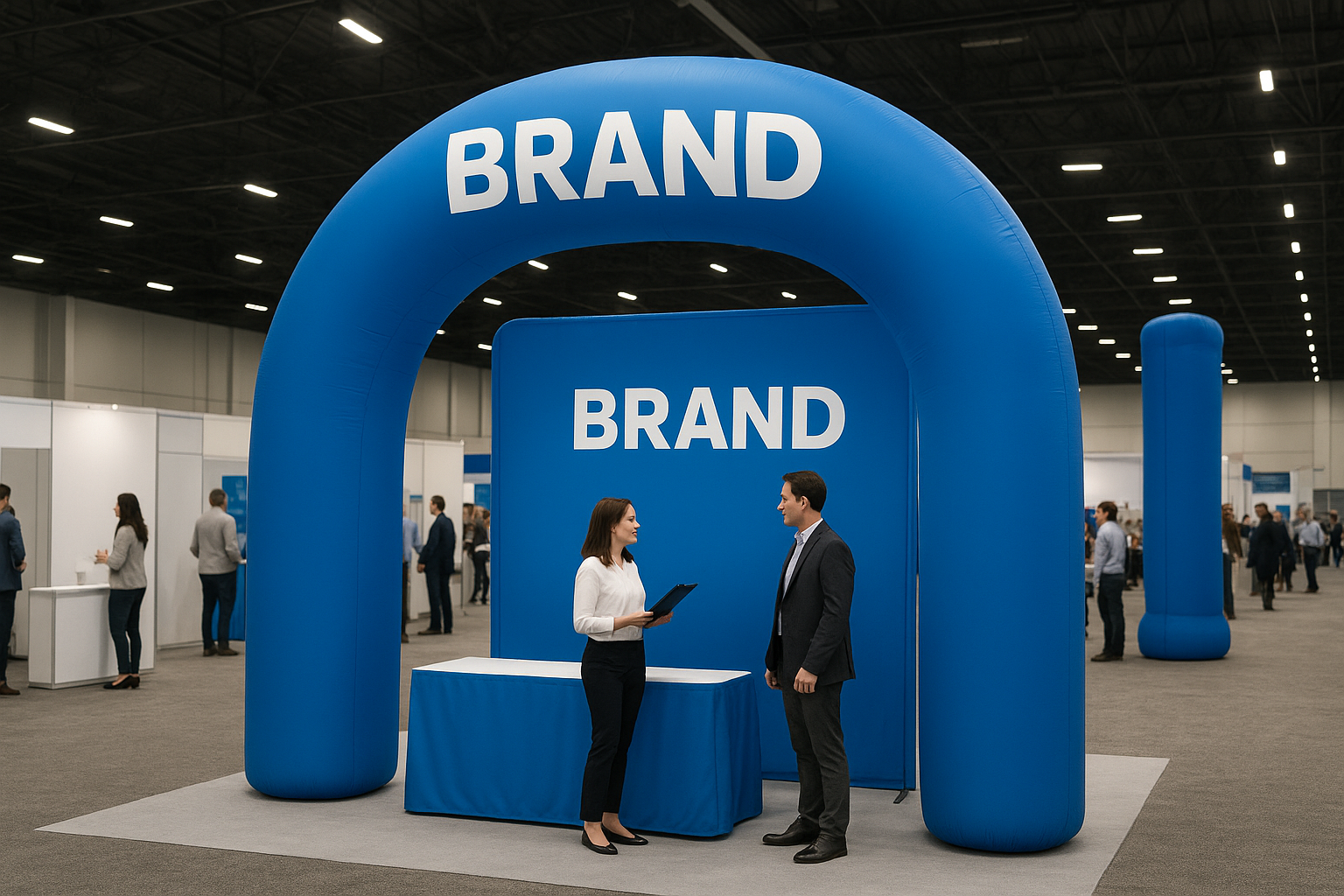
A branded inflatable landmark turns your booth space into a physical destination on the show floor. Instead of relying on attendees to notice your banner from 30 feet away, you give them a visual anchor they can locate from across the hall before they even walk your direction.
What it is
Think of this as a large-format custom inflatable placed at or around your exhibit, typically featuring your logo, brand colors, and sometimes a product replica or character. These structures range from inflatable arches and giant product replicas to dome canopies and column-style towers. The goal is straightforward: make your booth impossible to miss in a crowded space.
Why it stops traffic
People navigate trade shows the way they navigate airports: they look for landmarks. A towering inflatable structure rises above standard booth dividers and pop-up banners, pulling eyes from across the hall. Because the format is unexpected, attendees slow down to look, which gives your team a natural window to open a conversation before a single word is spoken.
The first five seconds of visibility decide whether an attendee walks toward your booth or past it.
Inflatable formats that work best on show floors
Not every inflatable fits every venue. Your choice depends on ceiling height, floor space, and whether the event is indoors or outdoors:
- Indoor shows: Branded archways, column inflatables, and tabletop display pieces
- Large convention centers or outdoor expos: Dome canopies, air dancers, and giant product replicas
Setup, power, and safety considerations
Most trade show inflatables use electric blower fans rather than helium, which makes them faster to set up and safer for indoor use. You should check the venue’s power outlet locations and floor load limits before finalizing your inflatable size. Always confirm fire-retardant material certification with your supplier, since most convention centers require it before anything inflates on their floor.
Budget range and timeline expectations
Custom trade show inflatables typically run between $800 and $5,000+ depending on size, complexity, and print area. Plan for a production lead time of three to six weeks for a fully custom piece, and build that window into your event calendar well before the deadline hits.
2. Spin to win game that captures leads
A spin-to-win wheel is one of the most reliable interactive trade show booth ideas for drawing a crowd. It gives attendees a clear reason to stop and a simple action to take, which lowers the barrier to engagement considerably.
What it is
You set up a branded prize wheel at the front of your booth. Attendees spin for a chance to win a reward, ranging from branded merchandise to discounts or service credits. The spin itself is the hook that starts the conversation.
How to run it without creating a swag mob
Keep the wheel visible but controlled. Station one staff member to manage the line and another to handle the conversation. Require attendees to complete a brief lead form before spinning to filter out casual prize-hunters.
Requiring a form before the spin converts a game into a qualified lead touchpoint.
Prize strategy that attracts the right people
Offer tiered prizes where at least one slot holds genuine business value, such as a free consultation or product trial. Skip cheap giveaways that attract everyone. Your goal is to pull in decision-makers with real interest, not just anyone with a free hand.
Lead capture flow and follow-up trigger
Connect your wheel to a tablet-based form or CRM integration so every spin logs a contact automatically. Assign a follow-up tag based on the prize won to personalize your post-show outreach.
Budget range and staffing needs
A quality branded wheel runs $200 to $600 for a printed, custom version. Plan for two dedicated booth staff to run it effectively, one managing the queue and one collecting contact information from each participant.
3. Hands-on demo challenge with a timed task
A hands-on demo challenge is one of the most underused interactive trade show booth ideas available to exhibitors. Instead of watching a product pitch, attendees complete a real task with your product or service, which creates a direct, memorable experience.
What it is
You set up a short, timed activity where attendees use your product to solve a specific problem or complete a defined task. The clock adds urgency and energy that keeps the crowd engaged and watching.
How to design a challenge that proves value fast
Build the challenge around your product’s single strongest feature. If your software automates a report, time how fast they can run it versus doing it manually. The goal is to let the product speak for itself in under two minutes.
A challenge that proves value in 90 seconds beats a 10-minute demo every time.
How to keep lines moving and conversations high quality
Cap each challenge round at two minutes and reset immediately. Station one staff member to run the timer and another to qualify each participant during the wait, so you’re not starting conversations from zero when they reach the front.
Lead capture and qualification questions to use
Ask participants two to three short questions before they start. This turns the waiting period into a qualification conversation without slowing the line. Good questions to use include:
- What’s your current role?
- What’s your biggest pain point right now?
- What’s your timeline for making a decision?
Budget range and space requirements
Most demo challenges require minimal additional budget beyond your existing product setup. Reserve at least a six-by-six-foot footprint to allow comfortable movement and a small queue without blocking neighboring booths.
4. QR code scavenger hunt around your booth
A QR code scavenger hunt turns your booth space into an interactive experience that keeps attendees engaged longer than a standard product walkthrough. You scatter multiple QR codes across different zones of your exhibit, and attendees scan each one to collect information, watch short clips, or unlock prizes.
What it is
Each QR code leads to a short piece of content or a clue that moves attendees to the next stop. The format works well as an interactive trade show booth idea because it naturally guides visitors through your full product story without requiring a dedicated staff presenter at every step.
How to structure the hunt for short attention spans
Limit the hunt to three to four stops maximum. More than that and you lose people before they finish. Each stop should take under 60 seconds to complete.
A scavenger hunt with fewer stops and sharper content outperforms a longer one every time.
What to put behind each QR code
Use a mix of short product videos, one-sentence customer quotes, and a final prize reveal. Keep each page mobile-optimized and load time under two seconds.
Tracking, lead capture, and attribution basics
Require a name and email at the final stop to claim any prize. Use UTM-tagged URLs on each code to track which stops generate the most scans and where attendees drop off.
Budget range and tech requirements
Expect to spend $100 to $400 on printed QR signage and a basic landing page tool to host each stop.
5. Photo moment station people want to share
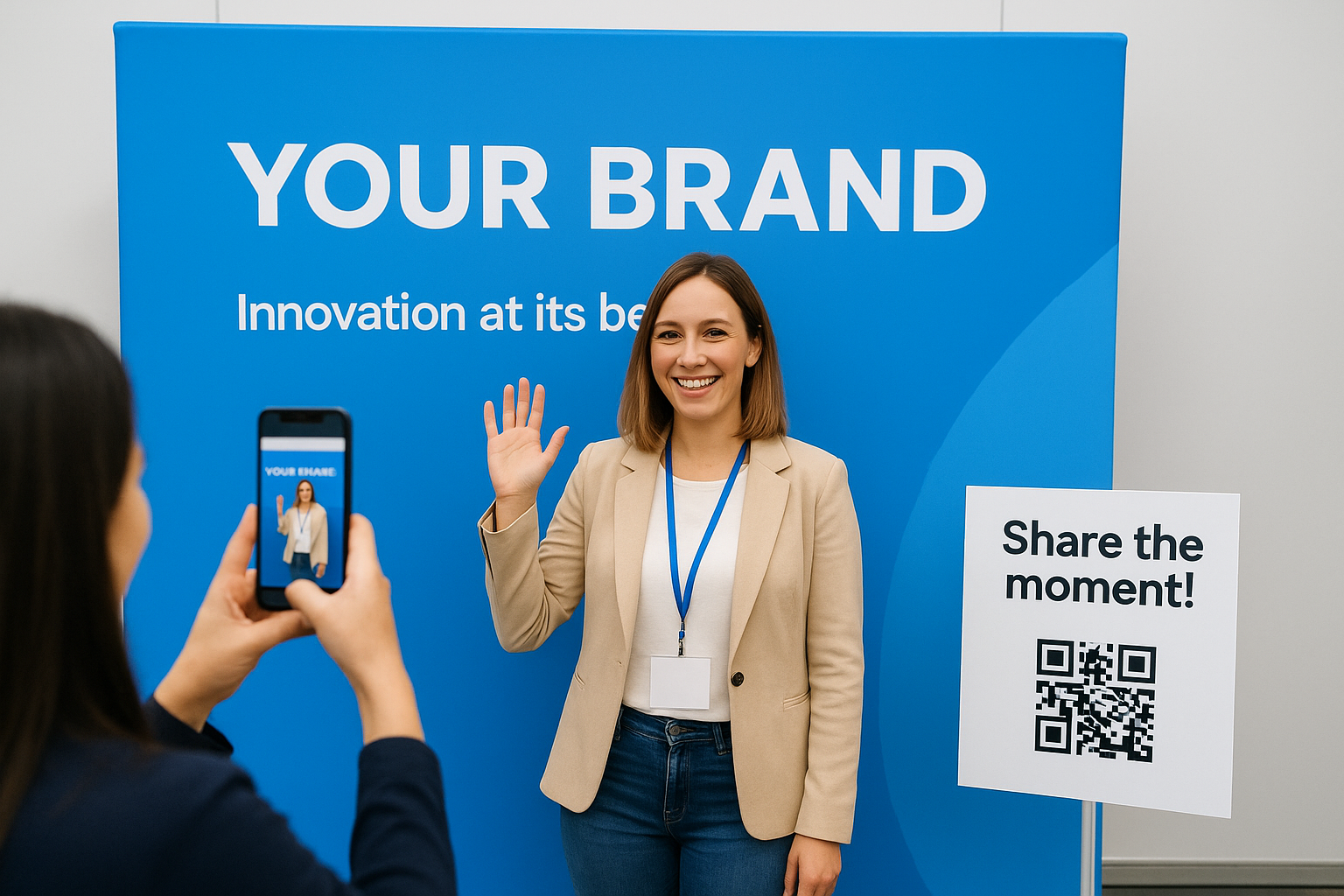
A photo moment station is one of the most shareable interactive trade show booth ideas you can build. When attendees pull out their phones to take a photo, they become voluntary brand ambassadors who broadcast your booth to their professional networks without you asking.
What it is
You build a dedicated photo spot within your booth using a branded backdrop, prop, or oversized visual element. The setup gives attendees a compelling reason to stop and capture a moment they’ll want to post.
How to design a photo setup that looks good on phones
Phones shoot vertical, so build your backdrop tall rather than wide. Use high-contrast colors and clean branding that reads clearly in a small thumbnail. Avoid busy backgrounds that compete with your logo.
A photo that looks great on a phone screen is the one that actually gets posted.
How to tie the photo moment to your message
Your backdrop should do more than display your logo. Include a short tagline or product claim that communicates what you do when someone sees the photo out of context. Give the image a reason to make sense to someone who has never heard of your brand.
Social sharing prompts and lead capture options
Place a small sign near the station with a specific phrase for attendees to use when posting, and pair it with a QR code that links to a lead capture form they can complete right after snapping the shot.
Budget range and production considerations
A printed fabric backdrop with a frame runs between $300 and $800. Custom inflatable photo frames or branded structures cost more but create a far more distinctive setup that stands out above standard booth dividers.
6. AI mini experience that creates a take-home item
An AI mini experience gives attendees a personalized output they walk away with, which means your brand stays with them long after the show floor clears. This is one of the few interactive trade show booth ideas where the deliverable itself continues the follow-up work for you.
What it is
You set up a tablet or laptop station where attendees answer two or three quick prompts. An AI tool processes their input and generates something useful, such as a custom marketing headline, a personalized report summary, or a short strategy recommendation they can actually apply at work.
Prompts and outputs that work for B2B audiences
Focus prompts on real business pain points, not personality quizzes. Ask about their industry, team size, or current challenge, then generate an output that ties directly to your product’s value proposition.
The take-home item should remind the attendee why your product matters to them specifically.
Printing and fulfillment options on the show floor
Print the output on the spot using a compact photo printer. A branded card or small booklet with their personalized content makes the experience feel polished and complete.
Consent, privacy, and brand safety guardrails
Collect only what you need, and display a clear one-line privacy statement at the station. Review AI outputs before printing to catch anything off-brand or inaccurate.
Budget range and setup checklist
Expect to spend $500 to $1,500 covering a printer, tablet, and software access. Your setup checklist should include a power supply, paper stock, and a backup output template in case the tool goes offline mid-show.
Quick next steps
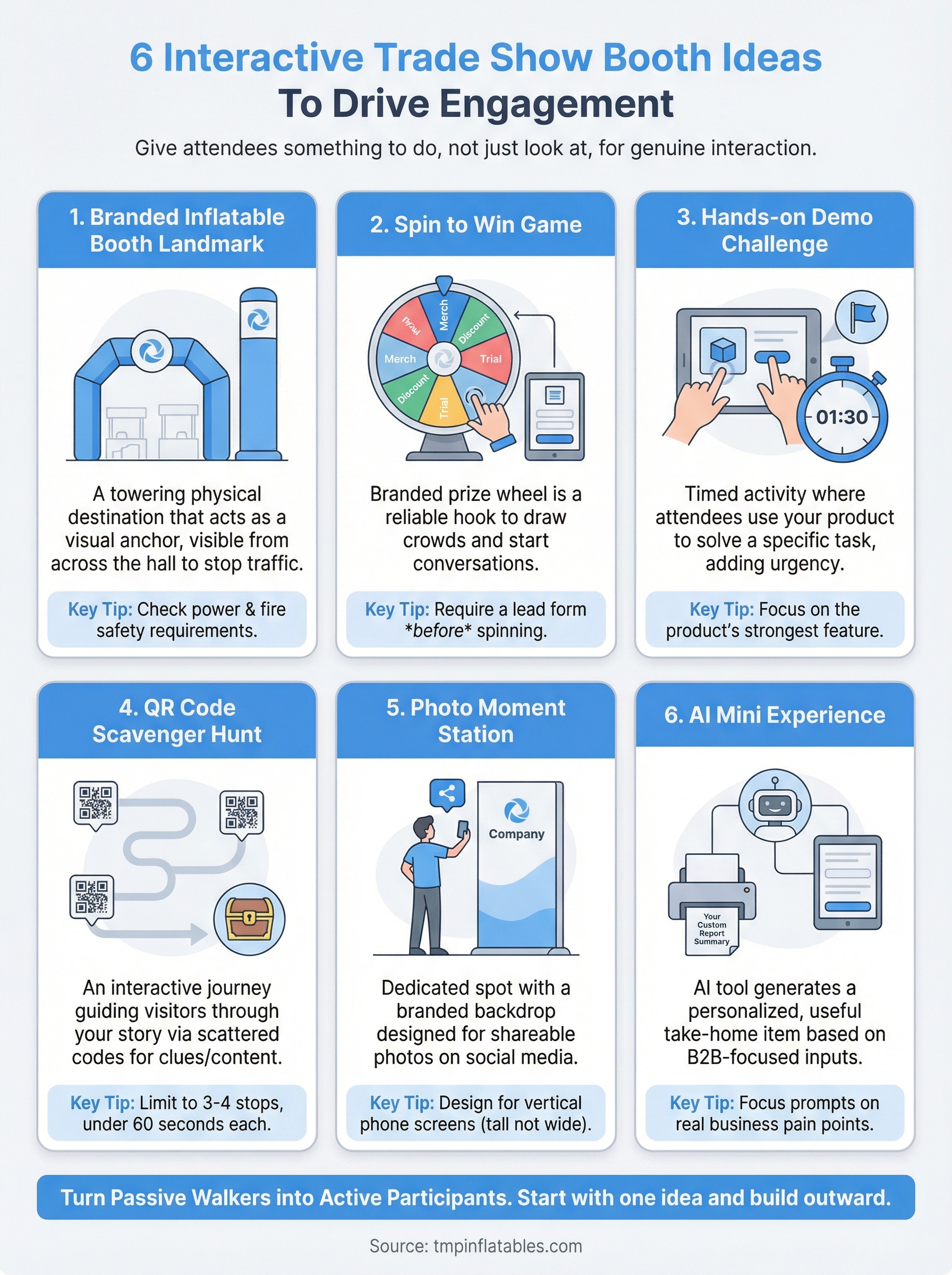
You now have six interactive trade show booth ideas you can take directly into your next event plan. Each one gives attendees a reason to stop, engage, and remember your brand long after they leave the show floor. The strongest booths combine more than one of these elements, so consider pairing a visual landmark with a lead capture activity to build both awareness and your contact list at the same time.
Start by picking the one idea that fits your budget and team size, then build outward from there. If a branded inflatable structure is on your radar, the setup timeline matters more than most exhibitors expect, so plan early and confirm your venue’s requirements before you order anything.
TMP Inflatables has helped brands across North America turn their trade show presence into something that actually pulls a crowd. If you want help figuring out the right setup for your space, reach out to the TMP Inflatables team to get started.