
If you’re searching for marketing services, you’re probably staring down a campaign deadline and trying to figure out which vendors actually move the needle. The term gets thrown around loosely, covering everything from a freelancer running Facebook ads to a full agency managing your SEO, PPC, web design, and brand strategy at once. That range makes it hard to know what you’re actually paying for or which services your business needs right now.
This article breaks down what marketing services really include, from digital advertising and content creation to the often-overlooked category of experiential marketing, the physical, in-person activations that get people talking about your brand at trade shows, product launches, and retail events. You’ll see how these pieces fit together and where each one delivers the most value for different business goals.
We’ll also cover what to expect when you hire a provider: typical timelines, pricing structures, and the deliverables you should demand before signing a contract. At TMP Inflatables, we’ve spent over 20 years supplying the inflatable displays and branded structures that make experiential campaigns memorable, so we know firsthand how these services connect to your bigger marketing plan.
Why marketing services matter for business growth
Every business owner eventually hits the same wall: you know your product is good, but nobody outside your immediate circle knows it exists. Marketing services exist to close that gap, and businesses that invest in them consistently outpace competitors who rely on word of mouth or sporadic social media posts. The difference isn’t magic. It’s structured execution applied over time, backed by data instead of guesswork.
The real cost of doing marketing alone without Marketing Services
Businesses that try to handle everything internally often burn through budget on trial and error. A founder running Google Ads without conversion tracking might spend $3,000 a month and have no idea which keywords actually generated sales. Wasted ad spend is one of the most common reasons small businesses abandon digital marketing entirely, when the real problem was never the channel, it was the lack of expertise managing it. Professional providers bring frameworks, testing processes, and reporting systems that catch these leaks before they drain your budget.
In Marketing Services Consistent visibility compounds over time
Growth rarely comes from one viral post or a single well-placed ad. It comes from showing up repeatedly across the channels your customers already use, whether that’s search results, their social feeds, or a trade show floor. Marketing services give you the consistency that one-off efforts can’t match, because agencies build calendars, track performance monthly, and adjust before small problems become expensive ones.
Consistent, professionally managed marketing compounds; scattered, occasional marketing doesn’t.
Think of it like compound interest. A brand that posts twice a week for a year builds recognition that a brand posting sporadically never achieves, even with a bigger one-time budget.
Marketing services scale as you grow
A startup with five customers needs different support than a regional chain opening its tenth location. Good providers adjust the mix of services to match where your business actually stands, not where a generic package assumes you are.
| Business stage | Primary marketing need | Typical services involved |
|---|---|---|
| Startup / pre-launch | Brand awareness | Web design, social media setup, basic content |
| Growth stage | Lead generation | SEO, PPC, email marketing |
| Established business | Retention and expansion | Advanced analytics, experiential marketing, multi-channel campaigns |
| Enterprise / multi-location | Brand consistency | Full-service agency management, national campaign coordination |
This scalability matters because it prevents two common mistakes: overspending on enterprise-level services when you’re still validating your product, or underinvesting once you have the revenue to compete for bigger market share.
Marketing Services and Where experiential marketing fits into growth
Online campaigns get most of the attention, but in-person brand experiences still drive measurable results, especially for businesses competing at trade shows, festivals, or retail launches. According to the U.S. Small Business Administration, businesses that combine multiple marketing channels, digital and physical, tend to build stronger customer relationships than those relying on a single approach. That’s precisely why experiential elements like branded inflatable arches, custom mascots, or misting tents show up in campaign budgets alongside SEO and PPC line items. They give people something to see, touch, and photograph, which digital ads alone can’t replicate.
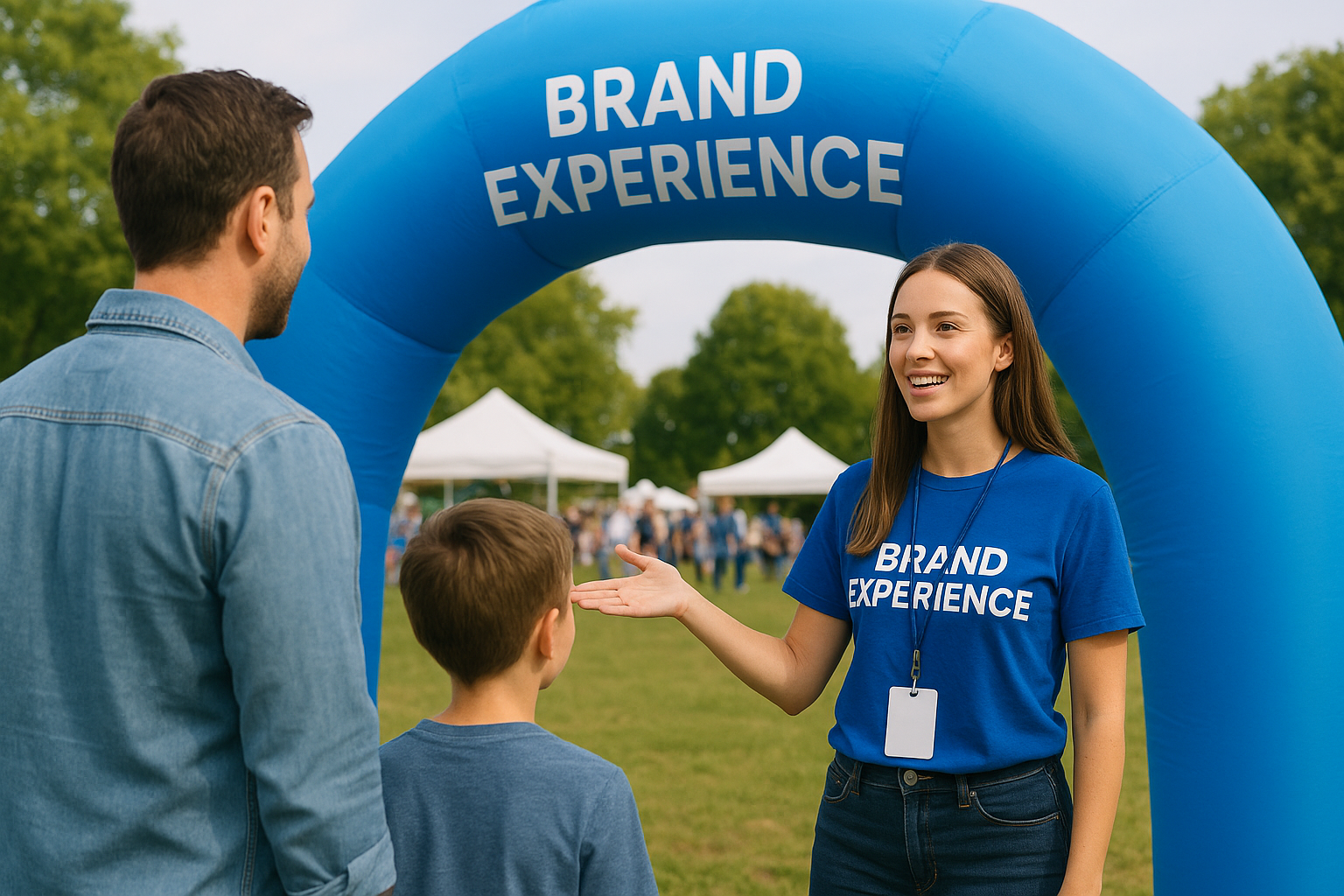
Growth-focused businesses treat marketing services as an investment with a measurable return, not a discretionary expense. When you view it that way, the choice isn’t whether to invest in professional marketing, it’s which combination of services will get you there fastest without wasting the budget you’ve worked hard to earn.
How to choose the right marketing services for your business
Picking the right mix of marketing services starts with an honest look at your goals, not a scroll through an agency’s service list. Too many businesses buy a package because it sounds comprehensive, then realize six months later they paid for SEO when what they actually needed was a trade show presence that would get their name in front of the right buyers. Start with the outcome you want, then work backward to the service that delivers it.
Define the goal before the channel
Before you sign anything, write down what success looks like in concrete terms: more qualified leads, higher foot traffic at events, stronger brand recognition in a new market. Vague goals like “more marketing” lead to vague results. A specific goal, like generating 50 qualified leads a month from a new metro area, points you toward specific services (local SEO, targeted PPC, maybe a regional trade show activation) instead of a generic bundle.
Pick services based on the outcome you need, not the package that sounds most complete.
Match Marketing Services to your sales cycle
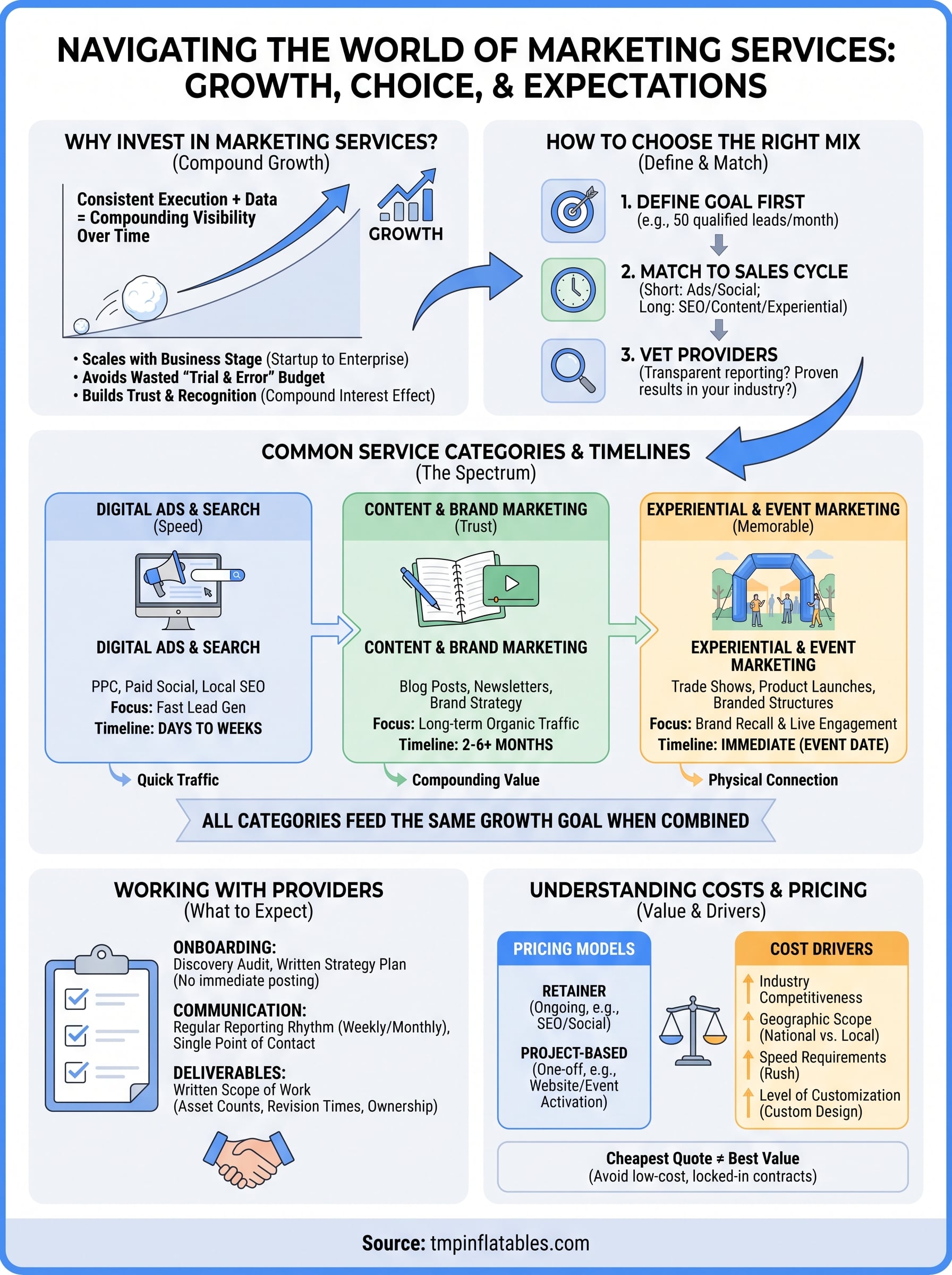
Businesses with short sales cycles, like retail or e-commerce, usually get faster returns from paid advertising and social media, because the path from ad click to purchase is short. Businesses with longer cycles, like B2B or high-ticket real estate, benefit more from content marketing, SEO, and experiential activations that build trust over months, not days. Ask any provider you’re evaluating how their recommended services align with how long your customers actually take to buy.
Vet Marketing Services providers with the right questions
Don’t rely on a slick pitch deck to decide who manages your budget. Run through these questions with every provider you’re considering:
- Can they show measurable results from a client in a similar industry or business size?
- Do they provide transparent reporting, or do you have to ask for basic metrics?
- Is there a single point of contact, or will you get bounced between departments?
- Can they scale services up or down as your needs change?
- Do they have direct experience with the specific service you need, not just general marketing?
Experience matters more than a long list of services offered. A provider that specializes in trade show and event marketing, for example, will understand logistics, shipping timelines, and booth traffic patterns in a way a generalist agency won’t.
Watch for red flags early within Marketing Services
Guaranteed rankings, locked-in long-term contracts with no exit clause, and pricing that seems too low for the scope promised are all warning signs. Legitimate providers explain their process, set realistic timelines, and welcome questions about how they measure success. If a provider can’t clearly explain what you’ll get in the first 90 days, that’s usually a sign they don’t have a real plan for your business.
Common types of marketing services explained
Marketing services span a wider range than most business owners realize, and lumping them all together makes it harder to budget correctly. Breaking them into clear categories helps you see which ones solve which problems, rather than treating “marketing” as one expensive blob of activity.
Marketing Services like Digital advertising and search services
Paid search, social ads, and search engine optimization fall under this umbrella, and they’re usually the first services businesses buy because results show up in a dashboard. Google’s own research shows that businesses using data-driven advertising tools see measurably better return on ad spend than those running unoptimized campaigns, which is why most providers lead with these numbers-heavy services. PPC delivers speed; SEO delivers compounding traffic that gets cheaper per lead the longer you invest.
Marketing Services like Content and brand marketing
Blog posts, video, email newsletters, and social content build the trust that ads alone can’t. Content marketing works slower than paid ads but keeps producing value long after a single ad budget runs dry. Brand marketing, meanwhile, covers logo design, messaging guidelines, and the visual consistency that makes a company recognizable across every channel it uses.
Marketing Services like Experiential and event marketing
This category covers physical activations: trade show booths, product launch events, festival sponsorships, and branded structures like inflatable arches, custom mascots, or misting tents for outdoor summer events. Experiential marketing puts your brand in front of people in a way a banner ad never will, letting them touch, photograph, and remember the experience.
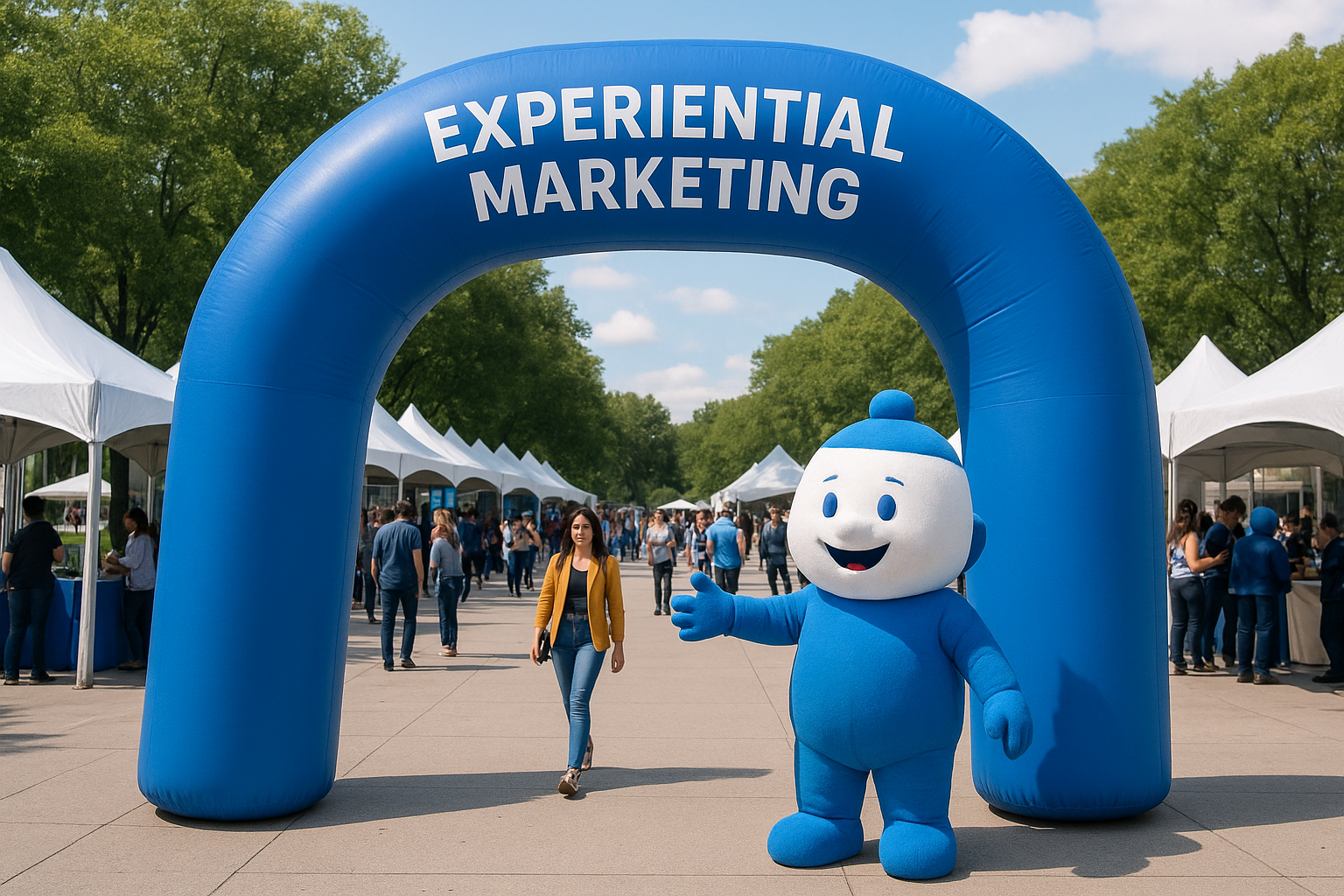
Digital marketing earns clicks; experiential marketing earns memories, and both feed the same growth goal.
Comparing the major Marketing Services categories
| Service type | Best for | Typical timeline to results |
|---|---|---|
| PPC/paid social | Fast lead generation | Days to weeks |
| SEO | Long-term organic traffic | 3-6 months |
| Content marketing | Trust building, thought leadership | 2-6 months |
| Experiential/event marketing | Brand recall, live engagement | Immediate impact at event |
| Traditional advertising | Broad local awareness | Weeks to months |
Traditional and local marketing services
Radio spots, print ads, direct mail, and local sponsorships still matter for businesses targeting a specific geography or an older demographic that digital campaigns miss. Providers who understand local marketing know how to blend these older channels with digital tracking, so you’re not flying blind on results just because the medium is offline. None of these categories work in isolation forever; the strongest campaigns usually combine two or three, matched to the goal you defined before you ever picked a provider.
What to expect when working with a marketing services provider
Signing a contract is the easy part. The real test of a marketing services provider shows up in the first month, when you find out whether they actually communicate, deliver on schedule, and treat your budget like it matters. Knowing what a professional relationship should look like helps you spot problems early instead of six months into a stalled campaign.
Marketing Services & The onboarding process
A solid provider starts with discovery, not execution. Expect an initial audit of your current marketing, competitor research, and a written plan before anyone touches your ad accounts or starts designing assets. Clear onboarding usually includes a kickoff call, access requests to your existing accounts, and a documented strategy you can review before work begins. If a provider skips straight to “we’ll start posting next week” without asking about your goals, that’s a shortcut that costs you later.
Marketing Services & Communication and reporting cadence
You should never have to chase a provider for updates. Reliable partners set a reporting rhythm and stick to it:
- Weekly or biweekly check-ins during active campaigns
- Monthly performance reports with clear metrics, not just screenshots
- A single point of contact who knows your account without escalation
- Quarterly strategy reviews to adjust based on what’s working
Transparent reporting is the difference between a provider you trust and one you’re constantly second-guessing.
If you can’t see the numbers behind your campaign, you can’t trust the results being claimed.
Marketing Services & Timelines by service type
Different services move at different speeds, and a provider worth hiring will set realistic expectations upfront instead of promising overnight results across the board.
| Service | Typical time to see results |
|---|---|
| PPC campaigns | 1-2 weeks for initial data |
| SEO | 3-6 months for ranking movement |
| Content marketing | 2-4 months for traffic growth |
| Experiential/event activations | Immediate, tied to event date |
Deliverables you should get in writing
Before work starts, get a written scope that spells out exactly what you’re paying for. This should include the number of assets produced monthly, ad spend management fees separate from media budget, response times for revisions, and who owns the creative work once the contract ends. Written deliverables protect you from scope creep, where a provider quietly reduces output while your invoice stays the same. Ask for a sample report and a sample contract from any provider before you commit, so you know exactly what accountability looks like once you’re a client instead of a prospect. Looking for companies with the secret sauce? Check out this list
How much marketing services typically cost
Pricing for marketing services varies more than most business owners expect, and vague answers from providers usually mean they haven’t nailed down their own process yet. Costs depend on the service, the size of your business, and whether you’re paying for management fees on top of actual media spend. Knowing the general ranges before you start negotiating keeps you from overpaying for basic work or underpaying for something that requires real expertise.
Typical price ranges by service
Small businesses often pay less per service but get less strategic depth, while enterprise clients pay more for dedicated teams and faster turnaround. Here’s what you can generally expect across the most common categories:
| Service | Typical monthly cost range | Notes |
|---|---|---|
| SEO | $750 – $5,000 | Higher end for competitive industries |
| PPC management | $500 – $5,000 + ad spend | Fees often 10-20% of ad budget |
| Social media management | $400 – $3,000 | Varies by number of platforms |
| Content marketing | $1,000 – $6,000 | Depends on volume and video needs |
| Experiential/event marketing | $2,000 – $50,000+ per event | Scales with structure size and complexity |
Why experiential marketing costs differently
Experiential services don’t follow a neat monthly retainer model because they’re tied to specific events, not ongoing campaigns. A custom inflatable arch or branded misting tent for a single trade show might run a few thousand dollars, while a multi-city product launch with custom mascots and large-format structures can climb much higher. Unlike a PPC retainer, you’re paying largely for physical production, shipping, and design work that gets reused across future events, which changes the math on long-term value.
Retainer vs. project-based pricing
Most digital services run on monthly retainers, which work well for ongoing needs like SEO or social media where consistency drives results. Project-based pricing fits one-off needs better, like a website redesign, a single event activation, or a seasonal campaign. Ask any provider which model they default to and why, since a retainer for a one-time need often means you’re paying for months of attention you don’t actually need.
The cheapest quote rarely delivers the cheapest cost per result.
What actually drives the price up or down
Several factors push pricing higher regardless of which service category you’re buying:
- Industry competitiveness (legal and finance cost more than local retail)
- Geographic scope (national campaigns cost more than single-market ones)
- Speed requirements (rush production and tight turnarounds add fees)
- Level of customization (custom design work costs more than templated options)
- Reporting depth (detailed analytics dashboards add to management fees)
Understanding these levers helps you negotiate honestly instead of just chasing the lowest number, which almost always costs more in wasted spend down the line.
Finding the right marketing partner for your goals
Good marketing services come down to matching the right provider to a clearly defined goal, not buying the biggest package on offer. You’ve seen how digital channels, content, and experiential activations each solve different problems, and how pricing and timelines shift depending on what you’re actually trying to achieve. The businesses that grow fastest are the ones that pick services deliberately, ask hard questions upfront, and demand real accountability from whoever manages their budget.
If your next campaign needs a physical brand experience that pulls people in at a trade show, product launch, or summer event, that’s where we come in. TMP Inflatables has spent over 20 years designing custom arches, mascots, misting tents, and branded structures that give experiential campaigns their memorable moment. Get a quote and let’s talk about what your event actually needs.