

The word props carries more meaning than most people realize. Say it in a theater and someone will hand you a sword, a telephone, or a suitcase. Say it in casual conversation and you’re giving someone respect or credit for a job well done. Same word, completely different context, and both uses show up constantly in the events and marketing world.
At TMP Inflatables, we design and produce custom inflatables for experiential marketing that can be used as props. From inflatable costumes and character replicas to branded arches and trade show displays. Every one of these products functions as a prop in the truest sense: an object that supports a bigger story a brand is trying to tell. That’s why understanding what props actually are, how they work across different settings, and why they matter so much is directly relevant to anyone planning an event or campaign.
This article breaks down the full meaning of “props”, the theatrical definition, the slang usage, and real examples of how props shape experiences on stage and at events. Whether you’re a marketing professional sourcing materials for a product launch or just curious about the word itself, you’ll walk away with a clear, practical understanding of the term and how it applies.
Why the word has multiple meanings
The word didn’t start with a single definition. It evolved across centuries of language and culture, picking up new meaning each time it landed in a different context. Understanding where the word comes from helps explain why it now means something completely different in a costume warehouse versus a text message.
From Latin roots to modern use
Theatrical usage of props traces back to the word “properties,” which came from the Latin “proprietas,” meaning ownership or a quality belonging to something. In early theater, stage managers used the term to describe any moveable object belonging to a production that wasn’t a costume or a fixed set piece. Over time, “stage properties” shortened to “props,” and the term stuck across theater, film, television, and live events.
The shift from “properties” to “props” is one of the cleaner examples of English compressing a formal term into something more practical without losing its original meaning.
How context changes the meaning
The slang usage came much later, emerging from African American Vernacular English (AAVE) in the late 20th century, where it carried the sense of giving someone credit or public recognition. The word moved through hip-hop culture and eventually into mainstream conversation. By the time it reached everyday speech, most people using it had no idea it shared a lineage with a theater department.
Both meanings are now fully established, and neither is going away. When you hear or read the word props today, the surrounding context almost always tells you which definition applies instantly. That’s the straightforward reason the word carries multiple distinct meanings: two separate evolutions of use, happening in completely different communities, both landing on the same term.
The meaning in slang and everyday speech
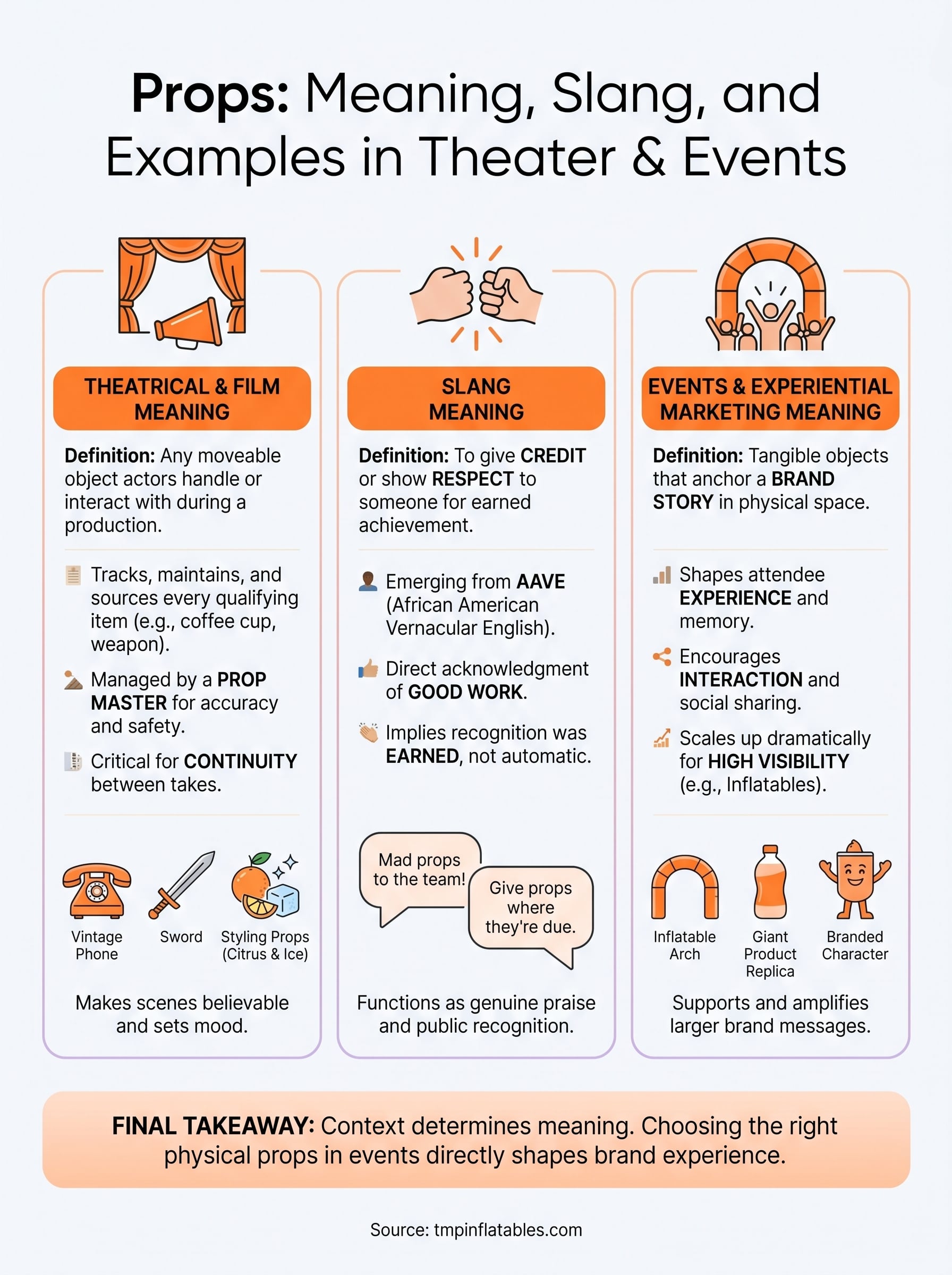
When someone says “give props” in conversation, they mean give credit or show respect to someone who earned it. You might hear it after a teammate pulls off something impressive, or when a colleague delivers a project under a tight deadline. The slang form functions as a direct acknowledgment that someone did something worth recognizing, and it carries genuine weight because it implies the recognition was earned, not handed out automatically.
How slang shows up in real life
You’ll find the word used across everyday speech in workplaces, sports settings, and social conversations. A coach gives props to an athlete after a strong performance. A creative director gives props to the team that turned around a difficult campaign. In brand and marketing circles, the term shows up naturally when celebrating a successful activation or event. The meaning is always consistent: someone did good work and deserves acknowledgment.
Props in the slang sense works precisely because it’s direct. There’s no ambiguity when someone says you earned props.
Common examples of the phrase in natural use:
- “Mad props to the team for pulling that off.”
- “She deserves props for handling that under pressure.”
- “Give props where they’re due.”
Meaning in theater, film, and photography
In professional productions, props refers to any moveable object that actors handle or interact with during a performance or shoot. This includes everything from a coffee cup on a desk to a weapon in a fight scene. The prop department tracks, maintains, and sources every qualifying item, and on a major production that list can run into the hundreds.
How they work on stage and screen
A prop master manages the full inventory of objects used during production. Their job is to ensure every item looks accurate for the period, fits the scene, and works safely in an actor’s hands. On a film set, continuity depends on props matching exactly between takes, which is why the prop department photographs and logs each item in detail.
Props in events and experiential marketing
In live events and experiential marketing, props serve a specific functional role: they anchor a brand story in physical space. Whether you’re running a product launch, a trade show booth, or an outdoor activation, the objects you place in your environment communicate your brand before anyone reads a single word of copy. Choosing the right props shapes how attendees experience and remember what they walked into.
The most effective event props don’t just occupy space. They give attendees a reason to stop, interact, and share.
Inflatables as large-scale event props
Custom inflatables represent one of the most practical and high-visibility categories of event props available to marketing teams today. A branded inflatable arch at a race finish line, a giant product replica at a retail activation, or an inflatable character at a trade show all function as props in the truest sense: physical objects designed to support and amplify a larger brand message.
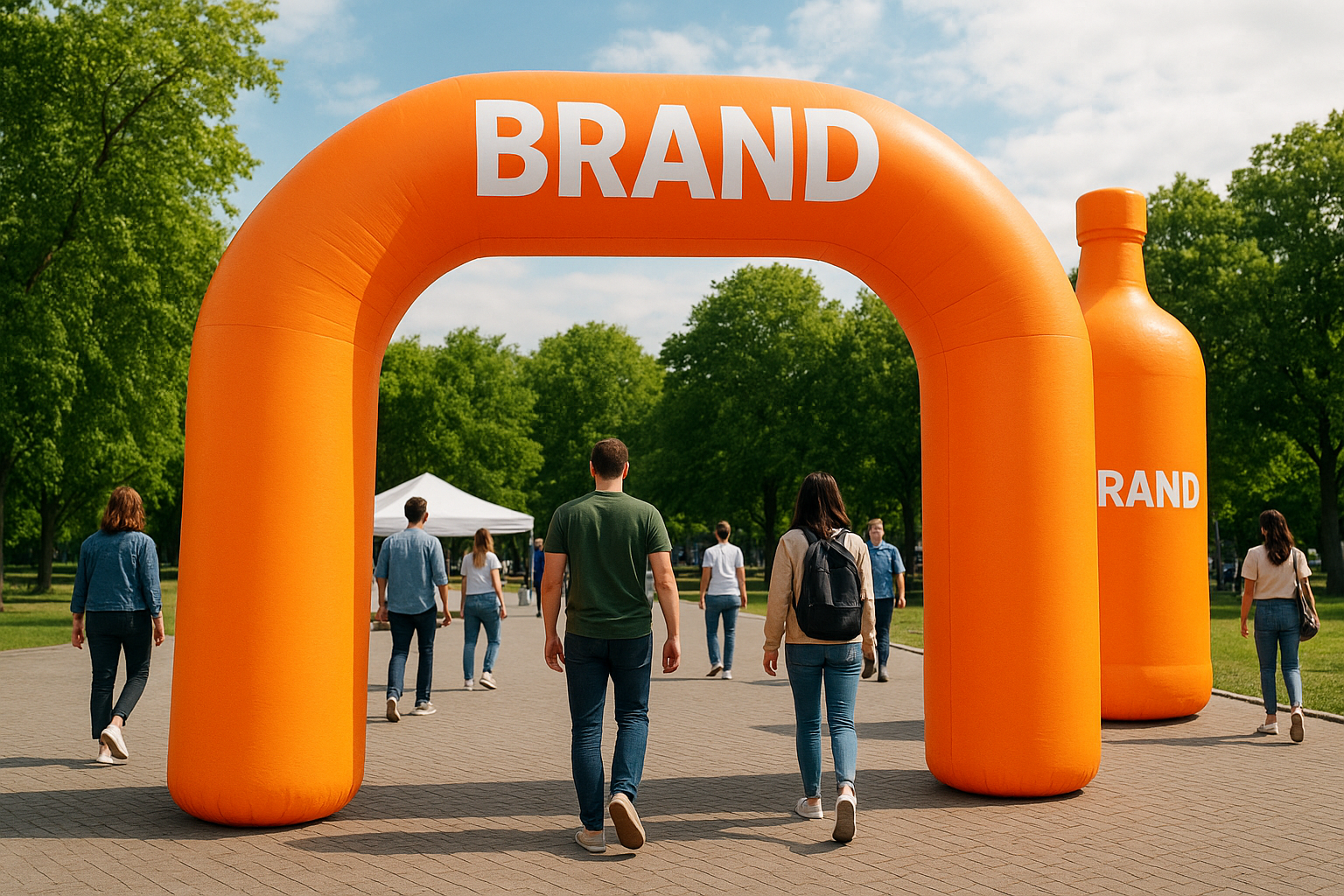
Your inflatables can be matched precisely to brand colors, product shapes, or campaign themes, which means every detail you put into the design works toward a consistent experience. Because they scale up dramatically compared to standard signage, inflatables draw attention at distances that most other props simply cannot reach.
Quick examples by context
Seeing the word in actual sentences makes the distinction immediate and clear. Here are direct examples across the three main contexts where you’ll encounter the term:
- Theater and film: “The prop master sourced a vintage rotary phone for the scene.”
- Slang: “Full props to the crew who set up the entire activation overnight.”
- Events and marketing: “The oversized inflatable product replica was the most-photographed prop at the entire trade show.”
Each sentence uses the same word to mean something different. Once you recognize which setting you’re in, the correct meaning of props becomes obvious without any second-guessing.
Final Takeaways
The word props covers a lot of ground depending on where you use it. In theater and film, props are the physical objects that make a scene believable. In everyday speech, the word means giving someone genuine credit for good work. In events and experiential marketing, props become the tangible tools that anchor your brand in physical space and give attendees something real to react to.
Understanding which meaning applies is straightforward once you pay attention to context. For marketing professionals, the most practical takeaway is that choosing the right event props directly shapes how your audience experiences your brand. A well-designed physical object, particularly one scaled to draw attention from a distance, can do work that no banner or digital screen can replicate.
If you’re planning an activation and need custom inflatables built around your brand, request a quote from TMP Inflatables and get the process started.