

The word vibes shows up everywhere, in casual texts, on social media, in brand names, and across the marketing campaigns that shape how people experience products and events. It’s one of those terms that feels instantly understood but is surprisingly hard to pin down when someone asks you to define it.
At TMP Inflatables, we think this constantly. Every custom inflatable, branded arch, and oversized product replica we design for experiential marketing agencies and event teams exists to do one thing: create an unmistakable feeling the moment someone walks into a space. That’s vibes in action.
But the word itself has a rich history that stretches well beyond event marketing, and it’s also been adopted as a name by several well-known brands. This article breaks down the full definition of “vibes,” traces how it evolved into one of the most-used slang terms in modern English, and covers the major brands that have claimed the word as their own, from earplugs to rolling papers to Meta’s AI video tool.
Why “vibes” matters in modern English
Language shifts constantly, and few words have moved as fast or as far as vibes. In the last decade, the term has crossed from niche subcultures into everyday mainstream speech, appearing in advertising copy, product names, job descriptions, and political campaigns. That kind of reach signals that a word is doing real work in the culture, not just floating around as temporary slang.
Where the word comes from
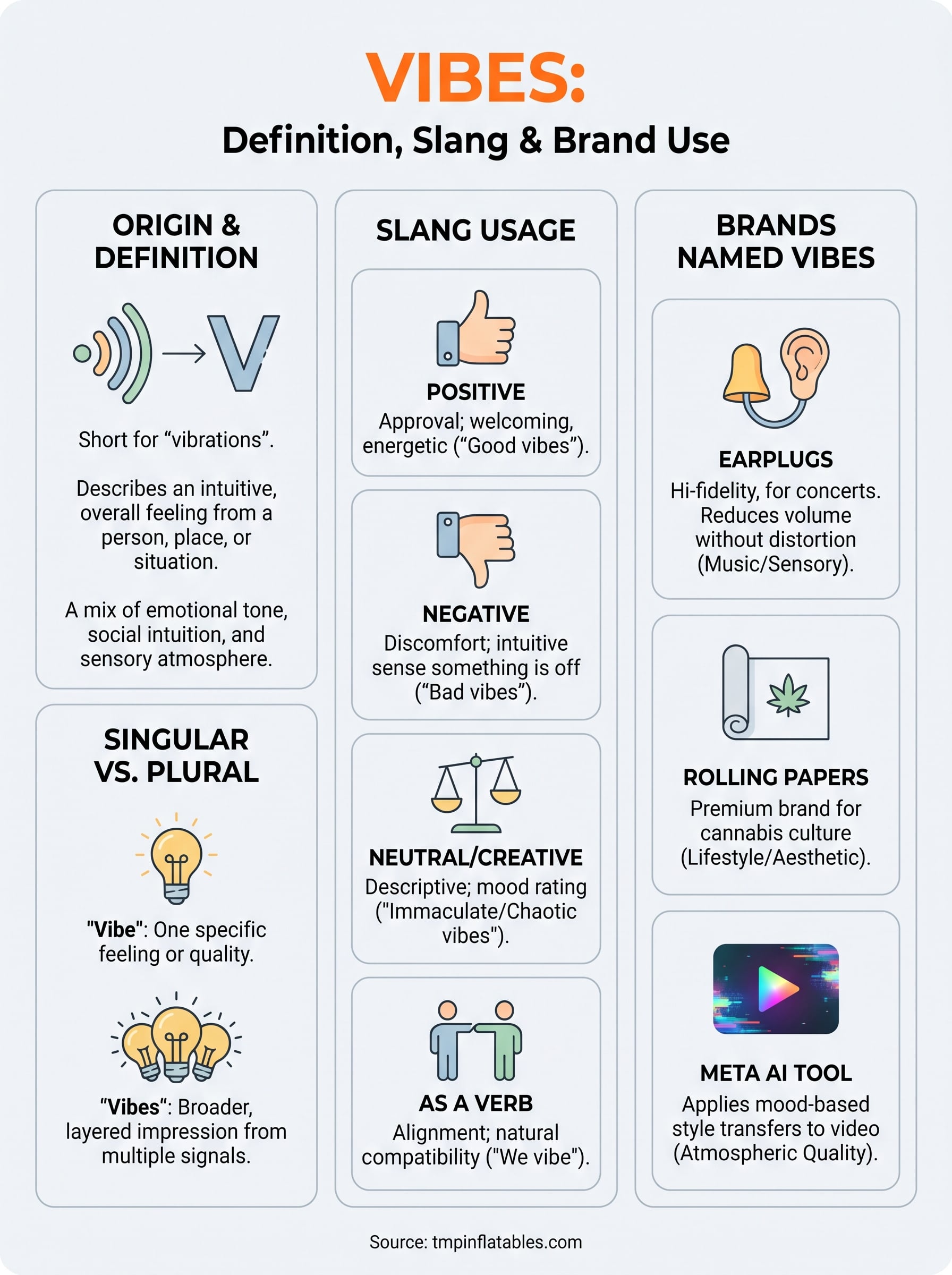
The word vibes is a shortened form of “vibrations,” and its roots go back further than most people expect. Spiritual and philosophical traditions going back centuries used the concept of vibrations to describe invisible forces or energies that one person could sense from another or from a physical space. By the mid-20th century, jazz musicians and counterculture communities in the United States had picked up the idea and turned it into everyday language. Saying someone “sent out good vibes” meant they projected a positive, readable energy.
The shift from “vibrations” to “vibes” is a textbook example of how language compresses meaning over time without losing the core idea.
Why the word stuck
Words that survive decades of language change tend to fill a gap that other words cannot. Vibes fills that gap by naming something people experience constantly but struggle to describe with clinical precision: the overall feeling a person, place, or situation gives off. No single synonym captures the same mix of emotional tone, social intuition, and sensory atmosphere that vibes does in one syllable.
Your own instinct probably confirms this. When you walk into an event space and something feels off before anyone speaks, you’re reading vibes. When a brand’s visual identity instantly feels right for its audience, that’s vibes working at a professional level too.
How people use “vibes” in slang and daily talk
Slang lives or dies based on how naturally it fits real conversation, and vibes has proven it can flex across almost any context. You’ll hear it used as a noun to describe a setting, as a verb to describe alignment, and as shorthand for whether something simply feels right or wrong.
Positive, negative, and neutral uses
People apply vibes in three main directions. Positive vibes signal approval: “This place has great vibes” means the atmosphere feels welcoming and energetic to whoever walks in. Negative vibes flag discomfort without requiring a specific explanation: “I’m getting bad vibes from this situation” communicates that your instincts are telling you something is off.
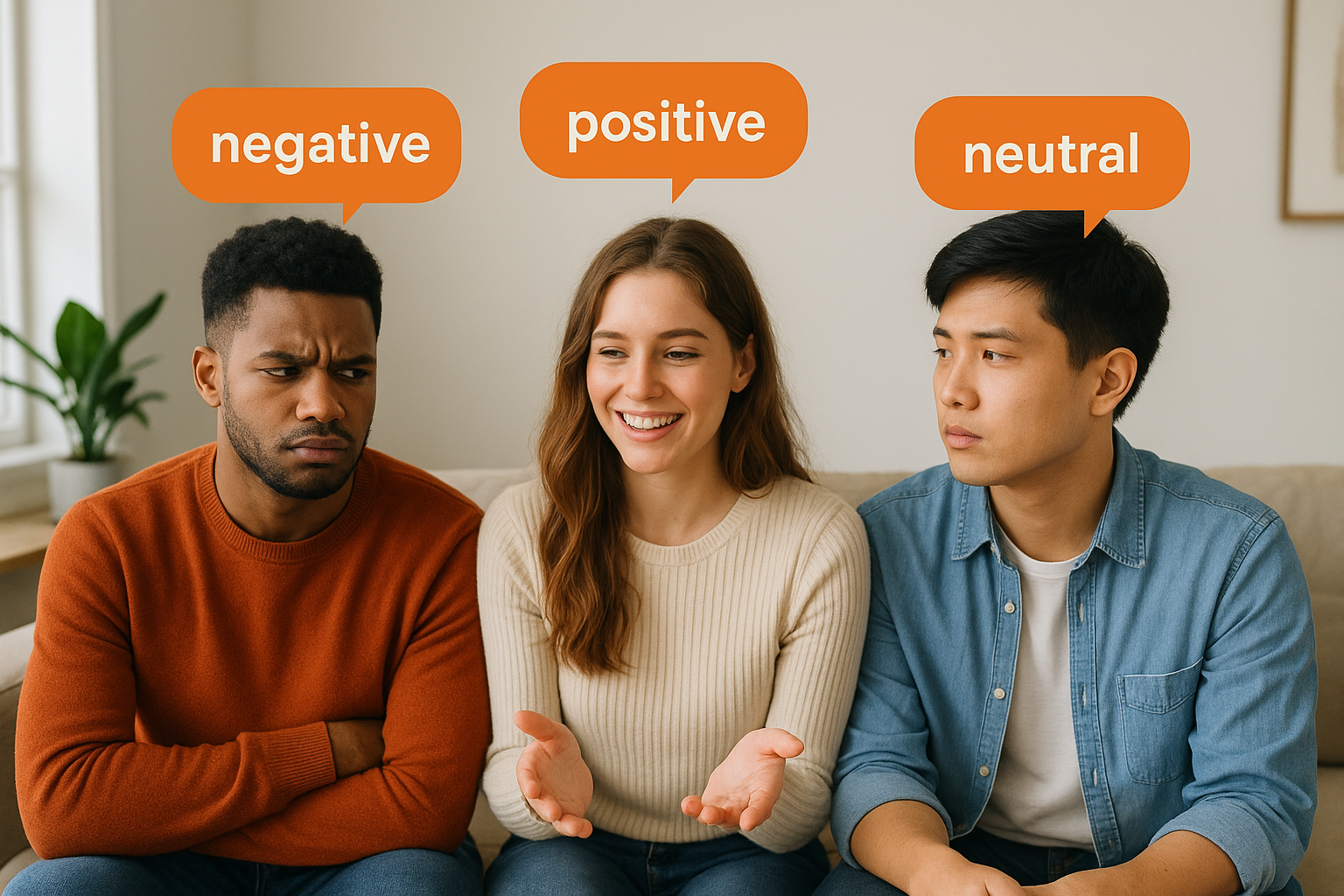
Vibes works as social shorthand precisely because it delivers a complete emotional read without demanding a detailed justification.
Neutral and creative uses are just as common in everyday speech. Phrases like “immaculate vibes” or “chaotic vibes” show up in online comments to rate anything from a playlist to a product launch. You can also use it as a verb: “We vibe” means two people share natural compatibility. This grammatical flexibility is exactly why the word has stayed relevant rather than fading like so many other slang terms from the same era.
Vibe vs vibes and close meanings
The singular and plural forms carry slightly different weight in everyday use, and knowing the difference helps you apply both correctly. Neither form is wrong, but they point to different things depending on what you’re describing.
Singular vs plural: what changes
“Vibe” in its singular form typically refers to one specific feeling or characteristic a person or place gives off. You might say “this room has a relaxed vibe” when pointing to a single, dominant quality. “Vibes” in its plural form covers a broader, more layered read on a situation, suggesting that multiple signals are combining into one overall impression.
The distinction is subtle but consistent: vibe narrows in on one quality, while vibes captures the full atmosphere.
Words that overlap with vibes
Several words sit close to vibes in meaning without being perfect substitutes. “Energy” covers the personal force someone projects but misses the environmental angle. “Atmosphere” gets at the feel of a physical space but sounds more formal and loses the intuitive, social dimension. “Aura” leans spiritual and can feel dated in casual speech. Vibes remains the most versatile and natural option when you want to name the feeling a person, place, or brand creates without overexplaining it.
Common examples you can copy and adapt
Seeing vibes used in real sentences makes it much easier to apply the word correctly in your own writing, captions, or spoken conversation. The examples below reflect natural, current usage across different contexts, from casual social exchanges to professional brand settings.
Ready-to-use phrases
Each phrase below covers a different situation where vibes fits naturally. You can pull any of these directly and adjust the details to match your specific context.
The fastest way to internalize how vibes works is to see it across enough situations until it starts to feel instinctive.
- “This venue has exactly the right vibes for the launch event.”
- “I’m not getting great vibes from that vendor.”
- “We really vibe when it comes to creative direction.”
- “The whole setup gave off summer festival vibes.”
- “Their brand identity has clean, modern vibes that their audience connects with.”
- “Something felt off, the vibes in that room were tense from the start.”
These phrases work across text messages, social captions, and creative briefs. Swapping the adjective in front of vibes is usually all it takes to fit a new scenario without losing the natural feel of the word.
Brands and products named Vibes
Several companies have adopted the word vibes as a brand name, recognizing that it communicates a feeling rather than a function. That choice is deliberate: a name that evokes atmosphere and experience tends to stick with consumers longer than a purely descriptive one.
Vibes earplugs
Vibes Hi-Fidelity Earplugs are one of the most recognizable products carrying this name. Designed for concerts and live events, they reduce volume without distorting sound quality. The brand leans directly into the word’s association with music and sensory experience, making it a natural fit for their target audience of concert-goers and musicians.
A brand name works hardest when it aligns directly with what the product actually delivers to the user.
Vibes rolling papers
Vibes Rolling Papers is a premium brand founded by well-known figures in cannabis culture. The company positions its products around a specific lifestyle and aesthetic, and the name reinforces that positioning without requiring any additional explanation to their audience.
Meta’s Vibes AI tool
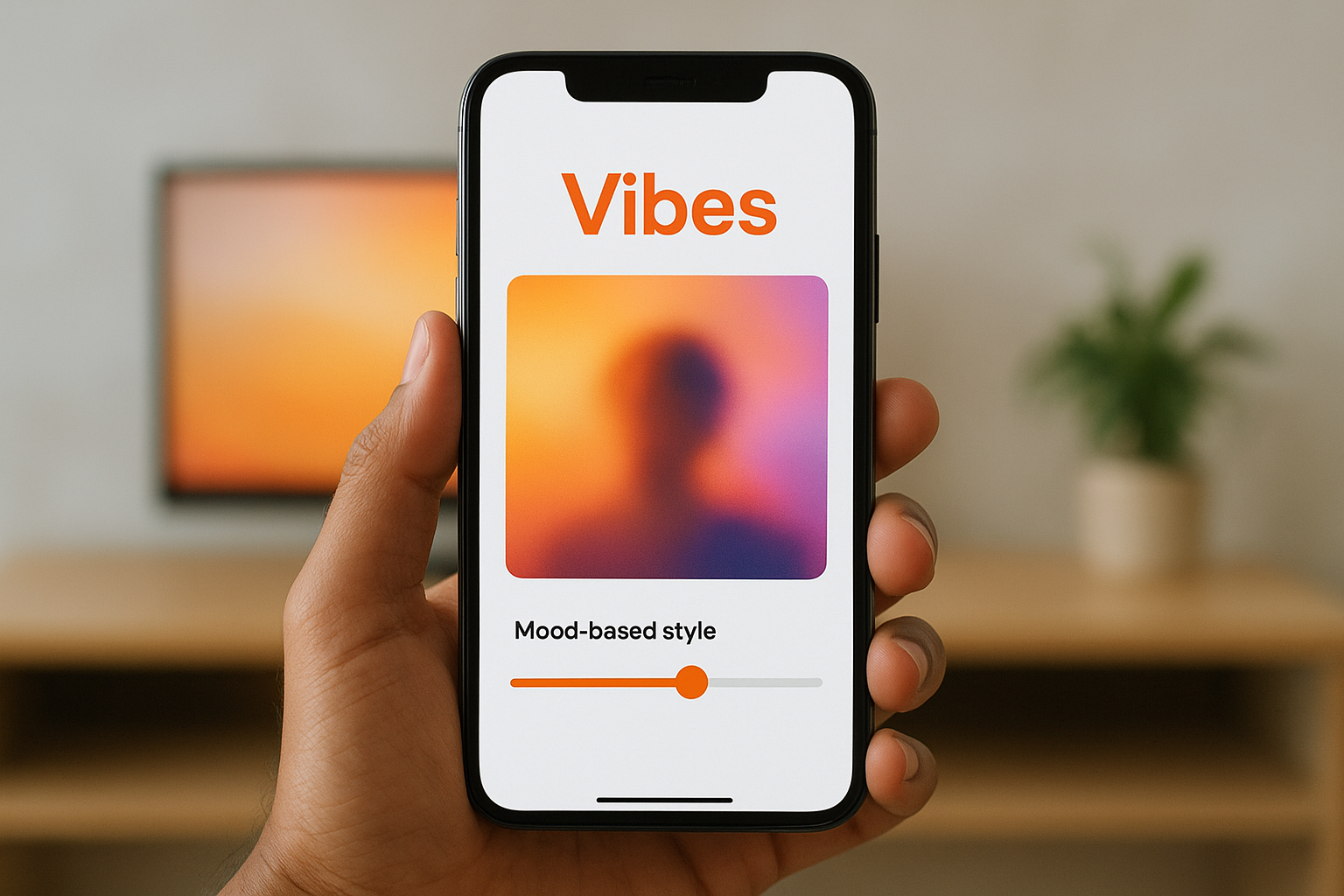
Meta released a tool called Vibes as part of its AI video generation suite. The tool allows users to apply mood-based style transfers to video content, making the name a direct reference to the atmospheric quality it produces in the output.
A quick recap and next step
The word vibes started as a compressed form of “vibrations” and grew into one of the most versatile terms in modern English. You can use it as a noun to describe atmosphere, as a verb to describe alignment, and as a quick read on whether something feels right or wrong. Brands like Vibes earplugs, Vibes Rolling Papers, and Meta’s Vibes tool have all claimed the word because it communicates feeling more efficiently than almost any alternative.
Understanding how language works at this level matters when you’re building brand experiences that stick. If your next event, trade show, or product launch needs to project the right energy the moment someone walks in, custom inflatables give you that immediate visual impact. Giant branded structures and oversized product replicas do the heavy lifting before a single word gets spoken. Request a quote for your next custom inflatable and start building the atmosphere your audience will remember.